

An accurate Total Cost of Ownership (TCO) model for healthcare outsourcing aggregates direct service fees, transition overhead, and long-term risk variables—not just the hourly rate. By shifting from simple labor arbitrage to “fully loaded” cost accounting, health system executives can accurately forecast the ROI of a HIPAA-compliant offshore healthcare desk while mitigating the hidden operational expenses that often erode efficiency.
Key Takeaways
- Go beyond the hourly rate: Include “fully loaded” costs such as management supervision, medical-grade security infrastructure, and compliance audits.
- Account for “transition debt”: Factor in one-time costs of process mapping, SME training, and knowledge transfer during the initial 90-day pilot.
- Quantify quality-risk premiums: Model the fiscal impact of vendor accuracy—even a small difference in coding accuracy can create downstream costs that dwarf labor savings.
- Include operational contingencies: Build a risk buffer into the model for currency fluctuations and potential service-level remediation.
- Keep the model transparent: Use clear, modular structure so internal financial models are as transparent as the expectations you set with external vendors.
What Are the Hidden Components of a Healthcare Outsourcing TCO?
The true cost is rarely the published hourly rate. A defensible model sorts expenses into three tiers—direct service, operational, and hidden/risk—so leaders can see how much sits beneath the price-sheet number and budget for it before signing.
To build a model that survives CFO scrutiny, procurement teams should categorize spend into three tiers. Tier 1 (direct service) covers base wages, facilities, equipment, and administrative overhead—fixed, predictable spend. Tier 2 (operational) adds ongoing training, HIPAA-certified software licenses, and quality-assurance monitoring, which vary with quality expectations. Tier 3 (hidden/risk) captures compliance audits, turnover-related hiring, and internal management time—the strategic, performance-linked costs most often left out.
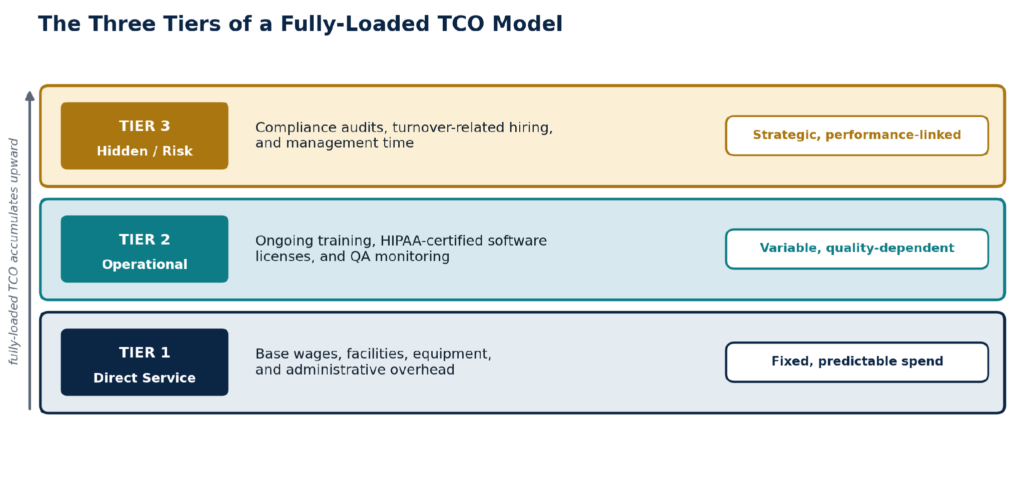
Figure 1. The three tiers of a fully-loaded TCO model and their strategic impact.
The danger of stopping at the price sheet becomes obvious when the tiers are stacked against the headline rate. In a typical engagement, the quoted labor rate represents under half of the cost the organization ultimately carries.

Figure 2. The price-sheet rate is only a fraction of the fully-loaded total cost of ownership.
How Does Staff Attrition Influence Long-Term Outsourcing ROI?
Attrition is a “stealth tax.” Every departure adds recruitment, onboarding, and productivity-gap costs while a replacement ramps up. A partner with materially lower turnover can be more cost-effective over 24 months even at a higher base rate—so demand real-time turnover metrics, not historical averages.
High attrition in the Philippine BPO sector quietly inflates TCO. Each time an agent leaves, the organization absorbs recruitment and onboarding costs plus a productivity gap while the replacement reaches full speed. Because these costs are diffuse, they rarely appear on a price sheet—yet over a multi-year engagement they can overwhelm a low headline rate.
This is why a higher hourly rate paired with low turnover frequently wins on total cost. When evaluating a partner, demand real-time turnover metrics rather than historical averages, and model the stealth tax explicitly.
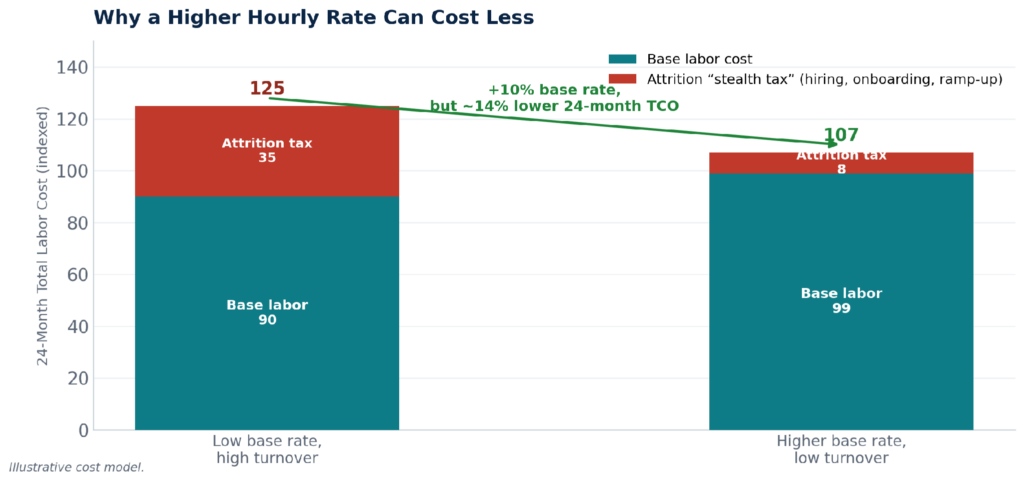
Figure 3. A higher base rate can still deliver a lower 24-month total cost when turnover is low.
What Do Real-World Results Look Like?
A large U.S. hospital network with a 35-day coding turnaround chose a boutique cardiac-coding specialist over a low-cost mega-vendor. Integrating the partner directly into its EHR, it cut turnaround to 14 days, measurably lifted coding accuracy, and reclaimed millions in annual revenue.
The network’s 35-day medical-coding turnaround was driving reimbursement delays, and the internal cost of errors was mounting. Rather than defaulting to a low-cost mega-vendor, the client used PITON-Global to identify a boutique provider with deep experience in specialized cardiac coding—then implemented a tiered model that integrated the partner’s workflow directly into the hospital’s EHR, supported by a 24/7 security enclave.
The results landed on the metrics that matter most to a fully-loaded TCO model—speed, accuracy, and recovered revenue—the same levers that shape the ROI health systems can expect from a specialized partner.
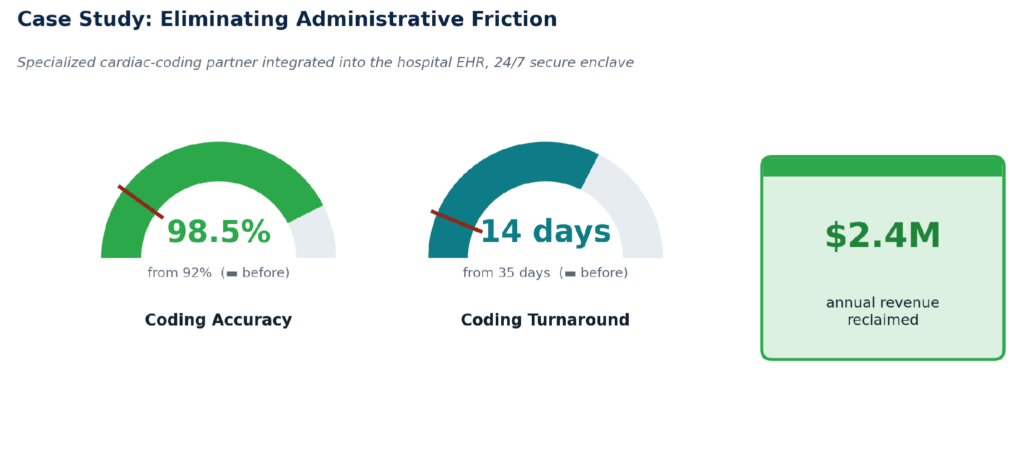
Figure 4. Faster turnaround and higher accuracy reclaimed significant annual revenue.
How Does PITON-Global Help Health Systems Model and Control TCO?
PITON-Global functions as an extension of your procurement team under a fiduciary-style advisory model. It provides access to 100+ healthcare-vetted Philippine providers, risk-based vetting that generic consultancies miss, and targeted matching that substantially shortens the vendor evaluation cycle.
Who Is PITON-Global?
PITON-Global is a specialist advisory firm for the high-stakes healthcare outsourcing environment. It operates as an extension of a health system’s procurement team, maintaining a curated network of more than 100 Philippine providers vetted specifically for healthcare-grade compliance—so TCO models rest on partners that can actually meet clinical and regulatory expectations.
How Does PITON-Global Differ From Traditional Outsourcing Brokers?
Unlike traditional brokers, PITON-Global operates under a fiduciary-style advisory model: its guidance is oriented to the client’s outcomes rather than to placing whichever vendor pays for the lead. That orientation matters most in healthcare, where a poor structural fit translates directly into compliance rework and inflated hidden-tier costs.
How Does a Network of 100+ Vetted Philippine BPO Providers Benefit Organizations?
Access to 100+ providers vetted for healthcare-grade compliance lets organizations compare like-for-like partners without an exhaustive market search. Because candidates are pre-screened for security, continuity, and domain expertise, teams can build accurate TCO comparisons faster and avoid the hidden costs that surface when a generalist is forced into a clinical role.
How Does PITON-Global’s Advisory-Led Vendor Matching Process Work?
PITON-Global applies a four-stage framework—Assessment, Vetting, Pilot, and Scaling. It maps requirements and compliance scope, runs a risk-based audit of security and continuity plans, governs a 90-day parallel-processing pilot, and then scales to full operational volume. Targeted matching and pilot governance shorten the procurement cycle substantially.
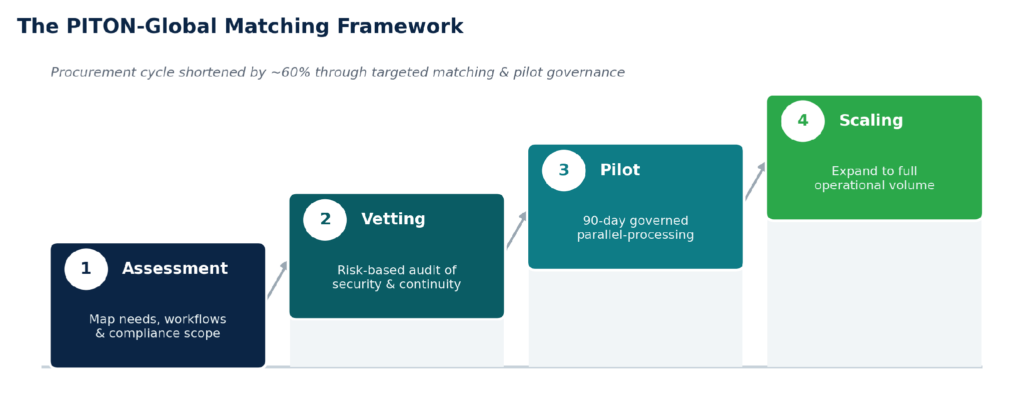
Figure 5. PITON-Global’s four-stage matching framework, from assessment to full-scale operations.
Why Do Organizations Use PITON-Global?
Organizations use PITON-Global to mitigate outsourcing risk and accelerate procurement while protecting margin. Its risk-based vetting focuses on the data-security and continuity factors generic consultancies miss, and its targeted matching shortens the evaluation cycle significantly—helping health systems reach a well-modeled, low-TCO partnership faster.
What Else Should Health Systems Know When Modeling TCO?
Common questions cover the right modeling term, HIPAA-compliance costs, the most frequent TCO error, the impact of agentic AI, verifying healthcare specialization, and currency risk. In short: model over three years, treat compliance as core, never omit internal management cost, and hedge currency.
Should TCO be modeled over a 1-year or 3-year term?
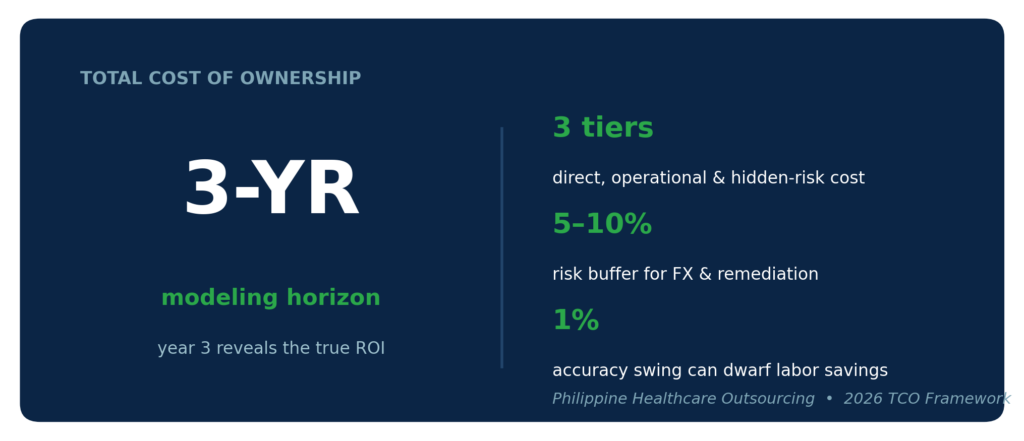
Always model over three years. Year one is cost-heavy due to setup and training; year three reveals the true ROI of the partnership, which is why the model should tie back to the health system’s strategic plan.
How do I factor in HIPAA-compliance costs?
Treat compliance as core, not an add-on. Include the cost of regular third-party security audits and the implementation of redundant data-protection layers.
What is the biggest mistake in TCO calculations?
Ignoring the internal management cost—the hours your own U.S.-based team spends managing the relationship and auditing the work, which feeds straight into the administrative cost ratio.
How does the “agentic AI” shift impact TCO?
AI-integrated services may carry higher upfront tech costs but significantly lower long-term labor cost per case. Treat the AI-enablement fee as a permanent, value-driving expense.
How do I verify a vendor’s healthcare specialization?
Ask for references from existing healthcare clients and evidence of specialized training certifications. Generic BPO experience is not a substitute for clinical domain knowledge.
Does currency fluctuation matter?
Yes. Local labor costs remain in PHP while contracts are in USD, so negotiate cost-of-living adjustments and currency-hedging clauses to prevent surprise rate hikes.