
A player who can't withdraw tells the forum, then the regulator.
We'll line up six to ten award-winning, mid-sized, fully compliant providers in Manila that specialize in your iGaming vertical and are serving operators like yours right now. Shortlist in 48 to 72 hours. Completely free, no obligation.

Sourced for you, not listed. Free, no obligation.
Your details go to John, nobody else.
Our iGaming vendor’s retention numbers are excellent — what risk are they ignoring to get them?
The safer-gambling markers. An agent serves two masters in one chat — the player and the regulator — and a great retention number says nothing about the flags ignored to earn it. Demand a live responsible-gaming intervention and its audit trail. The online gaming operator replaced a retention-first vendor: VIP retention +16% on the 14% of players driving 68% of GGR, review cleared, no action.
BPO Partners
Contacts / Year
Delivery Hubs
An iGaming agent serves two masters in a single conversation: the player who wants to keep going and the regulator who needs them protected. Push retention too hard and you breach your licence; intervene clumsily and you lose the player. The skill is doing both at once.
Player support first, KYC and payments second: what iGaming operators outsource, by how early they move it.







Your game mix and your rulebooks decide where the two masters collide hardest.
These are the four operator profiles we build for most often — each with its own risk surface, each served by the same licence-grade stack.
The full licence-grade stack: RG intervention, <9-minute KYC, VIP desk, audit-ready trail.
Anchors to: The Balance Map · the online gaming operator →In-play support at betting speed, event-surge coverage, and RG monitoring tuned to live-wagering patterns — chasing losses looks different at in-play tempo.
Anchors to: The Risk Matrix · RG row →Collusion and multi-accounting monitoring, tournament-surge support, and payments integrity across peer-to-peer stakes.
Anchors to: The Risk Matrix · Fraud row →Volume products with their own rulebooks — and for crypto-native operators, the on-chain compliance surface our Crypto & Web3 operation covers in depth. One vendor, both desks, cross-linked.
Anchors to: The Licence Test →Every player desk sits somewhere on this map — where is yours?
Player value runs up; regulatory rigor runs across. Most vendors are good at one and dangerous at the other. Only the top-right corner — high retention and full compliance — keeps both your players and your licence.
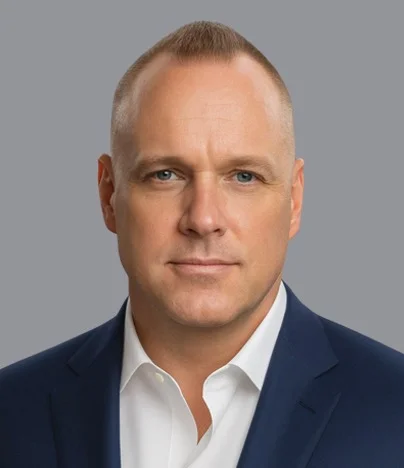
“The dangerous iGaming vendor is the one with a great retention number, because you cannot see the risk they are ignoring to get it. A safer-gambling intervention that costs you a deposit today is the cheapest licence insurance you will ever buy — and the agents who can do it warmly are rare.”
A churn-chaser vs. a licence-grade operation.
Seven dimensions, two philosophies — set side by side, not buried in a grid.
Four ways an operator bleeds — each one a quadrant on the map.
An operator’s risk isn’t one surface; it’s four, and each is what living in the wrong quadrant costs. A per-contact vendor absorbs the chats these risks generate; a licence-grade desk contains each one — warmly on the player side, coldly on the trail.
The through-line: the first row is why quadrant A is a suspension waiting to happen; the third is why quadrant C loses the VIPs; the top-right corner is the only place all four rows are contained at once. The map isn’t a metaphor — it’s the risk register drawn as a picture. It’s the same regulated-operations doctrine our crypto-compliance and aviation desks run on: the regulator asks for the record on the one that mattered, not the volume.
Where does the value come from when retention and compliance pull together?
From three booked streams a per-contact price ignores — VIP value retained, onboarding conversion lifted and fraud cut — with RG/AML enforcement exposure shown separately as modelled risk, not booked benefit. The most expensive player is the one a regulator says you should have stopped — and didn’t.
Illustration, not a client result: 45 FTEs × 1,920 paid hours at about $10.42/hour ($20,000 per FTE per year) plus a 10% transition provision, against $64,000 per FTE onshore — a modelled difference of $1.89M. The bars above are value categories to evaluate with your own data, not booked benefits.
One capability, two beneficiaries — a KYC-only deployment, measured.
the online gaming operator proves the full licence-grade desk. This is the floor — and it proves it on the only capability that pays both masters at once: a KYC-only engagement, RG and VIP left in-house, the one ledger line a CMO and a CCO verify together.
Here is the cost per seat. Now here is what the player nobody stopped costs.
Every RFP compares cost-per-contact, so we publish the seat math. Then we price the two masters — because a chat handled cheaply that misses a risk marker isn’t a saving; it’s a regulator’s finding with a timestamp on it.
The seat lens prices the agent; the protected player prices the licence. The generic desk is cheap per chat and existential per book: the retention number looks great while the risk it’s ignoring accrues silently, the slow KYC taxes every signup, and the thin trail means the interventions that did happen can’t be proven to the only audience that matters. Price both masters and the four streams a per-contact quote ignores — enforcement avoided ($2.0M–$4.4M), VIP retention ($1.3M–$2.6M), onboarding conversion ($0.9M–$1.8M), and fraud cut ($0.7M–$1.4M) — stack to a $4.9M–$10.2M annual net benefit.
That is how the flagship engagement’s $1.01M program was followed by a client-reported gross benefit of $7.7M (7.6× cost, not audited): a review cleared with no action, VIP retention up 16% on the 14% of players driving 68% of GGR, and KYC fast enough to convert. The most expensive player is the one a regulator says you should have stopped — and didn’t.
Indicative 2026 rates — the licence-grade roles shown apart from the chat seat.
Multilingual chat has a generic market; the agent who can intervene on a safer-gambling marker warmly — costing you a deposit today to protect the licence tomorrow — does not. A quote at the chat band for RG or VIP work is a quadrant-A vendor with a price on it.
The two premium rows have no generic equivalent because both live in the top-right quadrant by definition: warm intervention and VIP care with limits are certified aptitudes, proven in a live assessment before deployment. A quote at the chat band for either is the tell. Rates confirmed per engagement against jurisdictions and player book.
Price my desk against the licence-grade standard →A licence-grade player desk live in 8 weeks — RG and KYC proven before launch.
A gated stand-up. No agent runs a live RG intervention until they pass a regulator-standard assessment against your jurisdiction’s rulebook.
iGaming BPO Philippines: what a provider must prove before you sign
Three capabilities decide whether a player desk protects your licence or quietly endangers it — and each can be demanded in a demo before you sign. A great retention number tells you nothing about the risk being ignored to get it.

“Ask an iGaming vendor to show you a live responsible-gaming intervention and the trail behind it. The ones who can do it warmly, and document it cleanly, are protecting your licence on every shift. The ones who only show you a retention chart are gambling it — and you find out the cost when the regulator does.”
Where the licence-grade desk doesn’t fit — and whose thresholds the intervention runs on.
A shortlist that includes “no” is the only kind worth having. Three engagements we turn down — and why the refusal is the point.
Deposit limits, marker definitions, intervention triggers, and self-exclusion policy are set by you and your jurisdiction; our discipline is applying them with the warmth that keeps the player and the rigor that satisfies the regulator. A vendor offering to set your RG thresholds offshore is offering you a regulator’s finding with someone else’s name on the policy. The trail is ours to build; the rulebook is yours to own.
The licence-grade model only pays off when both masters are measured: retention and intervention quality, VIP value and trail completeness. If the mandate is retention with the risk markers ignored, that vendor is cheaper, available, and a suspension waiting to happen — and we’ll decline the work rather than hold the pen when the regulator calls. Our value is the top-right quadrant; we don’t operate in the others.
Sub-9-minute KYC and warm intervention require being inside your Sumsub/Optimove/platform stack under Zero-Trust VDI — player history, deposit patterns, and markers on one screen, with payment data dual-controlled at zero local residency. Without that access, we’d be a chat desk guessing at a player — the exact generic-desk failure this page audits against.
Player One — Gaming & Entertainment Support Outsourcing to the Philippines
An analysis of player-lifetime economics, trust-and-safety operations, VIP and payments support, launch-day surge machinery, and vendor-selection discipline for studios, publishers, and entertainment platforms sourcing in the Philippines. Part of PITON-Global’s Executive White Paper Series, by John Maczynski and Ralf Ellspermann.
Hidden champions: the six to ten providers you’d otherwise have missed, lined up in 48 to 72 hours. Judge for yourself. No cost, no obligation.
What iGaming leaders ask before they outsource.
In-depth answers to the questions that decide an iGaming BPO engagement — from the principals who run them.

iGaming and online betting support outsourcing in the Philippines: player support, payments and responsible gaming around the clock
iGaming and online betting support outsourcing to the Philippines gives online casinos, sportsbooks, poker rooms, lottery operators and gaming platform providers a team for the operations that run every hour the games do: player support across chat, email and phone, payments and withdrawal processing, KYC and verification, responsible gaming interactions, fraud and bonus abuse review, VIP account management and the compliance documentation regulators demand in every licensed market. Players expect instant answers, instant withdrawals and fair treatment, and regulators expect proof of all three.
The Philippines has a large, experienced iGaming support workforce built over years of serving international operators, with English fluency, familiarity with sports and casino products and training in responsible gaming and anti-money-laundering obligations. Providers in Manila, Cebu and Clark run secure 24/7 operations with peak staffing for major sporting events. This section covers how iGaming support is organized to satisfy players and regulators at once.
Player support at event speed
Players contact support about account access, deposits, bonuses, bet settlement, game issues and withdrawals, mostly through live chat, with volume spiking around major matches, races and tournaments. Agents resolve in minutes with product knowledge across sportsbook and casino, explain terms clearly and escalate technical issues to platform teams. Multilingual desks serve regulated markets in their languages; language rows follow the multilingual rate tier.
Settlement disputes need care: agents explain rules, check results and void or resettle under authority limits, with escalation to trading teams. See live chat support for chat operations and multilingual call center for language coverage.
Payments, withdrawals and verification
Withdrawal speed is the top driver of player trust. Payments teams review and approve withdrawals under risk rules, resolve failed deposits and payment method issues and reconcile with payment providers. KYC teams verify identity, age and address at registration and at thresholds, run source of funds checks for high-value players and handle enhanced due diligence, all under licence conditions and anti-money-laundering rules.
Delays in verification frustrate players and stall withdrawals, so verification queues are worked to tight service levels with clear communication about what is needed. See KYC and AML operations for compliance operations and payments support for payment operations.
Multi-jurisdiction licensing and localization
An operator licensed in several markets runs several rulebooks at once: different verification requirements, bonus restrictions, advertising rules, responsible gaming tools and reporting formats in the UK, Malta, Ontario, New Jersey, Sweden and every other regulated jurisdiction. Support teams are organized by market with procedures, scripts and training specific to each licence, and agents never apply one market’s rules to another’s players.
Localization goes beyond language: payment methods, popular sports and games, cultural tone and local holidays all shape support. Native-language desks follow the multilingual rate tier, and multi-market reporting shows performance and compliance by licence. See multilingual call center for language desk design.
Content moderation, streaming and community
Live casino chat, poker tables, esports streams and community channels need moderation in real time: abusive language, collusion signals, underage indicators, self-exclusion breaches and spam. Moderators act within seconds under clear rules, escalate integrity and safeguarding concerns to specialist teams and log actions for regulators who ask how player protection is enforced in social features.
Community and social media teams support promotions, respond to players publicly and privately, and handle the reputational moments that follow big wins, disputed outcomes and outages. See content moderation for moderation at scale and social media customer care for public response standards.
Responsible gaming and player protection
Licensed operators must identify and help players at risk. Agents are trained to recognize markers of harm in conversations and account behavior, apply deposit limits, time-outs and self-exclusion requests immediately and correctly, make responsible gaming interactions with empathy and document every step. Regulators in the UK, Europe, Australia and US states audit these interactions.
Proactive teams review flagged accounts, make outreach calls under scripts approved by compliance and escalate to compliance officers for decisions on restrictions. See trust and safety for platform-level user protection models.
Fraud, VIPs, compliance and choosing a partner
Fraud and bonus abuse analysts detect multi-accounting, bonus hunting rings, chargeback fraud and collusion, take action under policy and document evidence. VIP account managers give high-value players personal service within responsible gaming boundaries, which is a careful balance regulators watch closely. Compliance teams prepare records for licence audits, regulatory reports and complaints to alternative dispute resolution bodies.
When you compare vendors, ask about iGaming licence market experience, responsible gaming training, payments and KYC procedures, peak event staffing, multilingual coverage and security. Vetted mid-sized Philippine providers usually start iGaming programs with 20 to 200 agents and report chat response and resolution times, withdrawal approval time, verification turnaround, responsible gaming interaction quality and complaint and ADR rates. See media and entertainment for adjacent sector programs.
Also serving: iGaming sits in our Media & Gaming hub. Related pages: KYC and AML operations, live chat support and trust and safety. For a practical walkthrough, see Responsible Gambling Interactions: What Player Support Teams Must Do and Record.
Our iGaming vendor’s retention numbers are excellent — what risk are they ignoring to get them?
The safer-gambling markers. An agent serves two masters in one chat — the player and the regulator — and a great retention number says nothing about the flags ignored to earn it. Demand a live responsible-gaming intervention and its audit trail. The online gaming operator replaced a retention-first vendor: VIP retention +16% on the 14% of players driving 68% of GGR, review cleared, no action.
BPO Partners
Contacts / Year
Delivery Hubs
An iGaming agent serves two masters in a single conversation: the player who wants to keep going and the regulator who needs them protected. Push retention too hard and you breach your licence; intervene clumsily and you lose the player. The skill is doing both at once.
Player support first, KYC and payments second: what iGaming operators outsource, by how early they move it.
Your game mix and your rulebooks decide where the two masters collide hardest.
These are the four operator profiles we build for most often — each with its own risk surface, each served by the same licence-grade stack.
The full licence-grade stack: RG intervention, <9-minute KYC, VIP desk, audit-ready trail.
Anchors to: The Balance Map · the online gaming operator →In-play support at betting speed, event-surge coverage, and RG monitoring tuned to live-wagering patterns — chasing losses looks different at in-play tempo.
Anchors to: The Risk Matrix · RG row →Collusion and multi-accounting monitoring, tournament-surge support, and payments integrity across peer-to-peer stakes.
Anchors to: The Risk Matrix · Fraud row →Volume products with their own rulebooks — and for crypto-native operators, the on-chain compliance surface our Crypto & Web3 operation covers in depth. One vendor, both desks, cross-linked.
Anchors to: The Licence Test →Every player desk sits somewhere on this map — where is yours?
Player value runs up; regulatory rigor runs across. Most vendors are good at one and dangerous at the other. Only the top-right corner — high retention and full compliance — keeps both your players and your licence.
“The dangerous iGaming vendor is the one with a great retention number, because you cannot see the risk they are ignoring to get it. A safer-gambling intervention that costs you a deposit today is the cheapest licence insurance you will ever buy — and the agents who can do it warmly are rare.”
A churn-chaser vs. a licence-grade operation.
Seven dimensions, two philosophies — set side by side, not buried in a grid.
Four ways an operator bleeds — each one a quadrant on the map.
An operator’s risk isn’t one surface; it’s four, and each is what living in the wrong quadrant costs. A per-contact vendor absorbs the chats these risks generate; a licence-grade desk contains each one — warmly on the player side, coldly on the trail.
The through-line: the first row is why quadrant A is a suspension waiting to happen; the third is why quadrant C loses the VIPs; the top-right corner is the only place all four rows are contained at once. The map isn’t a metaphor — it’s the risk register drawn as a picture. It’s the same regulated-operations doctrine our crypto-compliance and aviation desks run on: the regulator asks for the record on the one that mattered, not the volume.
Where does the value come from when retention and compliance pull together?
From three booked streams a per-contact price ignores — VIP value retained, onboarding conversion lifted and fraud cut — with RG/AML enforcement exposure shown separately as modelled risk, not booked benefit. The most expensive player is the one a regulator says you should have stopped — and didn’t.
Illustration, not a client result: 45 FTEs × 1,920 paid hours at about $10.42/hour ($20,000 per FTE per year) plus a 10% transition provision, against $64,000 per FTE onshore — a modelled difference of $1.89M. The bars above are value categories to evaluate with your own data, not booked benefits.
One capability, two beneficiaries — a KYC-only deployment, measured.
the online gaming operator proves the full licence-grade desk. This is the floor — and it proves it on the only capability that pays both masters at once: a KYC-only engagement, RG and VIP left in-house, the one ledger line a CMO and a CCO verify together.
Here is the cost per seat. Now here is what the player nobody stopped costs.
Every RFP compares cost-per-contact, so we publish the seat math. Then we price the two masters — because a chat handled cheaply that misses a risk marker isn’t a saving; it’s a regulator’s finding with a timestamp on it.
The seat lens prices the agent; the protected player prices the licence. The generic desk is cheap per chat and existential per book: the retention number looks great while the risk it’s ignoring accrues silently, the slow KYC taxes every signup, and the thin trail means the interventions that did happen can’t be proven to the only audience that matters. Price both masters and the four streams a per-contact quote ignores — enforcement avoided ($2.0M–$4.4M), VIP retention ($1.3M–$2.6M), onboarding conversion ($0.9M–$1.8M), and fraud cut ($0.7M–$1.4M) — stack to a $4.9M–$10.2M annual net benefit.
That is how the flagship engagement’s $1.01M program was followed by a client-reported gross benefit of $7.7M (7.6× cost, not audited): a review cleared with no action, VIP retention up 16% on the 14% of players driving 68% of GGR, and KYC fast enough to convert. The most expensive player is the one a regulator says you should have stopped — and didn’t.
Indicative 2026 rates — the licence-grade roles shown apart from the chat seat.
Multilingual chat has a generic market; the agent who can intervene on a safer-gambling marker warmly — costing you a deposit today to protect the licence tomorrow — does not. A quote at the chat band for RG or VIP work is a quadrant-A vendor with a price on it.
The two premium rows have no generic equivalent because both live in the top-right quadrant by definition: warm intervention and VIP care with limits are certified aptitudes, proven in a live assessment before deployment. A quote at the chat band for either is the tell. Rates confirmed per engagement against jurisdictions and player book.
Price my desk against the licence-grade standard →A licence-grade player desk live in 8 weeks — RG and KYC proven before launch.
A gated stand-up. No agent runs a live RG intervention until they pass a regulator-standard assessment against your jurisdiction’s rulebook.
iGaming BPO Philippines: what a provider must prove before you sign
Three capabilities decide whether a player desk protects your licence or quietly endangers it — and each can be demanded in a demo before you sign. A great retention number tells you nothing about the risk being ignored to get it.
“Ask an iGaming vendor to show you a live responsible-gaming intervention and the trail behind it. The ones who can do it warmly, and document it cleanly, are protecting your licence on every shift. The ones who only show you a retention chart are gambling it — and you find out the cost when the regulator does.”
Where the licence-grade desk doesn’t fit — and whose thresholds the intervention runs on.
A shortlist that includes “no” is the only kind worth having. Three engagements we turn down — and why the refusal is the point.
Deposit limits, marker definitions, intervention triggers, and self-exclusion policy are set by you and your jurisdiction; our discipline is applying them with the warmth that keeps the player and the rigor that satisfies the regulator. A vendor offering to set your RG thresholds offshore is offering you a regulator’s finding with someone else’s name on the policy. The trail is ours to build; the rulebook is yours to own.
The licence-grade model only pays off when both masters are measured: retention and intervention quality, VIP value and trail completeness. If the mandate is retention with the risk markers ignored, that vendor is cheaper, available, and a suspension waiting to happen — and we’ll decline the work rather than hold the pen when the regulator calls. Our value is the top-right quadrant; we don’t operate in the others.
Sub-9-minute KYC and warm intervention require being inside your Sumsub/Optimove/platform stack under Zero-Trust VDI — player history, deposit patterns, and markers on one screen, with payment data dual-controlled at zero local residency. Without that access, we’d be a chat desk guessing at a player — the exact generic-desk failure this page audits against.
Player One — Gaming & Entertainment Support Outsourcing to the Philippines
An analysis of player-lifetime economics, trust-and-safety operations, VIP and payments support, launch-day surge machinery, and vendor-selection discipline for studios, publishers, and entertainment platforms sourcing in the Philippines. Part of PITON-Global’s Executive White Paper Series, by John Maczynski and Ralf Ellspermann.
What iGaming leaders ask before they outsource.
In-depth answers to the questions that decide an iGaming BPO engagement — from the principals who run them.
iGaming and online betting support outsourcing in the Philippines: player support, payments and responsible gaming around the clock
iGaming and online betting support outsourcing to the Philippines gives online casinos, sportsbooks, poker rooms, lottery operators and gaming platform providers a team for the operations that run every hour the games do: player support across chat, email and phone, payments and withdrawal processing, KYC and verification, responsible gaming interactions, fraud and bonus abuse review, VIP account management and the compliance documentation regulators demand in every licensed market. Players expect instant answers, instant withdrawals and fair treatment, and regulators expect proof of all three.
The Philippines has a large, experienced iGaming support workforce built over years of serving international operators, with English fluency, familiarity with sports and casino products and training in responsible gaming and anti-money-laundering obligations. Providers in Manila, Cebu and Clark run secure 24/7 operations with peak staffing for major sporting events. This section covers how iGaming support is organized to satisfy players and regulators at once.
Player support at event speed
Players contact support about account access, deposits, bonuses, bet settlement, game issues and withdrawals, mostly through live chat, with volume spiking around major matches, races and tournaments. Agents resolve in minutes with product knowledge across sportsbook and casino, explain terms clearly and escalate technical issues to platform teams. Multilingual desks serve regulated markets in their languages; language rows follow the multilingual rate tier.
Settlement disputes need care: agents explain rules, check results and void or resettle under authority limits, with escalation to trading teams. See live chat support for chat operations and multilingual call center for language coverage.
Payments, withdrawals and verification
Withdrawal speed is the top driver of player trust. Payments teams review and approve withdrawals under risk rules, resolve failed deposits and payment method issues and reconcile with payment providers. KYC teams verify identity, age and address at registration and at thresholds, run source of funds checks for high-value players and handle enhanced due diligence, all under licence conditions and anti-money-laundering rules.
Delays in verification frustrate players and stall withdrawals, so verification queues are worked to tight service levels with clear communication about what is needed. See KYC and AML operations for compliance operations and payments support for payment operations.
Multi-jurisdiction licensing and localization
An operator licensed in several markets runs several rulebooks at once: different verification requirements, bonus restrictions, advertising rules, responsible gaming tools and reporting formats in the UK, Malta, Ontario, New Jersey, Sweden and every other regulated jurisdiction. Support teams are organized by market with procedures, scripts and training specific to each licence, and agents never apply one market’s rules to another’s players.
Localization goes beyond language: payment methods, popular sports and games, cultural tone and local holidays all shape support. Native-language desks follow the multilingual rate tier, and multi-market reporting shows performance and compliance by licence. See multilingual call center for language desk design.
Content moderation, streaming and community
Live casino chat, poker tables, esports streams and community channels need moderation in real time: abusive language, collusion signals, underage indicators, self-exclusion breaches and spam. Moderators act within seconds under clear rules, escalate integrity and safeguarding concerns to specialist teams and log actions for regulators who ask how player protection is enforced in social features.
Community and social media teams support promotions, respond to players publicly and privately, and handle the reputational moments that follow big wins, disputed outcomes and outages. See content moderation for moderation at scale and social media customer care for public response standards.
Responsible gaming and player protection
Licensed operators must identify and help players at risk. Agents are trained to recognize markers of harm in conversations and account behavior, apply deposit limits, time-outs and self-exclusion requests immediately and correctly, make responsible gaming interactions with empathy and document every step. Regulators in the UK, Europe, Australia and US states audit these interactions.
Proactive teams review flagged accounts, make outreach calls under scripts approved by compliance and escalate to compliance officers for decisions on restrictions. See trust and safety for platform-level user protection models.
Fraud, VIPs, compliance and choosing a partner
Fraud and bonus abuse analysts detect multi-accounting, bonus hunting rings, chargeback fraud and collusion, take action under policy and document evidence. VIP account managers give high-value players personal service within responsible gaming boundaries, which is a careful balance regulators watch closely. Compliance teams prepare records for licence audits, regulatory reports and complaints to alternative dispute resolution bodies.
When you compare vendors, ask about iGaming licence market experience, responsible gaming training, payments and KYC procedures, peak event staffing, multilingual coverage and security. Vetted mid-sized Philippine providers usually start iGaming programs with 20 to 200 agents and report chat response and resolution times, withdrawal approval time, verification turnaround, responsible gaming interaction quality and complaint and ADR rates. See media and entertainment for adjacent sector programs.
Also serving: iGaming sits in our Media & Gaming hub. Related pages: KYC and AML operations, live chat support and trust and safety. For a practical walkthrough, see Responsible Gambling Interactions: What Player Support Teams Must Do and Record.