

Why does the cheapest insurtech BPO seat end up costing us engineering roadmap?
Because a generic agent who hits a 422 error escalates it — adding a handoff to a fix a platform-trained specialist closes in 12 minutes. In audits, 76% of providers claiming API capability couldn’t diagnose a webhook authentication failure. MGA the digital MGA deployed a 20-specialist API-first team: escalations to engineering fell from 340 to 22 a month, returning 580 engineering hours monthly.
BPO Suppliers
Platforms Served
Delivering for Clients
Insurtech success is no longer defined by how fast you acquire customers — it is defined by how fast you settle claims and clear underwriting backlogs without compromising your Technical Sovereignty. The Philippines has become a Technical Operations Extension that integrates natively into your API ecosystem.
Policyholder service first, claims second: the functions digital carriers outsource, by how early they move them.








Your stack, your distribution, and where your Operational Debt compounds.
Growth arrives as event volume, and event volume arrives as escalations. API-layer triage, policy operations, and claims at platform scale — integrated to Guidewire, Duck Creek, or Socotra, so your engineers ship roadmap instead of resolving 401s.
Program scale is a document problem before it’s a distribution problem. Submission intake, risk-data structuring, and quote-to-bind support that feeds your underwriting model clean inputs — +60% throughput, 28% faster to bind.
The hardest workflows to staff in insurance: telematics dispute resolution and partner-API operations demand the compound profile generic pools can’t supply. Model-trained specialists holding a 0.4/1,000 DOI complaint rate against a 3.1 industry average.
High-volume claims with someone else’s brand on the outcome. Agentic FNOL at 99.5% capture, forensic HITL with 82% staged-loss detection, and the empathy layer on every sensitive notification — under HITRUST governance your carrier clients can audit.
Why does fast-growing insurtech consistently accumulate Operational Debt — and what is the architectural fix?
Operational Debt compounds in claims cycle time, underwriting bottlenecks and regulatory exposure — until the velocity that made the platform successful becomes the liability that threatens it. It cannot be cleared by a generic BPO operating at the ticket layer.
A Technical Operations Extension is a Philippine-based partner team that integrates at the API layer rather than the ticket layer, understands the interplay between policyholder data and platform architecture, and operates under HITRUST CSF governance that satisfies the institutional trust requirements of carriers, reinsurers and embedded distribution partners.

“The third insurtech cohort I see failing in 2026 engaged a generic BPO to manage API-first operations with agents who did not understand the difference between a 401 Unauthorized and a 422 Unprocessable Entity. The platform’s technical architecture had outpaced its operational support architecture. We close that gap.”
What does a genuine API-first extension look like — and why are UBI and embedded the hardest workflows to staff?
An API-First Technical Operations Extension is not a help desk trained on your portal — it is a specialist team that understands your data model, webhook structure and claims API schema. UBI and embedded add a compound skill profile generic BPO talent pools cannot supply.
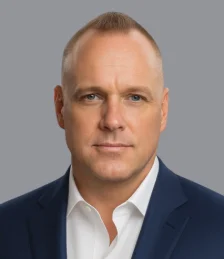
“They are looking for specialists who can interpret a Socotra policy object, trace a Duck Creek billing event through the ledger, and identify why a webhook payload from their telematics provider is generating a 500 error in their UBI pricing engine. That is a different hiring profile entirely.”
When a driver disputes a trip-based premium adjustment, resolution requires a specialist who understands the telematics event payload, the scoring algorithm’s input variables and the policyholder’s contractual rights — simultaneously. Generic BPO agents cannot resolve UBI disputes; they generate regulatory complaints.
Why is HITRUST CSF the institutional trust moat that determines which insurtech platforms win partner integrations?
In 2026 the insurtech growth ceiling is institutional credibility, not acquisition capacity. Carriers, reinsurers and embedded distribution partners require documented data governance before executing integration agreements. HITRUST CSF certification is the signal that unlocks them.
The cheapest column in this table is the most expensive one on your P&L.
Every other vendor’s calculator stops at the seat rate. Ours doesn’t, because on API-first operations the seat rate is where Operational Debt begins.
The global-BPO seat costs more up front — and Operational Debt compounds on top of it. Illustrative projection at standard role mix; labor savings run 55–60% vs. an equivalent in-house or onshore build, with the vetted seat priced below a global BPO’s. We confirm exact figures — labor line and full dividend — against your stack, event volumes, and partner-integration pipeline.
Indicative 2026 rates — the compound profile shown role by role, not blended.
Most rate cards flatten every role to a band. Ours shows the spread deliberately, because the spread is the argument: a compound-profile specialist — insurance literacy, API literacy, and model-specific training in one hire — costs about $2 an hour less at a mid-sized, insurance-specialized provider than the global BPO’s generalist, at both ends of every band, and returns the difference many times over in escalations that never happen. A quote at the generic band for an API-layer role is Friction Point 01 with a price tag.
The two roles global BPOs rarely staff are the point: 76% of providers claiming API capability failed a live webhook-failure diagnosis (PITON-Global Q2 2026 insurtech audit cohort), because they staff those seats from a generalist pool. Rates confirmed per engagement against stack and event volumes. Global BPO column: indicative 2026 rate cards of large global providers for the same roles, which typically run $14–$20 an hour for specialist roles; the PITON-Global-vetted band from mid-sized, specialized providers runs about $2 an hour lower at both ends of every row.
Price my stack against the compound-profile standard →Legacy BPO vs. the Technical Operations Extension.
The competitive delta between a legacy 2024 BPO baseline and the PITON-Global-vetted 2026 standard — across eight dimensions that determine velocity, fraud integrity and institutional credibility.
How a digital MGA reclaimed 580 engineering hours a month.
A documented Q4 2025 engagement: a US-based MGA running a digital distribution platform for embedded business insurance, processing 6,200 monthly policy events across three embedded partners, deploying a 20-specialist Philippine Technical Operations team.
One layer, one queue — an API-triage-only deployment, measured.
The flagship engagement proves the three-layer extension; The digital MGA proves the three-layer extension; the API-first insurance platform proves the entry point. A platform doesn’t need a claims transformation to get its engineers back — a single governed layer, placed between the event stream and the sprint board, cleared the escalation queue in one quarter with the rest of the stack untouched. Operational Debt is paid down the way it accrued: one layer at a time.
We had been running a Philippine BPO for 18 months on our UBI platform and watching our DOI complaint rate creep upward without being able to identify the root cause. PITON-Global’s audit found our agents had received zero telematics-specific training — they were explaining trip-score calculations using generic insurance language that bore no relationship to how our algorithm actually worked. The complaints were the symptom. The training deficit was the cause.
How the three-layer architecture eliminates Operational Debt while building institutional trust.
A three-layer system designed specifically for API-first insurtech platforms — an API Integration Layer that absorbs operational complexity, a Forensic Claims & Underwriting Layer that delivers 99.5% accuracy, and a Compliance Telemetry Layer that maintains HITRUST CSF as a live institutional trust signal.
Two insurtech-specific friction points that cause generic BPO to compound — not clear — Operational Debt.
The API Support Gap and the UBI & Embedded Logic Deficit are specific to digital insurance operations and cannot be resolved by traditional BPO profiles. Both are auditable before contract execution. Both generate the Operational Debt they were hired to eliminate.
The Algorithmic Certainty Paradox: automated underwriting without human verification creates the reserve risk it was designed to eliminate.
Algorithmic certainty depends entirely on the quality of the data inputs — and input quality depends on the operational layer that collects, verifies and structures risk data before it reaches the model. When that layer is a generic BPO with no insurance literacy, the algorithm receives incomplete, inconsistent and occasionally fabricated risk data, and produces confident-looking outputs that generate reserve inadequacy and adverse selection the loss experience eventually reveals.
The 28% quote-to-bind improvement we document is not a technology improvement — it is a data quality improvement. When a Philippine specialist with insurance literacy structures the risk data before it enters the algorithm, the model receives better inputs and produces more accurate outputs. The claims that follow are consistent with the premium charged. That is Algorithmic Certainty — an operational achievement, not a technology one.
Where the Technical Operations Extension doesn’t fit.
What insurtech leaders ask before they outsource.
In-depth answers to the questions that decide an insurtech engagement — from the principals who run them.

Insurtech outsourcing in the Philippines: operations that keep pace with product velocity
Insurtech outsourcing to the Philippines gives digital insurers, MGAs built on modern platforms, embedded insurance providers and insurance software companies a team for the operations that growth creates faster than engineering can automate: customer support across chat and app, policy servicing exceptions, claims intake and fast-track handling, underwriting referrals that fall outside automated rules, partner and distribution support, and the operational data work behind pricing and product teams. Insurtechs win on experience and speed; operations have to match the product.
Filipino teams combine insurance knowledge with digital support skills and already serve insurtechs in the US, UK and Australia, working in modern policy platforms, ticketing systems and claims tools. Hubs in Manila, Cebu and Clark run 24/7 for app users and scale with growth stages. This section describes how operations are organized around an automated insurance product. Our guide to customer experience in insurtech outsourcing covers the wider picture.
Digital-first customer support
Insurtech customers expect answers in chat and in-app messaging within minutes, with voice for complex or emotional moments such as a claim. Support agents work in ticketing and messaging tools integrated with the policy platform, resolve coverage, billing and document questions on the spot and route licensed tasks appropriately. Tone matches the brand: plain language, no jargon, no forms where a message will do.
Support data feeds product. Agents tag contact reasons, and weekly reports show which flows confuse customers and where automation could remove a contact entirely. See insurance back-office and CX for traditional carrier models.
Exceptions: servicing, underwriting and claims
Automated platforms handle the majority of quotes, binds, endorsements and simple claims. The exceptions, such as unusual risks, document mismatches, failed identity checks, mid-term changes the flow does not support and claims with inconsistencies, need people. Exception desks work these queues with clear rules and service levels, so the product stays fast even when the rule fails.
Underwriting referrals go to licensed underwriters with files prepared by the support team; claims fast-track desks handle low-complexity claims under authority limits and escalate others to adjusters. See underwriting support and insurance claims processing for the full functions.
Pet, travel, gig and new-category insurance
Insurtechs have opened new categories: pet insurance, embedded travel cover, gig worker protection, parametric products, usage-based auto and on-demand cover. Each has unusual service patterns. Pet claims arrive with vet invoices and medical histories; parametric products pay on triggers and need clear explanation; usage-based products generate data questions; gig cover turns on and off with work.
Support teams learn each product deeply and build knowledge bases around real customer questions rather than policy documents. Claims fast-track desks for small, frequent claims in these categories keep customers happy and costs low.
Data operations for pricing and product teams
Insurtechs compete on data: pricing models, risk selection and product design built from internal and external data. Data operations teams clean and label claims and policy data, enrich with third-party data, maintain the datasets pricing teams use and produce the regulatory reporting that filings require. Clean data operations let small actuarial and data science teams move quickly.
Model governance applies: data lineage, documentation and bias testing matter in insurance, where unfair discrimination rules constrain what variables may be used. Data teams keep the documentation that regulators and auditors ask for.
Embedded and partner support
Many insurtechs distribute through partners: retailers, lenders, platforms and apps that embed insurance at the point of sale. Partner support desks help partners with integration questions, policy lookups, commission statements and customer escalations, and monitor embedded flows for errors that would otherwise surface as customer complaints.
Partner data reconciliation, such as matching policies sold to partner records and settling commissions, is a steady operational task. See embedded finance operations for the fintech equivalent.
Compliance at speed and choosing a partner
Insurtechs are regulated like any insurer, with licensing, disclosures, complaint handling and privacy rules in every market they enter. Vendors keep licensed tasks with licensed staff, apply approved scripts in digital channels and support regulatory filings and examinations. Growth into new states or countries means new rules, and support teams are trained before launch.
When you compare vendors, ask about modern platform experience, chat and messaging quality, exception handling design, licensed staff availability and how fast they scale. Vetted mid-sized Philippine providers usually start insurtech programs with 5 to 50 people and report first response time, resolution in channel, exception turnaround, complaint rate and customer rating. See fintech outsourcing for adjacent digital finance operations.
Also serving: insurtech sits in our BFSI hub. Related pages: insurance outsourcing, insurance back-office and CX and embedded finance operations.
Why does the cheapest insurtech BPO seat end up costing us engineering roadmap?
Because a generic agent who hits a 422 error escalates it — adding a handoff to a fix a platform-trained specialist closes in 12 minutes. In audits, 76% of providers claiming API capability couldn’t diagnose a webhook authentication failure. MGA the digital MGA deployed a 20-specialist API-first team: escalations to engineering fell from 340 to 22 a month, returning 580 engineering hours monthly.
BPO Suppliers
Platforms Served
Delivering for Clients
Insurtech success is no longer defined by how fast you acquire customers — it is defined by how fast you settle claims and clear underwriting backlogs without compromising your Technical Sovereignty. The Philippines has become a Technical Operations Extension that integrates natively into your API ecosystem.
Policyholder service first, claims second: the functions digital carriers outsource, by how early they move them.
Your stack, your distribution, and where your Operational Debt compounds.
Growth arrives as event volume, and event volume arrives as escalations. API-layer triage, policy operations, and claims at platform scale — integrated to Guidewire, Duck Creek, or Socotra, so your engineers ship roadmap instead of resolving 401s.
Program scale is a document problem before it’s a distribution problem. Submission intake, risk-data structuring, and quote-to-bind support that feeds your underwriting model clean inputs — +60% throughput, 28% faster to bind.
The hardest workflows to staff in insurance: telematics dispute resolution and partner-API operations demand the compound profile generic pools can’t supply. Model-trained specialists holding a 0.4/1,000 DOI complaint rate against a 3.1 industry average.
High-volume claims with someone else’s brand on the outcome. Agentic FNOL at 99.5% capture, forensic HITL with 82% staged-loss detection, and the empathy layer on every sensitive notification — under HITRUST governance your carrier clients can audit.
Why does fast-growing insurtech consistently accumulate Operational Debt — and what is the architectural fix?
Operational Debt compounds in claims cycle time, underwriting bottlenecks and regulatory exposure — until the velocity that made the platform successful becomes the liability that threatens it. It cannot be cleared by a generic BPO operating at the ticket layer.
A Technical Operations Extension is a Philippine-based partner team that integrates at the API layer rather than the ticket layer, understands the interplay between policyholder data and platform architecture, and operates under HITRUST CSF governance that satisfies the institutional trust requirements of carriers, reinsurers and embedded distribution partners.
“The third insurtech cohort I see failing in 2026 engaged a generic BPO to manage API-first operations with agents who did not understand the difference between a 401 Unauthorized and a 422 Unprocessable Entity. The platform’s technical architecture had outpaced its operational support architecture. We close that gap.”
What does a genuine API-first extension look like — and why are UBI and embedded the hardest workflows to staff?
An API-First Technical Operations Extension is not a help desk trained on your portal — it is a specialist team that understands your data model, webhook structure and claims API schema. UBI and embedded add a compound skill profile generic BPO talent pools cannot supply.
“They are looking for specialists who can interpret a Socotra policy object, trace a Duck Creek billing event through the ledger, and identify why a webhook payload from their telematics provider is generating a 500 error in their UBI pricing engine. That is a different hiring profile entirely.”
When a driver disputes a trip-based premium adjustment, resolution requires a specialist who understands the telematics event payload, the scoring algorithm’s input variables and the policyholder’s contractual rights — simultaneously. Generic BPO agents cannot resolve UBI disputes; they generate regulatory complaints.
Embedded insurance activates a policy at a distribution partner’s checkout — a flow where the support specialist must understand the partner’s API, the policy activation logic and the customer journey at once. The capability is a compound of insurance, technical and partner-integration literacy.
Agentic FNOL triage scores severity and verifies policy in seconds; a forensic HITL layer catches staged-loss patterns AI alone cannot. An empathy specialist layer handles total-loss and sensitive claims with zero AI language and a trauma-informed protocol. Forensic FNOL runs at 99.5% — the same Agentic FNOL Triage layer documented on our insurance operations.
Why is HITRUST CSF the institutional trust moat that determines which insurtech platforms win partner integrations?
In 2026 the insurtech growth ceiling is institutional credibility, not acquisition capacity. Carriers, reinsurers and embedded distribution partners require documented data governance before executing integration agreements. HITRUST CSF certification is the signal that unlocks them.
The cheapest column in this table is the most expensive one on your P&L.
Every other vendor’s calculator stops at the seat rate. Ours doesn’t, because on API-first operations the seat rate is where Operational Debt begins.
The global-BPO seat costs more up front — and Operational Debt compounds on top of it. Illustrative projection at standard role mix; labor savings run 55–60% vs. an equivalent in-house or onshore build, with the vetted seat priced below a global BPO’s. We confirm exact figures — labor line and full dividend — against your stack, event volumes, and partner-integration pipeline.
Indicative 2026 rates — the compound profile shown role by role, not blended.
Most rate cards flatten every role to a band. Ours shows the spread deliberately, because the spread is the argument: a compound-profile specialist — insurance literacy, API literacy, and model-specific training in one hire — costs about $2 an hour less at a mid-sized, insurance-specialized provider than the global BPO’s generalist, at both ends of every band, and returns the difference many times over in escalations that never happen. A quote at the generic band for an API-layer role is Friction Point 01 with a price tag.
The two roles global BPOs rarely staff are the point: 76% of providers claiming API capability failed a live webhook-failure diagnosis (PITON-Global Q2 2026 insurtech audit cohort), because they staff those seats from a generalist pool. Rates confirmed per engagement against stack and event volumes. Global BPO column: indicative 2026 rate cards of large global providers for the same roles, which typically run $14–$20 an hour for specialist roles; the PITON-Global-vetted band from mid-sized, specialized providers runs about $2 an hour lower at both ends of every row.
Price my stack against the compound-profile standard →Legacy BPO vs. the Technical Operations Extension.
The competitive delta between a legacy 2024 BPO baseline and the PITON-Global-vetted 2026 standard — across eight dimensions that determine velocity, fraud integrity and institutional credibility.
How a digital MGA reclaimed 580 engineering hours a month.
A documented Q4 2025 engagement: a US-based MGA running a digital distribution platform for embedded business insurance, processing 6,200 monthly policy events across three embedded partners, deploying a 20-specialist Philippine Technical Operations team.
One layer, one queue — an API-triage-only deployment, measured.
The flagship engagement proves the three-layer extension; The digital MGA proves the three-layer extension; the API-first insurance platform proves the entry point. A platform doesn’t need a claims transformation to get its engineers back — a single governed layer, placed between the event stream and the sprint board, cleared the escalation queue in one quarter with the rest of the stack untouched. Operational Debt is paid down the way it accrued: one layer at a time.
We had been running a Philippine BPO for 18 months on our UBI platform and watching our DOI complaint rate creep upward without being able to identify the root cause. PITON-Global’s audit found our agents had received zero telematics-specific training — they were explaining trip-score calculations using generic insurance language that bore no relationship to how our algorithm actually worked. The complaints were the symptom. The training deficit was the cause.
How the three-layer architecture eliminates Operational Debt while building institutional trust.
A three-layer system designed specifically for API-first insurtech platforms — an API Integration Layer that absorbs operational complexity, a Forensic Claims & Underwriting Layer that delivers 99.5% accuracy, and a Compliance Telemetry Layer that maintains HITRUST CSF as a live institutional trust signal.
Two insurtech-specific friction points that cause generic BPO to compound — not clear — Operational Debt.
The API Support Gap and the UBI & Embedded Logic Deficit are specific to digital insurance operations and cannot be resolved by traditional BPO profiles. Both are auditable before contract execution. Both generate the Operational Debt they were hired to eliminate.
The Algorithmic Certainty Paradox: automated underwriting without human verification creates the reserve risk it was designed to eliminate.
Algorithmic certainty depends entirely on the quality of the data inputs — and input quality depends on the operational layer that collects, verifies and structures risk data before it reaches the model. When that layer is a generic BPO with no insurance literacy, the algorithm receives incomplete, inconsistent and occasionally fabricated risk data, and produces confident-looking outputs that generate reserve inadequacy and adverse selection the loss experience eventually reveals.
The 28% quote-to-bind improvement we document is not a technology improvement — it is a data quality improvement. When a Philippine specialist with insurance literacy structures the risk data before it enters the algorithm, the model receives better inputs and produces more accurate outputs. The claims that follow are consistent with the premium charged. That is Algorithmic Certainty — an operational achievement, not a technology one.
Where the Technical Operations Extension doesn’t fit.
What insurtech leaders ask before they outsource.
In-depth answers to the questions that decide an insurtech engagement — from the principals who run them.
Insurtech outsourcing in the Philippines: operations that keep pace with product velocity
Insurtech outsourcing to the Philippines gives digital insurers, MGAs built on modern platforms, embedded insurance providers and insurance software companies a team for the operations that growth creates faster than engineering can automate: customer support across chat and app, policy servicing exceptions, claims intake and fast-track handling, underwriting referrals that fall outside automated rules, partner and distribution support, and the operational data work behind pricing and product teams. Insurtechs win on experience and speed; operations have to match the product.
Filipino teams combine insurance knowledge with digital support skills and already serve insurtechs in the US, UK and Australia, working in modern policy platforms, ticketing systems and claims tools. Hubs in Manila, Cebu and Clark run 24/7 for app users and scale with growth stages. This section describes how operations are organized around an automated insurance product. Our guide to customer experience in insurtech outsourcing covers the wider picture.
Digital-first customer support
Insurtech customers expect answers in chat and in-app messaging within minutes, with voice for complex or emotional moments such as a claim. Support agents work in ticketing and messaging tools integrated with the policy platform, resolve coverage, billing and document questions on the spot and route licensed tasks appropriately. Tone matches the brand: plain language, no jargon, no forms where a message will do.
Support data feeds product. Agents tag contact reasons, and weekly reports show which flows confuse customers and where automation could remove a contact entirely. See insurance back-office and CX for traditional carrier models.
Exceptions: servicing, underwriting and claims
Automated platforms handle the majority of quotes, binds, endorsements and simple claims. The exceptions, such as unusual risks, document mismatches, failed identity checks, mid-term changes the flow does not support and claims with inconsistencies, need people. Exception desks work these queues with clear rules and service levels, so the product stays fast even when the rule fails.
Underwriting referrals go to licensed underwriters with files prepared by the support team; claims fast-track desks handle low-complexity claims under authority limits and escalate others to adjusters. See underwriting support and insurance claims processing for the full functions.
Pet, travel, gig and new-category insurance
Insurtechs have opened new categories: pet insurance, embedded travel cover, gig worker protection, parametric products, usage-based auto and on-demand cover. Each has unusual service patterns. Pet claims arrive with vet invoices and medical histories; parametric products pay on triggers and need clear explanation; usage-based products generate data questions; gig cover turns on and off with work.
Support teams learn each product deeply and build knowledge bases around real customer questions rather than policy documents. Claims fast-track desks for small, frequent claims in these categories keep customers happy and costs low.
Data operations for pricing and product teams
Insurtechs compete on data: pricing models, risk selection and product design built from internal and external data. Data operations teams clean and label claims and policy data, enrich with third-party data, maintain the datasets pricing teams use and produce the regulatory reporting that filings require. Clean data operations let small actuarial and data science teams move quickly.
Model governance applies: data lineage, documentation and bias testing matter in insurance, where unfair discrimination rules constrain what variables may be used. Data teams keep the documentation that regulators and auditors ask for.
Embedded and partner support
Many insurtechs distribute through partners: retailers, lenders, platforms and apps that embed insurance at the point of sale. Partner support desks help partners with integration questions, policy lookups, commission statements and customer escalations, and monitor embedded flows for errors that would otherwise surface as customer complaints.
Partner data reconciliation, such as matching policies sold to partner records and settling commissions, is a steady operational task. See embedded finance operations for the fintech equivalent.
Compliance at speed and choosing a partner
Insurtechs are regulated like any insurer, with licensing, disclosures, complaint handling and privacy rules in every market they enter. Vendors keep licensed tasks with licensed staff, apply approved scripts in digital channels and support regulatory filings and examinations. Growth into new states or countries means new rules, and support teams are trained before launch.
When you compare vendors, ask about modern platform experience, chat and messaging quality, exception handling design, licensed staff availability and how fast they scale. Vetted mid-sized Philippine providers usually start insurtech programs with 5 to 50 people and report first response time, resolution in channel, exception turnaround, complaint rate and customer rating. See fintech outsourcing for adjacent digital finance operations.
Also serving: insurtech sits in our BFSI hub. Related pages: insurance outsourcing, insurance back-office and CX and embedded finance operations.