

On this page
- Key Takeaways
- Which Operational Metrics Warrant Enforceable Financial Penalties?
- How Should Credits Be Tiered and Capped?
- How Can Contracts Balance Strict Penalties with Sustainable Vendor Operations?
- When Should Penalties Not Apply at All?
- What Does a Restructured Penalty Framework Deliver in Practice?
- Why Partner with PITON-Global for Strategic Offshore BPO Selection?
- Frequently Asked Questions
Enterprises should establish financial remedies for offshore service level failures through tiered service credits sized as a share of monthly management fees. Contracts should link penalties directly to core operational indicators such as First Contact Resolution, measured against the targets behind each contact center KPI, while maintaining reasonable liability caps and earn-back clauses that preserve long-term vendor alignment.
Key Takeaways
- Tiered service credits. Scale penalties from a small credit for minor KPI breaches up to a substantial share of the fee for chronic, severe operational failure.
- Core metric focus. Restrict financial penalties to critical indicators: First Contact Resolution, schedule adherence, and security uptime.
- Liability capping. Cap total monthly deductions at a fixed share of the aggregate invoice so penalties never threaten vendor solvency.
- Earn-back mechanisms. Let providers recoup a portion of deducted credits where performance rebounds across consecutive quarters.
- Advisory risk mitigation. Use independent advisory frameworks to negotiate structures that enforce accountability without triggering supplier distress.
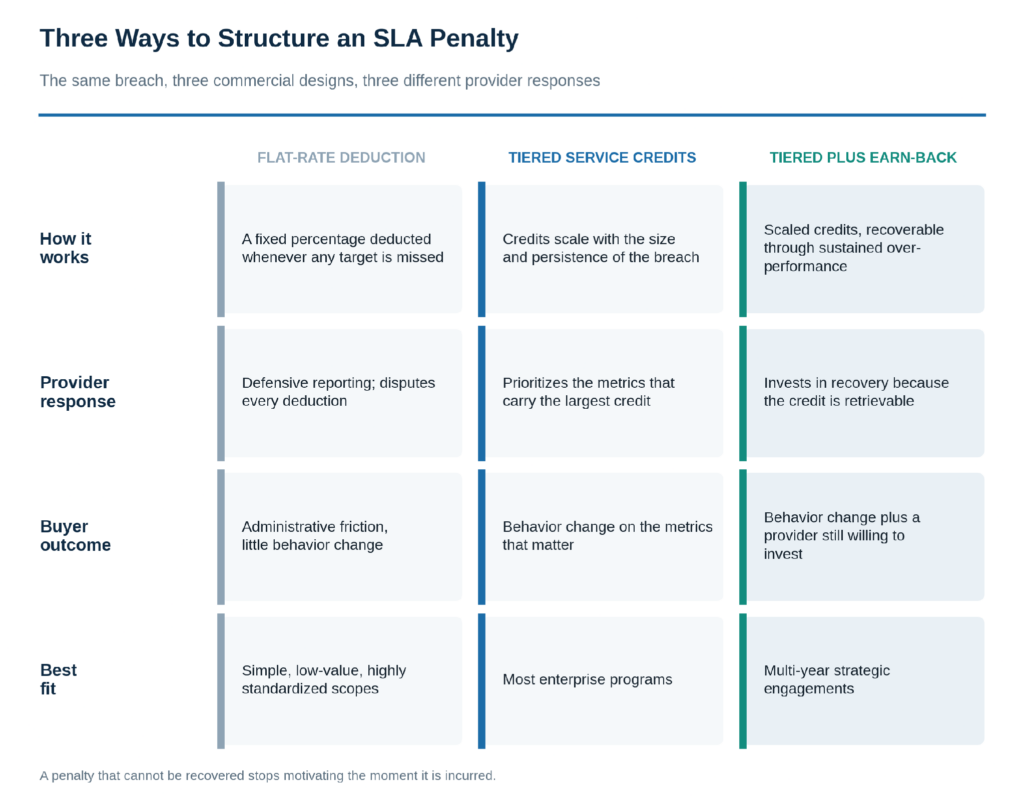
Figure 1. Three ways to structure an SLA penalty, and the provider response each design produces.
Which Operational Metrics Warrant Enforceable Financial Penalties?
Restrict credits to indicators that signal systemic degradation and directly affect customer experience: First Contact Resolution, schedule adherence, Average Speed of Answer under 30 seconds, and quality assurance, each against an agreed threshold. Blanket penalties across every reported metric create friction without changing behavior.
Drafting a master services agreement with a provider in Metro Manila, Cebu, or Clark means deciding which failures are worth a deduction. The instinct is to attach a remedy to everything measured, which produces a scorecard nobody manages deliberately and a monthly reconciliation exercise that consumes governance time. Four well-chosen indicators tell you whether the service is systemically degrading; the rest, such as average handle time, tell you why.
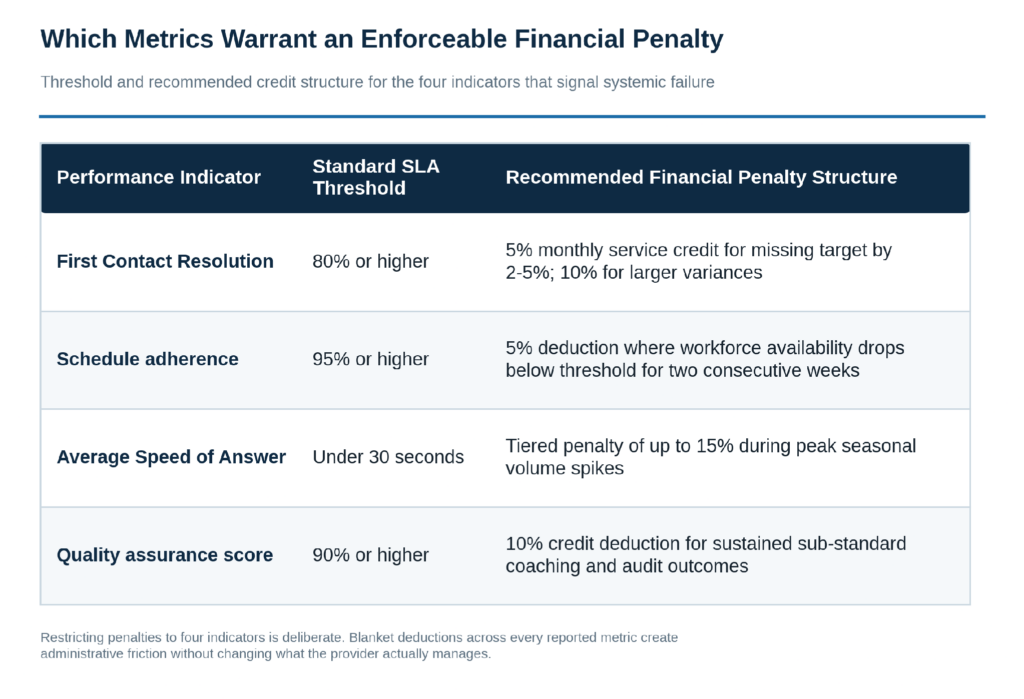
Figure 2. The four indicators that warrant an enforceable penalty, with thresholds and recommended credit structures.
Tie the Credit to the Size of the Miss
A binary penalty treats a one-point miss identically to a ten-point collapse, which is neither fair nor useful. Graduated tiers — a smaller credit for missing First Contact Resolution by two to five points, a larger one for bigger variances — make the remedy proportionate and give the provider a reason to arrest a slide early rather than accepting the deduction as a fixed cost.
Require Persistence Before Deducting
Single-month variance is often noise: a seasonal spike, a product incident, an unusual contact mix. Schedule adherence penalties applying after two consecutive weeks below threshold, and quality deductions applying only to sustained sub-standard audit outcomes, focus the remedy on systemic failure rather than on anomalies. This is also what makes the penalty defensible in a governance meeting.
Handle Peak Seasons Explicitly
Average Speed of Answer carries a higher tier during peak volume precisely because that is when the metric matters most to the customer. The corollary is that the volume band triggering peak treatment must be agreed in advance: penalizing a provider for queue times generated by a surge well beyond the forecast it staffed against transfers a buyer forecasting problem into a vendor performance failure.
How Should Credits Be Tiered and Capped?
Individual tiers scale with severity and persistence as a share of the monthly fee. Because credits aggregate across metrics, cap total monthly deductions at a fixed share of the aggregate invoice — without a ceiling, a single bad month can remove a provider’s entire margin on the account.
The aggregate cap is the clause buyers most often overlook and providers most often need. Metrics do not fail independently: an understaffed month depresses adherence, lengthens answer times, and drags resolution rates simultaneously, so the tiers that looked modest in isolation can stack into a deduction no provider can absorb.
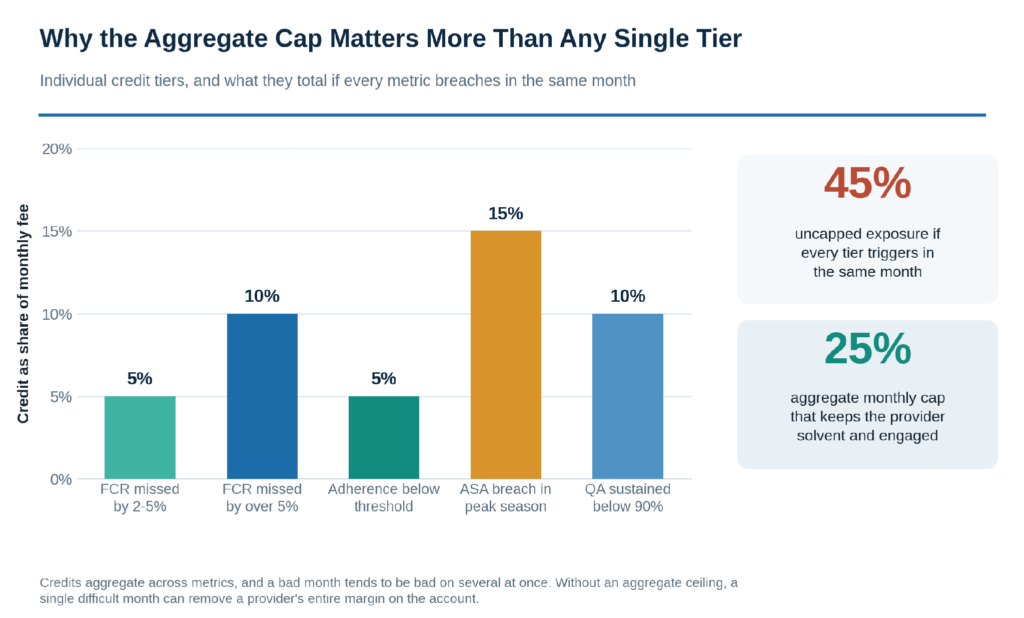
Figure 3. Individual credit tiers and what they total if every metric breaches in the same month.
Why Capping Protects the Buyer, Not the Vendor
A cap looks like a concession and functions as self-protection. A provider facing an uncapped deduction that exceeds its margin on the account has three options: dispute everything, cut the delivery inputs the buyer cannot see, or exit. None of them produces the service recovery the penalty was designed to buy. The ceiling keeps the provider solvent enough to fix the problem, which is the actual objective.
Leave Room Above the Cap for Other Remedies
Credits are not the only remedy and should not be asked to do everything. Where failure persists past the cure period at ceiling credits, the contract should open other routes — step-in rights, a remediation plan with executive sponsorship, and ultimately termination for cause with no exit fee. A structure that relies on credits alone runs out of options exactly when it needs more.
How Can Contracts Balance Strict Penalties with Sustainable Vendor Operations?
Pair deductions with monthly liability caps, cure periods of 30 to 60 days, and collaborative root-cause analysis before credits apply. Overly punitive sanctions produce agent demoralization, higher turnover, and supplier withdrawal — outcomes that damage service more reliably than the failure being penalized.
Philippine providers operate under strict labor statutes and mandatory statutory benefits, so payroll is a fixed obligation regardless of what a credit removes from the invoice. A penalty structure that compromises a provider’s ability to cover baseline payroll does not create accountability; it creates the attrition that guarantees the next failure. Underestimating local attrition dynamics or mandatory training curves is the fastest way to destabilize a program you were trying to protect.
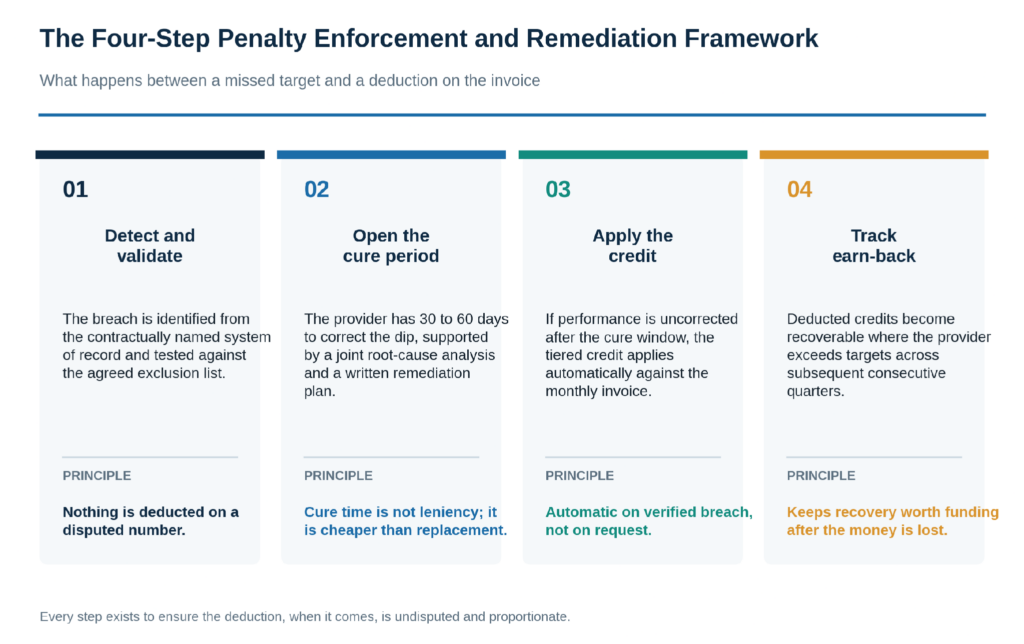
Figure 4. The four-step enforcement and remediation framework, from detection through cure period to earn-back.
The Cure Period Is Cheaper Than the Alternative
Giving the provider 30 to 60 days to correct a dip before credits are formally deducted is not leniency. It is a recognition that recovery is cheaper than replacement, and that a joint root-cause analysis conducted while the problem is live produces better information than a post-hoc deduction. Where the dip is corrected inside the window, the buyer gets the service it wanted rather than a discount on service it did not.
Earn-Back Keeps Recovery Worth Funding
Once credits are deducted, a provider has no financial reason to invest in recovery unless the money is retrievable. Earn-back clauses that return a portion of assessed credits after sustained over-performance — commonly three consecutive quarters — keep the incentive alive at exactly the point where the relationship is under strain, the same logic that underpins performance-based contracts in call center services.
Many corporate buyers make the mistake of treating penalty clauses as a weapon rather than an operational safeguard. Well-structured agreements align financial consequences with realistic labor market benchmarks, ensuring the provider remains financially stable while fiercely protecting client service standards.
— John Maczynski, CEO, PITON-Global
When Should Penalties Not Apply at All?
Exempt failures the provider does not control: force majeure events such as major typhoons or widespread telecommunications outages, client-side system outages and unannounced changes, volume beyond agreed elasticity bands, and single-month anomalies that have not persisted.
Exclusions are frequently treated as concessions extracted by the vendor. They are better understood as what keeps the remaining penalties enforceable. A framework that deducts credits for a buyer’s own API change or for a regional grid failure will be disputed every time it triggers, and a remedy contested at every application stops functioning as an incentive and becomes a monthly negotiation.
Write the Exclusion List Before the First Measurement Period
Name the excluded events, the evidence required to invoke them, and who decides. In the Philippine context this means addressing typhoon season and telecommunications disruption specifically rather than relying on a generic force majeure clause — and pairing the exemption with an obligation on the provider to maintain a tested continuity plan, so the carve-out covers genuine disruption rather than under-investment.
What Does a Restructured Penalty Framework Deliver in Practice?
A digital banking platform facing escalations and customer churn with no contractual recourse moved to tiered credits on First Contact Resolution, strict liability caps, and a 30-day cure period. Resolution improved markedly, dispute resolution cycles fell sharply, and accountability held across a three-year term.
Client Challenge
A rapid-growth digital banking platform was experiencing frequent escalations and customer churn, the kind of damage that shows up first in falling CSAT scores, because its legacy Philippine provider was missing critical resolution timeframes. The agreement described the expected performance but attached no financial consequence, so a persistent shortfall was a governance discussion rather than a commercial event and nothing about the provider’s economics changed when service slipped.
Vendor Selection Process
PITON-Global audited the existing vendor terms to establish exactly which remedies were missing, then matched the client with a top-tier financial services provider from its network of more than 100 Philippine providers already operating balanced SLA frameworks. Willingness to accept automatic credits and an aggregate cap was treated as a screening criterion, which narrowed the field to providers confident in their delivery.
Solution Implemented
The new agreement embedded a dynamic penalty structure: tiered service credits triggered by First Contact Resolution drops, a strict aggregate liability cap on monthly deductions, a structured 30-day cure period before credits applied, and earn-back available on sustained quarterly recovery.
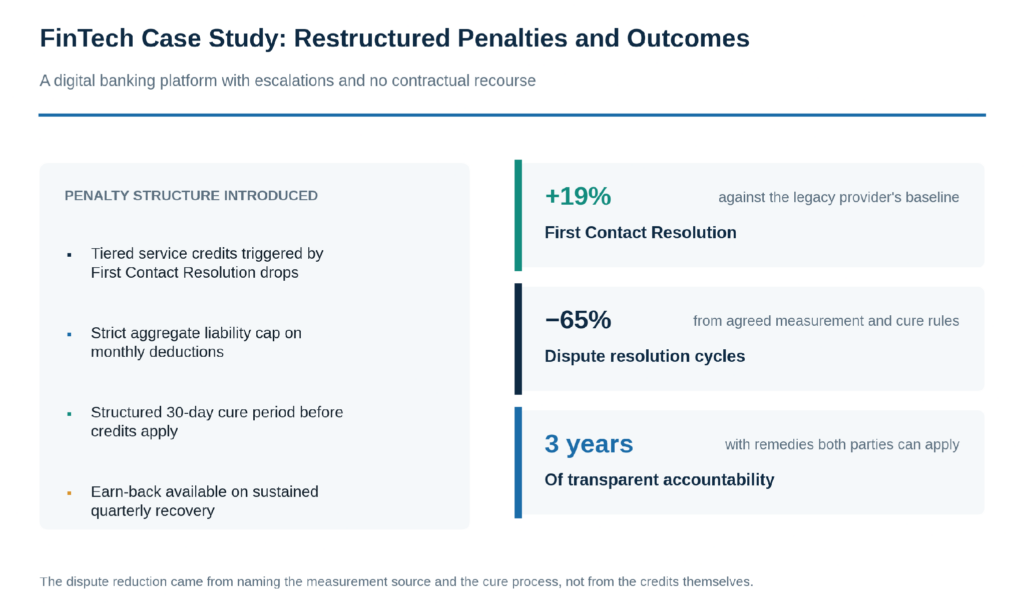
Figure 5. The penalty structure introduced and the outcomes it produced across the three-year agreement.
Outcomes and Lessons
First Contact Resolution improved markedly, dispute resolution cycles shortened sharply, and accountability became transparent across a three-year contract. The dispute reduction is the more transferable finding: it came from naming the measurement source and the cure process rather than from the credits themselves, which means most of that gain is available inside an existing agreement through amendment. Enforceable remedies paired with clear cure periods preserve collaboration while eliminating persistent underperformance.
Why Partner with PITON-Global for Strategic Offshore BPO Selection?
PITON-Global is a BPO advisory and outsourcing consultancy offering advisory-led matching across a curated network of more than 100 top-tier Philippine providers, combining operational benchmarking with contract risk evaluation to reduce exposure and accelerate negotiation.
Who Is PITON-Global?
PITON-Global advises enterprise buyers on Philippine outsourcing across provider selection, performance benchmarking, and commercial structuring. Its relevance to penalty design is practical: whether a proposed credit structure is enforceable depends on whether the provider has the margin headroom to absorb it and the remediation capability to recover from it. In a market of more than 1,000 providers, neither of those is visible from a rate card or a capability deck.
How Does PITON-Global Differ from Traditional Outsourcing Brokers?
Traditional intermediaries earn on placement, which narrows the recommendation set to whichever providers pay best and ends their involvement at introduction — before the remedies are drafted. An advisory-led model is organized around the buyer’s outcome: objective evaluation, recommendations that may include providers with no commercial relationship to the advisor, and continued engagement through structuring and governance. On penalty work the distinction matters, because an intermediary paid on placement has no reason to report that a shortlisted provider cannot survive the credit regime it has just agreed to.
How Does PITON-Global’s Network of 100+ Vetted Philippine BPO Providers Benefit Organizations?
Providers are assessed on performance evidence, financial resilience, penalty readiness, and remediation capability before reaching a buyer. The distinction that matters is between providers willing to sign a penalty regime and providers able to sustain one — a shortlist filtered on the second is materially different. Coverage spans voice and CX, back office and finance, financial services, technical support, and specialist verticals across Manila, Cebu, Clark, and Davao.
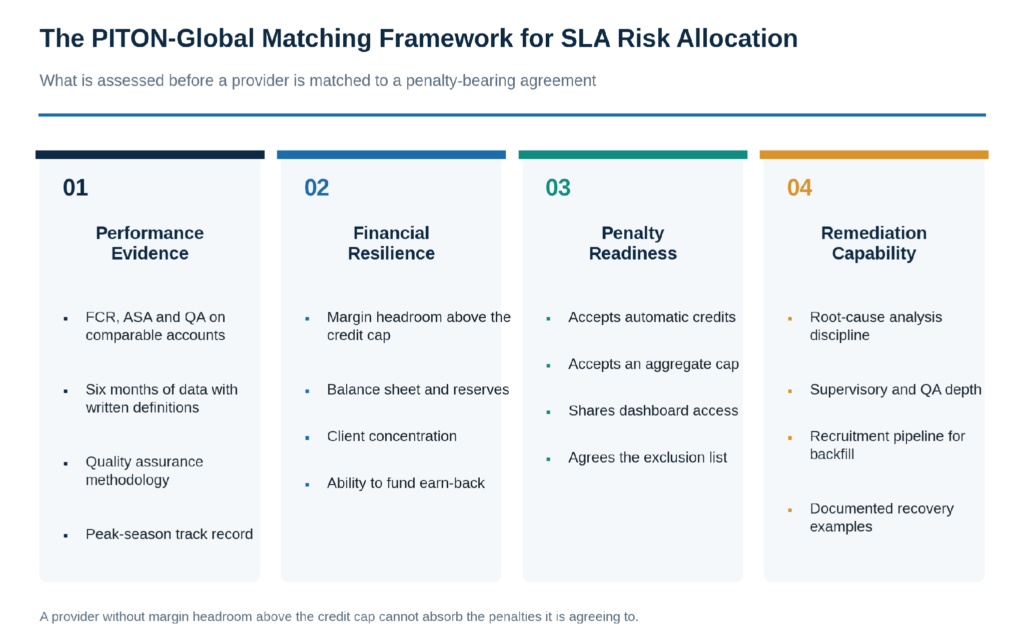
Figure 6. The matching framework for SLA risk allocation, applied before a provider is matched to a penalty-bearing agreement.
How Does PITON-Global’s Advisory-Led Vendor Matching Process Work?
Requirements, volumes, and target service levels are documented; the vetted network is filtered on domain expertise and capacity; candidates are assessed on account-level performance evidence, margin headroom against the proposed cap, and willingness to accept automatic remedies; and the buyer is supported through baseline measurement, credit tier design, exclusion drafting, and the governance cadence that applies the framework after signature.
Why Do Organizations Use PITON-Global?
- Enforceable remedies. Credit structures sized against what a provider can actually absorb rather than what it will agree to.
- Fewer disputes. Measurement sources, exclusions, and cure processes agreed before the first measurement period.
- Improved provider fit. Delivery capability and penalty readiness assessed together rather than traded against each other.
- Accelerated negotiation. Providers already operating balanced SLA frameworks remove entire rounds from contracting.
- Protected relationships. Accountability enforced without pushing a capable partner into distress or withdrawal.
Frequently Asked Questions
What is a standard monthly liability cap for BPO service credits?
Enterprise contracts typically cap total monthly deductions at a fixed, modest share of the aggregate monthly invoice. The cap exists to keep the provider financially able to remediate; deductions beyond that level tend to produce withdrawal rather than recovery.
How do cure periods function alongside SLA financial penalties?
A cure period gives the provider 30 to 60 days to correct a performance dip before credits are formally deducted from the billing cycle. It should be paired with a joint root-cause analysis and a written remediation plan, so the time is used rather than simply elapsed.
What are earn-back mechanisms in outsourcing contracts?
Earn-back clauses allow a provider to recover a percentage of previously assessed service credits by exceeding performance targets for a defined period, commonly three consecutive quarters. They keep recovery commercially worthwhile after the credits have already been taken.
How do force majeure events impact SLA penalty enforcement?
Contracts should exempt providers during extraordinary regional disruption such as major typhoons or widespread telecommunications outages. Pair the exemption with an obligation to maintain a tested business continuity plan, so the carve-out covers genuine events rather than under-investment in redundancy.
Why should penalties be tied to consecutive failures rather than single-month dips?
A grace period for single-month variance prevents penalizing a provider for anomalies and focuses financial remedies on systemic failure. It also makes the deduction easier to defend when it does apply, because the evidence shows a pattern rather than a bad month.
How do Philippine labor laws influence penalty negotiations?
Providers carry mandatory statutory benefits and fixed payroll obligations that do not flex when a credit reduces the invoice. Penalty structures must leave the provider able to cover baseline payroll, or the deduction produces the attrition that causes the next failure.