

On this page
- Key Takeaways
- Which Core Inspection Categories Belong in Philippine Offshore Contracts?
- How Do Local Regulatory Environments Shape Vendor Audit Requirements?
- How Often Should Audits Run, and What Should Trigger One?
- How Should Audit Rights Be Negotiated?
- What Does Restructuring Inspection Terms Deliver in Practice?
- Why Partner with PITON-Global for Strategic Offshore BPO Selection?
- Frequently Asked Questions
Enterprises outsourcing to the Philippines should negotiate audit rights covering financial transparency, operational security, data privacy compliance, and labor standards verification. A robust master services agreement mandates unannounced physical facility inspections, regular information security reviews, and full access to subcontractor performance tiers to prevent systemic vulnerabilities. Audit clauses are one part of the wider framework of offshore contract governance.
Key Takeaways
- Regulatory data alignment. Audit rights must explicitly cover the Philippine Data Privacy Act alongside GDPR or HIPAA obligations where they apply.
- Operational and security access. Mandate periodic review of physical security controls, N+1 power redundancy, and multi-carrier network failover.
- Financial and subcontractor transparency. Require visibility into pass-through costs, billing methodology, and every lower-tier vendor dependency.
- Unannounced inspection protocols. Retain the right to random, unannounced audits of agent workstations and data storage environments.
- Independent advisory benchmarking. Calibrate audit scope against current Philippine market practice rather than against a provider’s template.
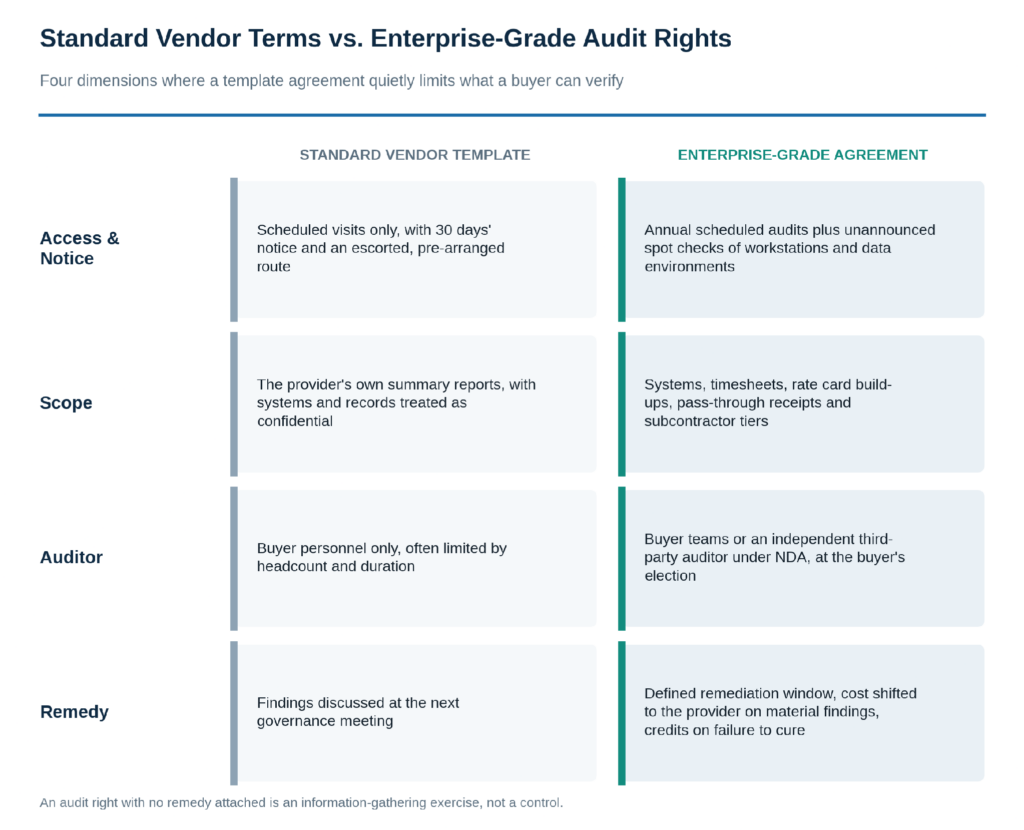
Figure 1. Standard vendor terms compared with enterprise-grade audit rights across access, scope, auditor, and remedy.
Which Core Inspection Categories Belong in Philippine Offshore Contracts?
Four categories, each with its own scope and cadence: information security and privacy reviewed semi-annually and after any incident, financial and billing transparency annually, operational and process compliance annually, and labor and workplace standards annually.
Procurement teams drafting agreements for delivery centers in Metro Manila, Cebu, or Clark routinely accept vendor templates that restrict inspection to scheduled, escorted visits reviewing the provider’s own summary reports. A single undifferentiated audit right produces a single undifferentiated site tour. Separating the right into four categories, each with a named evidence list, is what makes an audit produce findings rather than photographs.
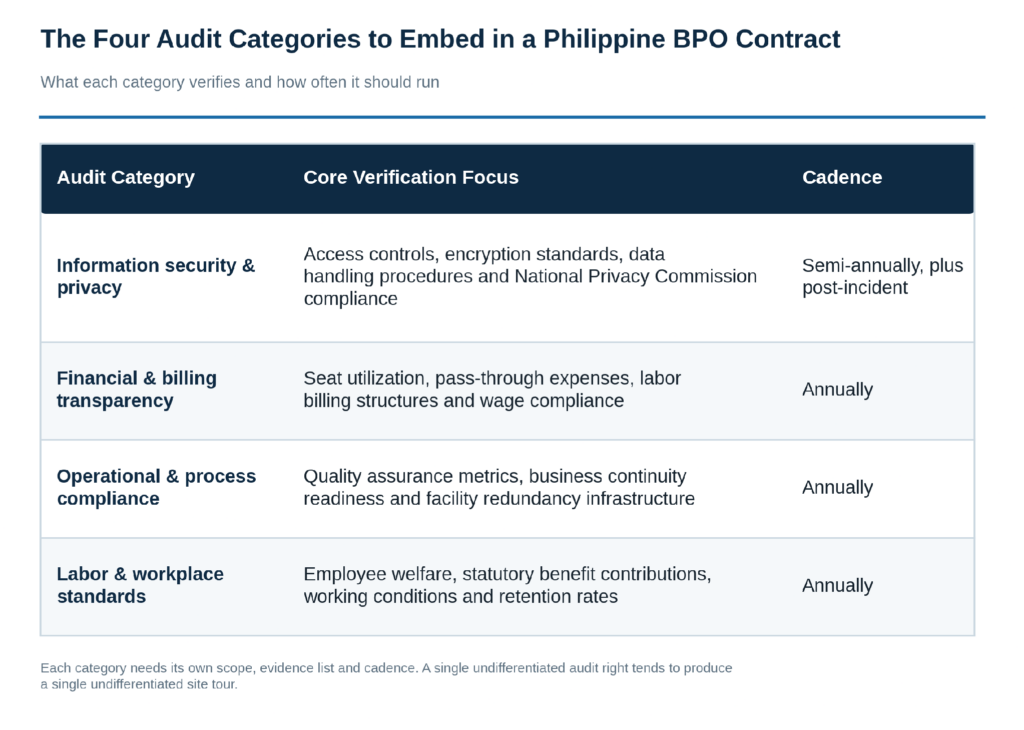
Figure 2. The four audit categories to embed in a Philippine BPO contract, with verification focus and cadence.
Financial and Billing Audits
Financial audits verify billing accuracy, staffing ratios, and resource allocation. The clauses that make them work are specific: access to timesheets, rate card build-ups, hardware amortization schedules, and original pass-through receipts. Without receipt-level access, a buyer can confirm what it was charged but not whether the charge reflects what the provider paid — which is precisely where license and telecom markups hide.
Information Security and Privacy Audits
Security audits test network perimeter defenses, endpoint controls, encryption standards, and data handling procedures against the Philippine Data Privacy Act and any applicable international framework. These warrant a semi-annual cadence rather than annual, and an automatic post-incident trigger, because the control environment changes faster than the contract year.
Operational and Labor Standards Audits
Operational audits cover quality assurance methodology, business continuity readiness, and facility redundancy. Labor audits cover statutory benefit remittances, working conditions, and retention. The labor category is the one most often omitted and the one that carries reputational exposure the buyer cannot contract away: the provider is the employer, but the buyer’s brand appears in the coverage if conditions fail. Audits are also easier when every site follows one process, the point of standardizing operations across locations.
How Do Local Regulatory Environments Shape Vendor Audit Requirements?
Philippine operations sit under the National Privacy Commission and the Department of Labor and Employment. Contracts must grant explicit rights to inspect data processing systems, Data Protection Officer registration, and employee compliance records — without them, a buyer carries regulatory exposure it has no mechanism to verify.
The exposure is asymmetric. A provider’s non-compliance with statutory remittances or data handling obligations becomes the buyer’s problem through service disruption, regulatory attention, and reputational damage, while the buyer’s ability to detect that non-compliance depends entirely on what the agreement permits. Attestation confirms the provider understands its obligations; access confirms it meets them, and only one of those is verifiable.
Write the Statutory Checks Into the Scope
Name the specific artifacts rather than the general right: National Privacy Commission registration and the designated Data Protection Officer, breach notification logs, SSS, PhilHealth and Pag-IBIG remittance schedules, 13th-month pay records, and night differential calculations. A general right to audit compliance produces a debate about what compliance means; a named evidence list produces documents.
Standard vendor agreements are deliberately designed to limit transparency, leaving buyers blind to operational vulnerabilities until a crisis occurs. Establishing rigorous, non-negotiable audit rights from the outset is the single most effective way enterprise leaders can protect their brand equity and ensure continuous service delivery in the Philippines.
— John Maczynski, CEO, PITON-Global
How Often Should Audits Run, and What Should Trigger One?
Run a comprehensive audit annually, security reviews semi-annually, quarterly documentary evidence packs without a site visit, and unannounced spot checks two to four times a year. Any material security incident should trigger an audit immediately, outside the calendar.
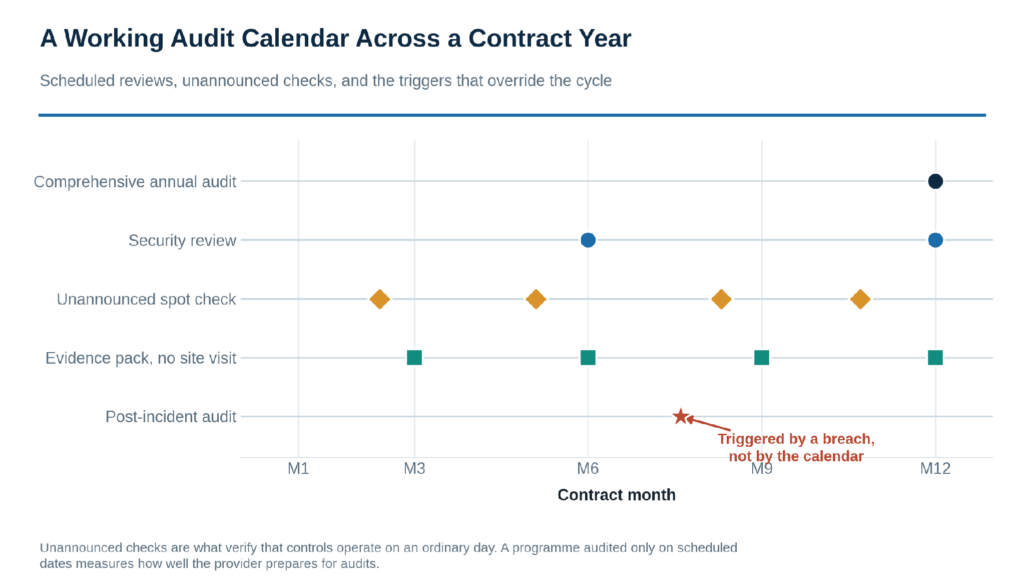
Figure 3. A working audit calendar across a contract year, including unannounced checks and incident triggers.
The unannounced element is what distinguishes verification from theatre. A program audited only on scheduled dates measures how well a provider prepares for audits, which is a genuine skill and an entirely different one from operating controls on an ordinary Tuesday. Clean-desk policies, workstation restrictions, and access controls are all trivially observable when nobody knew you were coming.
Make Unannounced Rights Workable
Unannounced does not mean unbounded, and providers resist open-ended rights for legitimate reasons — client confidentiality on shared floors, security escort requirements, and operational disruption. Define the scope of an unannounced visit in advance: which areas, how many people, maximum duration, and what evidence must be produced on the day. A bounded right that a provider can accept is worth more than an unlimited one it will refuse or resist.
Use Evidence Packs Between Site Visits
Quarterly documentary submissions — remittance schedules, penetration test summaries, continuity test results, QA calibration records — keep the evidence trail current without the cost of a visit. They also make the annual audit faster and sharper, because the on-site time goes to testing what the documents claim rather than to collecting them.
How Should Audit Rights Be Negotiated?
Five stages: define the scope and named artifacts, set access terms including unannounced rights, agree who may audit, allocate the cost, and attach a remedy. The last two are where providers negotiate hardest, and where the right becomes enforceable rather than decorative.
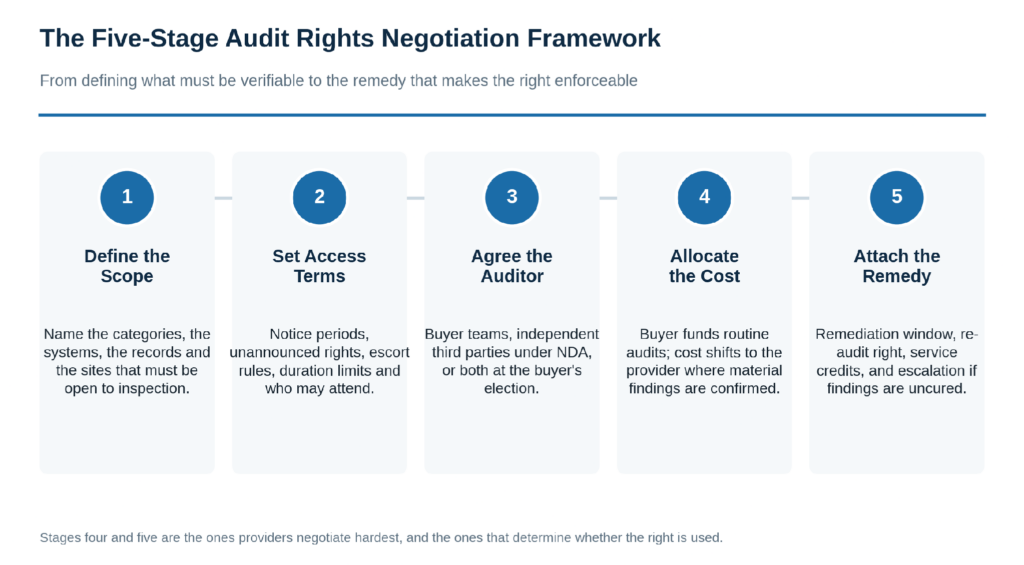
Figure 4. The five-stage audit rights negotiation framework, from scope definition to attached remedy.
Allocate the Cost Deliberately
The standard construction is that the buyer funds routine audits and the cost shifts to the provider where material findings are confirmed. This does two useful things: it prevents audits being used as a cost-free irritant, and it gives the provider a direct financial interest in passing. Define what counts as material in advance, since the definition is what the clause turns on.
Attach a Remedy, or the Right Is Decorative
An audit right with no consequence attached produces findings discussed at the next governance meeting and rarely anything else. The agreement should specify a remediation window proportionate to the finding, a re-audit right at the provider’s cost, service credits where the finding is uncured, and escalation to termination for cause in the case of a serious unremediated failure. Making those meetings act on findings is a governance-design question, covered in our guide to shared services governance structures.
Secure Third-Party and Flow-Down Access
Reserve the right to appoint an independent third-party auditor under NDA at the buyer’s election, since technical security evaluation and financial reconciliation often need specialist capability the buyer’s team does not hold. Equally important is flow-down: the right must extend to subcontractors, or a provider can place the activity you most want to inspect one tier beyond your reach.
What Does Restructuring Inspection Terms Deliver in Practice?
A North American financial institution with no contractual audit rights could not identify data access vulnerabilities or verify attrition. Moving to an agreement with unannounced walkthroughs, real-time security checks, and billing disclosure eliminated regulatory exposure, cut billing discrepancies, and lifted quality scores within six months.
Client Challenge
The institution’s Philippine agreement contained no meaningful inspection rights, which meant it could not identify systemic data access vulnerabilities or verify the agent attrition rates being reported to it. The problem was not that the provider was necessarily failing; it was that the buyer had no mechanism to know either way, and a regulated financial institution cannot carry unverifiable exposure indefinitely.
Vendor Selection Process
PITON-Global audited the existing supplier relationship to establish which rights were missing, then used its network of more than 100 vetted Philippine providers to source a partner willing to accept comprehensive enterprise audit terms. Willingness to be inspected was treated as a threshold criterion, because a provider that declines access cannot be verified on anything else.
Solution Implemented
The revised master services agreement incorporated unannounced physical security walkthroughs, real-time data security compliance checks, transparent financial and billing disclosure, and flow-down access to subcontractor performance tiers.
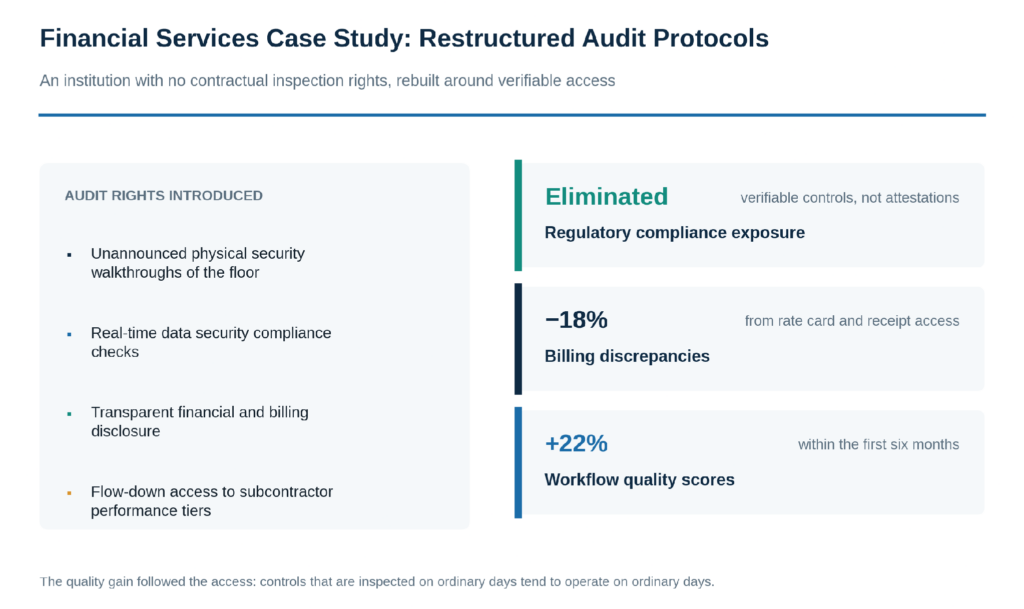
Figure 5. The audit rights introduced in the revised agreement and the outcomes within six months.
Outcomes and Lessons
The restructuring eliminated regulatory compliance exposure, reduced billing discrepancies, and improved workflow quality scores within six months. The quality improvement is worth noting because it was not the objective: controls that are inspected on ordinary days tend to operate on ordinary days, and the same effect applies to process discipline generally. Securing audit rights before signing prevents protracted compliance disputes and delivers operational visibility that no amount of reporting substitutes for.
Why Partner with PITON-Global for Strategic Offshore BPO Selection?
PITON-Global is a BPO advisory and outsourcing consultancy delivering advisory-led vendor matching across a curated network of more than 100 top-tier Philippine providers, embedding operational benchmarks and contract standards into every engagement.
Who Is PITON-Global?
PITON-Global advises enterprise buyers on Philippine outsourcing across provider selection, contract standards, and governance design. Its relevance to audit rights is practical: knowing which providers already operate under enterprise inspection regimes, which have passed third-party audits for comparable clients, and which will resist unannounced access saves a negotiation cycle that would otherwise be discovered clause by clause. In a market of more than 1,000 providers, that intelligence is not published.
How Does PITON-Global Differ from Traditional Outsourcing Brokers?
Traditional brokers earn on placement, which ends their involvement at introduction — before the audit clauses are drafted — and gives them no reason to raise a provider’s resistance to inspection. An advisory-led model is organized around the buyer’s outcome: objective evaluation, recommendations that may include providers with no commercial relationship to the advisor, and continued engagement through contracting and governance.
How Does PITON-Global’s Network of 100+ Vetted Philippine BPO Providers Benefit Organizations?
Providers are screened on contract posture, compliance evidence, operational transparency, and audit track record before reaching a buyer. That matters because the meaningful distinction is between providers willing to sign audit clauses and providers ready to be audited against them. Coverage spans voice and CX, back office and finance, healthcare administration, and specialist verticals across Manila, Cebu, Clark, and Davao.
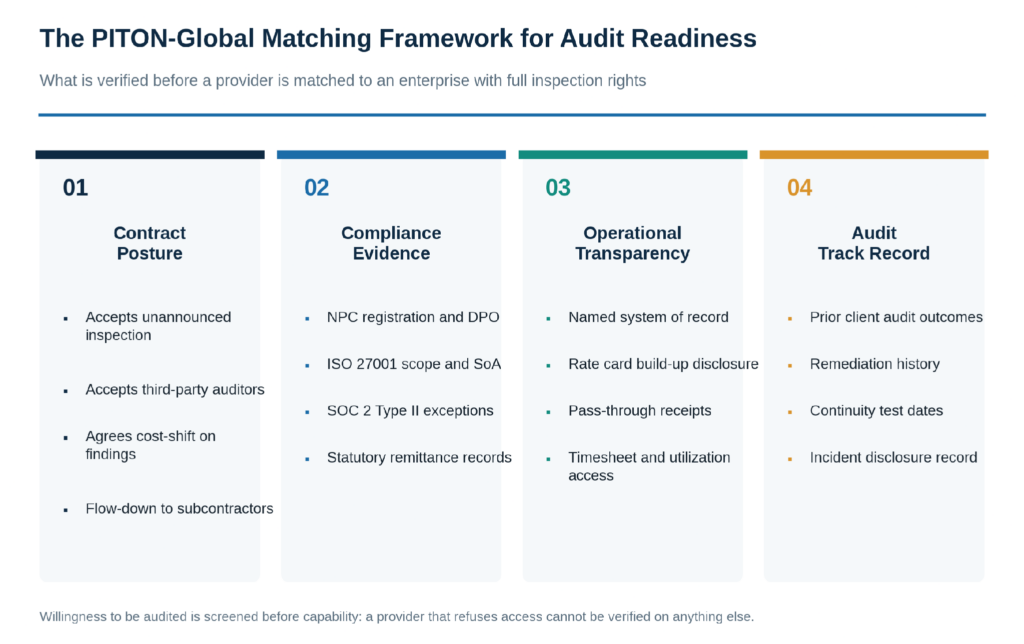
Figure 6. The matching framework for audit readiness, applied before a provider reaches an enterprise buyer.
How Does PITON-Global’s Advisory-Led Vendor Matching Process Work?
Requirements, regulatory obligations, and inspection needs are documented; the vetted network is filtered on domain expertise and capacity; candidates are screened on privacy registration, certification scope, transparency of billing, and willingness to accept unannounced and third-party audits; and the buyer is supported through scope drafting, cost allocation, remedy design, and the governance cadence that actually exercises the rights.
Why Do Organizations Use PITON-Global?
- Enforceable audit rights. Scope, access, cost allocation, and remedy engineered rather than inherited from a provider template.
- Reduced regulatory exposure. Privacy registration, certification scope, and statutory remittances verified before shortlisting.
- Faster negotiation. Providers already operating under enterprise inspection regimes remove rounds from the contracting cycle.
- Genuine transparency. Rate card build-ups, pass-through receipts, and subcontractor tiers open to inspection rather than summarized.
- Governance that uses the rights. Audit cadence designed so the clauses are exercised routinely instead of activated in a crisis.
Frequently Asked Questions
What specific clauses are essential for effective BPO financial audits?
Provisions for inspecting timesheets, billing rate card calculations, hardware amortization schedules, and original pass-through cost receipts. Receipt-level access is the clause that prevents hidden markups on licenses, telecom, and hardware, and it is the one most often absent from vendor templates.
How frequently should enterprise buyers conduct onsite operational audits?
A comprehensive annual audit alongside unannounced spot checks roughly every six months, supported by quarterly documentary evidence packs. The unannounced element is what verifies that controls operate on ordinary days rather than on scheduled ones.
What data privacy regulations must Philippine BPO audits address?
The Philippine Data Privacy Act of 2012 as the local baseline, alongside GDPR, HIPAA, and SOC 2 Type II where the data or the client base engages them. Verify that certification scope covers the specific site and service running your program, not the provider as a whole.
Can a BPO vendor legally refuse an enterprise audit request?
Yes, if the master services agreement lacks explicit audit rights. Access is a contractual entitlement rather than an inherent one, which is why the language must be established during initial negotiation — leverage to obtain it drops sharply once the program is live. Renewal is the next point where leverage returns, as our guide to renewal terms explains.
What role do third-party auditors play in offshore vendor management?
Independent validation maintains objectivity and supplies specialist capability for technical security evaluation and financial reconciliation. Reserve the right to appoint one at your election under NDA, rather than relying on the provider to nominate the assessor.
How do comprehensive audit rights mitigate operational business continuity risks?
They allow verification of backup power, telecom redundancy, and secondary site readiness — including the date and result of the last live failover test. A continuity plan that has never been exercised is a hypothesis, and only an audit right lets a buyer find that out before a typhoon does.