

Healthcare BPO in the Philippines directly reduces an organization’s Administrative Cost Ratio (ACR) by converting fixed structural overhead into a flexible, variable cost model. Labor arbitrage, specialized clinical talent, and deep process automation—the building blocks of offshore claims, coding and member-services teams—compress claims-processing cycles and eliminate costly operational friction.
Key Takeaways
- Structural ACR compression: Moving non-core back-office and clinical processes offshore drops administrative spend well below the industry-average share of premium revenue.
- Substantial labor arbitrage: Immediate, deep savings on labor overhead while securing U.S.-accredited nursing, billing, and medical-coding professionals.
- First-pass clean-claim yields: First-pass clean-claim rates climb sharply, cutting rework, appeals, and revenue leakage.
- CapEx to OpEx: Major capital outlays for internal technology and compliance infrastructure become predictable, transaction-based operating expense.
- Enhanced regulatory alignment: Institutional-grade provider frameworks mitigate compliance risk with no degradation in data security.
How Does Offshore Sourcing Reshape the Spending Curve for Payers and Providers?
It replaces rigid internal cost structures with an elastic operating model. The core shift is from capital expenditure to operational expenditure: instead of funding localized technology, real estate, and recruitment, organizations pay strictly for delivered outcomes, which structurally lowers the administrative cost ratio.
Healthcare payers and providers operate under intense regulatory mandates and tightening margins. Administrative expenses spanning claims adjudication, complex utilization management, medical billing, and omni-channel member services frequently erode financial sustainability. Shifting these specialized operations offshore swaps a rigid internal cost structure for a highly elastic operational model, and some administrative functions gain far more than others from the move.
The primary driver of that restructuring is the systemic move from capital expenditure (CapEx) to operational expenditure (OpEx). Rather than investing in localized technology infrastructure, real estate, and continuous domestic recruitment, organizations pay only for delivered outcomes, freeing capital to fund a hospital’s long-term growth strategy instead.
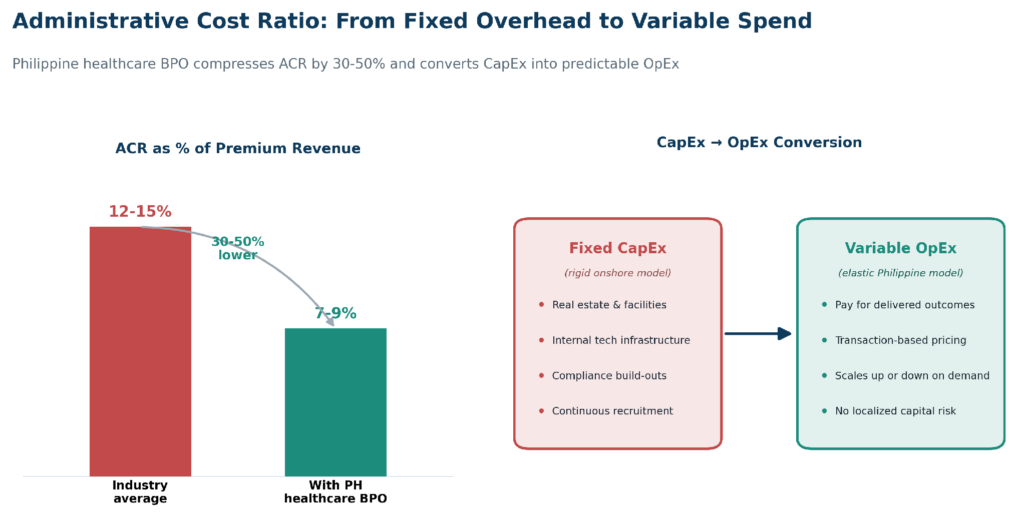
Figure 1. Administrative cost ratio compression alongside the structural conversion of fixed CapEx into variable OpEx.
The scale of the arbitrage is consistent across key functional areas, where offshore rates run at a fraction of domestic equivalents while holding to demanding quality benchmarks.
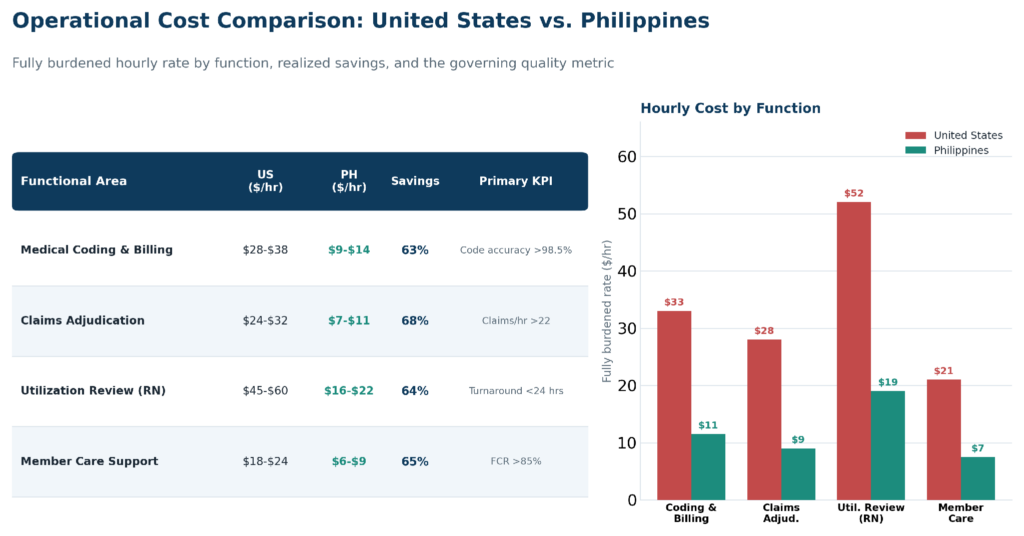
Figure 2. Fully burdened hourly cost by function, U.S. versus offshore delivery, with realized savings and the governing KPI.
What Impact Does Talent Specialization Have on First-Pass Claim Rates?
Specialized talent is the true financial catalyst. The country produces tens of thousands of nursing and allied-health graduates trained in U.S. regulations, HIPAA, ICD-10/11 coding, and risk adjustment. Accurate first-pass coding lifts clean-claim rates sharply and reduces the cost of managing denials, appeals, and resubmissions.
Lower cost yields little value if quality degrades, so the real catalyst within the offshore ecosystem is the high density of specialized healthcare professionals. The country graduates tens of thousands of nursing and allied-health professionals each year who undergo intensive institutional training in U.S. healthcare regulations, HIPAA compliance, ICD-10 and ICD-11 coding, and risk-adjustment methodologies.
Many healthcare executives incorrectly view the Philippines as merely a destination for basic customer care. In reality, the market has evolved to handle highly complex clinical and analytical processes. When you embed a licensed Philippine nurse into your utilization review or complex claims workflow, you aren’t just saving on labor; you are driving down error rates that otherwise trigger millions in administrative leakage.
— John Maczynski, CEO, PITON-Global
That clinical expertise flows straight to the first-pass clean-claim rate. When claims are coded and audited accurately on initial submission, the administrative cost of managing denials, appeals, and resubmissions drops precipitously, removing a major layer of workflow friction and the bottlenecks that inflate ACR.
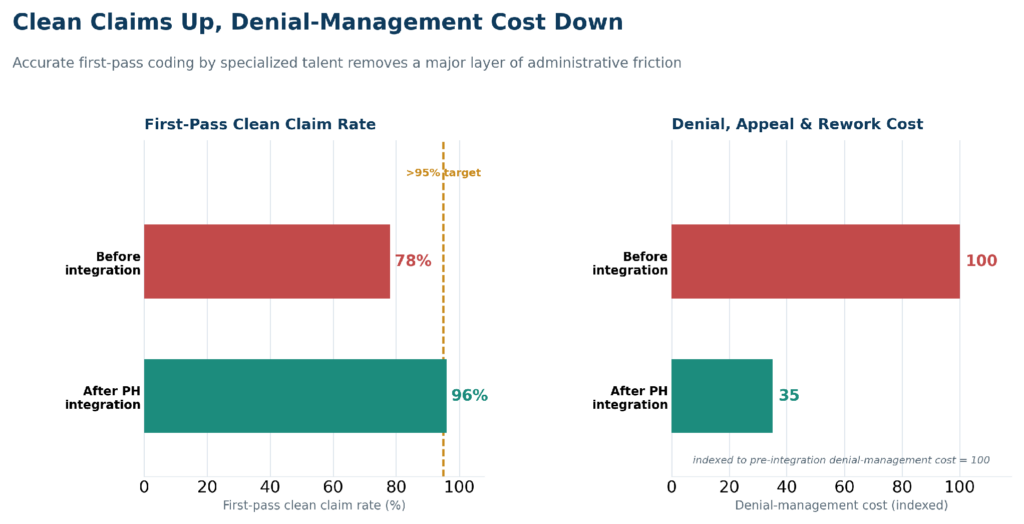
Figure 3. Higher first-pass clean-claim rates drive a steep reduction in denial, appeal, and rework cost.
What Framework Optimizes Vendor Selection and Risk Mitigation?
Enterprise buyers should evaluate every provider across four operational vectors before contracting: compliance and data security, clinical governance, infrastructure redundancy, and a scalability matrix. Rigorous vetting on each insulates the enterprise from vendor failure while preserving the projected ACR gains.
Entering the offshore healthcare market carries operational risk if executed without a rigid vetting framework. Buyers must balance cost reduction against compliance, data security, and business continuity, evaluating providers across four critical vectors.
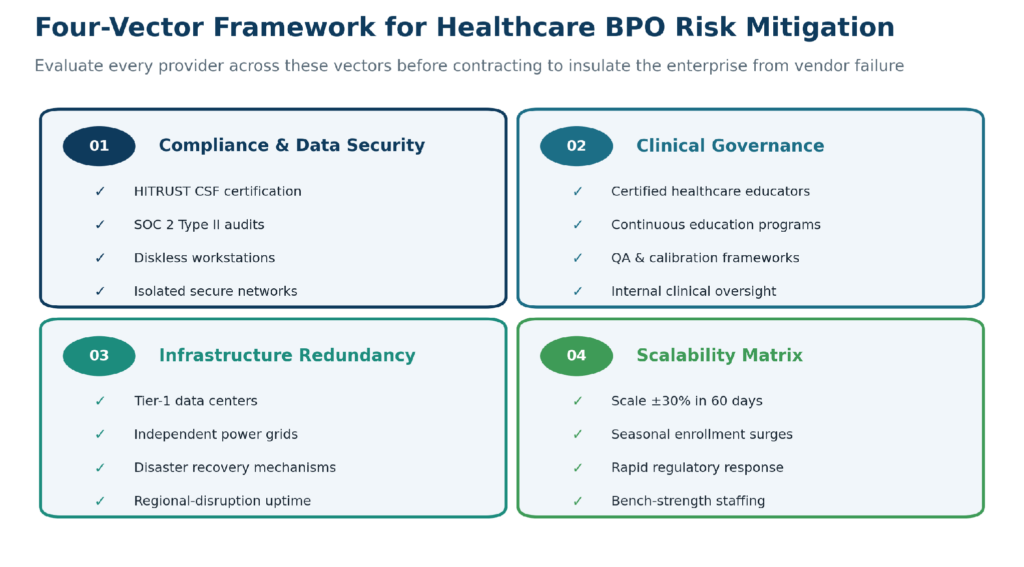
Figure 4. A four-vector framework for evaluating offshore healthcare providers before contracting.
- Compliance and data security: Active HITRUST CSF certification, SOC 2 Type II audits, and end-to-end HIPAA protocols including diskless workstations and isolated secure networks.
- Clinical governance: Internal clinical oversight, continuous education, and quality-assurance frameworks managed by certified healthcare educators.
- Infrastructure redundancy: Tier-1 data centers, independent redundant power grids, and disaster-recovery mechanisms that maintain uptime during regional disruptions.
- Scalability matrix: The structural ability to scale personnel up or down substantially within a 60-day window for seasonal enrollment or abrupt regulatory change.
How Did a Mid-Market U.S. Payer Cut Its Administrative Cost Ratio?
A 450,000-member U.S. health plan with an ACR well above industry norms deployed 45 certified coders and 20 claims adjudicators in Manila. Within 12 months its ACR fell well below its starting level, first-pass clean claims climbed sharply, cycle times dropped substantially, and it saved millions annually in overhead.
The plan faced an elevated administrative cost ratio, driven by a severe claims-queue backlog, a weak first-pass clean-claim rate, and rising domestic coder costs. PITON-Global ran an exhaustive workflow diagnostic and screened its network of 100+ vetted providers, identifying three firms with deep expertise in the client’s core administrative processing system within 14 days.
The selected vendor deployed a dedicated team of 45 certified coders and 20 claims adjudicators in Manila, integrating real-time automated workflows with human-in-the-loop quality checks for complex, high-dollar claims.
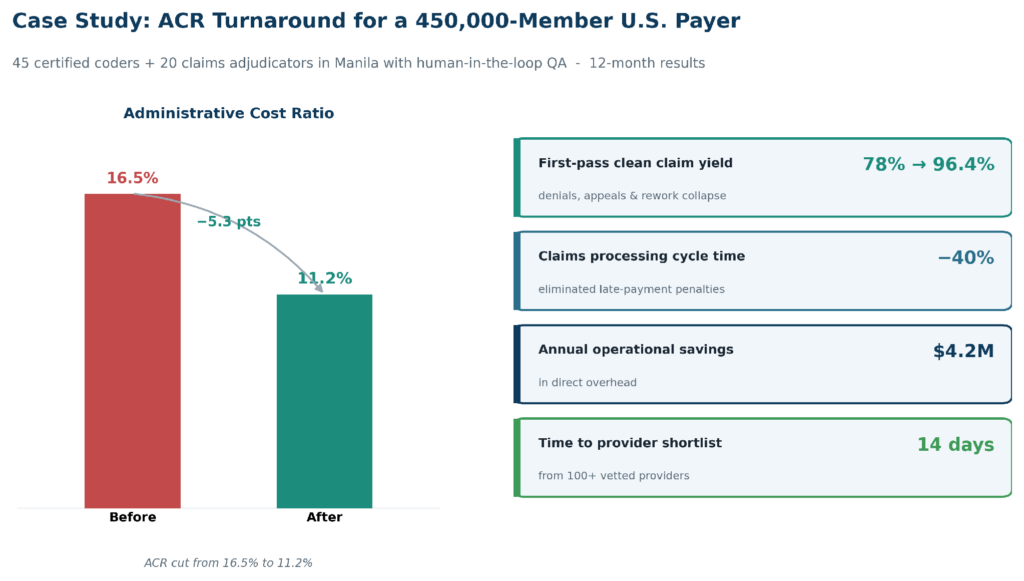
Figure 5. Twelve-month outcomes for the 450,000-member payer: ACR compression and headline performance gains.
Success depended heavily on upfront system integration and a synchronized, dual-shore management framework during the initial 90-day transition.
What Role Does PITON-Global Play in Navigating the Philippine Sourcing Landscape?
PITON-Global is an independent strategic advisor, not a lead broker. It matches an enterprise’s clinical, technical, and financial requirements against the verified competencies, cultural fit, and compliance posture of 100+ vetted Philippine providers, removing the guesswork and risk from selection while structurally driving down ACR.
Who Is PITON-Global?
PITON-Global is an elite business process outsourcing advisory and consultancy based in the Philippines. It works as an independent strategic advisor to enterprise buyers, applying specialized market intelligence and deep provider-selection expertise so health plans and providers can navigate hundreds of provider organizations and reach the few genuinely equipped to lower administrative cost ratios.
How Does PITON-Global Differ from Traditional Outsourcing Brokers?
Unlike traditional brokers that merely pass leads to the largest market players, PITON-Global operates as a neutral advisor whose recommendations rest on the client’s clinical, technical, and financial requirements rather than referral volume. That independence keeps guidance aligned with the enterprise’s ACR and risk goals instead of a vendor’s commercial interests.
How Does PITON-Global’s Network of 100+ Vetted Philippine BPO Providers Benefit Organizations?
With an active network of more than 100 highly specialized, deeply vetted call center and back-office providers, PITON-Global removes the guesswork, friction, and risk from provider selection. Pre-vetting on compliance posture, clinical competency, and infrastructure lets organizations reach qualified shortlists quickly, often within two weeks, without exhaustive open-market due diligence.
How Does PITON-Global’s Advisory-Led Vendor Matching Process Work?
PITON-Global’s advisory-led matching process evaluates an enterprise’s unique clinical, technical, and financial requirements against the precise competencies, cultural fit, and compliance postures of verified providers. This structured alignment secures institutional-grade outsourcing solutions, accelerates deployment timelines, and structurally drives down administrative cost ratios without sacrificing clinical or operational integrity.
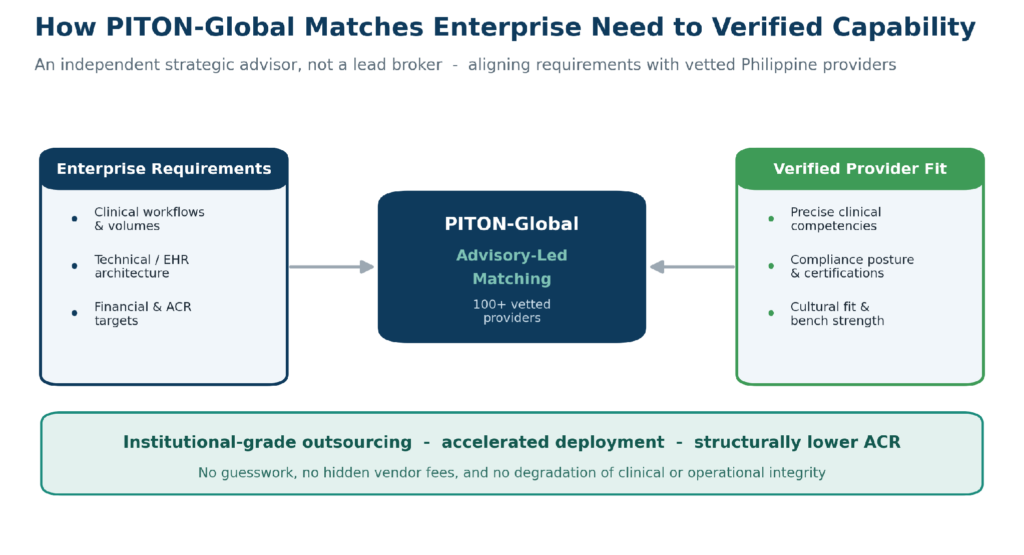
Figure 6. PITON-Global aligns enterprise requirements with verified provider fit through advisory-led matching.
Why Do Organizations Use PITON-Global?
Organizations partner with PITON-Global to eliminate vendor-selection guesswork, accelerate deployment, and structurally lower administrative cost ratios while safeguarding clinical and operational integrity, turning a high-risk procurement decision into a precise, evidence-based match between need and verified capability.
What Else Should Enterprise Buyers Know About Philippine Healthcare BPO?
Common questions concern HIPAA security, transition timelines, clinical scope, time-zone coverage, surge handling, and hidden costs. In short: providers use diskless, audited secure facilities, migrations run 60 to 90 days, licensed RNs handle utilization review, teams operate 24/7, surges are met with cross-trained bench strength, and an advisor keeps hidden costs in the SLA.
How do offshore providers ensure strict HIPAA compliance and data security?
Vetted providers combine biometric access controls, diskless workstations that prevent local storage, strict clean-desk policies, network segmentation, encrypted transmission, and routine third-party SOC 2 Type II and HITRUST audits.
What is the typical timeline to transition healthcare claims processing to the Philippines?
A standard enterprise migration takes 60 to 90 days, covering secure network integration, compliance auditing, talent sourcing, process mapping, and a phased parallel-run before full cutover.
Can offshore teams manage complex clinical processes like utilization review?
Yes. The talent pool includes thousands of licensed Registered Nurses proficient in clinical guidelines such as InterQual and MCG who execute pre-authorization, utilization management, and case management under strict clinical governance.
How do time-zone differences affect U.S.-Philippines workflows?
Providers operate 24/7/365, with teams on U.S. accounts working permanent night shifts that align to U.S. day shifts, ensuring real-time integration and immediate intraday processing.
What happens to quality during seasonal spikes like Open Enrollment?
Top-tier providers use cross-training, multi-skilled bench strength, and automated workflow distribution to scale capacity rapidly for surge volumes without degrading quality or turnaround times.
What are the hidden costs associated with offshore healthcare delivery?
Hidden costs typically stem from unmapped telecom redundancies, unexpected software licensing for remote users, or prolonged transitions. An advisory firm factors these into the initial SLA to keep costs predictable, and they belong in any CFO-grade ROI calculation as well.