
Call center services in the Philippines fall into four families: inbound (customer service, helpdesk, order and billing), outbound (sales, lead generation, collections, surveys), omnichannel/digital (chat, email, social, messaging), and specialized/back-office (technical support, healthcare, finance, content and data operations). The strategic question in 2026 is not what can be outsourced — nearly all of it can — but which services are commoditizing under AI and which are moving upmarket into human-led, higher-value work.
Key Takeaways
- Four service families. Inbound, outbound, omnichannel/digital, and specialized/back-office — one destination spans all four, from frontline voice to data operations.
- Voice is still the core, not the whole. The Philippines leads English voice work, but modern programs are omnichannel — chat, email, social, and messaging alongside calls.
- The line is moving fast. Simple, scripted, high-volume services are commoditizing under AI; complex, emotional, technical, and regulated services are moving upmarket to humans.
- Specialized work is the growth edge. Healthcare, finance, and technical support carry higher value and play to Philippine domain-talent depth.
- Choose services by where value is heading. Outsource the commoditizing work to AI-augmented teams; invest in the human-led services that differentiate your brand.
What Are the Main Categories of Call Center Services in the Philippines?
Four families: inbound support, outbound sales and engagement, omnichannel/digital channels, and specialized or back-office services — spanning voice and non-voice work.
Philippine call center services have expanded far beyond the phone, but they still organize cleanly into four families. Inbound covers customer service, helpdesks, order and billing support, and inbound sales. Outbound covers sales, lead generation, collections, surveys, and appointment setting. Omnichannel and digital covers live chat, email, social, messaging, and self-service support. And specialized or back-office covers technical support, healthcare and finance processes, and content and data operations. One mature provider can typically span all four.
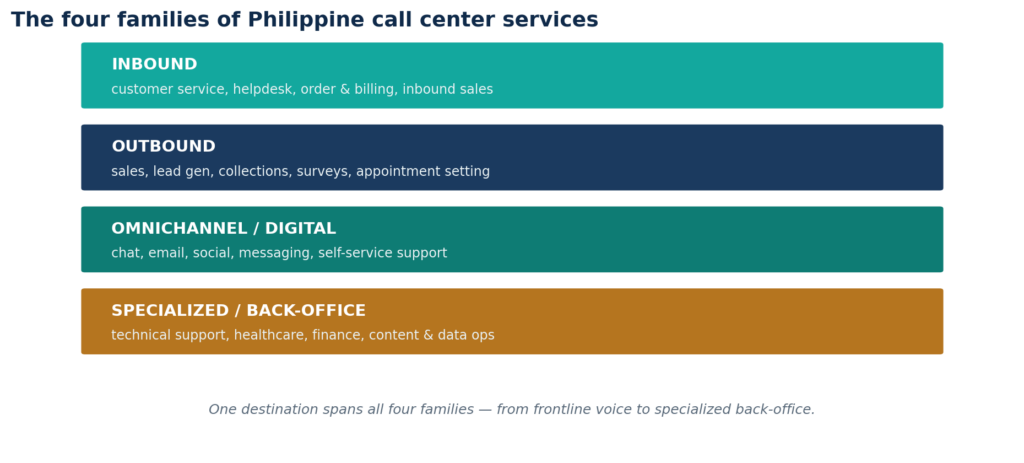
Figure 1 — The service taxonomy: a single destination covers frontline voice through specialized back-office.
The breadth matters because it lets a company consolidate. Rather than splitting voice, chat, and back-office across three vendors and geographies, many buyers run an integrated omnichannel program from a single Philippine partner — reducing handoffs and giving the customer one consistent experience.
Is the Philippines Only Good for Voice, or for Digital Channels Too?
Both — it remains the leading destination for English voice work, but modern programs are omnichannel, blending chat, email, social, and messaging with calls.
The Philippines’ reputation was built on voice — and accent neutrality plus cultural alignment still make it the first choice for English-language phone support. But treating it as voice-only is a decade out of date. The same workforce now runs omnichannel CX, and for good reason: customers move fluidly between channels, and a fragmented support setup shows. The country’s English depth, which is a voice advantage, is equally an advantage in written channels where tone, grammar, and clarity are visible to the customer on every line.
Which Services Should You Actually Outsource in 2026?
Send the commoditizing, scripted, high-volume work to AI-augmented teams, and invest the human-led capacity in complex, emotional, technical, and regulated interactions.
The most useful way to choose services in 2026 is not by channel but by where value is heading. Simple FAQ and status queries, password resets, scripted tier-1 voice, and high-volume data entry are commoditizing fast as AI absorbs them. Complex and emotional support, technical and specialized helpdesks, consultative and retention sales, and healthcare, finance, and other trust-sensitive roles are moving the other way — toward human-led work that AI cannot do well and that differentiates a brand.
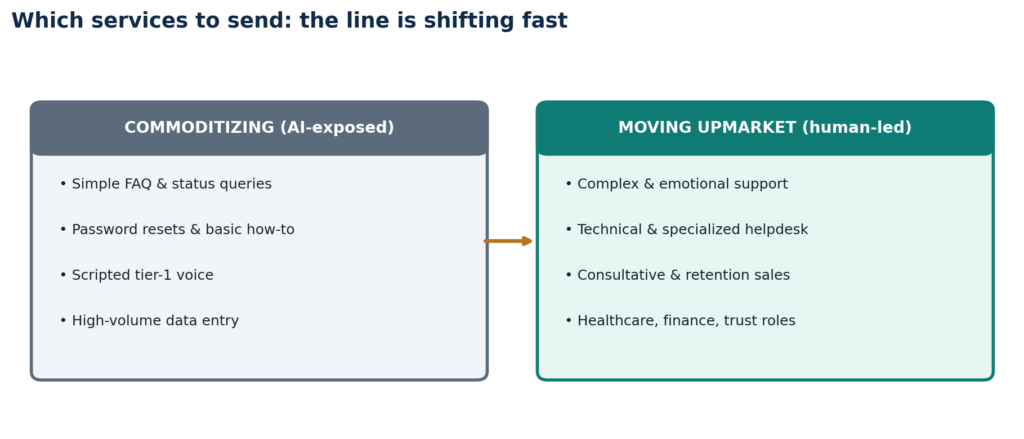
Figure 2 — The dividing line between AI-exposed and human-led services is shifting — choose services accordingly.
“Buyers still come to us asking to offshore their simplest tickets to save a few dollars an hour. That is yesterday’s play — AI will eat that work anyway. The smart move is the opposite: send the routine volume to an AI-augmented team and put your investment into the complex, human conversations that actually decide whether a customer stays. That is where a great Philippine team earns its keep.” John Maczynski — CEO, PITON-Global; former Global EVP of the world’s largest BPO provider
What Specialized Call Center Services Is the Philippines Particularly Good At?
Technical support, healthcare, and finance processes — higher-value, domain-heavy work that plays to the country’s deep professional and medical talent pools.
The fastest-growing edge of Philippine call center services is the specialized tier, where domain knowledge commands a premium. Technical support draws on a technically literate, AI-tool-fluent workforce. Healthcare support and processing draw on one of Asia’s deepest medical and allied-health talent pools. Finance and insurance processes draw on decades of regulated-sector experience and mature security posture. These services sit at the top of the value chain precisely because they are hard to automate and hard to staff — which is where the Philippines’ talent depth becomes the differentiator rather than its cost.
| Specialized Service | Why the Philippines Fits |
| Technical support | Technically literate, English-fluent agents for tier-2/3 troubleshooting. |
| Healthcare support | Deep medical/allied-health talent pool; HIPAA-aligned operations. |
| Finance & insurance | Decades of regulated-sector experience and security maturity. |
| Content & data ops | Process discipline for moderation-adjacent and data work. |
| Retention & sales | Consultative, relationship-based selling, not just scripts. |
| Back-office processing | Order management, claims, and administration at scale. |
“The services that are growing fastest here are the ones people least associate with a ‘call center’ — nurses supporting healthcare programs, technical specialists handling tier-three issues, analysts in finance operations. That breadth is the point: the Philippines is not a phone-answering destination anymore, it is a full CX and operations destination.” Ralf Ellspermann — CSO, PITON-Global; 25-year Philippine BPO veteran
Frequently Asked Questions
What Call Center Services Can Be Outsourced to the Philippines?
Inbound (customer service, helpdesk, order and billing), outbound (sales, lead gen, collections, surveys), omnichannel/digital (chat, email, social, messaging), and specialized/back-office (technical support, healthcare, finance, content and data operations).
Is the Philippines Only for Voice Support?
No. It leads English voice work but runs full omnichannel CX — chat, email, social, and messaging — plus specialized and back-office services. Its English depth is an advantage in written channels too.
Which Services Are Best to Outsource in 2026?
Send commoditizing, scripted, high-volume work to AI-augmented teams; invest human-led capacity in complex, emotional, technical, and regulated interactions that differentiate your brand and resist automation.
What Specialized Services Is the Philippines Strong In?
Technical support, healthcare support, finance and insurance processes, content and data operations, and consultative retention sales — higher-value work backed by deep professional and medical talent pools.
Related in This Series
Why Are Call Centers in the Philippines the Global CX Standard?
The full picture and the industry context.
How Does Call Center Outsourcing to the Philippines Work?
Engagement models: managed, dedicated, hybrid, BOT, GCC.
What Does It Cost to Run a Call Center in the Philippines?
The TCO cost-stack and 2026 benchmarks.
Why Is Call Center Pricing Moving From Per-Hour to Outcome-Based?
How the commercial model is changing in the AI era.
How Do Philippine Call Centers Deliver CX Quality?
The metrics that govern quality, and the voice edge.
Is AI Replacing Call Centers in the Philippines?
The AI-human division of labor, in depth.
How Do You Choose the Right Call Center Partner?
The vendor scorecard and the quality-tier gap.
Where Should You Locate: Manila, Cebu & Beyond?
The city-tiering framework for hub selection.
About PITON-Global
PITON-Global is a vendor-neutral outsourcing advisory with 25+ years in the Philippine market, connecting global companies with providers across the full range of call center and CX services — inbound, outbound, omnichannel, and specialized. We help you scope the right services and source the right partner, free of charge and with no obligation.