

TL;DR: The Key Takeaway
Data labeling outsourcing in the Philippines has transitioned from a cost-driven back-office function into a high-value discipline of “Intelligence Arbitrage.” In 2026, the archipelago serves as the global “human firewall” against AI hallucinations, providing the specialized AI Pilots and Robot Wranglers required to train safe, physically-aware, and culturally nuanced models. Labeling is the entry point: the same teams increasingly run RLHF and model evaluation, part of the wider training-data stack AI labs now source offshore.
To achieve reliable, real-world AI deployment, developers now prioritize Model Truth over raw volume. The country has emerged as the premier destination for this shift, moving beyond simple 2D tagging to complex 4D sensor fusion and agentic governance. By leveraging a high-AQ (Adaptability Quotient) workforce and the CREATE MORE Act (RA 12066), Filipino providers deliver the cognitive rigor necessary for autonomous mobility, medical-grade diagnostics, and ethical AI oversight.
Executive Briefing: The 2026 Operational Paradigm
- The Intelligence Gap: As automated labeling tools hit a “complexity ceiling,” the demand for human specialists who can interpret sensor physics and logical intent has reached an all-time high.
- Fiscal Velocity: The CREATE MORE Act (RA 12066) has solidified the country’s competitive edge, offering enhanced deductions for power and AI-specific workforce training that keep operations well below onshore cost levels.
- The “AI Pilot” Model: The role of the “annotator” is obsolete. In 2026, Filipino AI Pilots manage fleets of autonomous agents, performing real-time logic verification and “Red Teaming” to ensure brand safety.
- Sovereign Data Governance: Top-tier hubs now utilize Zero-Possession Data Architecture, where data is streamed into secure sandboxes without ever residing on local hardware, supporting compliance with GDPR and the Philippine Data Privacy Act.
- Strategic Catalyst: PITON-Global acts as the governance architect, rigorously vetting specialized Filipino labs to deliver a measurable “Model Performance Lift” rather than mere man-hours.
Beyond Annotation: The Rise of Agentic Governance
In 2026, the competitive battlefield for AI has shifted from general capability to Reliability. Early iterations of computer vision thrived on disorganized datasets, but modern “Physical AI”—humanoid robots, industrial drones, and autonomous fleets—requires a volumetric understanding of the world.
The Philippine labeling sector is the primary catalyst for this transition. Filipino specialists are now viewed as Digital Cartographers and Semantic Architects. They don’t just “label”; they encode wisdom into data. Whether it is identifying a subtle fungal infection in agritech imagery, outlining findings in medical image annotation, or synchronizing 3D LiDAR point clouds with 4D temporal vectors, these technicians ensure that the AI understands object permanence and physical constraints. This is the ultimate promise of the Filipino workforce: creating a “semantic heart” for the modern enterprise.
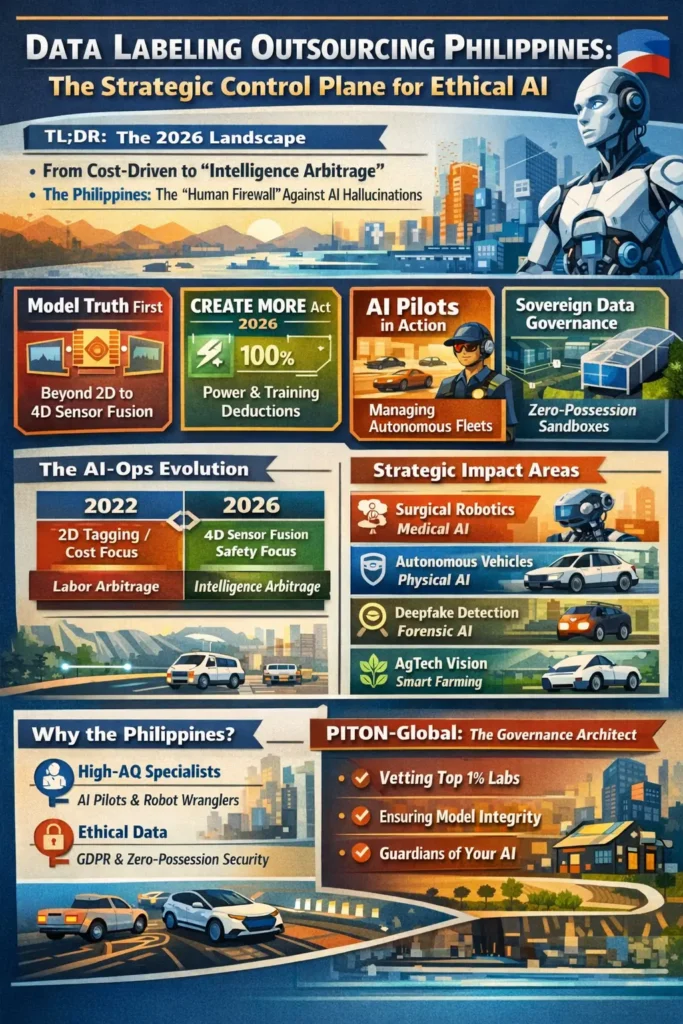
Table 1: The AI-Ops Maturity Matrix (2022 vs. 2026)
How the local sector has elevated the standard of training data for global R&D.
| Capability | 2022 State (Cost-Centric) | 2026 State (Value-Centric) |
| Primary Task | 2D Bounding Boxes / Image Tags | 4D Sensor Fusion & Temporal Tracking |
| Core Metric | Cost-per-Asset / Hourly Rates | Model Performance Lift / Safety Gain |
| Workforce Skill | Basic manual labeling | AI Pilots / Perception Specialists |
| Governance | Standard NDAs | Sovereign Data sandboxes & NPC Audit |
| Success Logic | Labor Arbitrage (Save Money) | Intelligence Arbitrage (Buy Precision) |
Intelligence Arbitrage: Encoding Logic into Data
In the 2026 landscape, “Intelligence Arbitrage” describes the value gained by utilizing a workforce capable of high-order reasoning. This is the “Malasakit” (genuine care) moat—a uniquely Filipino cultural trait that serves as a defensive wall against total automation.
When data is annotated by Filipino specialists who understand the real-world consequences of a model’s behavior, the resulting AI is inherently more robust. This leads to a faster path to commercialization and fewer catastrophic edge-case failures. Global firms no longer outsource to the Philippines to find “cheaper workers”; they outsource to find Specialized AI Governors who can articulate why a model failed and provide the corrective feedback loop required for ethical alignment.
Table 2: Application Complexity and Strategic Impact
The Philippines offers tailored expertise across the spectrum of 2026 AI requirements.
| Application | Complexity | Necessary Expertise | Strategic ROI |
| Surgical Robotics | Extreme | Anatomy & Haptic Feedback | Enables sub-millimeter precision in remote ops. |
| Sensor Fusion | High | LiDAR, Radar & Camera Sync | Ensures safety for autonomous “Physical AI.” |
| Agentic AI | High | Intent & Logic Verification | Prevents “hallucinations” in autonomous workflows. |
| Forensic SGI | Moderate | Deepfake & Metadata Tagging | Compliance with 3-Hour takedown mandates. |
| AgTech Vision | Moderate | Multispectral Analysis | Validates carbon credits and crop health. |
Expert Perspectives: The PITON-Global Insight
How do Filipino specialists prevent “Model Drift”?
Filipino AI Pilots use Active Learning loops. They don’t just label static sets; they monitor the model’s live performance in production, identifying “low-confidence” zones and labeling specifically for those edge cases to retrain the model on the fly.
What role does the CREATE MORE Act play in AI infrastructure?
Beyond tax breaks, the Act allows BPOs to claim 100% deductions on power and training. This is critical for 2026, as high-fidelity 3D/4D labeling is compute-intensive. It keeps local operations markedly more cost-effective than onshore hubs while allowing for massive investment in high-end GPU workstations.
Can the Philippines handle sensitive “Sovereign Data”?
Absolutely. Through PITON-Global, we architect Zero-Possession environments. Annotators interact with data via encrypted “view-only” tunnels. No data is stored, downloaded, or cached locally, satisfying the strict requirements of healthcare, finance, and government sectors, as outlined in our briefing on labeling services built on zero-possession architecture.
How does PITON-Global vet its partners in this high-tech era?
We have moved from auditing “speed” to auditing “Logical Integrity.” We look for labs with high STEM-graduate ratios, proven Sensor Fusion experience, and a culture of Agentic Governance. We ensure our partners aren’t just vendors, but “Logic Guardians” for your AI. The full criteria are set out in what separates the leading AI and autonomy providers.