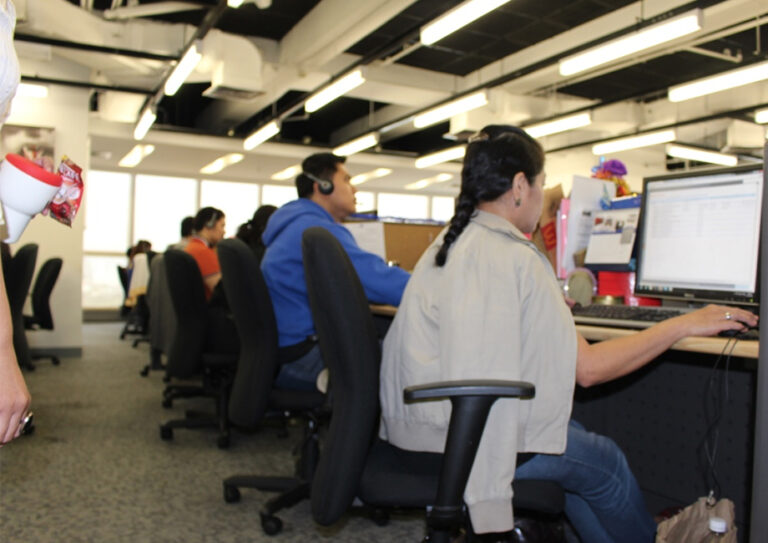

Hospitals can safely outsource high-volume, non-clinical patient-facing functions — appointment scheduling, omni-channel patient access, insurance eligibility verification, and prior-authorization tracking — to specialized Philippine healthcare BPO providers that run HIPAA-governed patient CX and clinical admin. Clinical triage and direct medical advice must stay in-house. Leveraging the country’s deep pool of university-educated staff and licensed nurses cuts administrative overhead while preserving HIPAA compliance.
Key Takeaways
- Clinical preservation: Only non-clinical workflows, patient-access administration, and front-end revenue-cycle tasks should be externalized; triage and medical advice must remain in-house.
- Significant cost arbitrage: Offshoring patient-facing administration to the Philippines substantially reduces operating expenditure versus domestic, in-house equivalents.
- Highly qualified talent: The Philippine HIMS sector offers a deep pool of tertiary-educated professionals — including registered nurses — who handle billing, coding, and patient inquiries with clinical empathy.
- Stringent data security: Top providers institutionalize SOC 2 Type II audits, HITRUST certification, and clean-room environments to eliminate breach vulnerabilities.
- Accelerated revenue cycles: Moving front-end collections and verification offshore optimizes the clean claim rate, reducing denials and days sales outstanding (DSO).
What Are the Operational Boundaries Between Safe and Unsafe Patient-Facing Functions?
Safe functions are repeatable, protocol-driven, and administrative — scheduling, registration, financial clearance, and billing support. Unsafe functions require licensed medical judgment in the domestic jurisdiction: clinical triage, diagnostic interpretation, direct medical advice, and crisis intervention. The boundary is simple: administration goes offshore; clinical decision-making stays in-house.
When evaluating workflows for international deployment, hospital executives must hold an uncompromising line between administrative management and clinical intervention. The principal risk of healthcare outsourcing is the inadvertent delegation of tasks that demand licensed clinical judgment. Drawing the line clearly up front protects patients, preserves compliance, and removes ambiguity for the offshore team.

Safe to Outsource (Administrative & Operational)
- Omni-channel scheduling and registration: managing inbound and outbound touchpoints across voice, chat, email, and patient portals to book appointments, manage waitlists, and capture demographic data.
- Front-end financial clearance: executing insurance eligibility verification, benefits confirmation, and prior-authorization tracking through payer portals before care is rendered.
- Patient financial services support: answering inbound and outbound inquiries on complex hospital bills, setting up structured payment plans, and processing digital payments.
Unsafe to Outsource (Clinical & High-Risk)
- Clinical triage and symptom assessment: judging the severity of an acute illness or directing a patient to the emergency department.
- Direct medical advice and prescription orders: issuing care instructions or modifying pharmacy scripts without direct domestic physician oversight.
- Crisis hotline management: handling behavioral-health or emergency-intervention lines that require localized psychiatric and emergency-response protocols.
How Do Philippine Healthcare BPO Metrics and Cost Structures Compare Globally?
The Philippine model pairs structural cost savings with exceptional quality. A fully loaded elite Philippine patient-access role costs a fraction of its domestic equivalent while delivering higher first-contact resolution, faster answer speeds, and far lower churn.
The specialized Healthcare Information Management Services (HIMS) sector employs more than 190,000 professionals, a significant share holding university degrees in nursing, allied health, or life sciences — the same talent base behind clinical development support for life-science sponsors. That clinical grounding means even non-clinical interactions are handled with real contextual knowledge and technical accuracy — the differentiator that separates premium Philippine providers from generic, low-cost call centers.

The financial arbitrage is only half the story; the productivity gains finance teams should model matter just as much. Across the metrics that govern patient experience and revenue integrity, the Philippine model also outperforms the domestic in-house baseline and holds its own against other major offshore and nearshore destinations.

What Regulatory and Operational Safeguards Reduce Outsourcing Risk?
Patient-data privacy under HIPAA, HITECH, and state mandates is the top board-level concern. The safeguard is partner selection: choose providers whose infrastructure matches or exceeds domestic hospital standards, with biometric access, clean-room floors, AES-256 encryption, and continuous AI compliance monitoring across every interaction.
Top-tier Philippine providers operate in a continuous state of audit compliance, layering physical and digital controls designed to eliminate data leakage. Four safeguards do most of the work.
- Biometric multi-factor authentication: facial-recognition and fingerprint access to patient-data queues at each individual workstation.
- Clean-room environmental protocols: no paper, writing utensils, mobile phones, or external storage in the production environment, preventing unauthorized data capture.
- Encryption in transit and at rest: AES-256 across secure virtual desktop infrastructure (VDI) and dedicated IPSec VPN tunnels, so PHI never resides locally on an offshore machine.
- Continuous AI compliance monitoring: real-time speech and text analytics scoring every interaction for compliance infractions, script deviations, and security risks.
When hospital executives look at offshoring patient access, they often fixate strictly on the cost per hour. But a cheap rate paired with a poor operational fit is a fast track to compliance failures and revenue leakage. The real value in the Philippine market isn’t just lower wages — it’s the deep clinical understanding built into the workforce. — John Maczynski, CEO, PITON-Global
What Results Can a Health System Expect After Outsourcing Patient Access?
Well-executed partnerships move fast: a mid-market system sharply cut call abandonment and front-end denials within 60 days, recovering leaked revenue and trimming annual overhead. The decisive factor was operational integration, not arm’s-length vendoring.
The Challenge
A regional U.S. health system with four acute-care hospitals and 32 outpatient clinics faced severe operational friction. Inbound call abandonment for outpatient scheduling climbed steeply, driven by a domestic labor shortage, contributing to a notable drop in patient acquisition. Data-entry errors in insurance verification pushed front-end denials sharply higher.
The Solution
Engaging PITON-Global to move past the traditional broker model, the system used an audit framework spanning more than 100 vetted mid-sized Philippine providers, filtering on active SOC 2 Type II certification, a dedicated healthcare division, and a recruiting engine able to onboard agents with allied-health degrees. A specialized Manila provider was selected within 21 days. A dedicated team of 35 patient-access specialists then took over omni-channel scheduling, pre-registration, and insurance verification — integrated directly into the system’s Epic EHR via encrypted VDI, under a hybrid governance model with daily KPI calibration.
The Outcomes
- Call abandonment: fell to a small fraction of its prior level within 60 days of deployment.
- Front-end denials: dropped sharply through rigorous eligibility verification.
- Net revenue impact: substantial leaked revenue recovered within the first 12 months.
- Operating cost savings: a meaningful net reduction in annual administrative overhead.

Success depended entirely on operational integration. Treating the offshore team as a core component of internal staff — sharing systems, metrics, and governance — rather than an isolated external vendor, ensured consistent quality, alignment with organizational goals, and a faster path to the typical break-even point.
How Does PITON-Global Help Hospitals Select the Right Philippine BPO Partner?
PITON-Global is an advisory-led consultancy that matches hospitals with the right pre-vetted Philippine provider from a network of more than 100 specialized operators. By auditing each client’s needs and recommending independently — not on commission — it sidesteps the RFP grind, reduces risk, and secures a provider aligned to volume, technology, and compliance from day one.
Who Is PITON-Global?
PITON-Global is a specialized BPO advisory and outsourcing consultancy bridging enterprise healthcare organizations and premium Philippine service providers. Within a market of more than 400 BPO operations, the firm brings over 40 years of global outsourcing experience and deep knowledge of provider capabilities, compliance standards, and pricing. Its focus is healthcare-grade BPO — patient access, revenue cycle, and clinical-support functions where accuracy and empathy are non-negotiable.
How Does PITON-Global Differ from Traditional Outsourcing Brokers?
Traditional brokers run on a commission-driven model that favors the largest global conglomerates, which frequently leaves mid-market health systems and specialty hospitals poorly aligned and underperforming. PITON-Global operates as an independent, advisor-led partner instead. It audits providers objectively, recommends on fit rather than payout, and is accountable to client outcomes — guidance a hospital can trust because it is not engineered to steer business toward any single operator.
How Does PITON-Global’s Network of 100+ Vetted Philippine BPO Providers Benefit Organizations?
Access to a curated network of more than 100 specialized, agile, mid-sized providers lets organizations skip the lengthy RFP process and move straight to a credible shortlist. The network spans service categories from omni-channel scheduling to certified medical coding, and every provider is pre-screened for SOC 2 Type II compliance, healthcare capability, and stability — so clients avoid the costly trial-and-error of qualifying unknown vendors.
How Does PITON-Global’s Advisory-Led Vendor Matching Process Work?
The process is structured and objective. It begins with an independent vendor audit, then an objective match of the client’s needs against the vetted network, followed by structural alignment of volume, technical stack, and compliance requirements to the right operating model, and finally a risk-mitigation stage that establishes governance, SLAs, and live performance dashboards. This removes the guesswork and structural misalignments that cause outsourcing initiatives to fail.

Why Do Organizations Use PITON-Global?
Organizations partner with PITON-Global to reduce operational risk, accelerate implementation, and secure long-term cost stability. Rather than gamble on an unfamiliar market of 400-plus operators, leaders gain independent guidance, a shortlist of best-fit specialists, and governance that protects quality after go-live — the difference between an outsourcing program that stalls and one built to last.
What Else Should Hospital Leaders Know Before Outsourcing Patient-Facing Functions?
The most common questions concern HIPAA compliance, when a licensed nurse is required, implementation timelines, EHR integration, and quality across time zones. In each case, vetted premium Philippine providers are built to meet or exceed domestic hospital standards.
Does outsourcing patient-facing work compromise HIPAA compliance?
No, when partners are chosen well. Top providers operate under SOC 2 Type II and HITRUST frameworks with biometric access, clean-room floors, and AES-256 encryption across VDI and VPN — controls that match or exceed those of many domestic hospitals.
Which roles require a licensed nurse versus a general agent?
Complex, clinically informed tasks — nuanced billing, medical coding, and inquiries that touch on care context — benefit from registered-nurse agents. High-volume scheduling, registration, and routine eligibility checks are handled effectively by tertiary-educated, healthcare-trained specialists.
How long does implementation typically take?
Provider selection through a vetted advisory model can occur in roughly three weeks; full deployment — secure VDI, EHR credentialing, and workflow training — generally follows within 6 to 12 weeks, depending on team size and integration depth.
Can offshore teams integrate directly with Epic and other EHRs?
Yes. Premium providers connect through secure, encrypted virtual desktop infrastructure so agents work natively inside the hospital’s EHR — for example Epic — maintaining a single source of truth rather than siloed third-party tools.
How is quality maintained across time zones?
The Philippine BPO industry operates 24/7/365 and aligns teams to U.S. time zones, supported by hybrid governance, daily KPI calibration, and continuous AI monitoring that scores every interaction for compliance and quality.