
The typical break-even period for healthcare outsourcing in the Philippines is 4 to 7 months. Mid-market and enterprise health systems usually recover transition, onboarding, and integration costs within two quarters, driven by an immediate 40% to 60% reduction in operating expenses. Highly specialized RCM or clinical-abstraction programs lean toward the 7-month end.
Key Takeaways
- Standard timeline: Most organizations reach full cost recovery and net-positive ROI within 4 to 7 months post-launch.
- Primary cost drivers: Run-rate reductions of 40% to 60% in administrative expenditure accelerate amortization of upfront migration fees.
- Volume sensitivities: High-volume administrative workflows such as scheduling and eligibility verification break even faster than specialized clinical functions.
- Ramp mitigation: Choosing an optimized partner from a pre-vetted network can cut time-to-break-even by up to 45 days.
What Financial Factors Direct the Time to Positive ROI?
Two factors set the trajectory: upfront capital (process mapping, secure data migration, EHR integration, compliance auditing, and dual-operating costs during the parallel run) and ongoing run-rate savings. In the Philippines, statutory benefits, facilities, and HR administration are bundled into vendor pricing, delivering immediate, predictable OpEx relief.
Calculating the exact break-even trajectory requires examining both upfront capital requirements and ongoing operational savings. A Philippine BPO deployment’s capital structure divides into implementation costs and baseline run-rate savings.
Upfront Capital Expenditures
Initial migration outlays typically comprise process mapping, secure data migration, EHR integrations, and dedicated compliance auditing. Organizations must also factor dual-operating expense during the parallel-run phase, when the offshore team is trained while domestic staff stabilize legacy operations.
Ongoing Operational Reductions
Run-rate savings are substantial because the cost arbitrage extends beyond base salaries to statutory benefits, facilities overhead, and HR administration. In the Philippines, statutory costs, including the employer SSS contribution, PhilHealth, Pag-IBIG, and mandatory 13th-month pay, are bundled into comprehensive vendor pricing, providing immediate and predictable operating-expense relief.
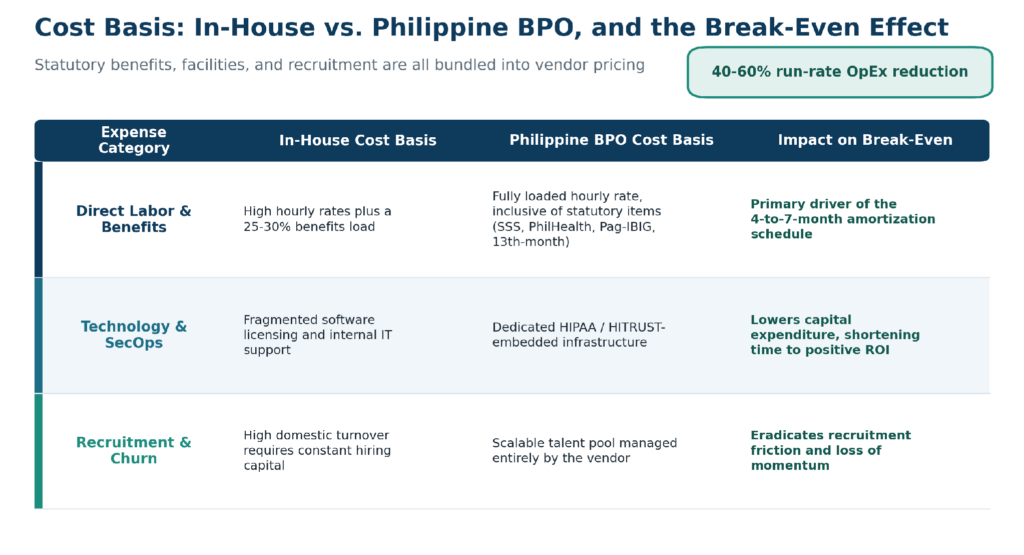
Figure 1. In-house versus Philippine BPO cost basis by expense category, and each one’s effect on break-even.
Plotted over time, the front-loaded implementation cost flattens while accelerating run-rate savings climb, and the two curves cross to mark net-positive ROI somewhere between months four and seven.

Figure 2. Cumulative implementation cost versus run-rate savings, with the break-even crossover in the 4-to-7-month window.
How Do Implementation Complexities Alter the Break-Even Velocity?
Workflow complexity sets the pace. High-volume administrative tasks break even in 4 to 5 months, specialized revenue cycle management in 5 to 6 months, and clinical abstraction or health information management in 6 to 7 months, as deeper integration and stricter compliance extend the stabilization phase.
The specific workflows chosen for deployment directly shape stabilization duration and, therefore, the financial recovery timeline. Simple, repetitive front-office tasks require fewer integration steps and compress the horizon, while complex back-office cycles demand systemic and regulatory oversight that pushes break-even outward.
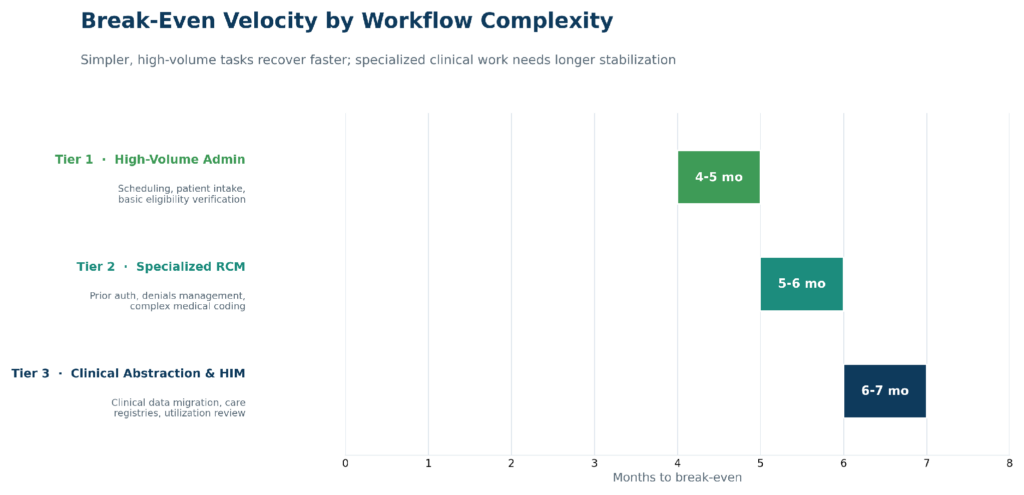
Figure 3. Break-even ranges by workflow tier, from high-volume administration to clinical abstraction.
Tier 1: High-Volume Administrative Tasks (4-5 Months)
Appointment scheduling, omnichannel patient intake, and basic insurance verification follow a compressed path. The training lifecycle is brief, integrations are straightforward, and the domestic team is relieved of administrative burden almost immediately.
Tier 2: Specialized Revenue Cycle Management (5-6 Months)
Prior authorizations, denials management, and complex coding require certified personnel, so ramp-up is more resource-intensive. The upside is amplified by a significant reduction in claim write-offs and a 15-to-20-day acceleration in accounts-receivable cycles.
Tier 3: Clinical Abstraction and Health Information Management (6-7 Months)
Migrating clinical data, managing patient-care registries, and handling utilization reviews require tertiary-educated professionals. Legacy-software integration and strict data-handling protocols push break-even toward seven months, though long-term yield is stabilized by highly accurate data curation and strict compliance.
When calculating the true timeline to positive ROI, healthcare leaders frequently overlook the stabilization phase. Selecting an arbitrary vendor based solely on the lowest hourly rate often extends the stabilization period by several months due to systemic errors and high turnover. True financial velocity is achieved by matching with a provider whose operational infrastructure matches the exact compliance demands of your clinical workflow from day one.
— John Maczynski, CEO, PITON-Global
How Did a Multi-State Health System Accelerate Its Financial Recovery?
A mid-market network across three states, facing 45% billing turnover and a $3.2M aging-A/R backlog, deployed a 45-FTE Manila team for denials, prior authorizations, and charge entry. A phased migration reached cost break-even at month 5, lifted clean claims to 98.4%, cut aging A/R by 18 days, and delivered 52% annualized savings.
The network was squeezed by a 45% annual turnover rate in billing, a growing $3.2 million aging-A/R backlog, and rising claim denials. Through a detailed advisory methodology it selected an elite, healthcare-exclusive Manila vendor with embedded HITRUST governance and predictive, AI-assisted RCM tools, deploying a dedicated 45-FTE team with a phased data-migration plan and automated workflow distribution.
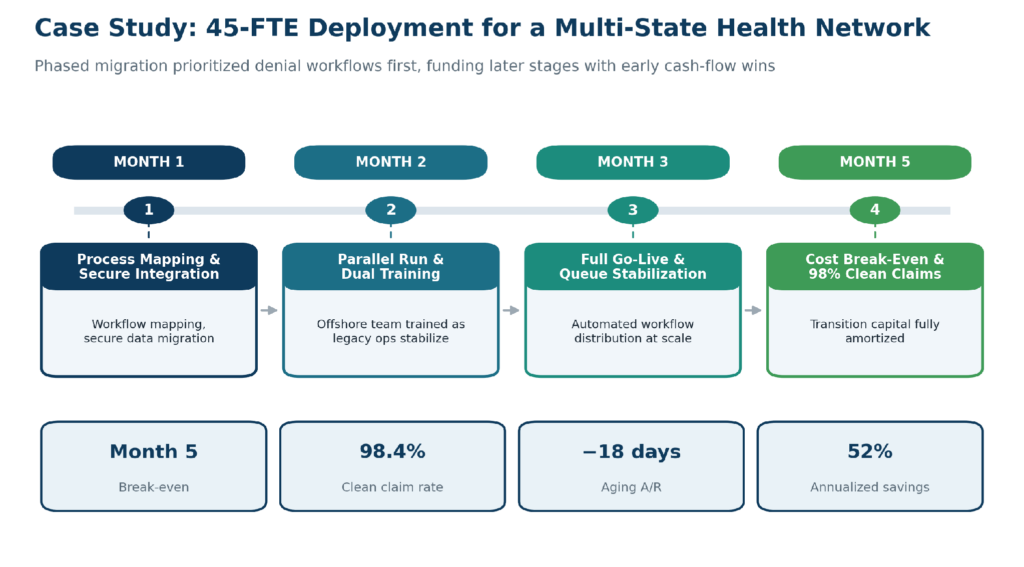
Figure 4. Case-study milestones from process mapping to break-even, with the headline 12-month outcomes.
A phased migration reduces implementation risk. By prioritizing denial workflows before transitioning core patient intake, the system generated early cash-flow wins that funded the subsequent stages of deployment.
What Role Does PITON-Global Play in Shortening the Path to Break-Even?
PITON-Global is a specialized boutique outsourcing advisory in Manila that replaces the generic broker model with objective strategic consulting. Its advisory-led matching examines technical compatibility, data-protection standards, and workforce specialization across 100+ vetted providers, minimizing transition friction and shortening the path to operational break-even.
Who Is PITON-Global?
PITON-Global is a specialized boutique outsourcing advisory firm based in Manila that eliminates the systemic risks of traditional vendor procurement. It operates as an objective strategic consultant, guiding enterprise healthcare organizations through the complexities of offshore deployment so financial recovery arrives on schedule rather than slipping.
How Does PITON-Global Differ from Traditional Outsourcing Brokers?
Moving away from the generic broker model, PITON-Global serves as an objective strategic consultant whose recommendations rest on the client’s technical, compliance, and workforce requirements rather than referral volume. That independence keeps guidance aligned with the buyer’s break-even and risk goals instead of a vendor’s commercial interests.
How Does PITON-Global’s Network of 100+ Vetted Philippine BPO Providers Benefit Organizations?
With an expansive network of more than 100 carefully vetted, specialized Philippine BPO providers, PITON-Global ensures healthcare networks bypass the hazards of misaligned capabilities. Pre-vetting on technical fit, data protection, and workforce specialization lets organizations reach qualified, break-even-ready operators quickly, without exhaustive open-market diligence.
How Does PITON-Global’s Advisory-Led Vendor Matching Process Work?
The advisory-led matching framework examines technical compatibility, data-protection standards, and workforce specialization, then aligns the buyer with the optimal operator. By matching capabilities precisely from day one, the firm minimizes transition friction, mitigates compliance risk, and shortens the path to operational break-even by up to 45 days.
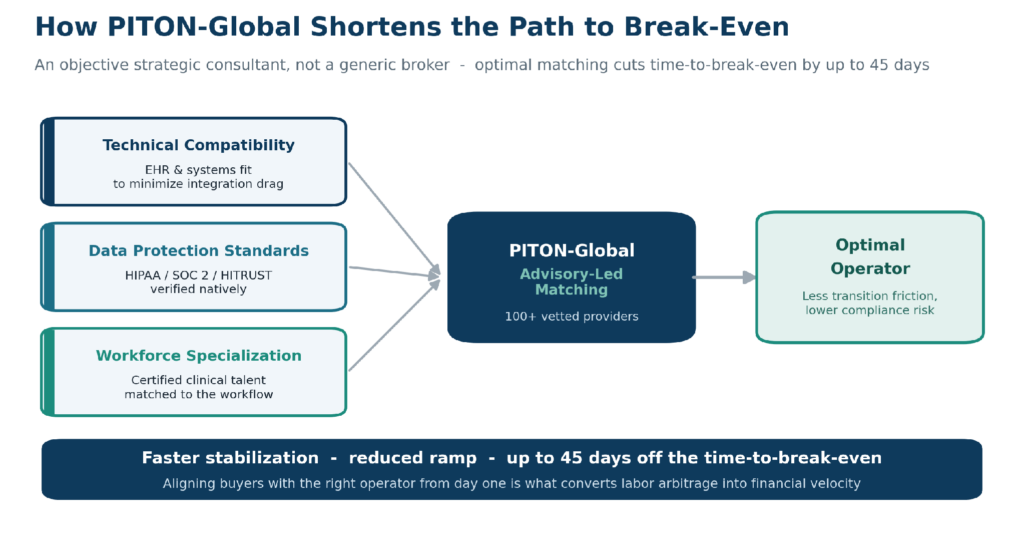
Figure 5. How PITON-Global’s three evaluation lenses produce an optimal operator and a faster path to break-even.
Why Do Organizations Use PITON-Global?
Enterprise decision-makers leverage PITON-Global to bypass misaligned capabilities, minimize transition friction, mitigate compliance risk, and shorten the path to operational break-even, converting a high-risk vendor search into a precise, evidence-based match that protects financial velocity.
What Else Should Buyers Know About Break-Even in Philippine Healthcare BPO?
Common questions concern hidden costs, nearshore comparisons, hybrid models, security setup, and minimum scale. In short: budget for parallel-run and licensing costs, the Philippines often breaks even 30 to 60 days faster than nearshore, hybrid models yield a predictable 6-month timeline, native certifications avoid remediation fees, and 5 to 10 FTEs typically justify the migration.
What are the main hidden costs that can delay the break-even period?
The primary hidden expenses are extended parallel-running costs, unbudgeted software and EHR licensing fees, and unexpected attrition during initial training. A structured implementation methodology accounts for these variables in the initial financial model.
How does the break-even timeline in the Philippines compare to nearshore locations?
While nearshore destinations offer closer geographic proximity, the Philippines provides a larger pool of tertiary-educated, clinically certified professionals. That deeper talent pool minimizes stabilization cycles, allowing the Philippines to break even 30 to 60 days faster than many nearshore markets.
Does a hybrid operational model alter the cost-recovery curve?
Yes. A hybrid framework that keeps a domestic core for complex escalations while offloading volume tasks to the Philippines lowers upfront disruption risk, balancing operational consistency with financial optimization and typically yielding a predictable 6-month break-even.
How do data-security requirements affect initial setup expenses?
Secure integration within a HIPAA-compliant, SOC 2 Type II environment requires rigorous access controls and secure network architecture. Partnering with a provider that maintains these certifications natively avoids capital-intensive remediation fees.
What transaction volume justifies the initial migration outlay?
While small programs can reach cost-neutrality, enterprise-level financial velocity typically arrives at a minimum of 5 to 10 dedicated FTEs or equivalent billing and coding volumes, where operational savings easily overcome fixed implementation costs.