

On this page
- Key Takeaways
- What Key Performance Indicators Matter Most for Executive Decision-Makers?
- How Do Regional Strengths and Benchmarks Affect Performance Measurement?
- How Can Businesses Build a Dependable Performance Management Framework?
- What Does a Successful Performance-Alignment Turnaround Look Like?
- How Does PITON-Global Help Enterprises Secure CX Success?
- What Are the Most Common Questions About Measuring CX in Philippine Outsourcing?
Companies should measure customer experience outcomes by aligning transactional metrics with long-term business value—shifting from operational performance to customer-centric health indicators. This means evaluating agent empathy and resolution quality alongside specialized indicators like Customer Effort Score and Customer Lifetime Value, and reading those results against the fully loaded cost of the program so that quality is judged per dollar rather than in isolation.
Key Takeaways
- Value over velocity: Shift evaluation from First Response Time to Customer Effort Score to prioritize comprehensive issue resolution.
- Calibrated quality assurance: Align internal QA criteria with external customer satisfaction feedback to prevent misleading operational metrics.
- Financial impact tracking: Link operational improvements directly to retention and lifetime value to clearly demonstrate outsourcing ROI.
- Empathy-driven assessment: Leverage the cultural strengths of the Philippine workforce by building sentiment and behavioral analysis into scoring.
What Key Performance Indicators Matter Most for Executive Decision-Makers?
The KPIs that matter most measure resolution and effort, not just speed. Average Handle Time and First Response Time track velocity but don’t correlate with satisfaction or retention. Executives should prioritize FCR, CES, NPS, CSAT, and Customer Lifetime Value to gauge real CX health.
Evaluating customer experience in outsourced operations requires moving beyond legacy cost-containment metrics. While Average Handle Time and First Response Time track operational velocity, they do not correlate with customer satisfaction or long-term brand retention. The reframe below shows where executive attention should move.
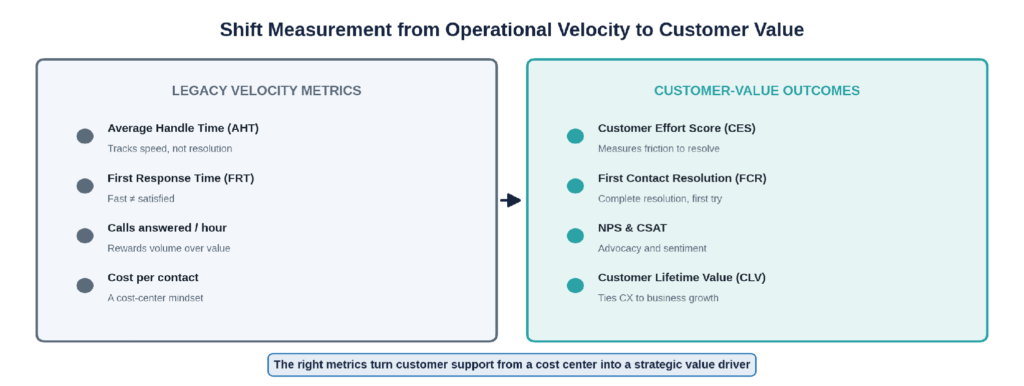
Figure 1. Reframing measurement from operational velocity toward customer-value outcomes.
Enterprise buyers must prioritize metrics that measure problem resolution and customer effort. Grouping the core indicators by what they actually reveal makes the picture clearer:
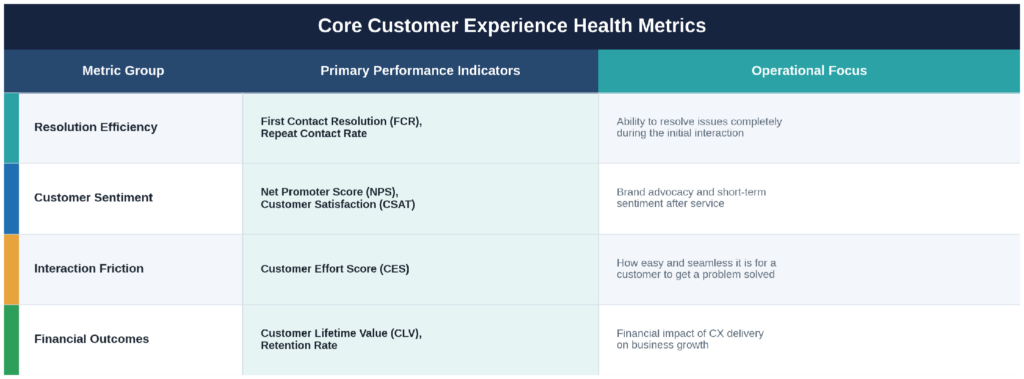
Figure 2. The core CX health metrics, grouped by resolution, sentiment, friction, and financial outcome.
Evaluating these metrics together provides a clear picture of vendor performance—helping companies transition customer support from a cost center into a strategic value driver, which is where the competitive advantages of a Philippine program show up beyond the rate card.
How Do Regional Strengths and Benchmarks Affect Performance Measurement?
The Philippine BPO sector delivers superior CX outcomes through cultural alignment and empathy, which lift soft-skill scores. Leaders should set SLAs against local baselines: top providers post high CSAT, well-managed programs reach strongly positive NPS, and Customer Effort Scores improve materially versus other offshore hubs.
The Philippine BPO sector is uniquely positioned to deliver superior CX outcomes thanks to specific cultural and structural dynamics. The workforce provides a high degree of empathy and cultural alignment with Western markets, directly improving soft-skill evaluations. When setting service level agreements, operational leaders should anticipate performance baselines that reflect these local dynamics.

Figure 3. Typical Philippine performance baselines: CSAT, NPS, and Customer Effort Score improvement.
Neutral accents and an intuitive understanding of Western idioms reduce friction, which is what drives the measurable improvement in Customer Effort Scores compared with other offshore destinations—a soft-skill advantage that shows up directly in the metrics that predict loyalty.
The true competitive advantage of the Philippine BPO sector isn’t just cost savings. It is the intrinsic service orientation and empathy of the workforce. When companies measure the right outcomes, they find that customer satisfaction gains often outweigh the direct labor arbitrage benefits.
— John Maczynski, CEO, PITON-Global
How Can Businesses Build a Dependable Performance Management Framework?
A dependable framework connects operational data to business goals through three phases: calibrate vendor QA against real customer feedback, deploy speech and sentiment analytics to surface hidden friction, and tie a portion of vendor pay to beating CX targets via bonus-malus provisions.
Managing an offshore program requires structured governance to keep operational data accurate and aligned with business goals. Misalignment occurs when a vendor meets internal service levels while customer satisfaction continues to decline. To close that gap, companies should establish a calibrated framework that connects operational performance with external feedback, built in three phases.
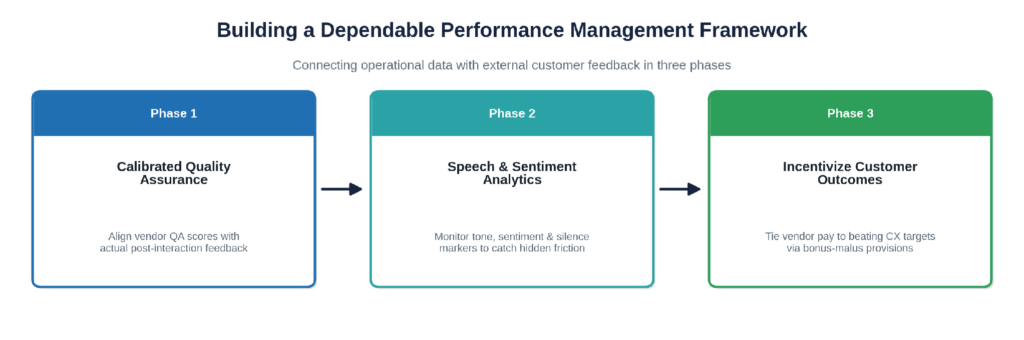
Figure 4. A three-phase framework that calibrates internal QA against real customer feedback and aligns incentives.
The decisive third phase is commercial: structuring agreements with bonus-malus provisions ties a portion of vendor compensation to beating target customer-experience metrics rather than simply answering calls quickly—aligning the vendor’s priorities with the outcomes that actually drive retention.
What Does a Successful Performance-Alignment Turnaround Look Like?
A successful turnaround replaces speed metrics with resolution and effort measures. One SaaS provider facing rising churn switched its primary KPIs to First Contact Resolution and Customer Effort Score, then improved FCR, cut customer effort, and grew contract renewals materially within six months.
The Challenge
A global software-as-a-service provider faced rising customer churn and low satisfaction with its technical support operation. The previous provider focused strictly on handling capacity, leading to poor resolution quality and frustrated users.
The Solution
The company turned to PITON-Global, which matched it with a specialized customer-experience provider in Manila. The new framework replaced speed metrics with First Contact Resolution and Customer Effort Score as the primary performance indicators.

Figure 5. Quantifiable outcomes within six months of realigning the performance framework.
Outcomes and Lessons
Within six months, First Contact Resolution improved markedly, Customer Effort Score fell materially, and contract renewals grew. The lesson: when the measurement framework rewards complete resolution and low effort rather than raw speed, customer loyalty and renewal revenue follow.
How Does PITON-Global Help Enterprises Secure CX Success?
PITON-Global is an independent advisory and procurement firm specializing in the Philippine outsourcing market. With a vetted network of 100+ providers across Manila and Cebu, it uses an advisory-led approach to match buyers on technical fit, cultural alignment, and proven performance—reducing risk and shortening procurement.
Who Is PITON-Global?
PITON-Global is an independent advisory and procurement firm specializing in the Philippine outsourcing market. With a vetted network of more than 100 call center and back-office providers across Manila and Cebu, the firm removes the guesswork from vendor selection and acts as a strategic advisor rather than a lead reseller.
How Does PITON-Global Differ from Traditional Outsourcing Brokers?
Unlike traditional brokers, PITON-Global uses an advisory-led approach that matches enterprise requirements with providers based on technical fit, cultural alignment, and proven performance history — the strategic-fit logic that decouples a vendor’s size from its suitability. The emphasis is on long-term CX outcomes and objective fit rather than forwarding leads to the largest market players.
How Does PITON-Global’s Network of 100+ Vetted Providers Benefit Organizations?
A vetted network of more than 100 providers across Manila and Cebu lets organizations bypass a risky open-market search. Because each provider is assessed for technical fit, cultural alignment, and performance history, buyers can quickly shortlist partners with the empathy-driven service orientation that produces strong CSAT, NPS, and Customer Effort Score results.
How Does PITON-Global’s Advisory Process Work?
PITON-Global maps each client’s CX goals and performance targets, screens its vetted Manila and Cebu network, assesses technical and cultural fit, verifies proven CX track records, and guides the buyer to the right partner—managing the process end to end to reduce risk and shorten procurement cycles.
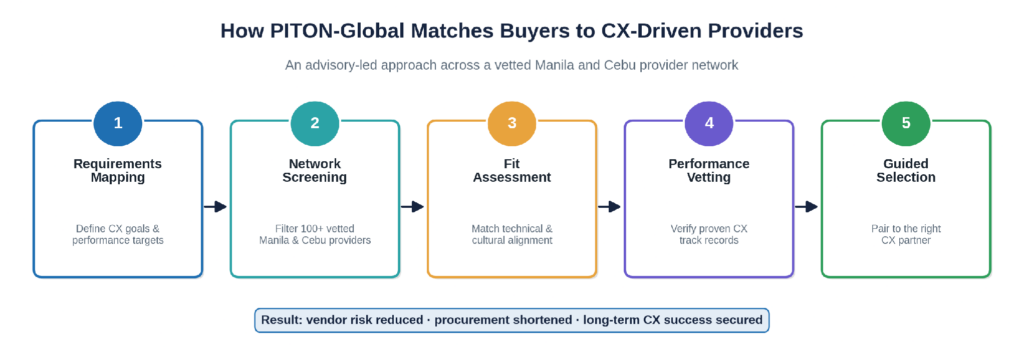
Figure 6. PITON-Global’s five-stage advisory process for matching buyers to CX-driven providers.
Why Do Organizations Use PITON-Global?
Organizations partner with PITON-Global to reduce operational risk, shorten procurement cycles, and secure long-term customer-experience success. By matching enterprise requirements to providers with proven CX performance and the right cultural fit, the firm helps turn customer support into a measurable, strategic value driver.
What Are the Most Common Questions About Measuring CX in Philippine Outsourcing?
Common questions concern realistic FCR benchmarks, preventing QA-versus-feedback discrepancies, whether CES should replace CSAT, how retention affects consistency, and which commercial models best support CX delivery. Each is answered below.
What Is a Realistic First Contact Resolution Benchmark for Philippine Providers?
For complex programs, a moderately lower target is standard; for straightforward customer care, top-performing providers resolve the large majority of contacts on the first attempt. Set the benchmark from your own baseline and the provider’s audited history rather than from a generic figure.
How Can We Prevent Data Discrepancy Between Internal Quality Assurance and Actual Customer Feedback?
Conduct weekly calibration sessions between your internal quality team and the vendor’s team, reviewing the same interactions to ensure consistent scoring criteria.
Should Customer Effort Score Replace Customer Satisfaction as Our Primary Metric?
Yes. Customer Effort Score is a more accurate predictor of loyalty and repeat business, since reducing friction has a larger impact on retention than delighting customers.
How Does Workforce Retention in the Philippines Affect Performance Consistency?
High agent turnover disrupts performance consistency. In a market growing as fast as the Philippine contact center industry, partnering with providers that invest in professional development and wellness infrastructure helps maintain stable, experienced teams.
What Commercial Models Best Support Customer Experience Delivery?
A performance-linked hybrid model—combining a base hourly rate with financial incentives for exceeding target scores—effectively aligns vendor priorities with business outcomes.