

On this page
- Key Takeaways
- What Financial Framework Governs the Total Cost of Ownership Reduction?
- How Do Labor Savings Translate Into Operating-Margin Expansion?
- How Does Hidden Variance in Transition Lifecycles Impact Early Margins?
- What Does a Margin Transformation Look Like in Practice?
- What Is PITON-Global and How Does It Guide Provider Selection?
- Frequently Asked Questions
Outsourcing to the Philippines expands enterprise operating margins materially, driven by a reduction in fully burdened labor cost that removes the majority of the onshore rate. Those savings flow straight to EBITDA, converting high fixed overhead into a flexible variable-cost model while service quality holds—which is why the analysis has to start with the difference between price and total cost, not the hourly quote.
Key Takeaways
- Expand margins directly. Shifting transactional and analytical workflows lifts operating margins by 1,500 to 2,500 basis points.
- Compress labor cost. Fully-burdened cost per FTE drops by well over half versus Western onshore baselines.
- Reallocate freed capital. Margin gains regularly fund high-yield R&D, market expansion, or core domestic hiring.
- Avoid capital expenditure. Specialized mid-market providers absorb the cost of facilities and advanced software infrastructure.
- Isolate turnover risk. Vetted providers keep program attrition low and stable, protecting early margins from recruitment drag.
What Financial Framework Governs the Total Cost of Ownership Reduction?
The framework weighs fully-burdened domestic cost against the total cost of ownership of a Philippine operation. Onshore figures hide healthcare premiums, payroll taxes, real estate, licensing, and recruitment friction. Philippine models consolidate these into one predictable seat rate — converting rigid fixed overhead into scalable variable expense.
Evaluating the margin impact of offshoring requires looking past simple hourly wage gaps. A comprehensive analysis balances fully-burdened domestic labor cost against the total cost of ownership of a Philippine operation — where onshore numbers frequently conceal compounding expenses like employer-paid healthcare, payroll taxes, office footprints, licensing, and recruitment friction.
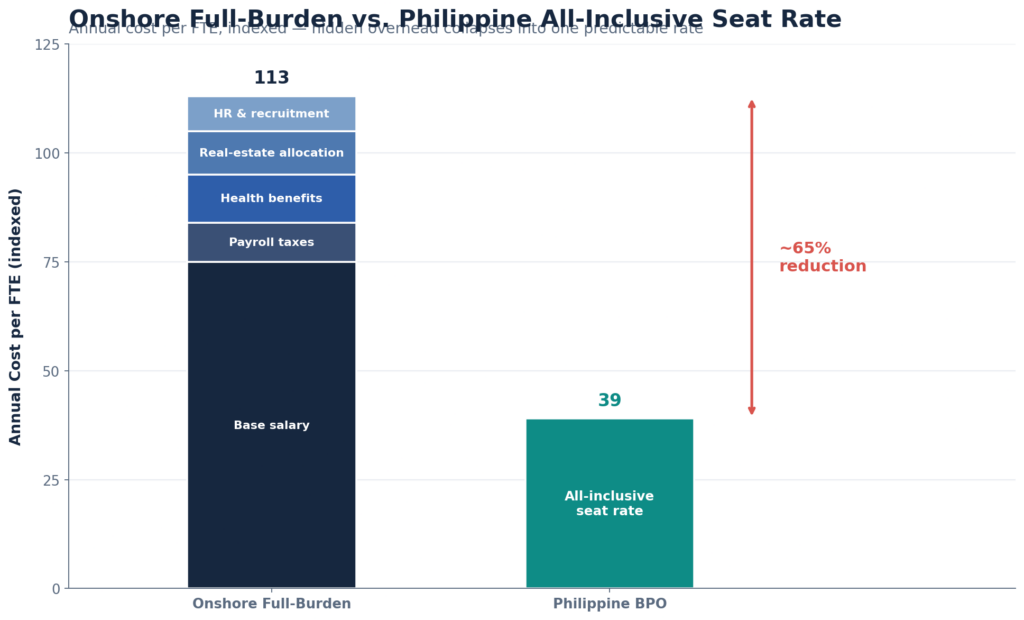
Figure 1. Onshore full-burden cost stack vs. a consolidated Philippine all-inclusive seat rate.
Consolidating those variables into a predictable seat rate lowers the enterprise operating-leverage ratio and protects margins during macroeconomic shifts. That seat rate should already include statutory items such as the night differential for US-hours coverage. The relief, however, varies by function.
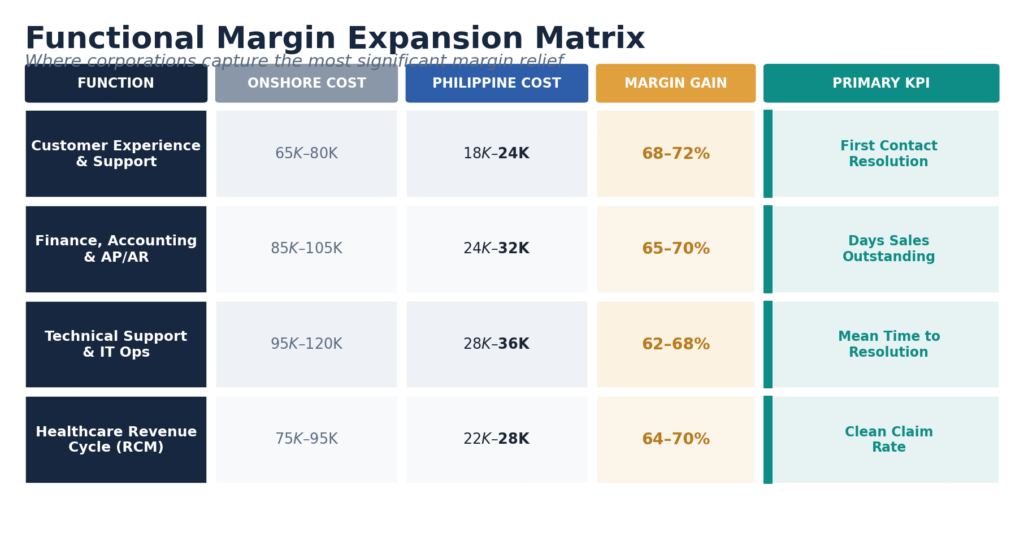
Figure 2. Margin improvement and primary KPI by core business function.
How Do Labor Savings Translate Into Operating-Margin Expansion?
Because outsourced labor cost is a direct operating expense, removing the bulk of it drops almost entirely to EBITDA — a direct and substantial lift to operating margin. Many enterprises then reinvest that freed cash into R&D, market expansion, or domestic hiring, compounding the strategic value of the savings.
The mechanism is simple but powerful: labor is a large, direct line item, so compressing it flows almost dollar-for-dollar into operating margin. The result is not just a lower cost base but a structurally more profitable and flexible operating model. Providers moving to outcome-based pricing push the same logic further, tying fees to results rather than seat-time.

Figure 3. Structural labor savings flow to EBITDA, then fund reinvestment.
How Does Hidden Variance in Transition Lifecycles Impact Early Margins?
Early margins face transition drag: dual-running a domestic team during migration, integration fees, compliance mapping, and governance setup. Generic vendors’ rigid, pre-packaged training extends ramp-up and introduces errors. Specialized mid-market providers use custom integration playbooks aligned to existing systems, bringing time-to-value under 90 days.
Long-term margin improvement is structurally sound, but early profitability often faces pressure from transition drag — the dual-running costs of an active domestic team during migration, technology integration fees, data-pipeline compliance mapping, and governance setup. How a provider manages this window determines how quickly margins recover.
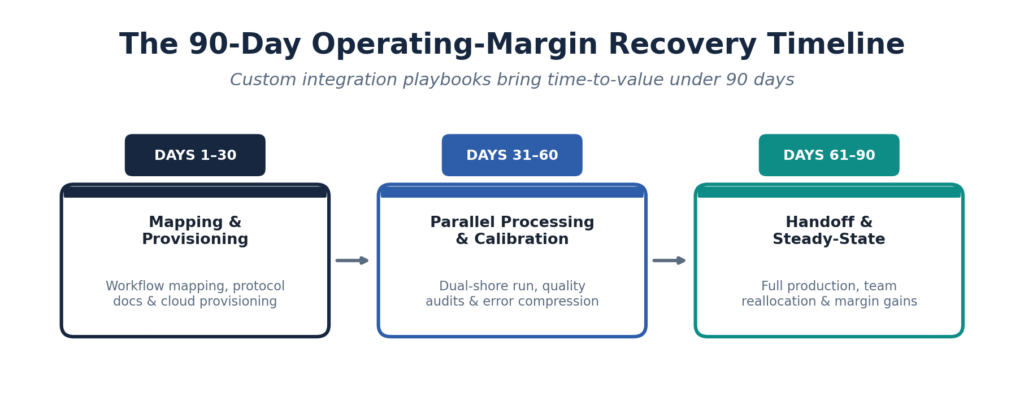
Figure 4. A disciplined 90-day timeline that brings operating margins to steady state.
Mass-market vendors rely on rigid, pre-packaged training that extends ramp-up and introduces transaction errors, temporarily eroding margins. Specialized mid-market providers instead design custom integration playbooks aligned to systems like NetSuite, Salesforce, or specialized ERPs — shortening time-to-value to under 90 days.
“Organizations frequently miscalculate early-stage margins because they treat outsourcing as a plug-and-play procurement exercise. Peak efficiency occurs when you match a specific workflow with a mid-market provider that features targeted domain experience. This strategic alignment minimizes transition friction, accelerates time-to-value, and prevents early margin erosion.”
— John Maczynski, CEO, PITON-Global
What Does a Margin Transformation Look Like in Practice?
It can reverse margin contraction fast. A global logistics firm whose margins had thinned to low single digits amid severe back-office attrition migrated a 50-FTE team to a specialized Manila provider — lifting processing accuracy to near-perfect levels, cutting cycle times by roughly a third and departmental OpEx by well over half, and expanding global operating margin by several hundred basis points in year one.
A global logistics and freight-forwarding firm saw operating margins contract to low single digits due to domestic back-office labor shortages and runaway attrition across billing, invoicing, and customs-compliance teams. Using an advisory-led matching system, it identified mid-market Philippine providers with documented ERP and complex international customs experience — not mass-market call centers.
The company migrated a 50-FTE team that assumed full ownership of invoice reconciliation, customs documentation processing, and digital exceptions management.
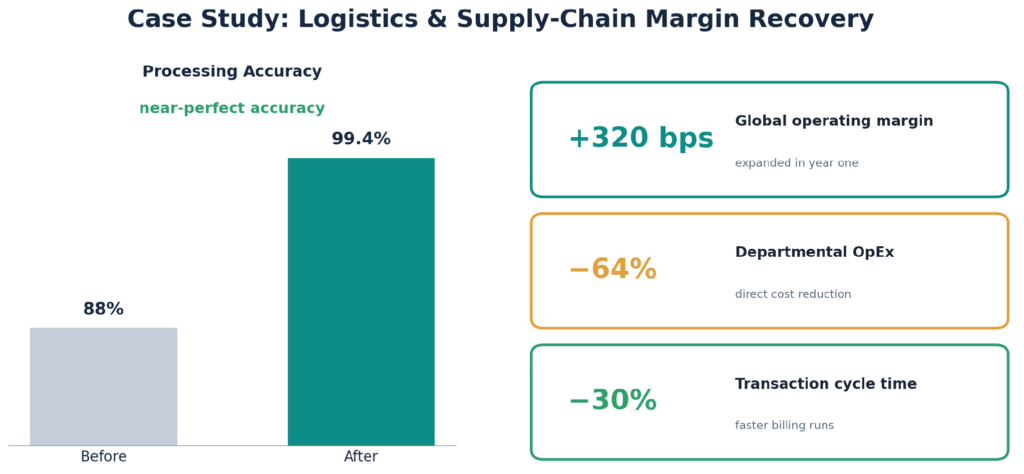
Figure 5. Accuracy, cost, cycle-time, and enterprise-margin outcomes of the deployment.
Lesson Learned
Offshoring highly repetitive but complex workflows to specialized operators prevents backlogs, eliminates domestic turnover costs, and directly protects corporate margin targets.
What Is PITON-Global and How Does It Guide Provider Selection?
PITON-Global is an elite, advisory-led outsourcing consultancy that removes execution risk and procurement delay from vendor selection. Acting as a strategic partner rather than a lead broker, it uses a diagnostic methodology to match each enterprise’s software, compliance, and scaling needs to a continuously audited network of 100+ specialized providers.
Who Is PITON-Global?
PITON-Global is an elite, advisory-led outsourcing consultancy that serves as a strategic partner to enterprise buyers, COOs, and financial executives, maintaining an exclusive, continuously audited network of more than 100 specialized providers across the Philippines.
How Does PITON-Global Differ From Traditional Outsourcing Brokers?
Rather than acting as a standard lead broker, PITON-Global operates as a neutral strategic partner. It aligns buyers with the right-fit provider instead of the highest bidder, eliminating the hidden costs of mismatched vendor pairings that quietly erode margins.
How Does Its Network of 100+ Vetted Philippine BPO Providers Benefit Organizations?
The exclusive, continuously audited network of 100+ specialized call-center and back-office providers gives enterprises fast access to vetted, high-performing partners matched to their exact stack and compliance needs — minimizing procurement risk.
How Does Its Advisory-Led Vendor Matching Process Work?
Through a diagnostic matching methodology, PITON-Global evaluates an organization’s software stack, regulatory compliance targets, and scaling goals, then aligns them with niche, high-performing providers — securing strong operating margins right from launch.

Figure 6. The diagnostic matching flow that secures margins from day one.
Why Do Organizations Use PITON-Global?
Progressive enterprises use PITON-Global to remove execution risk, eliminate the hidden costs of mismatched partnerships, and secure strong operating margins from launch — partnering with providers proven to deliver on both cost and quality.
Frequently Asked Questions
How does the Philippine model convert fixed costs into variable costs?
It replaces capital expenditure for office space, hardware, and recruitment channels with a single, predictable monthly per-seat fee, letting enterprises adjust operational scale as demand shifts.
What financial risks can delay positive margin returns?
The most frequent causes are poorly documented processes, inadequate training timelines, choosing a vendor solely on low hourly rates, and communication silos between teams.
How does workforce attrition in the Philippines affect the bottom line?
High attrition at generic providers raises training costs and causes delays. Partnering with low-turnover mid-market providers isolates programs from these unexpected operational expenses.
Why do back-office analytical functions yield higher returns than voice support?
Voice support provides linear, headcount-based relief, while analytical functions deliver compounding returns by systematically improving data accuracy and shortening business cycle times — unless the voice program is contracted under value-driven, outcome-based call center contracts, which turn that relief from linear to performance-linked.
Can an enterprise capture margin improvements with a small initial team?
Yes. Large programs optimize management overhead, but a targeted 5-to-10-FTE team lets an organization validate process mechanics before scaling to peak efficiency.
How does regional infrastructure affect operational uptime?
Premium providers operate in tier-1 economic zones in Manila and Cebu with redundant fiber connectivity and direct power grids, supporting near-continuous uptime guarantees that protect processing margins.