

On this page
- Key Takeaways
- Why Is Traditional Attrition a Critical Threat to Onshore Operational Continuity?
- What Frameworks and Metrics Drive Employee Retention in the Philippines?
- How Does Cultural Alignment and Localized Leadership Prevent Early Attrition?
- What Does a Successful Workforce-Stabilization Deployment Look Like?
- How Does PITON-Global Help Enterprises Build Stable Offshore Teams?
- What Are the Most Common Questions About Workforce Stability in Philippine BPOs?
Outsourcing companies in the Philippines maintain workforce stability by combining structured career progression and premium health benefits with expansion into provincial university hubs. This mitigates urban recruitment friction and talent raiding, and—paired with culturally aligned leadership—keeps annual attrition well below volatile global averages. Retention is the last link in recruiting, training and keeping offshore agents, and for a buyer it decides whether the investment in ramp-up pays off.
Key Takeaways
- Provincial talent cultivation: Migrating program footprints from oversaturated metros to secondary university hubs lowers frontline friction and secures multi-year retention.
- Structural benefits engineering: Top providers integrate comprehensive family healthcare and clear skill-upgrading paths to counter standard poaching tactics.
- Culturally aligned leadership: Management frameworks built on Malasakit—genuine shared accountability—build institutional loyalty and lower unprogrammed turnover.
- Predictive attrition mitigation: Vetted providers use data-driven workforce analytics to catch early signs of agent burnout up to 30 days before service is affected.
Why Is Traditional Attrition a Critical Threat to Onshore Operational Continuity?
Attrition is a critical threat because high annual turnover continuously drains institutional knowledge, lengthening hold times and lowering first-contact resolution. Since agents take months to reach peak efficiency, teams that turn over every 9–12 months stay trapped in a costly learning phase.
High turnover in domestic contact centers and back-office teams creates a costly cycle of recruitment, onboarding, and training. When an onshore program loses a large share of its agents every year, institutional knowledge drains out continuously, producing longer hold times, lower first-contact resolution, and dropped balls on key corporate files.
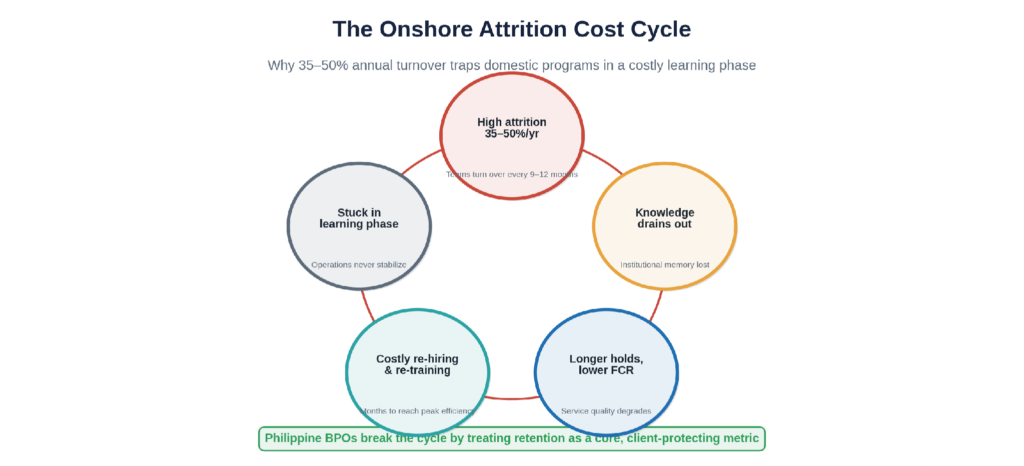
Figure 1. The attrition cost cycle that traps high-turnover domestic programs in a perpetual learning phase.
For enterprise buyers, the financial impact extends far beyond hiring fees. It takes months of live production for a new support agent or financial analyst to reach peak efficiency, so when teams turn over every nine to twelve months, operations never escape that costly ramp. Philippine BPO providers address this structural vulnerability by treating retention as a core metric that directly protects client operational quality.
What Frameworks and Metrics Drive Employee Retention in the Philippines?
Retention is driven by four vectors: sourcing from Next Wave provincial cities, day-one family healthcare, structured upskilling tied to certifications, and predictive workforce analytics. Together they push annual attrition well below tier-1 metro and Western norms.
Maintaining a stable workforce requires a structured, multi-layered approach to compensation, wellness, and career paths. Elite providers build comprehensive retention programs that make operations resilient to market shifts. The comparison below shows how advanced Philippine protocols differ from standard industry practice on each vector.
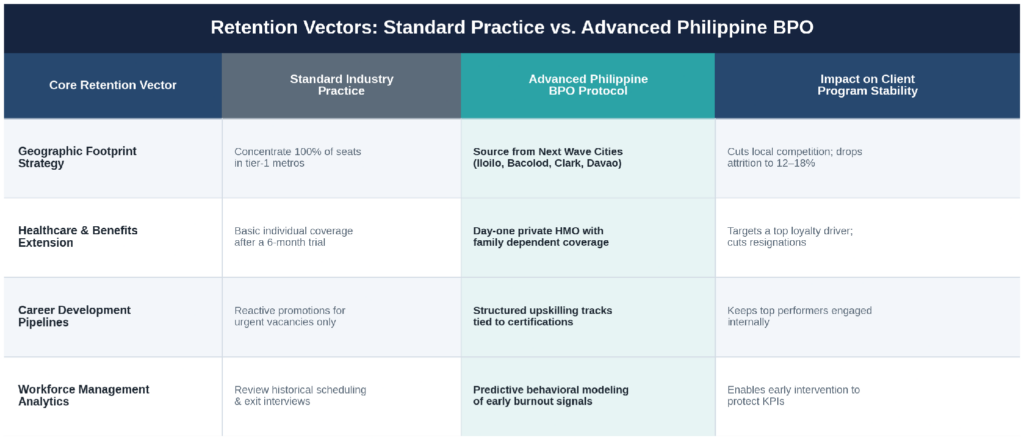
Figure 2. Four retention vectors and how advanced Philippine BPO protocols strengthen client program stability.
The cumulative effect is a dramatic reduction in annual attrition once a program combines provincial sourcing with deliberate retention engineering:
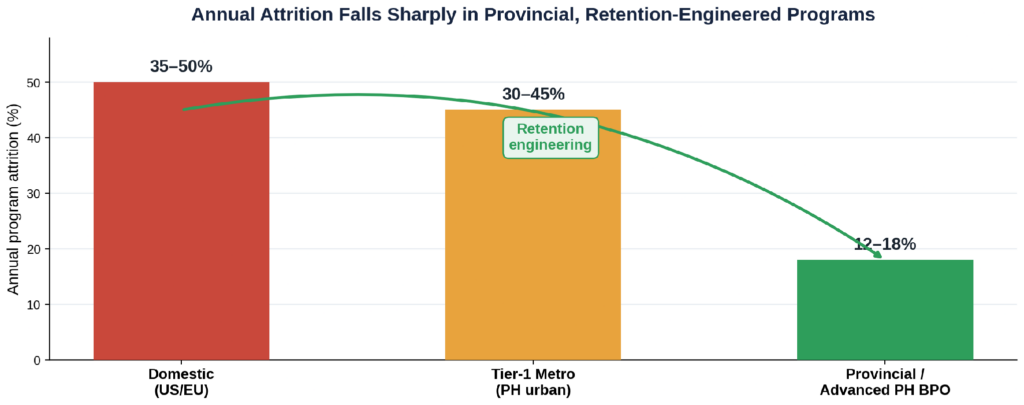
Figure 3. Annual program attrition falls sharply in provincial, retention-engineered programs.
How Does Cultural Alignment and Localized Leadership Prevent Early Attrition?
Workforce stability is closely tied to Malasakit—a deep sense of personal ownership, empathy, and shared accountability. Managing by metrics alone erodes engagement, while supportive workspaces, regular team building, and accessible leadership make professionals feel valued and stay longer.
Western organizations often overlook how local management style affects offshore retention. In the Philippines, stability is closely tied to the cultural concept of Malasakit—a deep sense of personal ownership, empathy, and shared accountability.
When supervisors manage by simply watching numbers on a screen without building human connection, engagement drops and turnover rises. High-performing providers counter this by designing supportive workspaces, hosting regular team-building events, and keeping leadership accessible—creating a culture where professionals feel valued as critical contributors rather than interchangeable line items.
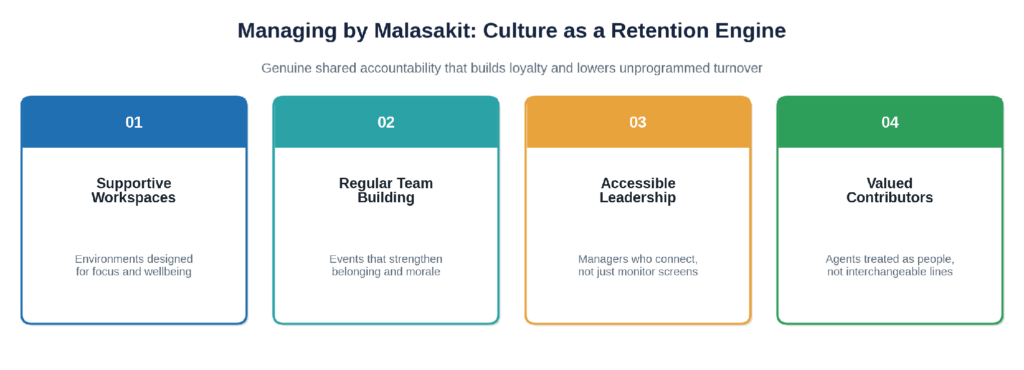
Figure 4. Managing by Malasakit translates cultural accountability into four concrete retention practices.
True workforce stability in the offshore environment cannot be bought through basic salary adjustments alone; it must be engineered into the workplace culture. When you partner with a provider that blends competitive family healthcare benefits with clear career paths in secondary university hubs, you insulate your business from the aggressive poaching common in saturated metro areas. Stability is the foundation of high-quality operational delivery.
— John Maczynski, CEO, PITON-Global
What Does a Successful Workforce-Stabilization Deployment Look Like?
A successful stabilization moves a complex program to a specialized provincial provider offering day-one family benefits and certification tracks. One enterprise software firm cut technical-support attrition to a fraction of its former level, sped up SLA resolution, lifted CSAT substantially, and cut costs sharply.
Client Challenge
A Silicon Valley enterprise software company faced severe service issues from chronically high annual attrition in its domestic tier-1 technical support team. The continuous loss of trained staff caused missed SLAs, low CSAT, and a growing ticket backlog.
Vendor Selection
The company partnered with PITON-Global to move away from rigid, volume-driven global models. PITON-Global used its advisory framework to screen its network of 100+ vetted Philippine BPOs, seeking mid-market providers with deep technical capability, drawn from the country’s technology talent networks, and proven retention in secondary tech hubs.
Solution Implemented
The company selected a specialized mid-market BPO in a prominent provincial university hub, which launched a dedicated 40-seat technical support pod offering day-one family health benefits and structured technical certifications tailored to the client’s complex software suite.
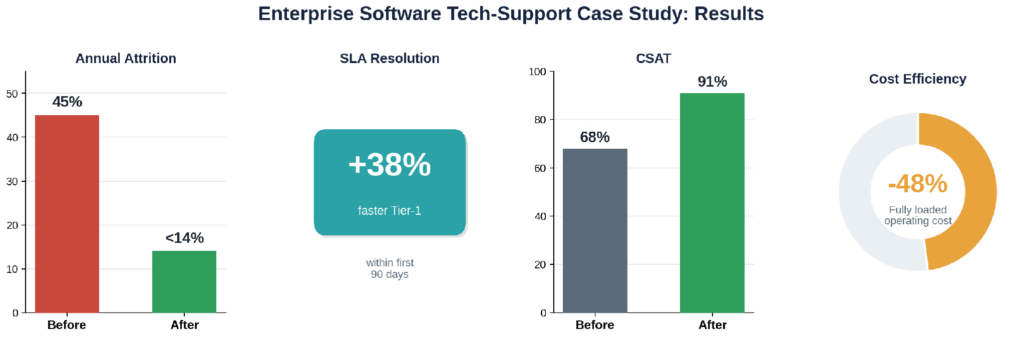
Figure 5. Quantifiable outcomes of the workforce-stabilization deployment.
Outcomes and Lessons
Annual program attrition dropped to a fraction of its former level, tier-1 ticket resolution improved markedly within 90 days, CSAT rose substantially on the back of consistent agent performance, and fully loaded operating costs fell sharply versus domestic staffing. The lesson: moving complex support to specialized, mid-market providers in provincial tech hubs shields teams from local poaching and keeps institutional knowledge inside the business.
How Does PITON-Global Help Enterprises Build Stable Offshore Teams?
PITON-Global is a vendor-neutral BPO advisory and outsourcing consultancy that engineers stability into offshore deployments. Using an advisory-led framework across a network of 100+ vetted providers, it removes selection guesswork and builds scalable teams that retain knowledge while lowering overhead.
Who Is PITON-Global?
PITON-Global is a premier, vendor-neutral BPO advisory and outsourcing consultancy that helps enterprise organizations plan, structure, and deploy high-performance call center and back-office teams in the Philippines. Rather than reselling capacity, it acts as a strategic advisor, drawing on decades of executive operations experience to guide every deployment toward stability.
How Does PITON-Global Differ from Traditional Outsourcing Brokers?
Traditional brokers focus on purely transactional matches. PITON-Global uses an advisory-led, vendor-neutral framework instead—filtering its network objectively and matching each client to the exact partner for its technical requirements, security needs, and culture, with the focus on long-term stability and client outcomes rather than provider promotion.
How Does PITON-Global’s Network of 100+ Vetted Philippine BPO Providers Benefit Organizations?
Access to an exclusive network of more than 100 carefully vetted, fully compliant providers lets organizations skip the guesswork of vendor selection. Coverage spans tier-1 metros and Next Wave provincial hubs, so buyers can prioritize partners with proven retention records, family-benefit structures, and the cultural management style that keeps teams stable.
How Does PITON-Global’s Advisory-Led Vendor Matching Process Work?
The process runs from requirements audit to stabilized delivery: mapping technical, security, and culture needs; screening the vetted network; vetting attrition, benefits, and hub strategy; running the full RFP while inspecting pricing and compliance; then deploying the pod and tracking KPIs and retention.
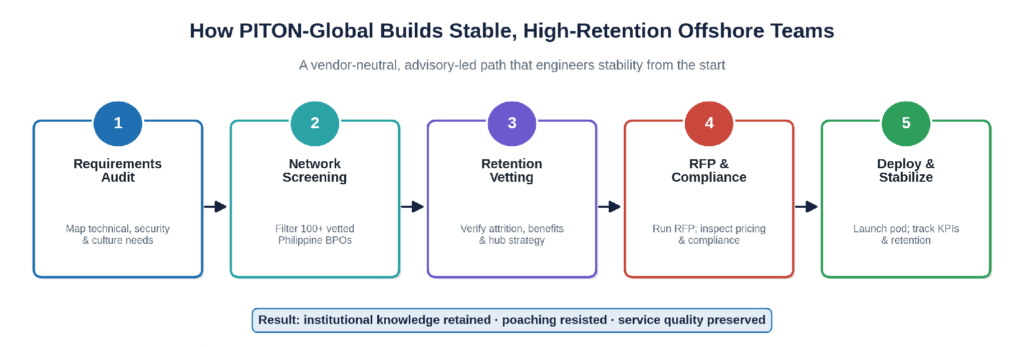
Figure 6. PITON-Global’s five-stage process for building stable, high-retention offshore teams.
Why Do Organizations Use PITON-Global?
Organizations use PITON-Global to remove guesswork from vendor selection, minimize operational risk, and avoid common offshoring mistakes. By handling the full RFP, pricing analysis, and compliance inspection—and prioritizing retention—the firm helps leaders build scalable, highly stable offshore teams that lower overhead while preserving institutional knowledge and service quality.
What Are the Most Common Questions About Workforce Stability in Philippine BPOs?
Common questions concern average attrition rates, why family healthcare matters so much, how provincial hubs compare to Metro Manila, how night-shift handoffs stay smooth, and how career paths affect service quality. Each is answered below.
What is the average annual attrition rate for BPO companies in the Philippines?
Large call centers in high-density urban areas can see high annual attrition, but top-tier mid-market providers and provincial operations consistently keep turnover far lower through targeted retention programs.
Why do family healthcare benefits play such a critical role in team retention?
In the Philippine workforce ecosystem, private healthcare coverage (HMO) that includes family dependents is a highly valued benefit. Providing health security for an employee’s family drives long-term loyalty and reduces unexpected resignations.
How do provincial BPO hubs compare to Metro Manila regarding stability?
Provincial university hubs like Iloilo, Bacolod, and Dumaguete generally offer significantly higher workforce stability. Lower competition from rival BPOs leads to longer employee tenure and a more focused, dedicated workforce.
How do Philippine providers ensure smooth operational handoffs during night shifts?
Local BPOs use automated workforce-management platforms alongside clear operational protocols. Overlapping shift windows and real-time dashboard tracking ensure critical data and unresolved tickets move seamlessly between teams without disruption.
How do structured career paths impact long-term service quality for clients?
When professionals see clear advancement paths within a program, they stay motivated to build deep product expertise, the depth behind the breadth-and-depth T-shaped agent model. That retained experience leads to higher first-contact resolution and more reliable long-term service quality.