

High-growth companies use business process outsourcing (BPO) in the Philippines to bypass local recruitment bottlenecks, instantly deploy advanced tech-enabled CX infrastructure, and cut operational overhead sharply—transparent per-seat rates for a scaling team show exactly where that reduction comes from. This converts high upfront capital into flexible, volume-indexed operating expense—letting fast-scaling enterprises reinvest directly into product innovation, marketing, and market acquisition.
Key Takeaways
- Substantial cost-to-value arbitrage: Fully burdened seats in primary Philippine delivery centers cost far less than domestic onshore options, instantly preserving runway.
- On-demand talent elasticity: A vast pool of university-educated, English-fluent professionals compresses team-building from months to days.
- Fiscal optimization via macro incentives: Partners backed by the CREATE MORE Act capture enhanced deductions on training and technology infrastructure.
- De-risked 24/7 operations: Continuous uptime and strict data-privacy compliance (SOC 2, ISO 27001) without internal infrastructure development.
- Strategic reinvestment capital: Freeing executive focus and capital lets fast-scaling organizations prioritize customer acquisition over administrative overhead.
What Drivers Cause Fast-Scaling Brands to Outsource Rather Than Hire Internally?
Speed. When a company hits product-market fit, acquisition volumes outpace internal capacity, and scaling support, data, or technical teams internally exposes bottlenecks—slow recruitment, payroll taxes, HR liabilities, and real-estate costs. Philippine BPO hubs bypass that friction, turning fixed payroll into an elastic, variable model and delivering institutional velocity.
For high-growth companies, speed is the ultimate competitive advantage. When a company achieves product-market fit, customer-acquisition volumes frequently outpace internal capacity. Scaling internal customer care, data operations, or technical helpdesks quickly reveals structural bottlenecks: slow local recruitment cycles, rising payroll taxes, complex HR liabilities, and expensive real-estate requirements.
By using BPO services in the Philippines, agile organizations bypass these issues entirely. Instead of building infrastructure from scratch, they hook into pre-established, world-class delivery hubs—following a structured technology-integration framework rather than stitching systems together ad hoc—converting fixed payroll risk into an elastic, variable expense that expands or contracts with volume in real time. The primary driver is not simply lowering headcount cost; it is achieving institutional velocity.
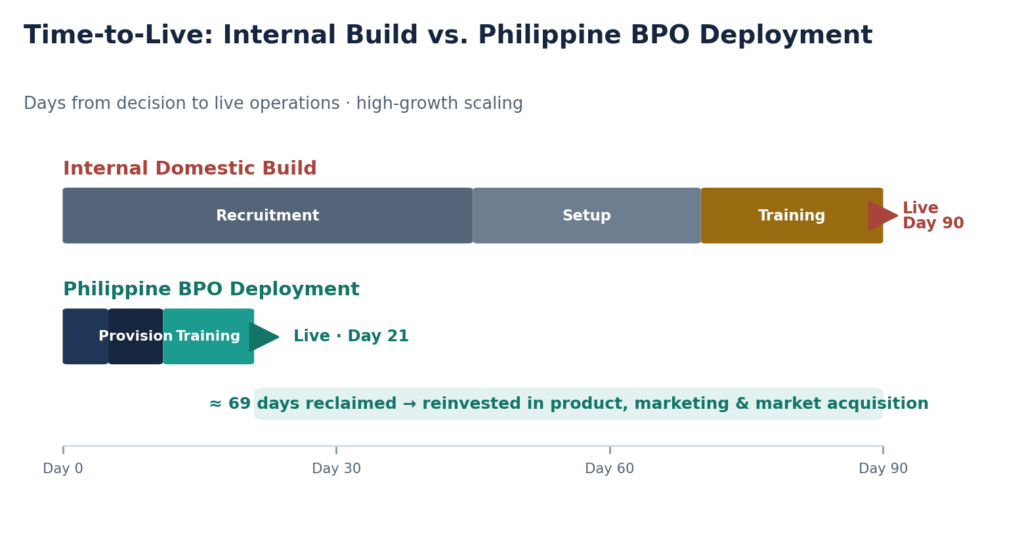
Figure 1. A representative time-to-live comparison—and what the reclaimed days are reinvested toward.
What Are the Real Operational Costs and Scaling Benchmarks?
Onshore support seats carry a heavy fully loaded monthly cost; turnkey Philippine BPO seats run a fraction of that across hubs like Manila, Cebu, and Iloilo. Under CREATE MORE, registered enterprises also gain a reduced corporate income tax rate under the Enhanced Deductions Regime and an enhanced deduction on power expenses—savings passed through as stable pricing.
To make informed decisions, financial officers must look past hourly rates and evaluate fully burdened operational cost. Onshore support positions carry a substantial fully loaded monthly cost once base salary, healthcare, workers’ compensation, recruitment, and office overhead are included. Premium, office-based delivery centers in hubs like Metro Manila, Cebu, and emerging locations such as Iloilo offer turnkey, enterprise-grade setups for a fraction of that.
The Philippine business-process-management landscape has evolved well beyond basic data entry. High-growth sectors—fintech, healthtech, and e-commerce—regularly scale specialized, analytics-enabled teams alongside automated customer-relationship workflows and outsourced social media engagement.

Figure 2. Fully burdened monthly operational cost by role: internal domestic versus turnkey Philippine BPO.
The local tax framework further protects foreign capital. The CREATE MORE Act provides high fiscal certainty: registered BPOs using the Enhanced Deductions Regime enjoy a lowered corporate income tax rate and an enhanced deduction on power expenses. Premium providers pass these macro-level savings straight through, keeping contract costs insulated from global inflationary trends.
How Do Enterprise Risks and Technical Compliance Align Offshore?
A common concern is that offshoring compromises quality or data security. In practice, Tier-1 Philippine facilities operate under institutional compliance that matches or exceeds Western environments—spanning certified data governance, redundant infrastructure, and a continuously upskilled workforce native to Western tech stacks.
A common concern among executive teams is that moving operations offshore might compromise quality control or data security. However, Tier-1 Philippine facilities operate under strict, institutional compliance guidelines that match or exceed Western corporate environments across three dimensions:
Data Governance and Integrity
Biometric access controls, thin-client computing, and formal ISO 27001, SOC 2 Type II, PCI-DSS, and HIPAA-compliant infrastructure.
Physical Redundancy
Dedicated economic zones equipped with automated dual-feed power generators and redundant undersea fiber backbones for continuity.
Skill Integration
Systematic upskilling into specialized system administrators, QA specialists, and data analysts who work smoothly within Western tech stacks.
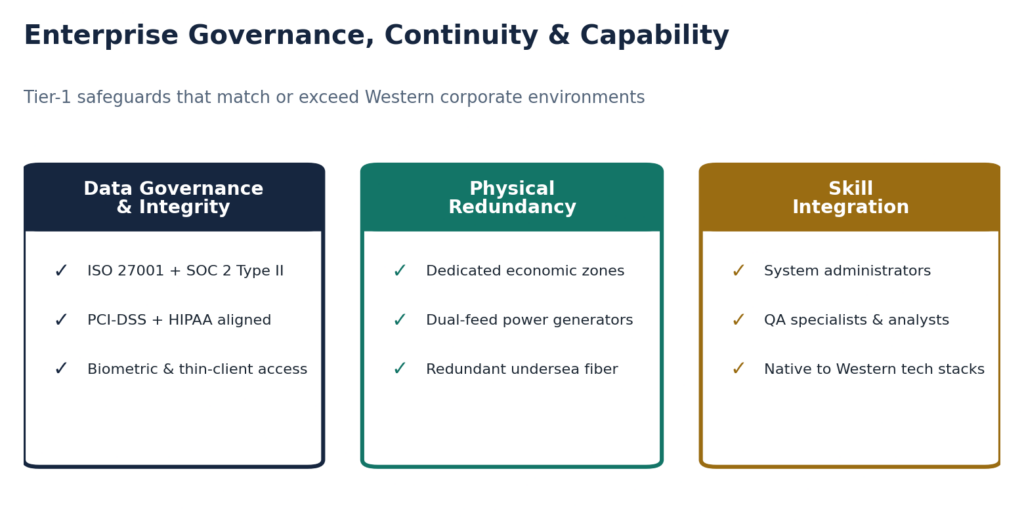
Figure 3. The governance, continuity, and capability safeguards to verify in any Tier-1 partner.
“High-growth scaling requires moving past basic labor-arbitrage thinking. The elite enterprises expanding into the Philippines are setting up highly integrated ‘value-creation centers.’ They leverage a young, university-educated, highly tech-literate workforce that can operate advanced automated workflows while protecting data integrity.”
— John Maczynski, CEO, PITON-Global
How Did a Silicon Valley Fintech Absorb a Fourfold Sign-Up Surge?
After a sudden fourfold sign-up surge created a KYC backlog and compliance delays, PITON-Global shortlisted three security-specialized providers in five business days. A 50-agent SOC 2 verification unit in Manila cut onboarding approval from 48 hours to under 12 minutes, held data accuracy near-perfect, and lowered scaling costs dramatically.
Client Challenge
A venture-backed fintech platform hit an overnight fourfold surge in user sign-ups, creating a massive identity-verification (KYC) backlog, critical compliance delays, and falling customer-satisfaction scores.
Vendor Selection
PITON-Global audited the platform’s security needs and screened its network to shortlist three specialized mid-market providers with proven compliance and data-security backgrounds—within five business days.
Solution Implemented
It deployed an office-based, 50-agent fraud and document-verification unit in Manila within a SOC 2-certified facility, wired to real-time performance-tracking APIs.
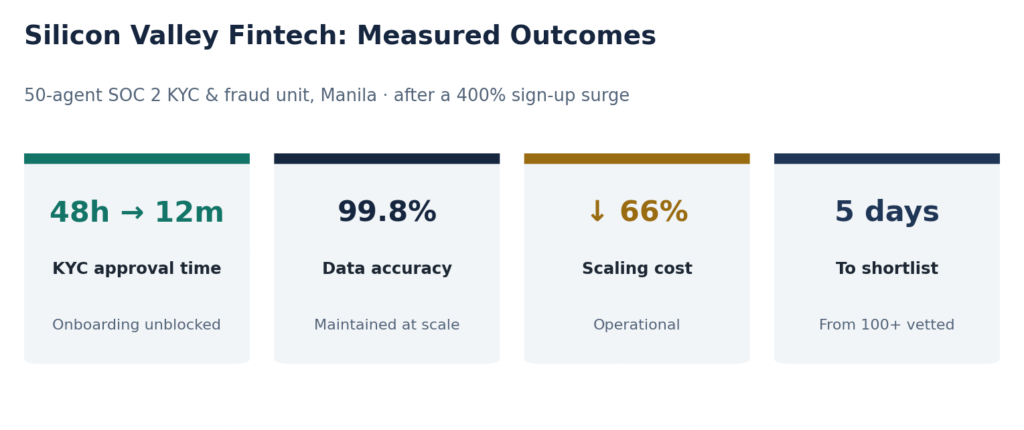
Figure 4. Measured outcomes of the fintech rapid-scale engagement.
Lessons Learned
Successful offshore expansion depends on matching specific compliance needs to vetted, specialized mid-market BPOs rather than defaulting to massive, slow-moving legacy operators—and on keeping the partner ecosystem consolidated as scope grows.
What Role Does PITON-Global Play in Accelerating Expansion?
PITON-Global is a specialized BPO advisory and consultancy, distinct from traditional broker models. Led by senior contact-center operators, it acts as an objective corporate advocate—providing independent, data-driven oversight across a vetted network of 100+ premium Philippine providers.
Who Is PITON-Global?
PITON-Global is a business-process-outsourcing advisory and consultancy led by international executives with decades of hands-on contact-center governance experience. Rather than commanding a proprietary footprint, it functions as an objective corporate advocate and risk-mitigation partner—guiding high-growth enterprises through the Philippine provider landscape to the operators that genuinely fit their velocity and compliance needs.
How Does PITON-Global Differ from Traditional Outsourcing Brokers?
Traditional brokers drive biased, commission-based referrals; PITON-Global does not. It provides independent, data-driven oversight across a rigorously vetted network and scores providers on objective criteria—domain fit, compliance, and commercial terms—so recommendations serve the client’s growth, not a referral incentive.
How Does PITON-Global’s Network of 100+ Vetted Providers Benefit Organizations?
A vetted network of more than 100 premium call-center and back-office operators removes procurement blind spots and the risk of independent sourcing. Because each provider is pre-screened, fast-scaling companies reach a best-fit shortlist in days—as in the case above, where three security-specialized providers were identified within five business days.
How Does PITON-Global’s Advisory-Led Vendor Matching Process Work?
PITON-Global runs a structured sourcing sprint: it audits security and volume needs, screens the vetted network, scores candidates on fit, compliance, and terms, and delivers a ranked, best-fit shortlist—typically within five business days. This eliminates procurement blind spots, protects data integrity, and optimizes commercial agreements before launch.

Figure 5. PITON-Global’s five-business-day sourcing sprint, from audit to best-fit shortlist.
Why Do Organizations Use PITON-Global?
High-growth organizations use PITON-Global to eliminate procurement blind spots, protect data integrity, optimize commercial agreements, and accelerate long-term operational success. By staying strictly vendor-neutral and matching specific requirements to proven providers, the firm compresses time-to-launch and lets leadership focus on expansion rather than vendor hunting.
What Else Should Fast-Scaling Buyers Know?
Buyers most often ask about time-zone collaboration, language and culture, launch speed, operational minimums, and IP protection. The answers below address each.
How does the time difference affect real-time collaboration?
Premium BPOs run continuous 24/7 operations aligned to Western time zones. Dedicated teams work overlapping schedules, ensuring seamless, real-time collaboration with domestic managers.
What language and cultural barriers should buyers expect?
The Philippines is the world’s leading contact-center destination, with near-universal literacy and strong Western cultural affinity. Agents are highly proficient in professional English, minimizing communication friction.
How fast can an enterprise-grade team launch?
While an internal domestic team often takes 90 to 120 days, PITON-Global’s vetted network can provision secure infrastructure, align telecom, complete training, and launch within 30 to 45 days.
What are the operational minimums to work with a high-quality BPO?
While legacy giants enforce 50- to 100-seat minimums, PITON-Global partners with premium mid-market and boutique providers that can execute precise programs starting at 10 to 15 seats.
How do we protect intellectual property when outsourcing workflows?
Protection rests on strict contractual frameworks, enforceable NDAs, and routing all data through secure Virtual Desktop Infrastructure (VDI)—so data stays on your enterprise servers without local storage.