

By delegating non-clinical administrative functions to specialized Philippine providers, hospitals convert fixed operational overhead into variable, scalable costs. Internal clinical staff stay focused on patient care while an offshore partner for hospital revenue-cycle work—using workflow automation and HIPAA-compliant infrastructure—runs patient engagement, revenue cycle management, and documentation at a significantly optimized cost basis.
Key Takeaways
- Convert fixed costs to variable. Move high-cost in-house administrative roles offshore so spend aligns with patient volume and service demand.
- Restore clinical focus. Offload medical coding, transcription, and scheduling so physicians reclaim hours lost to administrative compliance.
- Scale on demand. Use offshore partners to ramp resources up or down for seasonal demand or expansion—without long-term local hiring.
- Optimize the revenue cycle. Certified coders and denial-management specialists reduce Days in Accounts Receivable and curb revenue leakage.
- Lead with compliance. Choose partners that embed HIPAA-aligned security, role-based access, and continuous audit logging into standard delivery.
Which Administrative Functions Yield the Highest Return When Outsourced?
Prioritize high-volume, repetitive processes that require specialized knowledge but not physical proximity to the patient. Revenue cycle management, patient engagement, medical scribing and documentation, and eligibility verification deliver the strongest bottom-line impact—improving financial integrity, patient experience, physician retention, and front-door efficiency.
Not all hospital functions are equal in their impact on performance. Expanding without ballooning overhead means starting where specialized, repeatable work can move offshore cleanly. The functions below combine high volume with clear strategic impact.
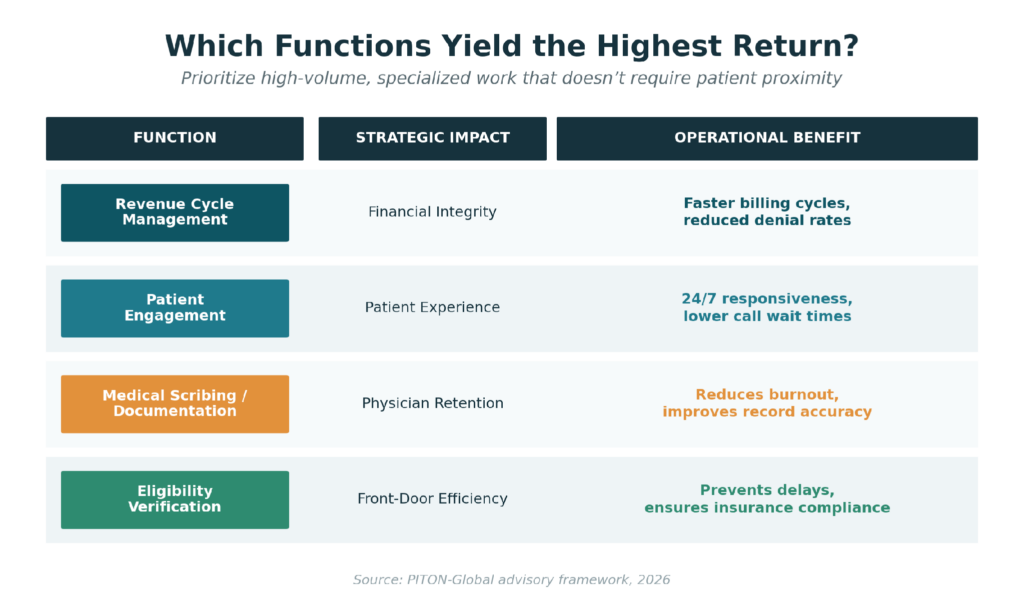
Figure 1. The administrative functions that yield the highest return.
Outsourcing these functions does more than cut cost—it changes the shape of the cost itself. In-house administration behaves like a fixed, lumpy expense: you hire in batches and carry that overhead regardless of demand. An offshore model converts it into a variable cost that scales with patient volume.

Figure 2. Converting fixed overhead into variable, scalable cost.
How Do Philippine Providers Maintain Data Security and Regulatory Compliance?
Healthcare outsourcing is an infrastructure decision, not just a staffing one. Top-tier offshore hubs treat data security as a core product—“secure-room” environments that prohibit personal devices, advanced Data Loss Prevention (DLP) software, and end-to-end encryption—with HIPAA and HITRUST alignment maintained through rigorous, quarterly-refreshed training.
The strongest providers engineer security into the environment rather than bolting it on. Secure-room floors bar personal mobile devices, DLP software monitors and blocks improper data movement, and end-to-end encryption protects all patient-facing data in transit and at rest. Role-based access and continuous audit logging make every action traceable.
Regulatory alignment is treated as an ongoing discipline. HIPAA and HITRUST requirements are reinforced through quarterly-refreshed training, and when a partner operates as an extension of the hospital’s own compliance framework, the result is often lower data-exposure risk than decentralized or poorly managed in-house teams, which is the case for treating an offshore partner as a protected operational backbone.
What Strategic Criteria Should Executive Teams Use for Vendor Selection?
Move beyond cost-per-hour and evaluate operational maturity across four dimensions: clinical literacy (licensed nurses or healthcare-educated staff), technical integration (Epic, Cerner, Athenahealth), governance models (daily QA, feedback, and escalation), and scalability benchmarks (how fast they onboard and train for specialties).
The market is saturated with generalist call centers, so the hourly rate tells you little about fitness for hospital-grade expansion. The framework below separates a true clinical-support partner from a commodity vendor, and it works best once you have checked whether your hospital is ready for healthcare BPO.
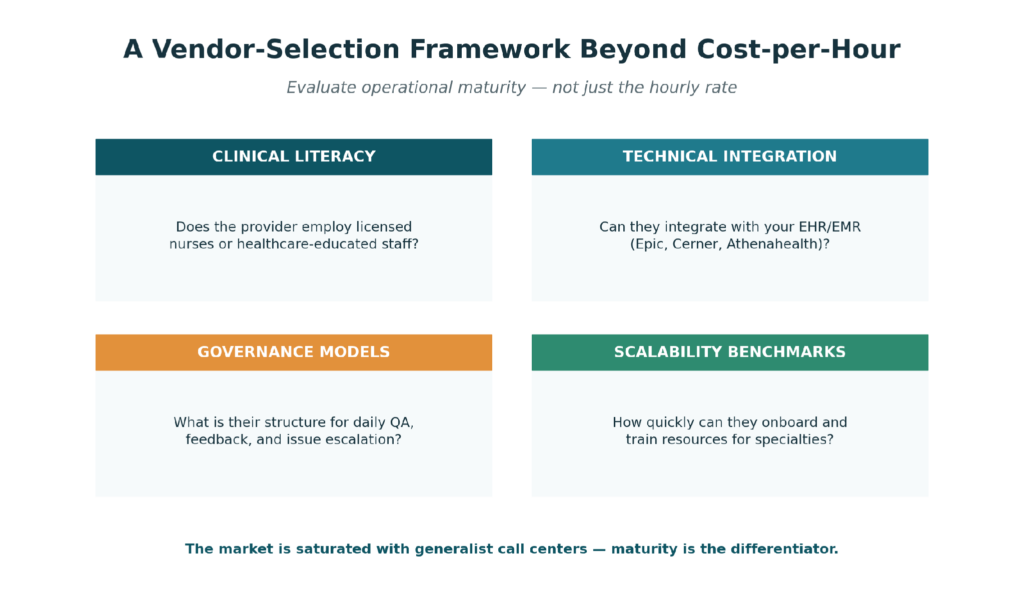
Figure 3. A vendor-selection framework beyond cost-per-hour.
“Healthcare isn’t just another BPO vertical—it’s an entirely different category of risk. The first failure point we see in healthcare outsourcing is scope ambiguity. Revenue protection must be engineered into the delivery model from day one, not treated as an afterthought.”
— John Maczynski, CEO of PITON-Global
What Does Scaling Patient Access Look Like in Practice?
It expands capacity while shrinking cost. A mid-sized U.S. health system facing a sharp rise in appointment cancellations and growing billing denials launched a 25-person offshore pilot—cutting Days in Accounts Receivable by 12, lifting appointment show-rates markedly, and saving hundreds of thousands of dollars a year within six months.
Client challenge. The system faced a steep increase in appointment cancellations and rising billing denials, straining the internal administrative team and revenue flow.
Vendor selection. PITON-Global used its vetting framework to narrow 100+ providers to three with specific expertise in U.S. outpatient clinical workflows and revenue-cycle auditing.
Solution. The system launched a pilot of 15 certified billing specialists and 10 patient-engagement advocates offshore, trained on its EMR, and implemented a closed-loop denial-management process.
Outcomes. Within six months, Days in Accounts Receivable fell by 12, appointment show-rates rose markedly, and the system saved hundreds of thousands of dollars in annual operating expenses.
Lessons learned. Early involvement of clinical leadership in training is essential for rapid integration, and real-time data transparency between hospital and offshore team is non-negotiable.
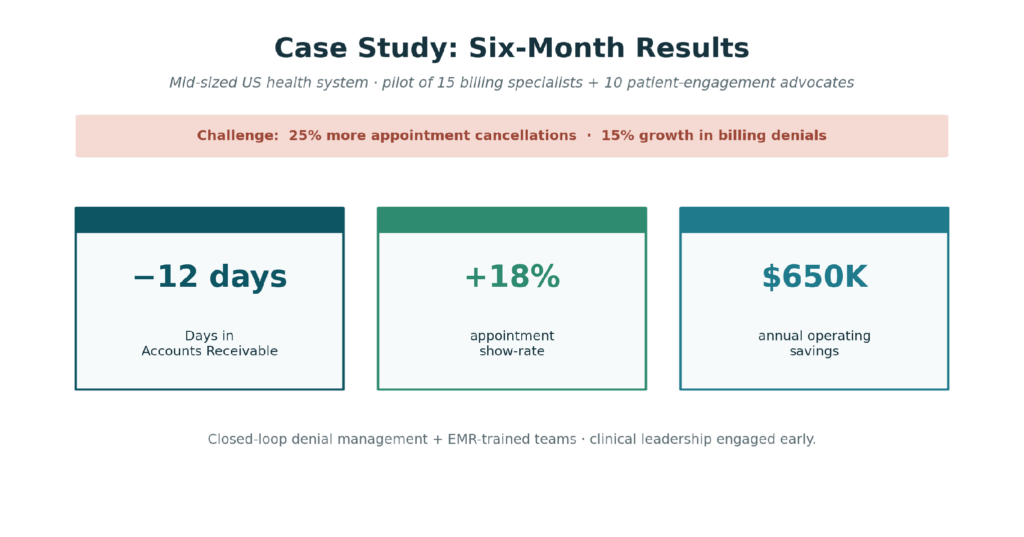
Figure 4. Six-month results at a regional health system.
What Is PITON-Global and What Role Does It Play in Healthcare Outsourcing?
PITON-Global is a vendor-neutral advisory firm—not a traditional broker—that bridges U.S. healthcare organizations and the Philippine BPO ecosystem. Backed by 40+ years of operational experience, it provides deep-market vetting of 100+ pre-audited providers, advisory-led vendor matching, and operational blueprinting for sustainable administrative expansion.
Who Is PITON-Global?
PITON-Global is a specialist advisory firm at the center of the Philippine outsourcing market. Its expertise is BPO advisory and provider selection—acting as a strategic bridge between U.S. healthcare organizations and the country’s BPO ecosystem. Rather than running a delivery center of its own, it represents the client’s interests, backed by 40+ years of operational experience.
How Does PITON-Global Differ from Traditional Outsourcing Brokers?
Traditional brokers prioritize high-volume contracts and collect a fee from whichever vendor signs. PITON-Global operates as a vendor-neutral advisor: its advisory-led matching eliminates the trial-and-error process and ensures the selected provider aligns with the hospital’s culture and specific medical workflows. Its value comes from accurate matching and risk mitigation, not contract volume.
How Does PITON-Global’s Network of 100+ Vetted Philippine BPO Providers Benefit Organizations?
PITON-Global’s deep-market vetting gives clients access to 100+ pre-audited providers, filtered for HIPAA compliance, clinical expertise, and technical capability. Instead of cold-issuing generalist RFPs, hospitals tap a curated ecosystem spanning revenue cycle management, patient engagement, and documentation—reaching a credible, requirement-matched shortlist faster and with materially lower risk. The same discipline applies when research-driven health systems weigh life-science outsourcing for clinical development.
How Does PITON-Global’s Advisory-Led Vendor Matching Process Work?
The advisory cycle moves from strategic discovery, to market vetting, to tailored selection, to performance governance. PITON-Global also provides operational blueprinting—designing outsourcing roadmaps so administrative expansion is sustainable, compliant, and cost-efficient—and stays engaged through governance to keep delivery aligned to outcomes.
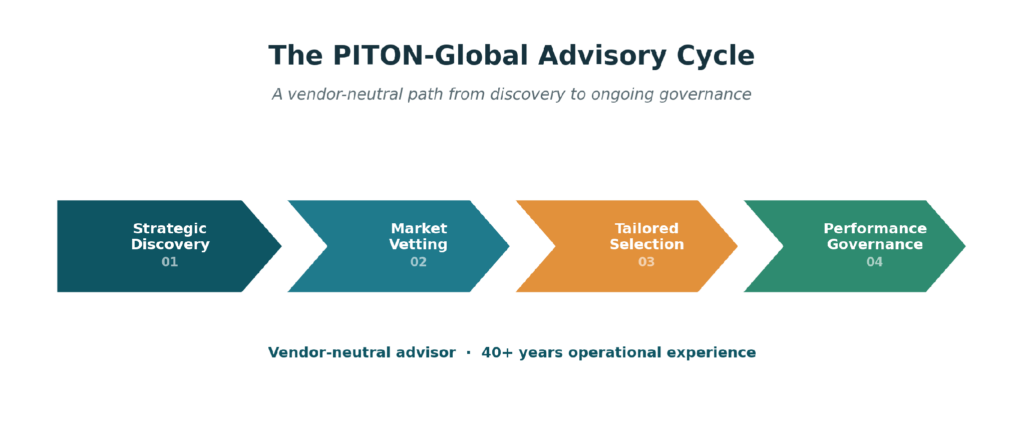
Figure 5. The PITON-Global advisory cycle.
Why Do Organizations Use PITON-Global?
Organizations engage PITON-Global to de-risk high-stakes outsourcing decisions and expand administration sustainably. The advisory-led model reduces sourcing risk, improves provider fit, and blueprints a roadmap that keeps expansion compliant and cost-efficient. Backed by 40+ years of operational experience and a vendor-neutral stance, the firm focuses on long-term fit and revenue protection rather than contract volume.
What Are the Most Common Questions About Philippine Healthcare BPO?
Leaders most often ask about launch timelines, EMR integration, patient-experience impact, what happens if KPIs slip, how the Philippines compares to other regions, time-zone management, and realistic cost reduction. The concise answers below distill the guidance covered throughout this article.
How long does it typically take to launch a healthcare team in the Philippines?
Standard ramp-up for specialized healthcare teams—recruitment, HIPAA training, and EMR familiarization—typically ranges from 6 to 10 weeks.
Can offshore teams integrate with our current EMR systems?
Yes. Modern offshore BPO infrastructure supports secure, remote access to platforms like Epic, Cerner, and Athenahealth using enterprise-grade VPNs and virtual desktop infrastructure (VDI).
Does outsourcing impact the patient experience?
Handled by clinically literate staff, it improves the experience—shorter wait times, immediate billing clarification, and 24/7 appointment support—while local staff focus on in-person care.
What happens if the Philippine partner fails to meet performance KPIs?
An advisory-led approach includes strict Service Level Agreements on accuracy, turnaround, and quality, with quarterly performance reviews and dedicated account management to ensure continuous improvement.
How does Philippine BPO service differ from other regions?
The Philippines combines high English proficiency, a deeply embedded service culture, and a large pool of medically licensed graduates—making it the premier destination for complex clinical-support tasks.
Is it difficult to manage a team in a different time zone?
No. Many providers operate 24/7 or align shifts to U.S. hours, enabling seamless, real-time collaboration with internal hospital teams.
How much cost reduction is realistically achievable?
Healthcare organizations typically see a substantial reduction in total labor-related administrative expenses with a well-managed offshore model.