

Your hospital is ready when it can move from “per-hour” billing to outcome-based partnerships that prioritize zero-touch throughput and upstream clinical accuracy. The Philippine sector, home to healthcare BPO designed for HIPAA environments, has matured into a “Clinical Intelligence Hub” pairing human expertise with Agentic AI to resolve complex revenue-cycle inefficiencies—so readiness is about your operating model, not just cost.
Key Takeaways
- Move beyond labor arbitrage. Shift focus to “clinical intelligence,” where Filipino teams handle the complex, gray-area cases autonomous AI cannot resolve.
- Use outcome-based incentives. Tie vendor revenue to net revenue lift or denial reduction rather than billable hours or FTE counts.
- Confirm operational maturity. Readiness requires HITRUST-certified environments and auditable workflows that integrate with your EHR and practice-management systems.
- Adopt the 2026 benchmark. Make “zero-touch throughput”—claims resolved without manual intervention—your primary measure of success.
- Select specialists, not giants. Mid-sized, specialized Philippine partners offer higher executive attention and faster, agile deployment of AI-enabled workflows.
Why Is the Shift Toward “Intelligence-Augmented” Operations Necessary?
Because manual processing and unmonitored automation can’t keep pace with payer complexity, and autonomous AI alone often struggles with accuracy on specialized coding. The Philippines bridges that gap with “Human-in-the-Loop” models, where licensed nurses and certified coders audit and correct AI-driven data using payer-specific context.
US health systems are under sustained financial pressure, with expense ratios eroding operating margins. The instinctive responses—more manual labor or more unsupervised automation—both fail against modern payer complexity. Manual processing is slow and turnover-prone; standalone AI lacks the clinical nuance to handle exceptions, and frequently falls short of acceptable accuracy on specialized coding.
The intelligence-augmented model resolves the trade-off. AI handles speed and routine pattern recognition; licensed Filipino clinicians provide the clinical conscience that catches and corrects what automation gets wrong. The difference in outcomes is dramatic.
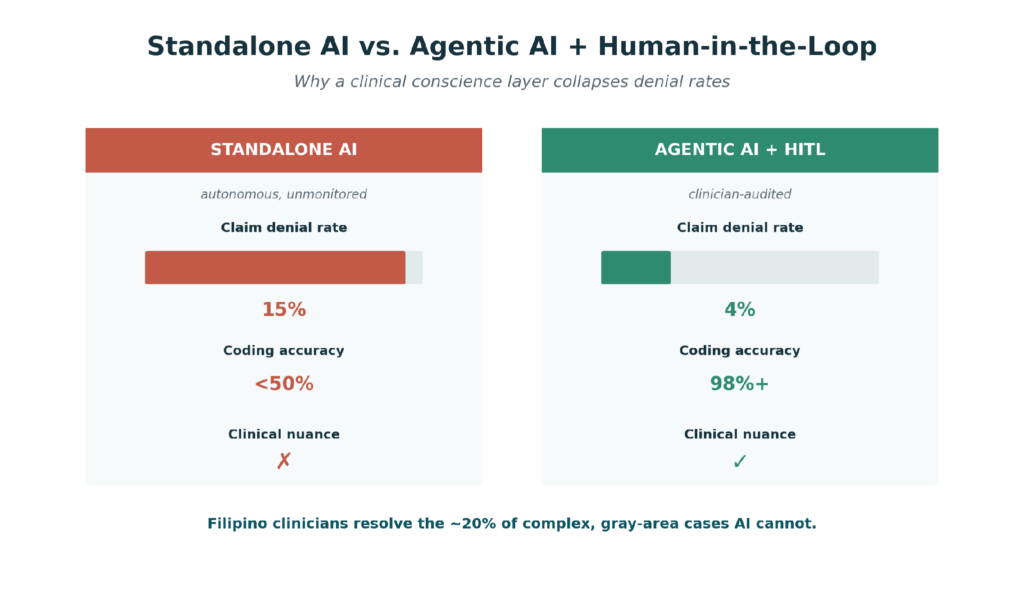
Figure 1. Standalone AI versus Agentic AI with a Human-in-the-Loop layer.
What Metrics Should Executives Use to Evaluate Potential Partners?
Retire “claims processed per hour.” The best partner often processes fewer claims because it corrects underlying data errors upstream. Evaluate on net revenue lift, performance-based pricing, zero-touch throughput, and the maturity of Agentic AI plus Human-in-the-Loop orchestration—not raw volume or FTE counts.
The metric you choose shapes the behavior you get. Volume-based measures reward throughput even when that throughput generates denials and rework. Outcome-based measures reward the opposite: getting claims right the first time so fewer ever need to be touched again. The full shift in evaluation criteria is summarized below.
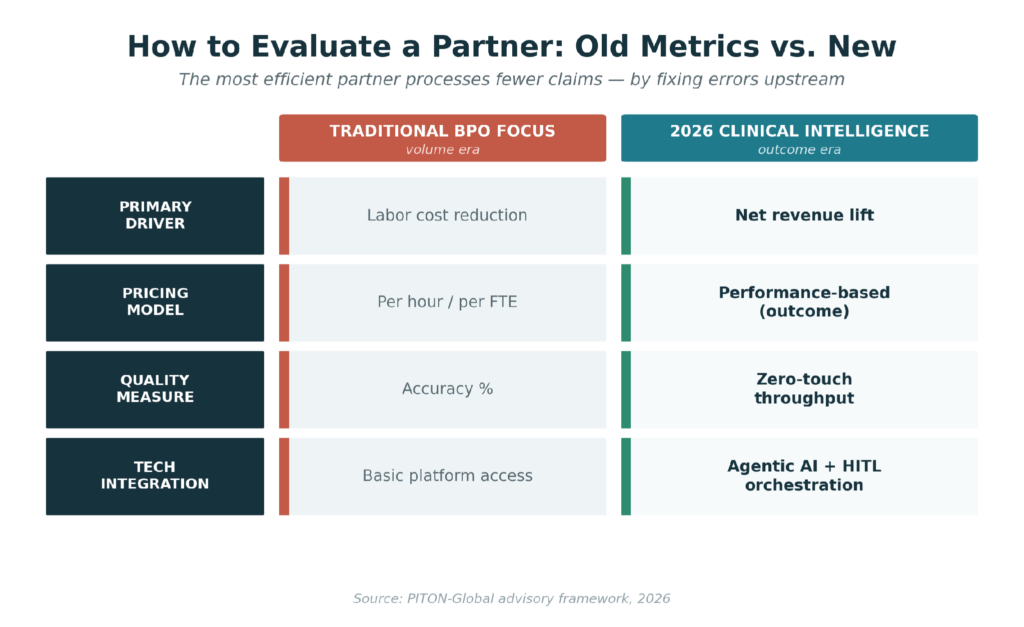
Figure 2. Evaluating partners by outcome metrics rather than volume.
How Can Your Hospital De-Risk the Outsourcing Process?
The greatest risk is misalignment between vendor incentives and hospital financial goals. A structured framework de-risks it: require rigorous data standards (ISO/IEC 5259-4), demand verified HITRUST CSF certification with forensic audit trails, and select providers with consistently low annual attrition, since clinical-role turnover degrades revenue immediately.
Three checks separate a safe engagement from a risky one. Operational integrity means the provider holds rigorous ISO/IEC 5259-4 data standards. Compliance infrastructure means verified HITRUST CSF certification and forensic audit trails for every automated output. Workforce stability means consistently low attrition—because turnover in clinical roles translates directly into revenue degradation.
Specialization is the strongest predictor of results. Over a 12-month engagement, deeper-specialized partners compound denial reductions far beyond what generalists achieve—which is why specialization belongs at the center of any de-risking framework, alongside a clear view of which patient-facing functions can safely move offshore.
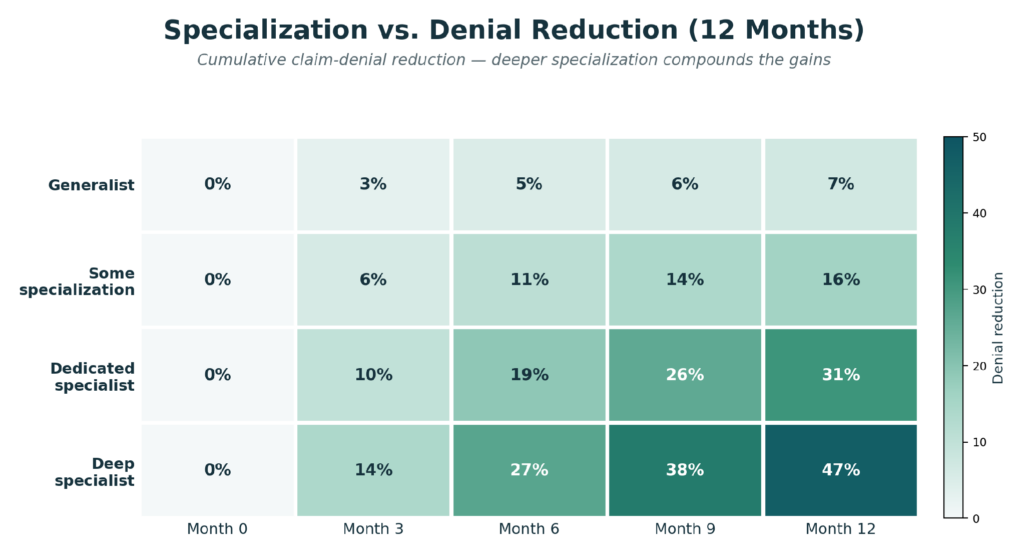
Figure 3. Deeper specialization compounds denial reduction over 12 months.
“The single biggest failure I’ve witnessed over 25 years is the attempt to ‘set and forget’ automation in clinical environments. True leaders are those who shift the commercial relationship from ‘hours worked’ to ‘outcomes achieved,’ effectively turning the BPO partner into a stakeholder in your financial health.”
— John Maczynski, CEO of PITON-Global
What Does Aligning Incentives Actually Achieve?
It aligns the vendor with your financial goals—often counterintuitively. A US multi-site hospital group with a persistently high denial rate replaced volume-based pricing with an “Agentic Shield” workflow and outcome-based model, achieving a significant lift in net patient revenue within 90 days while actually processing fewer total claims.
Challenge. The group struggled with a persistently high denial rate and significant revenue leakage. Its legacy vendor used volume-based pricing, which inadvertently incentivized claim throughput over claim accuracy.
Solution. PITON-Global identified and migrated the group to a specialized, mid-sized Manila provider running an “Agentic Shield” workflow—an AI layer that flags coding errors before submission, overseen by clinical experts—and shifted to outcome-based pricing.
Outcome. Within 90 days, the hospital achieved a significant lift in net patient revenue. By resolving errors upstream, the vendor reduced the total volume of claims processed, aligning its incentives with the hospital’s zero-touch-throughput goal.
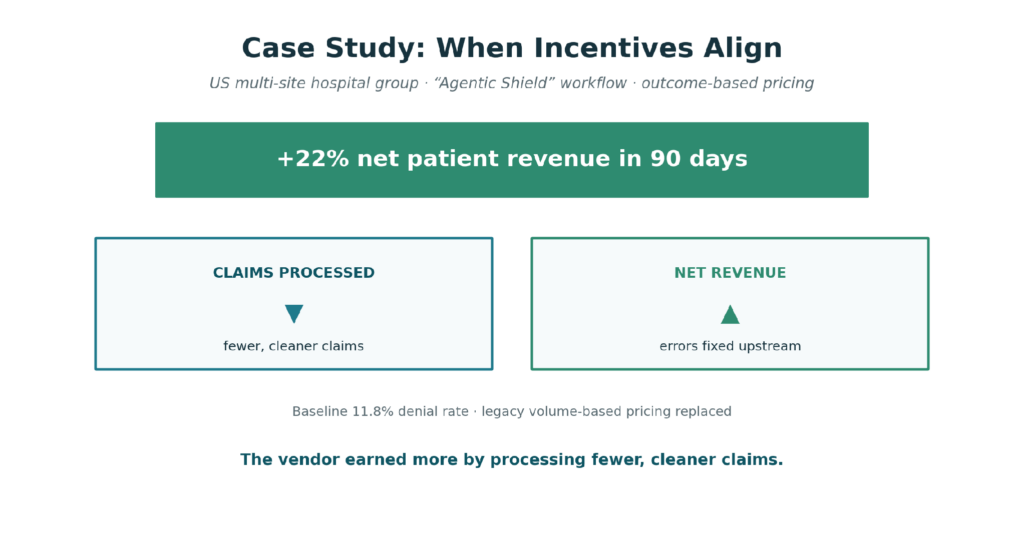
Figure 4. Aligned incentives: more revenue from fewer, cleaner claims.
How Does PITON-Global Facilitate This Transition?
PITON-Global is a vendor-agnostic advisory firm that acts as an extension of your procurement and operations teams. It provides rigorous vetting of 100+ mid-sized Philippine providers, advisory-led matching through a structured seven-step process, and a zero-cost engagement funded by the provider network—so you access expert vendor selection without budget friction.
Who Is PITON-Global?
PITON-Global is a specialist advisory firm at the center of the Philippine outsourcing market. Its expertise is BPO advisory and provider selection—functioning as an extension of your procurement and operations teams to navigate a crowded vendor landscape. Rather than running a delivery center of its own, it represents the client’s interests across a network of more than 100 vetted, mid-sized providers.
How Does PITON-Global Differ from Traditional Outsourcing Brokers?
Traditional brokers earn a fee from whichever vendor signs, which biases their advice. PITON-Global is vendor-agnostic: it works as an extension of your team to find the right operational and clinical fit, not the easiest sale. Its value comes from rigorous, independent vetting and expert-led matching rather than transaction volume.
How Does PITON-Global’s Network of 100+ Vetted Philippine BPO Providers Benefit Organizations?
The network of 100+ mid-sized Philippine providers is audited for operational maturity and clinical capability, which compresses discovery and qualification dramatically. Instead of cold-issuing generalist RFPs, hospitals tap a curated ecosystem of specialists, reaching a credible, requirement-matched shortlist faster—and with materially lower risk than sourcing alone.
How Does PITON-Global’s Advisory-Led Vendor Matching Process Work?
PITON-Global uses a structured seven-step process—discovery, needs and EHR mapping, RFP, vetting and shortlist, site evaluation, best-fit matching, and transition and ramp—to map your specific EHR and clinical-workflow needs to providers with demonstrated excellence in those exact specialties. The advisory phase typically spans four to eight weeks, with transition and ramp-up over an additional 60–90 days.
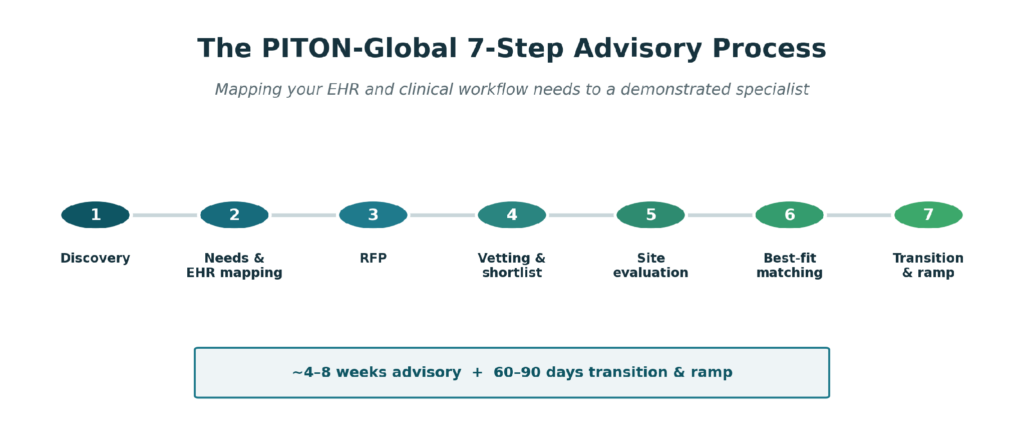

Figure 5. The PITON-Global seven-step advisory process.
Why Do Organizations Use PITON-Global?
Organizations use PITON-Global to de-risk high-stakes outsourcing decisions and secure genuine operational fit. The advisory-led model reduces sourcing risk, improves provider fit, and accelerates selection. Because the advisory fee is funded by the provider network, hospitals access premium market intelligence and expert-led vendor selection at zero cost—without budget friction.
What Are the Most Common Questions About Philippine Healthcare BPO?
Leaders most often ask about offshore HIPAA compliance, why mid-sized providers win, the impact of time zones, whether AI can replace coders, how long selection takes, and how to measure success. The concise answers below distill the guidance covered throughout this article.
How do we ensure HIPAA compliance offshore?
Reputable Philippine healthcare BPOs maintain HITRUST CSF certification, use encrypted virtual desktop infrastructure (VDI), and employ dedicated HIPAA Security Officers to manage forensic audit trails.
Why mid-sized providers over industry giants?
Mid-sized specialists offer higher executive visibility, lower attrition, and more agile integration of custom AI workflows than large-scale, high-volume providers.
What is the impact of time-zone differences on patient care?
Modern healthcare BPO uses “follow-the-sun” models: offshore teams complete back-office work during US nighttime hours, so clean data is ready for your local clinical teams by morning, and the same coverage supports round-the-clock patient communication and engagement.
Can AI fully replace medical coders?
No. Current AI struggles with complex, gray-area clinical exceptions. The highest-performing model is Agentic AI overseen by human coders who provide the final clinical conscience.
How long does the vendor selection and transition take?
The advisory process—discovery, RFP, and site evaluation—typically spans 4–8 weeks, with transition and ramp-up over an additional 60–90 days.
How do we measure the success of an outsourcing initiative?
Measure by zero-touch throughput and net revenue lift rather than transaction volume or agent counts; for patient-facing lines, add measures of consistent, high-quality patient communication. The objective is to automate the routine and reserve human intelligence for the exceptional.