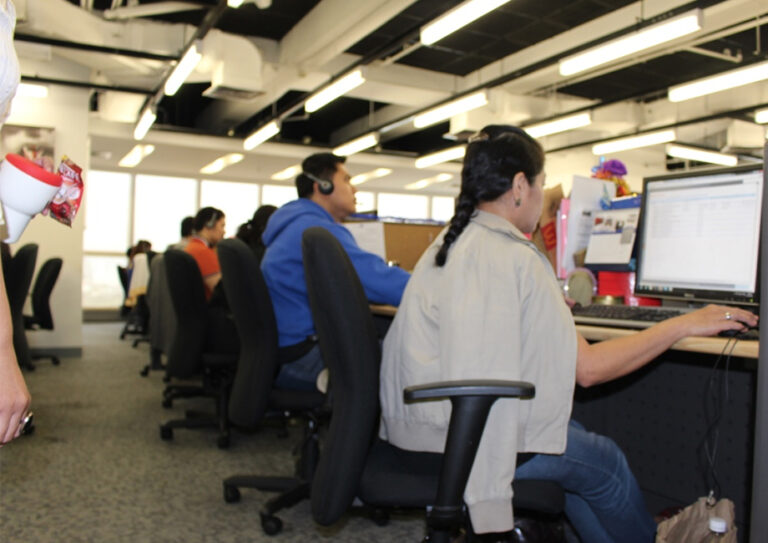

A frustrated user with a broken integration does not care where the engineer sits; they care whether the fault is understood on the first call and fixed without a second one. That is the standard North American software and hardware companies hold remote troubleshooting run by Filipino engineers to, and it is the reason high-quality technical support has become one of the most requested programs on Manila and Cebu floors. The sections below define what quality means for a technical desk, how the better providers build and prove it, and how a buyer can check it before a contract is signed.
What high-quality technical support looks like to the end user
To the user, quality means three things: the problem is understood the first time, it is fixed without being passed around, and it does not come back. Everything a provider does on hiring, training and assurance should trace back to one of those three outcomes.
That definition matters because many vendors still measure quality the way a general service floor does, with greeting scripts, hold etiquette and handle time. Those behaviors are pleasant, but a user can receive a warm, well-structured call that ends with the wrong fix. A technical desk has to score the diagnosis itself: were the right questions asked, was the fault isolated correctly, was the fix the one your documentation prescribes, and did the agent confirm it worked before closing?
How Filipino teams are hired and trained for troubleshooting
The better providers in the Philippines hire for reasoning first and product knowledge second, because products change and reasoning does not. Candidates for technical queues typically come from IT, computer science and engineering programs, or from earlier help desk roles, and are tested on live troubleshooting scenarios rather than on scripted role plays.
Depth of the labor pool
Scale makes selective hiring possible. The Philippine IT-BPM industry employed about 1.9 million people in 2025 and earned revenue above $40 billion, according to IBPAP figures reported by the Philippine Star in January 2026. A provider recruiting from that pool can reject most applicants for a Tier 2 role and still fill a class on schedule.
Training that mirrors your stack
Good onboarding at a Philippine technical practice runs in a sandbox that mirrors your product, with real historical tickets as exercises, and ends with a certification gate the agent has to pass before touching a live queue. Ask to see the gate, the pass rate and what happens to people who fail it. A vendor that cannot answer has probably not built one.
QA built for troubleshooting accuracy
A technical QA program scores whether the fix was right, not only whether the conversation was polite. The scorecard should weight diagnosis and resolution most heavily and treat soft skills as a smaller, separate section.
- Diagnosis: did the agent gather the environment details, reproduce or confirm the symptom, and rule out the obvious causes in a sensible order?
- Resolution: was the fix correct, documented in the ticket and confirmed with the user before closure?
- Escalation: if the ticket moved up a tier, did it carry everything the next engineer needed?
- Security: was identity verified and was access used only within the agent’s scope?
- Communication: was the user kept informed, in plain language, about what was happening and why?
Calibration is the other half, and it is where distance matters least if it is scheduled properly. Your product owner in North America, the vendor’s QA lead and a team lead should score the same sample of tickets every few weeks and compare results. When the three scores drift apart, the scorecard is not measuring what everyone thinks it is. A short video session scheduled inside the Philippines night shift, which falls in your working day, is usually enough.
Communication that shortens the fix
Clear communication is a technical skill on a support desk, because a misunderstood symptom sends the diagnosis in the wrong direction. English fluency is where Filipino teams start ahead: the Philippines scored 569 and ranked 28th in the 2025 EF English Proficiency Index, placing it in the high proficiency band.
Fluency alone is not enough, though. The agents who resolve fastest translate what the user says (“it just stops working after lunch”) into testable hypotheses (a sleep policy, a token expiry, a VPN timeout) and then explain the fix back in the user’s own terms. Patience and a steady tone help too, particularly with non-technical users who are embarrassed to ask. Those habits can be trained and scored, and the best providers do both.
Where quality shows up in the numbers
Quality shows up as fewer repeat contacts and faster resolution of the hard tickets, not as a higher satisfaction score alone. Satisfaction surveys are useful but low in response and skewed toward easy wins, so read them alongside operational measures.
- First-contact resolution, which tells you whether users needed only one conversation.
- Reopen rate, which tells you whether the fix held.
- Mean time to resolve for high-priority incidents, reported separately from routine tickets.
- QA accuracy scores on diagnosis and resolution, trended monthly.
How these measures are set and reviewed with a Philippine-based team, including the governance cadence that keeps them honest, is covered in our article on driving IT support performance through KPIs.
Connected devices and the next quality test
Connected devices raise the bar because a single fault can sit in the hardware, the firmware, the home network, the mobile app or the cloud service behind it. An agent has to hold all five layers in mind and work through them methodically.
Providers preparing for that work build device labs on site, train agents on the full chain from sensor to cloud, and write decision trees that cover each layer. Our piece on IoT and connected-device support looks at how Manila and Cebu teams are adapting. It is also a good test of a vendor’s maturity: ask how it would support a device it has never seen, and listen for a method rather than a promise.
How to verify quality before and after signing
Verify quality with your own tickets, your own scorecard and the actual people who will run your queue. Marketing material describes the best team a vendor has; a pilot shows you the team you will get.
- Give each shortlisted provider a sample of anonymized tickets and ask them to walk through how they would diagnose three of the hardest.
- Listen to recorded technical calls from an existing client, with permission, and score them on your own scorecard.
- Meet the QA lead and ask how the scorecard is calibrated and how often.
- Run a paid pilot and review the measures above every week before extending scope.
Shortlisting is where most of the risk is removed. Of the roughly 1,000 providers operating in the Philippines, only 110 mid-sized firms made it through PITON-Global’s seven-step vetting framework, about one in ten, and the framework includes workflow stress-testing that puts candidates through realistic scenarios. For context on why buyers now treat support as a differentiator rather than a cost to minimize, see how technical support moved from cost center to strategic asset.
Frequently asked questions
Is voice still the main channel for technical work?
Voice remains common for urgent and complex incidents, but chat, email and in-app messaging carry a growing share, and screen-sharing sessions often do the real work. A capable provider staffs all of them from one team with one knowledge base.
Can AI replace the human agent on a technical desk?
AI handles well-documented, repetitive questions and helps agents find articles faster. Novel faults, multi-layer problems and anxious users still need a person, which is why the strongest programs pair automation with a skilled human tier rather than replacing one.
Which security standards should a technical provider hold?
At minimum SOC 2 Type II and ISO 27001, plus PCI DSS if agents hear card data and HIPAA if they touch health information. PITON-Global’s recommended providers are governed under the frameworks listed on its capabilities page.