

Healthcare outsourcing to the Philippines cuts administrative overhead by 50–70% versus scaling U.S. teams, while adding a specialized, clinically trained talent pool that stabilizes operations. Shifting non-core functions like RCM and medical coding to HIPAA-compliant Philippine teams lets U.S. providers scale fast and reach 98%+ clean claim rates without domestic turnover hurdles.
Key Takeaways
- Capture 50–70% OpEx savings. Outsourcing frees capital to reinvest in core patient care and technology infrastructure.
- Stabilize your workforce. Philippine BPOs show far lower churn in administrative roles than the U.S., where medical-billing turnover often exceeds 40–80% a year.
- Scale in 15–30 days. A vetted provider can ramp rapidly to meet seasonal surges and backlogs that U.S. recruitment simply cannot match.
- Embed compliance and security. Top providers run “clean-room” environments with biometric access, HIPAA/HITRUST certification, and SOC 2 Type II audit-readiness.
- Treat it as transformation, not cost-cutting. BPO is an architectural decision to offload transactional labor and focus on high-value patient outcomes.
Why Is the “In-House vs. BPO” Debate Critical for Healthcare Leaders in 2026?
Because the administrative burden has reached a breaking point. Domestic teams face rising costs and severe turnover—a “leaky bucket” of institutional knowledge—while margins tighten. In 2026, the move to Philippine BPO is driven less by cost-cutting than by the need for operational resilience: stable, scalable, compliance-embedded capacity.
The core problem with the in-house model is not just cost; it is fragility. When billing and coding knowledge lives in individuals who leave every year or two, every departure resets productivity and reopens compliance gaps. Scaling that model means absorbing more rent, taxes, benefits, and recruiting cycles for capacity that remains volatile.
A specialized Philippine BPO inverts that equation. Dedicated agent pods preserve institutional knowledge, compliance is embedded in the workflow rather than dependent on a single person, and capacity can expand or contract on demand. The dimension-by-dimension comparison below makes the contrast concrete.
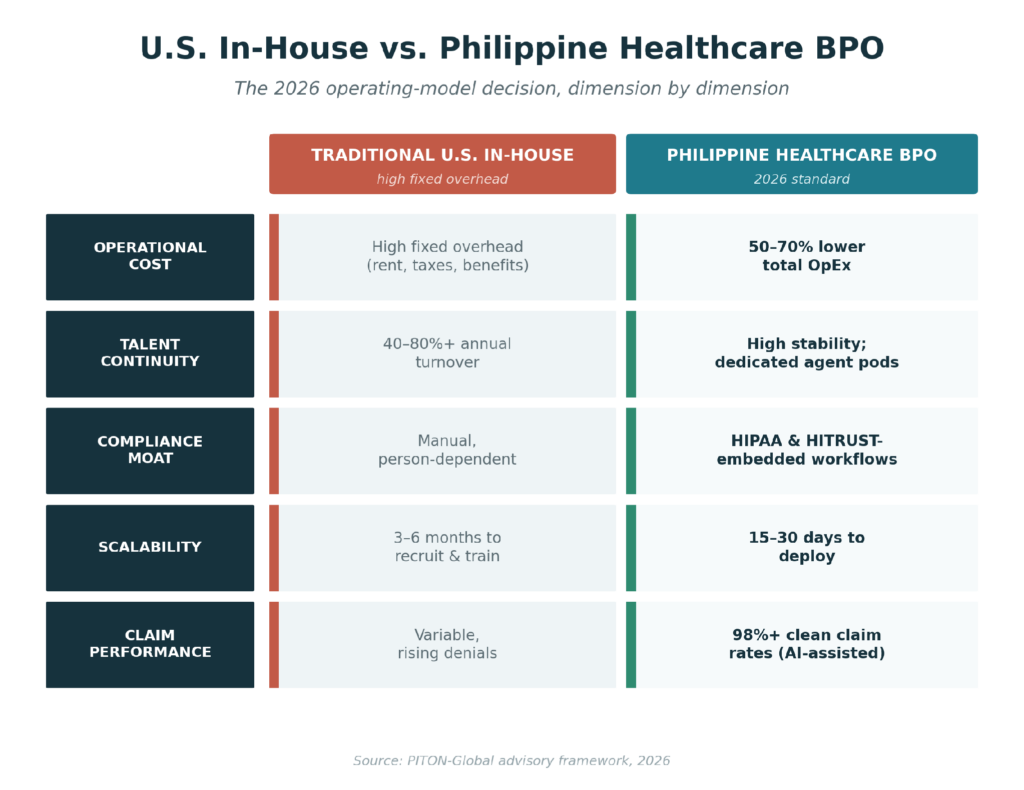
Figure 1. U.S. in-house versus Philippine healthcare BPO, dimension by dimension.
Speed of deployment is where the gap is most visible. Recruiting and training a domestic team to full productivity can take roughly four months; a vetted Philippine partner can stand up a productive team in about three weeks.

Figure 2. The recruitment-to-productivity gap: roughly 120 days versus 20.
How Do You Mitigate Risk When Outsourcing Sensitive Healthcare Data?
Risk mitigation in 2026 is built on technological transparency, not trust in individuals. The highest-performing Philippine BPOs run “Zero Trust” architectures—biometric MFA, locked-down virtual desktops, continuous HIPAA monitoring, and redundant disaster recovery—so protected health information never leaves an audit-ready environment.
In a well-designed program, security is layered and verifiable at every step. Identity is controlled through mandatory biometric multi-factor authentication; workstations run on Virtual Desktop Infrastructure (VDI) with USB and download ports disabled; data flows are encrypted and monitored in real time; and redundant power, fiber, and cloud failover keep the operation running through local disruptions.
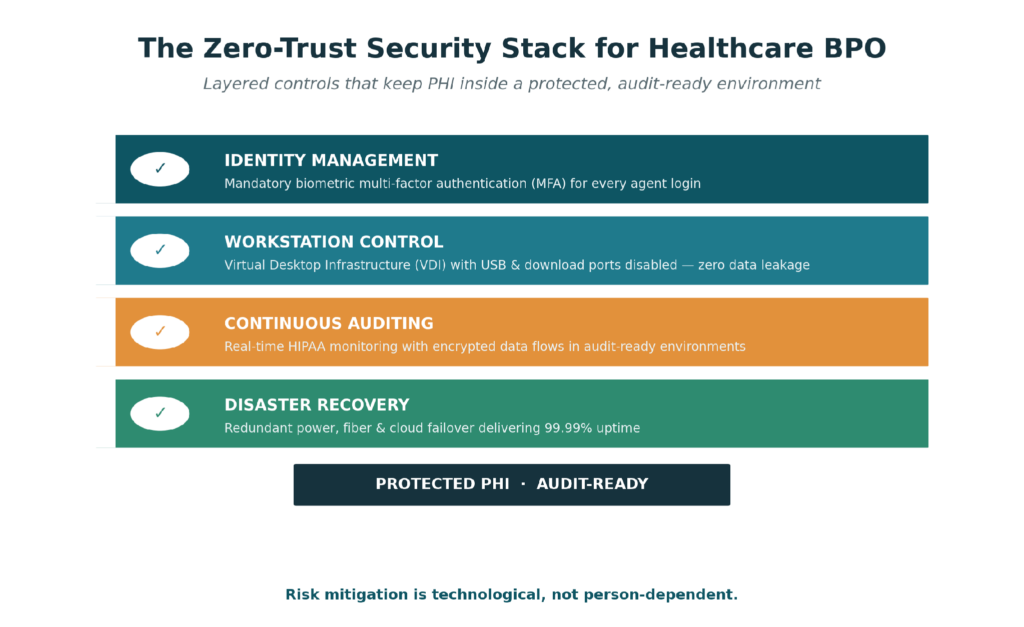
Figure 3. The Zero-Trust security stack that protects PHI end to end.
Crucially, this insulates the revenue cycle from single points of failure. Because controls are architectural rather than person-dependent, a 99.99% uptime target is realistic even when local climate or logistics intervene—something a small in-house team rarely matches.
Expert Insight: What Should Leaders Prioritize?
“The mistake most healthcare organizations make is treating the Philippines as a cost-cutting play rather than an architectural transformation. If you prioritize the lowest hourly rate, you get the commodity service you paid for. If you invest in the right partner—one built for your specific seat count and vertical—you gain a strategic extension of your enterprise. It’s about operational fit, not just geography.”
— John Maczynski, CEO of PITON-Global
What Does a Successful In-House-to-BPO Transition Look Like?
Success comes from matching the right partner to the account—not chasing the lowest rate. One U.S. specialty-clinic network, facing an unsustainable 12% claim write-off rate, reached a 98.5% clean claim rate within 90 days, cut administrative OpEx by 62%, and grew to two new clinics without adding back-office headcount.
Client challenge. A U.S.-based specialty-clinic network faced an unsustainable 12% claim write-off rate driven by internal backlogs and high turnover.
Solution. PITON-Global audited the workflows and recognized that the 40-seat requirement would be deprioritized by large “Tier-1” giants. It matched the client with a specialized boutique partner with deep clinical-coding experience, then implemented an AI-assisted RCM platform with a human-in-the-loop verification layer.
Outcomes. The clinic hit a 98.5% clean claim rate within 90 days, reduced administrative OpEx by 62% annually, and acquired two additional clinics with no increase in back-office headcount.
A leading indicator of that turnaround was Days Sales Outstanding (DSO), which fell by roughly half as clean claims accelerated cash collection.
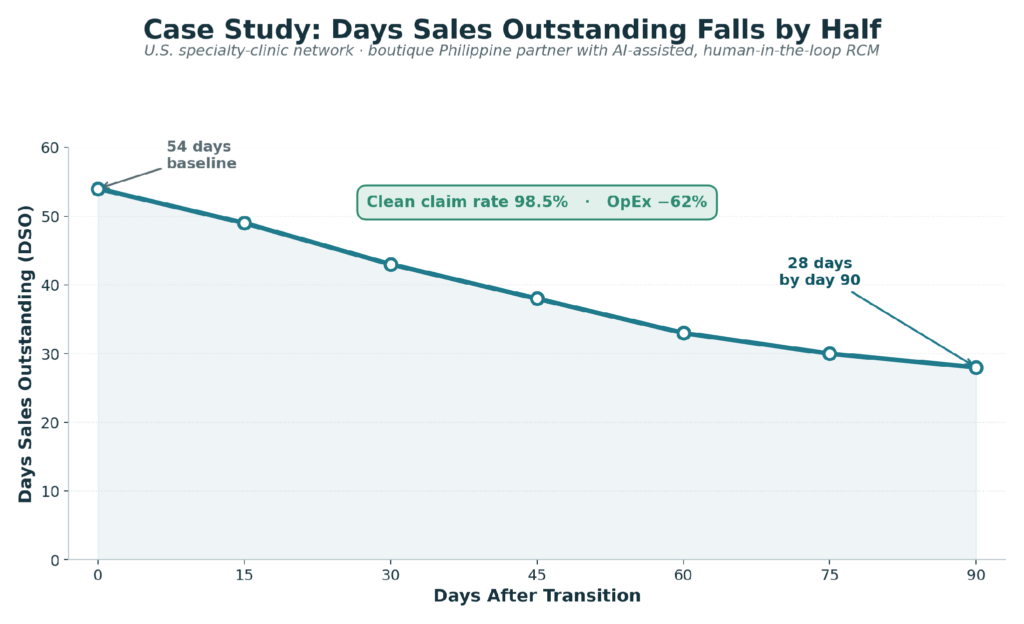
Figure 4. Days Sales Outstanding fell by roughly half within 90 days of transition.
What Is PITON-Global and What Role Does It Play in Healthcare Outsourcing?
PITON-Global is a vendor-neutral advisor—not a broker—that supplies the due-diligence layer enterprise procurement often lacks. It matches hospitals to best-fit partners from a network of 100+ vetted Philippine BPOs, prioritizing operational fit over the easiest sale and managing the RFP, benchmarking, and contract-protection process.
Who Is PITON-Global?
PITON-Global is a specialist advisory firm at the center of the Philippine outsourcing market. Its expertise is BPO advisory and provider selection—guiding U.S. healthcare organizations through a crowded vendor landscape to identify partners whose clinical, technical, and compliance profiles fit the client’s requirements. Rather than running a delivery center of its own, PITON-Global represents the client’s interests across the wider provider ecosystem.
How Does PITON-Global Differ from Traditional Outsourcing Brokers?
Traditional brokers earn a finder’s fee from the first vendor that signs, which biases their advice. PITON-Global acts as a vendor-neutral advisor: it evaluates providers independently, prioritizes the “right fit” over the “easiest sale,” and centers each engagement on the client’s outcomes. Its value comes from accurate matching and rigorous due diligence, not from promoting a preferred supplier.
How Does PITON-Global’s Network of 100+ Vetted Philippine BPO Providers Benefit Organizations?
A curated network of 100+ Philippine BPOs—selected on audited performance, attrition metrics, and technical maturity—compresses discovery and qualification dramatically. Instead of cold-issuing generalist RFPs, organizations tap a pre-screened ecosystem spanning billing, RCM, coding, insurance verification, and scheduling. Because each provider is already vetted for capability and stability, buyers reach a credible shortlist faster and with materially lower risk.
How Does PITON-Global’s Advisory-Led Vendor Matching Process Work?
PITON-Global maps the client’s specific RCM needs, seat count, and vertical against each provider’s demonstrated domain expertise, then manages the RFP and benchmarking process end to end. It ensures the resulting contract carries the necessary security, performance, and exit clauses—protecting the enterprise and avoiding the “double penalty” of paying enterprise rates for a junior team at a Tier-1 mega-provider.

Figure 5. Three pillars of the PITON-Global advisory model.
Why Do Organizations Use PITON-Global?
Organizations engage PITON-Global to de-risk high-stakes outsourcing decisions and secure long-term scale. The advisory-led model reduces sourcing risk, improves provider fit, and accelerates selection while protecting the contract with the right clauses. Because the firm is compensated by its supplier network, hospitals receive advisory, audit, and sourcing support—plus guidance throughout the evaluation—at no direct cost to the client.
What Are the Most Common Questions About Philippine Healthcare BPO?
Leaders most often ask which functions to outsource, whether HIPAA compliance is guaranteed, how to prevent agent churn, what the “double penalty” is, and how the time-zone difference affects operations. The concise answers below distill the guidance covered throughout this article.
What healthcare services are best suited for outsourcing?
Medical billing, RCM, clinical coding, insurance verification, and patient scheduling are the most high-impact functions. They rely on standardized, rule-based processes that benefit from the 24/7 coverage of Philippine teams.
Is HIPAA compliance guaranteed?
Leading Philippine BPOs maintain the same rigorous data-protection standards as U.S. firms—HIPAA/HITECH compliance, SOC 2 certification, and strict, audited cybersecurity protocols—managed under a Business Associate Agreement.
How do I ensure my BPO partner doesn’t “churn” my agents?
Prioritize providers with annual attrition under 20%. PITON-Global vets providers specifically on employee-engagement metrics and career-pathing programs to protect continuity.
What is the “double penalty” in BPO sourcing?
It is the risk of paying enterprise-level rates for a mid-market account, only to have your program assigned to junior management within a global “Tier-1” mega-provider. Right-fit matching avoids it.
How does the time-zone difference affect operations?
Most Philippine healthcare BPOs run 24/7 or custom North American shifts, so administrative tasks are often completed while your U.S. office is offline—accelerating your daily workflow.