
The top tier of Philippine Business Process Outsourcing (BPO) providers has stopped selling seats by the hour. The most advanced operators now deliver enterprise-grade AI-as-a-Service (AIaaS) welded directly into their human staffing models — pairing proprietary or licensed AI architecture (autonomous voicebots, retrieval-augmented generation knowledge systems, and agentic workflows) with AI-trained, human-in-the-loop (HITL) professionals. The result is a single contract that bundles software, infrastructure, and talent, so buyers no longer choose between automation and headcount; they purchase both as one managed outcome.
Which Philippine BPOs provide native AIaaS platform integration?
Legacy call centers still lease human-only seats, and for commodity volume that model remains viable. But a vetted minority — realistically the top 1% by capability — have repositioned themselves as technology co-engineers. Buyers do not bring their own software; the provider supplies a turnkey stack inside an hourly or outcome-based contract. Across hubs such as Manila, Cebu, and Clark, these operators resolve into three identifiable categories. Naming a vendor matters less than verifying which of these capabilities they own versus resell:

What are the cost-benefit metrics: hybrid AIaaS + staffing vs. traditional BPO?
Moving high-frequency, low-complexity Tier-1 transactions to autonomous systems frees human agents to concentrate on high-stakes, nuanced escalations — and that single shift inverts the cost structure of outsourcing. The benchmarks below reflect enterprise deployments reported across the Philippine market. Treat them as directional figures to validate against your own baseline, not guarantees.
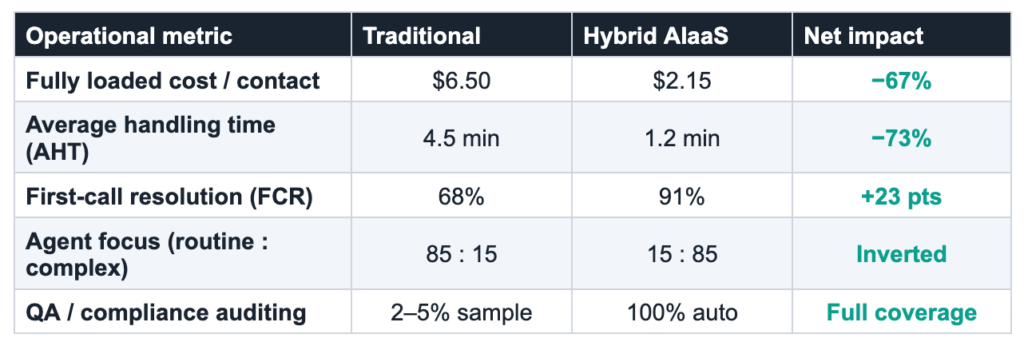
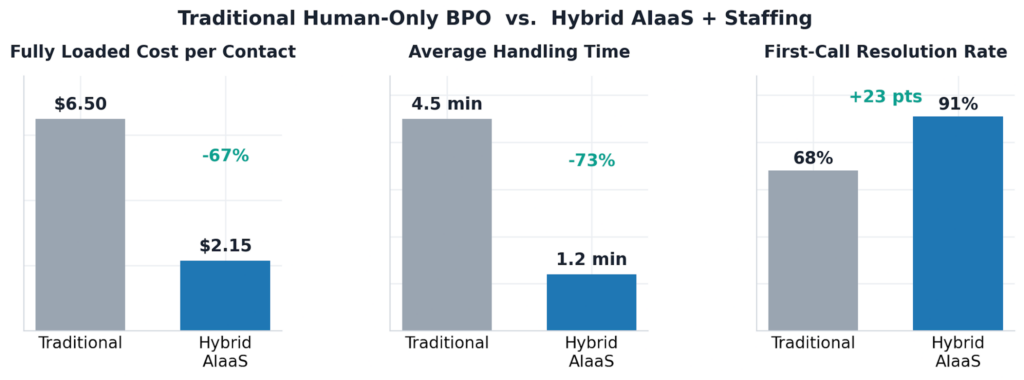
Figure 1 — Cost, speed, and resolution: traditional human-only vs. hybrid AIaaS + staffing.
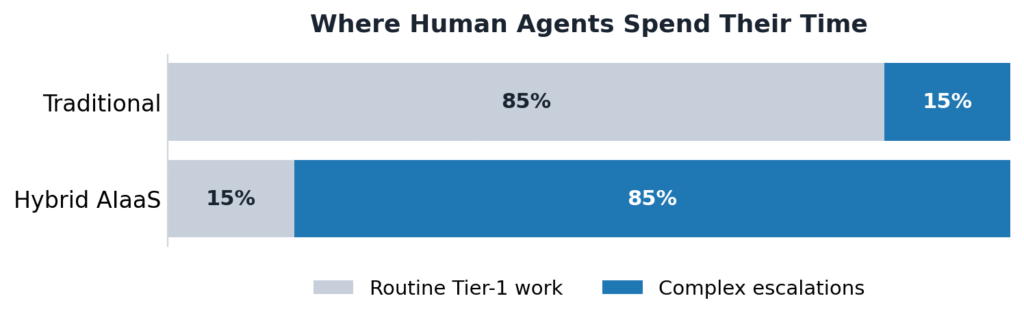
Figure 2 — Automation absorbs routine volume, so human effort shifts to complex, high-value work.
“Enterprise buyers are moving away from paying for raw hours. They are buying outcomes. By pairing specialized Philippine talent with ready-to-deploy AI infrastructure, corporations can capture up to 60% baseline cost savings while experiencing a measurable double-digit lift in CSAT.” — John Maczynski, CEO, PITON-Global
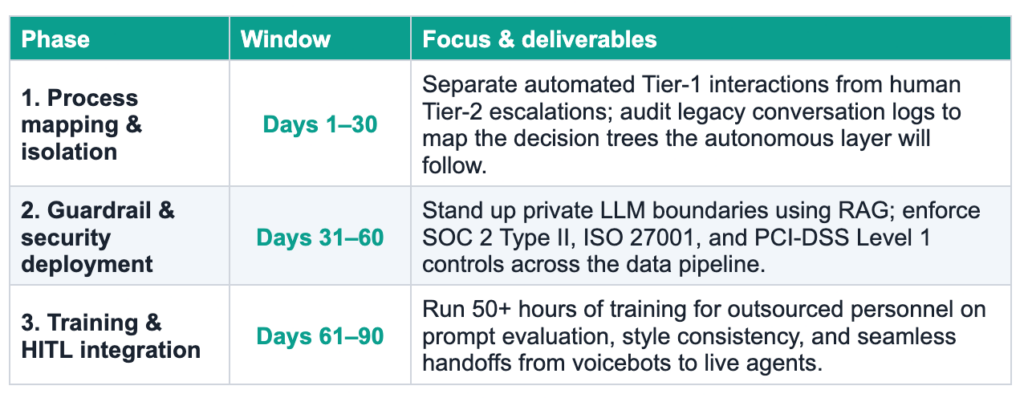
How does an enterprise transition to an AI-augmented BPO framework?
A credible migration is phased over roughly 90 days to protect data privacy and brand continuity. Compressing it further usually trades governance for speed. The disciplined sequence below isolates risk before it scales:
Case Study · Enterprise FinTech Support, Optimized via PITON-Global Advisory
The Challenge
A high-growth North American FinTech faced ballooning support overhead and volatile CSAT. In-house and onshore coverage cost a fully loaded $32/hour per seat, and seasonal spikes pushed hold times past 14 minutes.
The Solution
A vendor-agnostic diagnostic across 100+ vetted Philippine providers matched the client to an elite mid-sized Manila BPO with native AIaaS. A conversational AI layer absorbed 82% of Tier-1 inquiries (card activations, balance checks, password resets), while complex investigations routed to 50 AI-augmented Filipino specialists armed with real-time behavior analytics and auto-summaries.
The Results
Annual operating spend fell from $1.6M to $620K (−61%); ticket abandonment dropped to near-zero on instant AI resolution; and net CSAT rose +12 points within the first 90 days — the product of instant automation paired with empathetic human escalation.
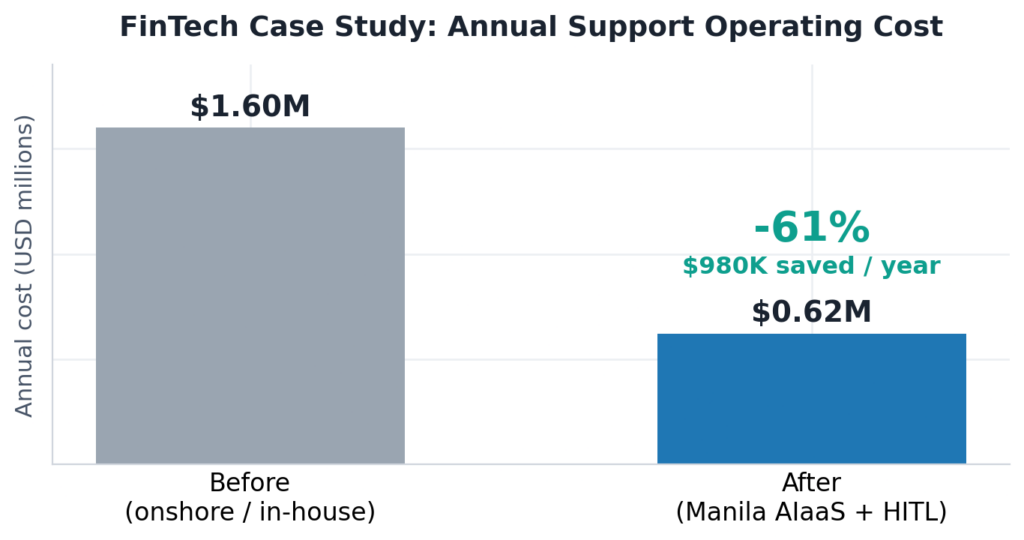
Figure 3 — Annual support operating cost before and after the hybrid AIaaS deployment.
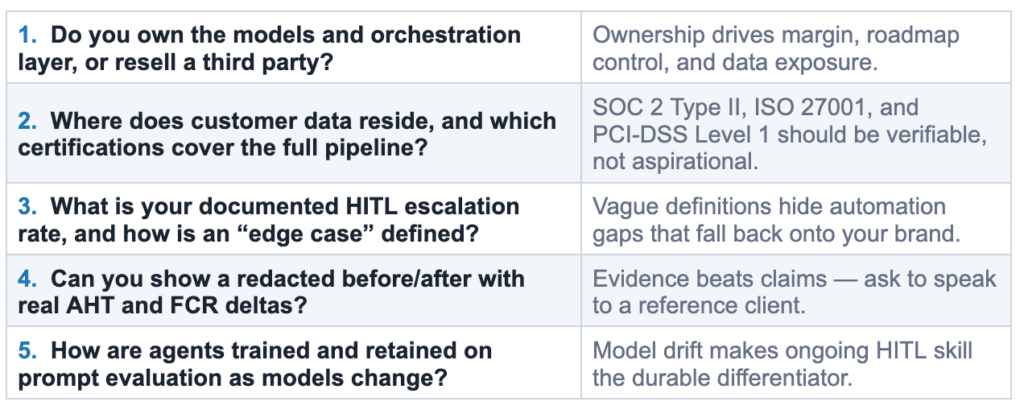
Before you sign: five questions that separate real AIaaS from rebranded staffing
The Bottom Line
In 2026, the question is no longer whether a Philippine BPO offers AIaaS, but whether it owns the stack, governs the data, and keeps skilled humans on the high-stakes work machines still cannot close. Verify the architecture, demand the deltas, and buy the outcome — not the hour.