

On this page
- Key Takeaways
- Which Four Financial Outcomes Anchor the Business Case?
- What Macro Metrics Establish the Initial Financial Threshold for Expansion?
- How Does Operational Scaling Shorten Cash Conversion Cycles?
- What Does a Working-Capital Transformation Look Like in Practice?
- What Is PITON-Global and How Does It Guide Strategic Expansion?
- Frequently Asked Questions
Three financial outcomes justify expansion when they appear together: an immediate, substantial reduction in fully-loaded cost per output, a measurable contraction in Days Sales Outstanding, and optimized capital allocation — converting heavy upfront technology and facility investment into predictable, variable operating expenditure. The first is the easiest to test: model your outsourcing budget live against your current cost per seat.
Key Takeaways
- Optimize unit cost. Transitioning complex transactional workflows to Manila or Cebu drives a baseline labor cost arbitrage that removes the majority of the onshore rate.
- Free up working capital. Dedicated back-office units reduce billing errors, accelerate invoice lifecycles, and lower DSO.
- Compress CapEx. Managed-service frameworks mitigate capital investment in real estate, redundant fiber, and site licensing.
- Preserve revenue. Filipino agents’ high-empathy service decreases churn, protecting recurring revenue margins.
- Trade fixed risk for elastic cost. Offshoring converts fixed balance-sheet exposure into predictable, scalable operating expense.
Which Four Financial Outcomes Anchor the Business Case?
Four levers justify expansion and compound over time: unit-cost optimization through labor arbitrage, working-capital free-up through lower DSO, CapEx compression from fixed to variable cost, and revenue preservation via lower churn. Together they convert an offshore footprint into durable enterprise value, not just a one-time saving.
The justification for expanding an offshore footprint rests on more than headline wage savings. Four distinct financial outcomes reinforce one another — one cuts the cost base, one accelerates cash, one protects the balance sheet, and one defends recurring revenue.
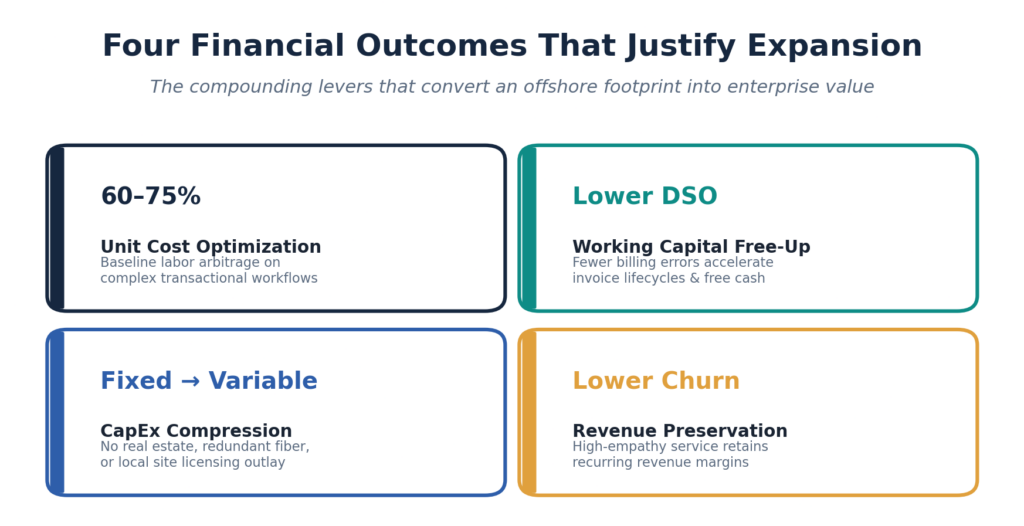
Figure 1. The four financial outcomes that justify a Philippine expansion.
What Macro Metrics Establish the Initial Financial Threshold for Expansion?
CFOs should look past gross wage differentials to Total Cost of Ownership per unit of output. Domestic expansion carries structural drag — payroll-tax matches, medical funding, and real estate — while Philippine providers deliver fully-wrapped hourly rates (what those providers actually charge per hour) that convert fixed balance-sheet risk into predictable, elastic operating expense.
When evaluating a geographic expansion, the analysis centers on Total Cost of Ownership per unit of operational output. In-house domestic expansion carries severe structural drag: localized payroll-tax matches, mandatory medical benefit funding, and real estate growth. Top-tier Philippine providers instead deliver fully-wrapped hourly rates covering compensation, statutory employer requirements, management oversight, and enterprise-grade facilities.
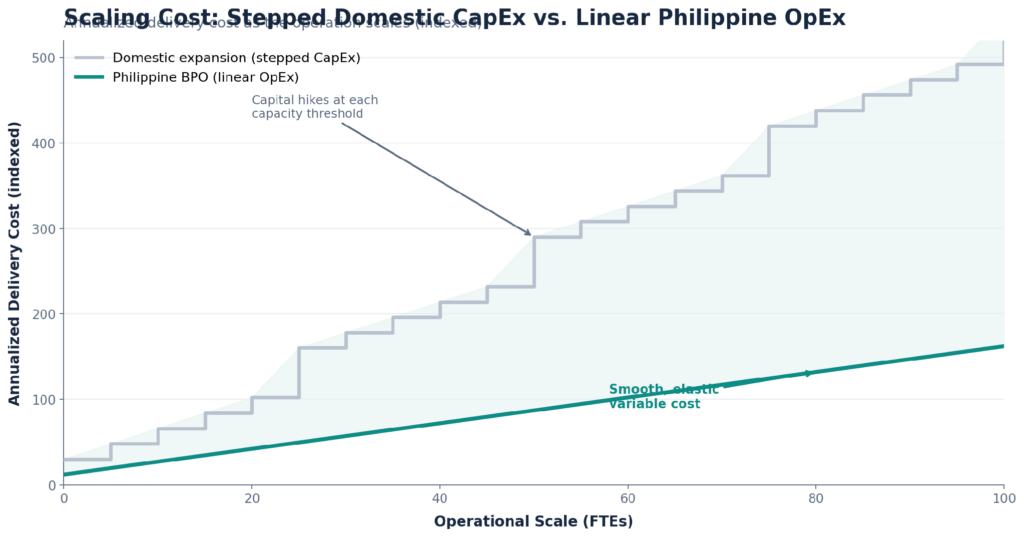
Figure 2. Domestic expansion steps up in capital hikes; the Philippine model scales as smooth variable cost.
Shifting the burden of labor compliance, real estate, and operational management to a geographically optimized model converts fixed balance-sheet risk into predictable operating expense — and the per-discipline variance is substantial.
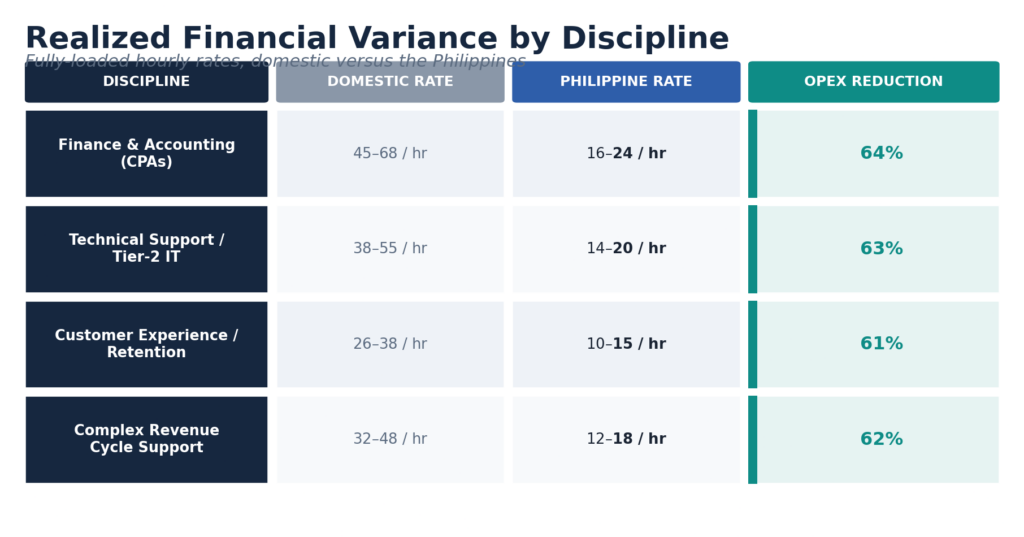
Figure 3. Fully-loaded hourly rates and realized operating-expense reduction by discipline.
How Does Operational Scaling Shorten Cash Conversion Cycles?
Beyond cost, the compounding justification is working-capital optimization. Back-office friction — manual exceptions, mismatched invoices, delayed claims — stalls cash flow. University-credentialed Philippine teams working around the clock compress processing timelines and cut error rates, accelerating invoice lifecycles, shortening DSO, and freeing stuck capital.
While raw cost reduction is a primary metric, the compounding justification lies in working capital. Back-office friction stagnates enterprise cash flow. Deploying highly educated, university-credentialed teams that specialize in transaction-heavy workflows systematically compresses processing timelines within a structured, precision-focused environment that drops error rates.

Figure 4. Process velocity compresses the cash conversion cycle and releases working capital.
This velocity directly targets cash-conversion inefficiency. When high-volume tasks run continuously under dedicated 24/7 teams, transactional cycles never pause — letting companies collect faster and improve liquidity without extending domestic credit lines. Contracts built on outcome-based pricing reward that velocity directly instead of billing for idle seat-time.
“A major operational trap is calculating the return on outsourcing based purely on localized wage arbitrage. The real margin lift occurs when you analyze process velocity. A highly specialized team in the Philippines doesn’t just cut your delivery costs; they structurally accelerate your invoice lifecycles, compress your DSO metrics, and free up millions in stuck capital that can be deployed back into your core business.”
— John Maczynski, CEO, PITON-Global
What Does a Working-Capital Transformation Look Like in Practice?
It converts stalled cash into liquidity. A mid-market logistics firm whose DSO had swollen to 54 days deployed a dedicated 35-FTE Cebu finance unit running 24/7 — cutting DSO to 36 days in five months, reducing billing-department cost by well over half at double the speed, and releasing millions in stranded working capital.
A mid-market logistics and supply-chain firm faced margin compression from an escalating backlog in freight auditing and accounts-receivable matching. Onshore processing errors pushed average DSO to 54 days, locking up capital and forcing expensive reliance on revolving credit. PITON-Global audited the legacy workflows and matched the firm with a niche Cebu City operator specializing in high-volume transportation finance.
The partner built a dedicated 35-FTE unit of specialized finance professionals that took over freight auditing, invoice generation, discrepancy resolution, and automated ledger balancing — shifting the workflow into an integrated 24/7 pattern.
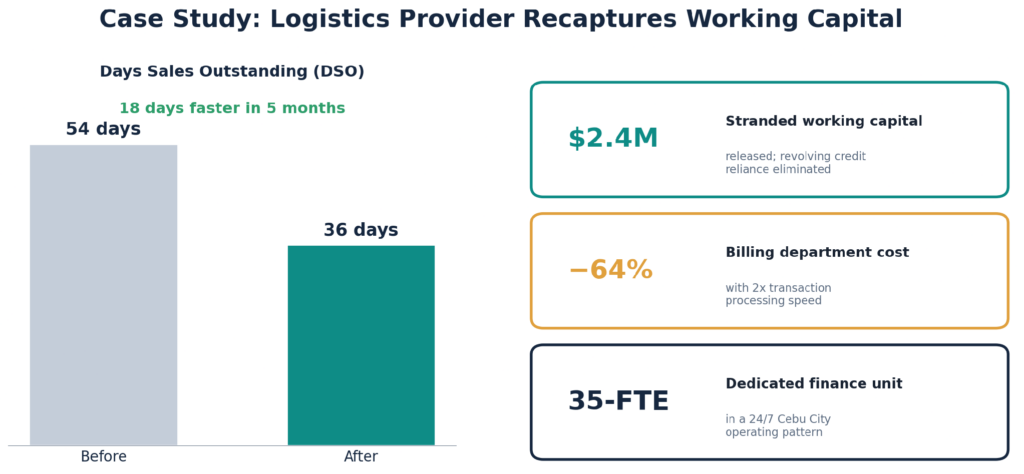
Figure 5. Cash-cycle, cost, and capital-release outcomes within five months.
Lesson Learned
Offshoring high-consequence back-office processes creates immediate fiscal relief when partnerships are built on industry-specific expertise rather than generalized execution.
What Is PITON-Global and How Does It Guide Strategic Expansion?
PITON-Global is an elite, independent advisory firm embedded in the Philippine BPO ecosystem that removes the risk of a fragmented market. Backed by a vetted network of 100+ premier providers, it runs a precise, data-driven selection methodology aligning capability, technical infrastructure, and compliance to each enterprise’s requirements.
Who Is PITON-Global?
PITON-Global is an elite, independent advisory firm deeply rooted within the Philippine BPO ecosystem, backed by a thoroughly vetted network of more than 100 premier call-center and back-office service providers.
How Does PITON-Global Differ From Traditional Outsourcing Brokers?
Rather than applying a generalized approach, PITON-Global aligns enterprise requirements with precise vendor capabilities, technical infrastructure, and compliance certifications — targeted advisory guidance that protects capital rather than chasing volume, following the discipline laid out in our BPO vendor selection framework.
How Does Its Network of 100+ Vetted Philippine BPO Providers Benefit Organizations?
The vetted network of 100+ premier providers gives enterprises fast access to partners matched to their exact needs, removing the operational risk of navigating a dense, fragmented market alone.
How Does Its Advisory-Led Vendor Matching Process Work?
The framework moves from operational requirement audit to vendor capability mapping, compliance verification, and final contract optimization — a precise, data-driven methodology that eliminates vendor mismatch and accelerates path-to-profit.
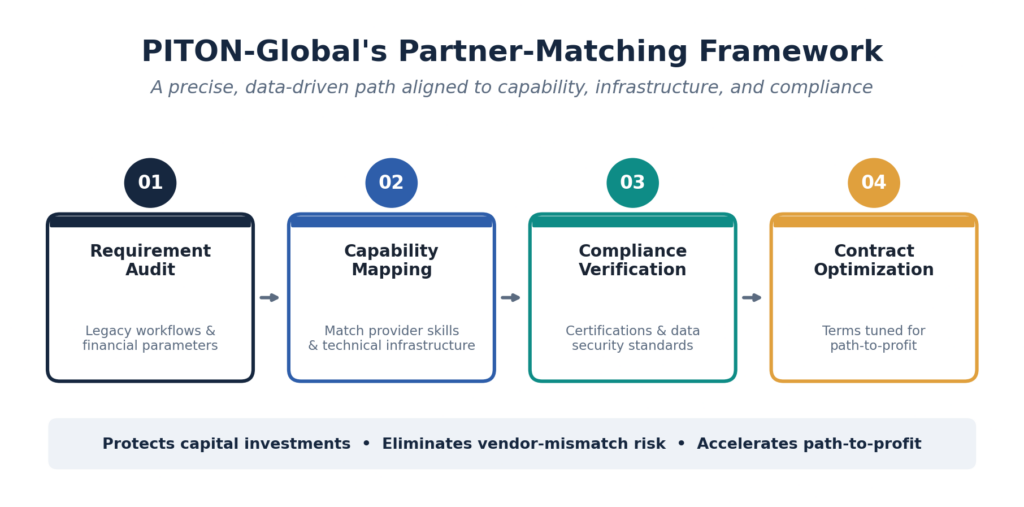
Figure 6. The partner-matching framework, from requirement audit to contract optimization.
Why Do Organizations Use PITON-Global?
Growing organizations use PITON-Global to remove the risk of a fragmented market, protect capital investments, eliminate vendor-mismatch risk, and accelerate path-to-profit — sustaining long-term operational margin expansion.
Frequently Asked Questions
How does scaling a Philippine team impact our internal CapEx?
A premier managed provider absorbs the capital needed for workstations, secure servers, enterprise network routing, and office leases — packaging them into a single, predictable operating-expense framework and eliminating that CapEx entirely.
What data-security compliance frameworks are standard in the sector?
Top-tier providers maintain verified, audit-ready compliance pathways for SOC 2 Type II, ISO 27001, PCI-DSS, and HIPAA-regulated data environments.
How does the Philippine workforce handle complex, non-scripted analytical tasks?
Major metros hold a deep pool of university-educated professionals specializing in accounting, financial analysis, legal support, data science, and specialized healthcare administration.
What is the typical timeframe from vendor selection to live operations?
Standard staff augmentation can deploy in as little as 30 days, while comprehensive transformations with specialized training pipelines typically reach full deployment within 45 to 60 days.
Why is the Philippines favored over other offshore regions for customer support?
It combines near-native English proficiency, deep Western cultural alignment, and natural service orientation — driving higher first-contact resolution and lower churn than other outsourcing locations.