
On this page
- Key Takeaways
- How Should Enterprises Define the Boundaries of “Safe” Outsourcing?
- Which Interaction Categories Perform Best Offshore?
- What Safeguards Prevent Operational Failure in Regulated Industries?
- What Does a Successful Secure Deployment Look Like?
- How Does PITON-Global Help Enterprises Outsource Customer Interactions Safely?
- Frequently Asked Questions About Offshoring Customer Touchpoints
Businesses can safely outsource high-volume customer interactions to the Philippines—including multi-tier technical support, omnichannel care, sales development, and regulated back-office processing. The decision follows the same logic as handing a voice operation to a managed provider: by mapping workflow complexity against the region’s mature talent pool and enterprise-grade security protocols, organizations scale critical frontlines while keeping full operational oversight and brand consistency.
Key Takeaways
- Structured tiered support: Tier 1 and Tier 2 inbound technical and account support migrate with minimal friction thanks to high English proficiency and strong problem-solving aptitude.
- Strict compliance standards: Sensitive interactions—healthcare intake, financial data processing—are safely handled by elite providers operating under SOC 2 Type II, ISO 27001, and PCI-DSS frameworks.
- Capital efficiency: Offshoring transactional touchpoints cuts frontline operating costs materially, freeing onshore capital to fund product innovation and business development.
- Strategic risk segmentation: Interactions requiring subjective judgment, legal authority, or high financial liability stay onshore, creating a balanced, hybrid delivery model.
How Should Enterprises Define the Boundaries of “Safe” Outsourcing?
Enterprises should define safe outsourcing by auditing each interaction along two axes: procedural standardization and data sensitivity. Structured, rule-based workflows are the safest to offshore, while interactions needing subjective judgment, binding legal authority, or ambiguous regulatory navigation should remain onshore.
Determining which touchpoints to move offshore requires an analytical assessment of complexity and risk, not a single blanket policy. A common executive mistake is classifying all customer interactions under one umbrella. In practice, workflows should be audited on two distinct dimensions: how standardized the process is, and how sensitive the underlying data is.
Interactions governed by structured workflows, explicit Standard Operating Procedures, and clear business logic are the safest to offshore—and the Philippine BPO sector executes these rule-based processes with exceptional precision. Conversely, interactions demanding subjective corporate judgment, binding legal negotiation, or navigation of ambiguous regulation are best retained by domestic in-house teams—the split that heads off most of the risks that come with offshoring call handling. The matrix below isolates where each type of work belongs.
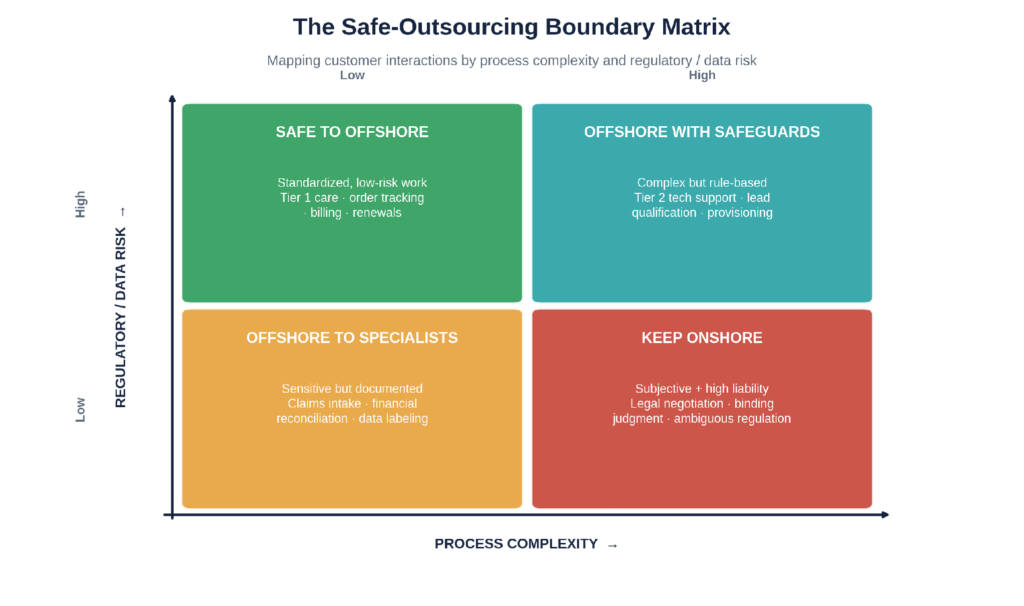
Figure 1. The safe-outsourcing boundary matrix maps interactions by process complexity and regulatory/data risk.
Which Interaction Categories Perform Best Offshore?
The categories that perform best are Tier 1 and 2 customer care, technical support, sales and growth operations, and regulated back-office processing. Each pairs a structured workflow with specialized local talent, delivering measurable performance gains at 2026 blended rates of roughly $8–$17 per hour.
The mature Philippine ecosystem supports a wide range of front- and back-office functions. By aligning specific touchpoints with specialized talent, businesses achieve meaningful performance upgrades rather than simple cost arbitrage. The graphic below summarizes the interactions that migrate safely, their representative workflows, 2026 fully loaded cost benchmarks, and the metric that should govern each one.
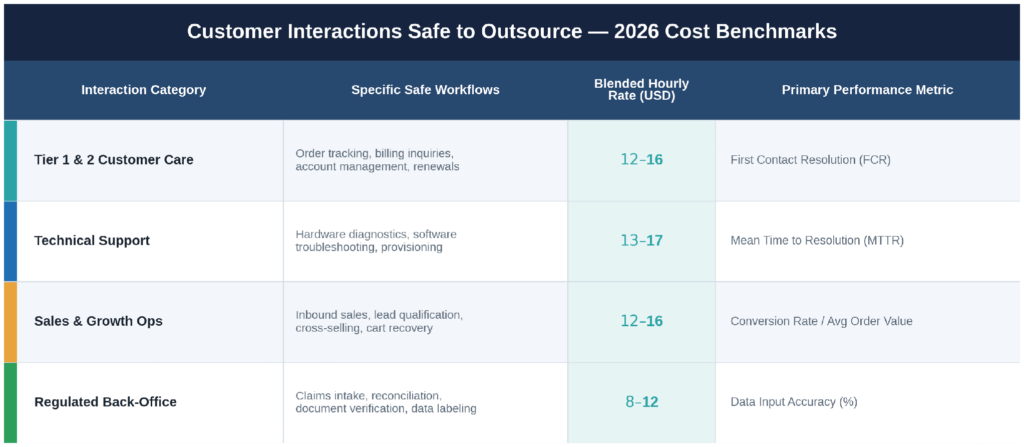
Figure 2. Safe-to-outsource interaction categories with 2026 blended hourly rate benchmarks.
Two patterns stand out. First, regulated back-office work carries the lowest blended rate of the four categories yet demands the highest accuracy discipline, making provider vetting essential. Second, each category should be measured by a workflow-specific KPI—FCR for care, Mean Time to Resolution for technical support, conversion for sales, and data-input accuracy for back office—rather than a single generic scorecard.
What Safeguards Prevent Operational Failure in Regulated Industries?
In regulated sectors, safety depends on information security and compliance. Enterprise-grade providers run encrypted virtual desktop infrastructure, clean-desk facilities, role-based access controls, and AI-enabled monitoring under SOC 2 Type II, ISO 27001, PCI-DSS, and the Philippine Data Privacy Act of 2012.
For fintech, healthcare, and insurance organizations, operational safety is inseparable from data security. The Philippine BPO industry is built for these demands, operating under the Philippine Data Privacy Act of 2012, which aligns with global frameworks such as GDPR, HIPAA, and CCPA. The reference architecture below shows how regulated data can stay within the onshore perimeter while offshore agents work only with an encrypted visual stream.
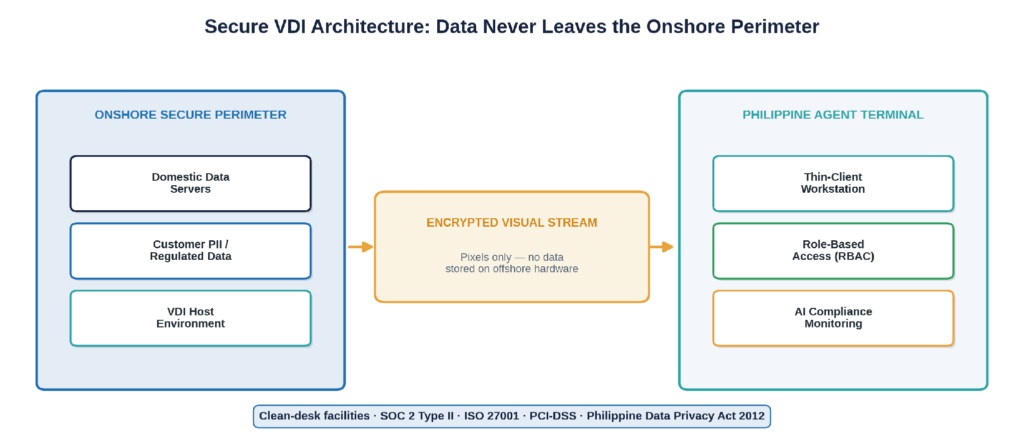
Figure 3. A secure VDI architecture ensures no regulated data is ever stored on offshore hardware.
Before transitioning sensitive workflows, enterprise buyers should verify that the provider enforces the following physical and digital safeguards:
Clean-desk environments
Production floors prohibit personal devices, writing materials, and external storage media to prevent unauthorized data capture.
Role-based access controls (RBAC)
Agents see only the specific data fields required to complete the immediate task—nothing more.
AI-enabled monitoring audits
Automated quality-assurance software—the same speech analytics that mine customer conversations for insight—continuously screens recordings and transcripts for compliance anomalies or unauthorized actions.
What Does a Successful Secure Deployment Look Like?
A successful secure deployment combines front-office care with integrated back-office verification inside one vetted, certified team. One fintech raised complex-billing First Contact Resolution sharply, cut fraud-triage time materially, and secured a substantial annual cost reduction within 120 days.
Client Challenge
A high-growth North American fintech application faced severe churn driven by transaction backlogs, long wait times, and a sharp rise in fraud-alert disputes.
Vendor Selection
Working with PITON-Global, the company assessed a network of 100+ vetted providers and bypassed generic, mass-scale vendors to partner with a specialized, highly secure mid-market BPO in Metro Manila.
Solution Implemented
The partner deployed a cross-trained team of 60 agents spanning inbound care and back-office fraud triage, housed in a dedicated SOC 2 Type II facility running encrypted virtual desktop infrastructure (VDI).
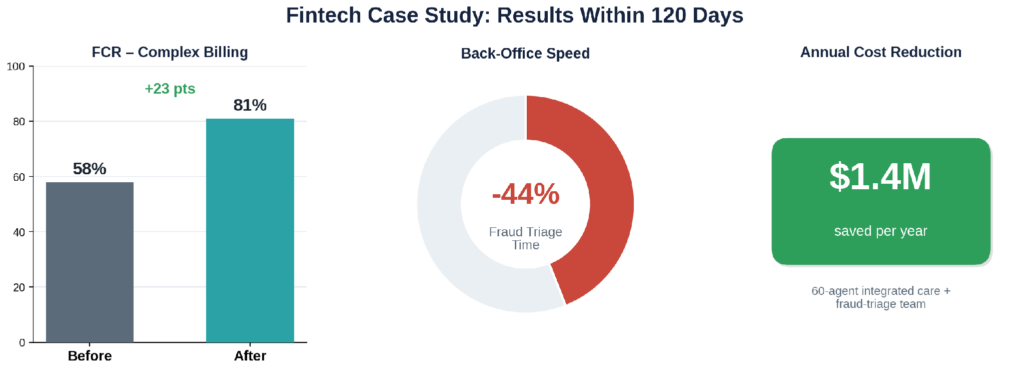
Figure 4. Measurable outcomes achieved within 120 days of secure deployment.
Outcomes and Lessons
Within 120 days, First Contact Resolution for complex billing rose sharply, fraud-triage time fell materially, and the client secured a substantial annual cost reduction. The lesson: combining front-office care with integrated back-office verification in one offshore team creates a smoother resolution workflow that directly strengthens consumer trust and brand safety.
The conversation around offshoring has completely shifted over the last few years. Enterprise buyers no longer ask if the Philippines can handle their frontlines—they want to know how deep into the customer lifecycle they can safely go. The answer lies in process documentation and vendor specialization. If you can define a workflow with clear logic, a top-tier Philippine call center can execute it as well as—and often better than—a domestic team. The key is avoiding generalist providers and instead finding vendors with deep, proven domain expertise in your specific vertical.
— John Maczynski, CEO, PITON-Global
How Does PITON-Global Help Enterprises Outsource Customer Interactions Safely?
PITON-Global is an independent, advisory-led BPO consultancy that de-risks provider selection. Using a data-driven audit methodology across a private network of 100+ vetted Philippine providers, it prevents vendor mismatch, removes deployment risk, and places sensitive interactions only with secure, high-performance specialists.
Who Is PITON-Global?
PITON-Global is a premium, advisory-led business process outsourcing consultancy focused on the Philippine market. Rather than reselling capacity, it acts as a strategic guide for enterprise buyers, bringing deep expertise in BPO advisory and provider selection. Its role in the outsourcing ecosystem is to translate complex enterprise requirements—complexity, data sensitivity, and service levels—into a secure, defensible vendor decision.
How Does PITON-Global Differ from Traditional Outsourcing Brokers?
Traditional brokers are commission-driven and tend to steer clients toward the largest providers that pay the highest referral fees. PITON-Global is provider-agnostic instead. It evaluates vendors independently through a meticulous audit, makes objective recommendations, and focuses entirely on strategic operational alignment and client outcomes rather than provider promotion—so guidance reflects fit and security, not financial incentive.
How Does PITON-Global’s Network of 100+ Vetted Philippine BPO Providers Benefit Organizations?
Access to a pre-vetted ecosystem of more than 100 specialized mid-market and boutique providers accelerates discovery and qualification. The network spans industries and service categories—care, technical support, sales operations, and regulated back office—so organizations can quickly identify secure, compliance-ready partners instead of cold-screening an unfamiliar market alone.
How Does PITON-Global’s Advisory-Led Vendor Matching Process Work?
The process moves systematically from requirements to secure placement: a structured requirements audit, network mapping against vetted providers, rigorous security vetting, specialist matching by vertical domain expertise, and hands-on support through diligence and launch.
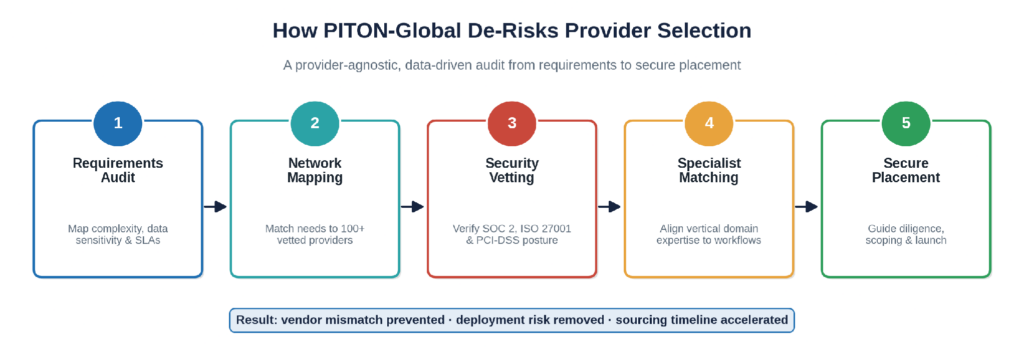
Figure 5. PITON-Global’s five-stage, provider-agnostic audit and matching process.
Why Do Organizations Use PITON-Global?
Organizations engage PITON-Global to reduce outsourcing risk, improve provider fit, accelerate the sourcing timeline, and secure better outcomes. By guiding the full evaluation—objectively matching operational strengths, security posture, and vertical expertise to long-term goals—the consultancy prevents vendor mismatch and ensures critical customer interactions are placed only with secure, high-performance providers.
Frequently Asked Questions About Offshoring Customer Touchpoints
The most common questions concern VIP account safety, brand-voice alignment, multilingual support, data sovereignty, and how complex technical products are trained. Each is addressed below.
Is it safe to outsource high-value or VIP customer accounts to the Philippines?
Yes. Using tier-based routing, businesses can direct high-value accounts to elite, top-performing agents. These specialized teams undergo deep brand-immersion training and receive competitive compensation to ensure high retention, consistency, and exceptional service delivery.
How do Philippine call centers maintain brand voice alignment across channels?
Top-tier providers run structured calibration sessions in which brand stakeholders and offshore quality-assurance teams review interactions together. This ongoing synchronization ensures agents mirror the exact tone, vocabulary, and cultural nuance of the core brand across voice, chat, and email—the discipline behind building stronger customer relationships through service excellence.
Can call centers in the Philippines support multilingual customer interactions?
While English is the primary operational language, major hubs in Manila and Cebu hold substantial multilingual talent. They can deliver support in Spanish, Mandarin, Cantonese, Japanese, Korean, and several European languages to serve global consumer bases.
What happens to data sovereignty when customer workflows are moved offshore?
Enterprise-grade providers use secure cloud architectures and virtual desktop infrastructure (VDI). Customer data remains hosted on the client’s domestic servers and is viewed by offshore agents only through encrypted visual streams, so no data is ever stored locally on offshore hardware.
How do businesses manage the training transition for complex technical products?
The “Train-the-Trainer” model is highly effective. Internal product specialists train the partner’s core team leads and corporate educators, who then replicate the curriculum locally using comprehensive learning management systems and simulated testing environments.