

On this page
- Key Takeaways
- Why Must Chief Executives Shift Focus from Operational Velocity to Value?
- What Are the Regional Performance Benchmarks for Philippine BPO Operations?
- How Do We Build a Data-Driven Governance Framework for Offshore Teams?
- What Does a Successful KPI Realignment Look Like?
- How Does PITON-Global Help Enterprises Secure CX Performance?
- What Are the Most Common Questions About CX KPIs in Philippine Outsourcing?
CEOs should monitor customer experience KPIs that align operational efficiency with long-term brand equity, moving beyond legacy speed metrics. For call centers in the Philippines, the critical indicators are Customer Effort Score, First Contact Resolution, and Customer Lifetime Value—ensuring the Philippine workforce’s empathy and capability translate into measurable retention and revenue, which is the standard behind support outsourcing judged on CSAT and first-contact resolution.
Key Takeaways
- Prioritize resolution over speed: Transition from Average Handle Time to First Contact Resolution to measure true problem resolution.
- Measure customer friction: Use Customer Effort Score as the primary predictor of long-term client retention and brand loyalty.
- Unify quality metrics: Calibrate internal quality scores with post-interaction sentiment to eliminate operational blind spots.
- Track financial outcomes: Link customer-support outcomes directly to Customer Lifetime Value to quantify outsourcing ROI.
Why Must Chief Executives Shift Focus from Operational Velocity to Value?
Executives must shift focus because speed metrics like Average Handle Time measure capacity, not sentiment or brand health. A strict focus on transaction speed undermines the Philippines’ core asset—high-empathy resolution—so leadership should evaluate vendors on long-term retention, not short-term output.
For corporate leaders, customer care has historically been evaluated through cost containment and speed. Metrics like Average Handle Time and Abandonment Rate provide visibility into capacity management, but they fail to measure sentiment or brand health. When scaling an offshore contact center in the Philippines, a strict focus on transaction speed actively undermines the primary regional asset: high-empathy, high-touch problem resolution.
CEOs must steer strategy toward metrics that track relationship preservation — the four-metric discipline set out in how offshore call centers deliver CX quality. A call handled quickly but requiring three follow-up contacts is a service-delivery failure that also raises operational cost. By prioritizing customer-centric health indicators, leadership can evaluate vendors on long-term retention rather than short-term output—a deliberate shift in what the executive scorecard rewards.
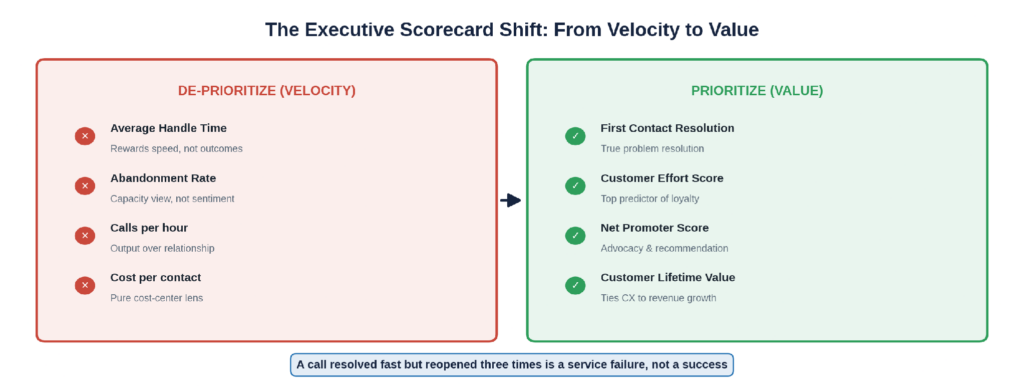
Figure 1. The executive scorecard shift: de-prioritize velocity metrics, prioritize value metrics.
That shift is justified by a direct relationship in the data: as Customer Effort Score falls, customer retention rises. Reducing friction does more for loyalty than any gain in raw handling speed.
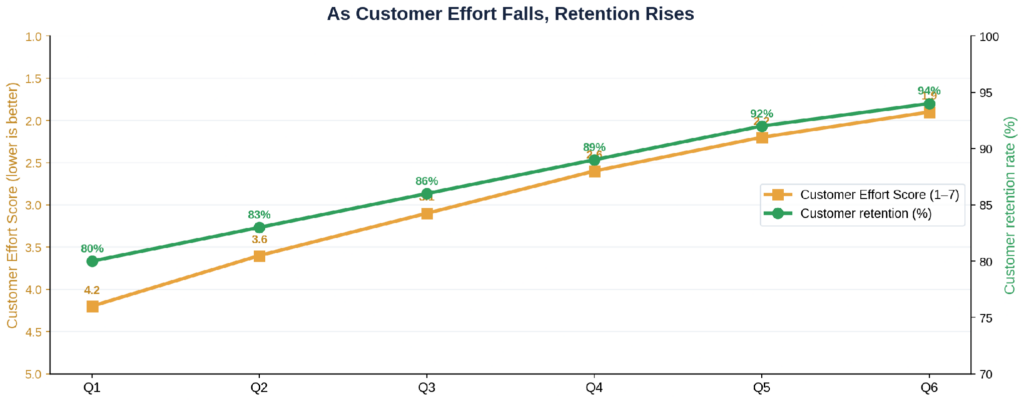
Figure 2. As Customer Effort Score declines, customer retention climbs in tandem.
What Are the Regional Performance Benchmarks for Philippine BPO Operations?
Top-tier Philippine operations set explicit targets for First Contact Resolution, Customer Effort Score, Net Promoter Score, and transactional CSAT rather than for handle time alone. Leaders should anchor SLAs to these value-focused baselines.
The Philippine outsourcing ecosystem provides structural advantages in language proficiency, cultural alignment, and emotional intelligence — the foundation of customer care outsourcing as a growth strategy rather than a cost play. To leverage these strengths, decision-makers should establish specific performance baselines within their service level agreements, as set out below.

Figure 3. The executive CX performance framework: each KPI with its benchmark and strategic outcome.
Evaluating an offshore partner solely on cost efficiency is an outdated approach. The true ROI of outsourcing to the Philippines is realized when a provider acts as a brand custodian. When you incentivize resolution quality and customer satisfaction over call volume, you turn a traditional support center into a powerful engine for business growth.
— John Maczynski, CEO, PITON-Global
How Do We Build a Data-Driven Governance Framework for Offshore Teams?
A dependable governance framework has three layers: synchronize internal and vendor quality standards through regular calibration, deploy speech and interaction analytics to monitor friction in real time, and structure performance-based incentives that tie vendor pay to beating CX targets.
Maintaining consistency across international operations requires structured quality governance. Misalignment occurs when an outsourced provider reports excellent service levels while internal customer-retention metrics drop. To bridge that gap, executive leadership should implement a multi-layered calibration process, built in three phases.
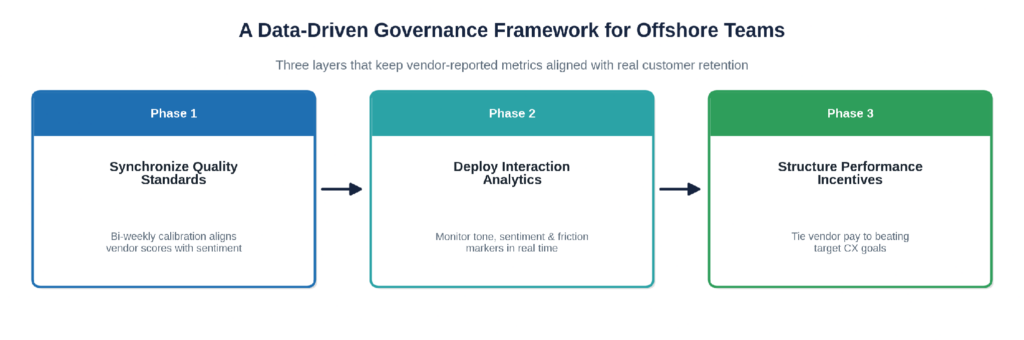
Figure 4. A three-phase governance framework that keeps vendor metrics aligned with real retention.
The third phase carries the most weight: tying a portion of the vendor’s commercial compensation to beating target CX goals ensures operational priorities match corporate objectives rather than drifting toward whatever is easiest to report.
What Does a Successful KPI Realignment Look Like?
A successful realignment replaces handle-time targets with First Contact Resolution and Customer Effort Score. One fintech brand lifted FCR sharply, cut Customer Effort Score by about a third, and improved overall retention within five months.
The Challenge
A prominent North American fintech company faced rising churn and low satisfaction due to poor issue resolution from its onshore support center. The incumbent vendor prioritized handling volume, producing a poor First Contact Resolution rate and rising customer frustration.
Vendor Selection and Solution
PITON-Global reviewed the program’s technical requirements and matched the enterprise with a specialized, highly vetted customer-care provider in Manila. The new model replaced handle-time targets with First Contact Resolution and Customer Effort Score as the primary metrics, combined with deep product training.
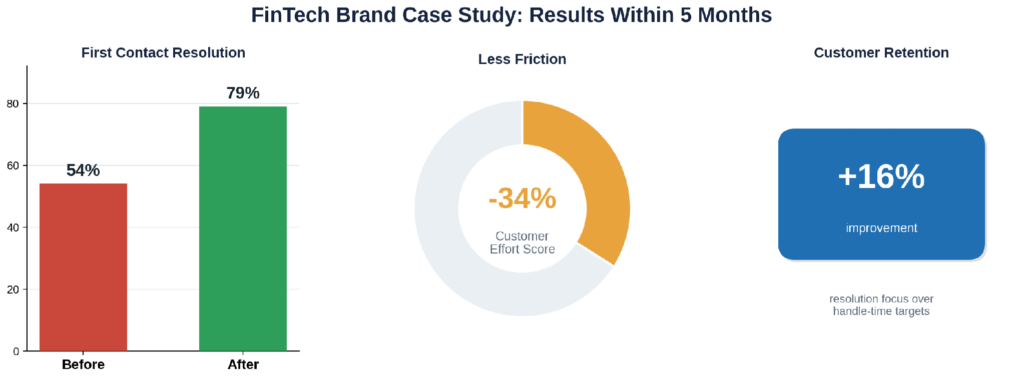
Figure 5. Quantifiable outcomes within five months of realigning vendor performance goals.
Outcomes and Lessons
Within five months, First Contact Resolution climbed steeply, Customer Effort Score dropped by about a third, and overall retention improved measurably. The lesson: shifting vendor performance goals from transaction speed to resolution quality preserves brand equity and reduces long-term operational expense.
How Does PITON-Global Help Enterprises Secure CX Performance?
PITON-Global is an independent BPO advisory and consultancy specializing in the Philippine market. With a vetted network of 100+ providers across Manila and Cebu, it uses an advisory-led model to match buyers on technical capability, cultural alignment, and proven performance history.
Who Is PITON-Global?
PITON-Global is an independent business process outsourcing advisory and consultancy specializing in the Philippine market. With a vetted network of more than 100 call center and back-office providers across Manila and Cebu, the firm eliminates the operational risks traditionally associated with offshoring and acts as a strategic advisor rather than a lead reseller.
How Does PITON-Global Differ from Traditional Outsourcing Brokers?
Unlike standard brokers, PITON-Global uses an advisory-led model to match corporate buyers with providers based on technical capability, cultural alignment, and proven performance history. The emphasis is on securing long-term CX outcomes and objective fit rather than forwarding leads to the largest market players.
How Does PITON-Global’s Network of 100+ Vetted Providers Benefit Organizations?
A vetted network of more than 100 providers across Manila and Cebu lets organizations bypass a risky open-market search. Because each provider is assessed for technical capability, cultural alignment, and performance history, buyers can quickly shortlist partners able to hit the resolution-focused KPIs that drive retention and lifetime value.
How Does PITON-Global’s Advisory Process Work?
PITON-Global maps each client’s KPI targets and technical needs, screens its vetted Manila and Cebu network, matches on capability and service culture, verifies proven CX performance history, and guides the buyer to the right partner—reducing risk and streamlining procurement.
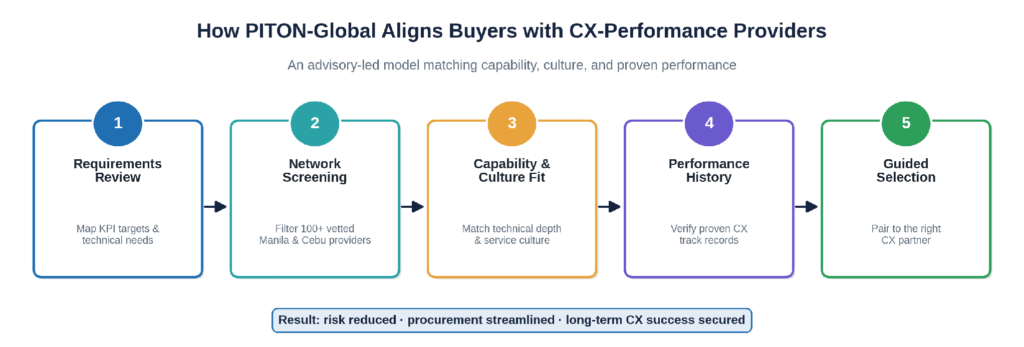
Figure 6. PITON-Global’s five-stage advisory process for aligning buyers with CX-performance providers.
Why Do Organizations Use PITON-Global?
Organizations partner with PITON-Global to reduce operational risk, streamline procurement, and secure long-term customer-experience success. By matching enterprise requirements to providers with proven CX performance and the right cultural fit, the firm helps leadership turn customer support into a measurable engine for retention and revenue growth, starting with the support functions that return the most when outsourced.
What Are the Most Common Questions About CX KPIs in Philippine Outsourcing?
Common questions concern why Customer Effort Score beats CSAT, how to prevent data discrepancies, realistic escalation rates, how retention affects metrics, and whether contracts should include financial penalties. Each is answered below.
Why Is Customer Effort Score More Reliable Than Traditional CSAT?
Customer Effort Score evaluates the ease of an interaction, which predicts loyalty and repeat business more accurately than short-term satisfaction scores.
How Do We Prevent Data Discrepancies in Vendor-Reported Metrics?
Establish independent data loops and carry out regular third-party audits on the vendor’s performance data to ensure all reported metrics are accurate.
What Is a Realistic Escalation Rate for Complex Customer Care Programs?
Top-performing call centers in the Philippines keep escalations to a small fraction of contacts, resolving the vast majority of issues during the initial tier-1 interaction.
How Does Agent Retention Affect Customer Experience Metrics?
High agent turnover disrupts team consistency and lowers service quality. Partnering with providers that invest in workplace wellness helps maintain stable, high-performing teams.
Should Our Commercial Contracts Include Financial Penalties for Missing Metrics?
Yes. A balanced service-level agreement with clear bonus and penalty clauses keeps the vendor’s operational priorities aligned with your business goals.