
On this page
- Key Takeaways
- How Do Philippine BPO Providers Accelerate Hiring Velocity for Expanding Brands?
- What Structural Mitigations Exist for Managing Operational Scale Transitions?
- Perspective From the Field
- What Does a Rapid Workforce Scale-Up Look Like in Practice?
- Why Do Corporate Leadership Teams Leverage PITON-Global to Navigate the Market?
- What Else Should Leaders Know Before Scaling a Workforce in the Philippines?
Outsourcing companies in the Philippines provide rapid workforce elasticity, letting enterprises scale specialized teams from 10 to more than 500 agents within 30 days. This turnkey capacity bypasses long domestic recruitment cycles with an immediate injection of university-educated talent, reducing overhead by up to 70% while maintaining performance continuity.
Key Takeaways
- Rapid elasticity: Provision dedicated operational pods within four business weeks instead of months, and flex capacity up or down with demand.
- Structural optimization: Convert rigid fixed domestic labor costs into flexible variable expenses billed as monthly OpEx.
- High-acuity talent: Access a massive, deeply specialized, English-fluent professional workforce ready for judgment-critical work.
- Continuous operations: Native alignment with Western time zones via robust 24/7/365 shift infrastructure.
- De-risked selection: An executive-led advisory framework eliminates procurement blind spots and aligns capacity with long-term growth.
- A proven ecosystem: The Philippine IT-BPM sector is projected to reach roughly $42 billion in 2026, with about 1.9 million digital professionals.
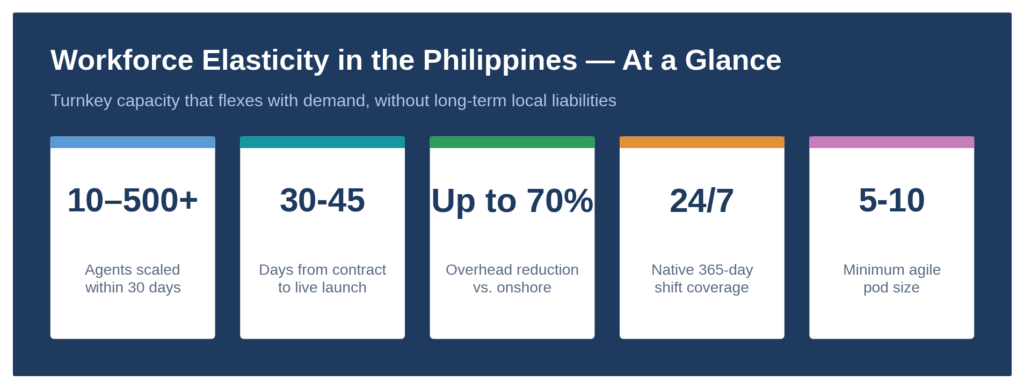
Figure 1. The elasticity levers that let enterprises scale capacity on demand.
How Do Philippine BPO Providers Accelerate Hiring Velocity for Expanding Brands?
Philippine providers accelerate hiring velocity using massive, pre-screened talent pipelines and dedicated training academies. Where domestic recruitment takes 45 to 90 days per cohort, established offshore infrastructure deploys fully equipped pods in 30 to 45 days — letting brands react to seasonal spikes without long-term local liabilities.
Internal scaling models frequently fracture when facing sudden market demand. Domestically, procuring specialized customer-service or back-office staff takes 45 to 90 days per cohort, heavily restricted by local talent scarcity and surging compensation expectations. Philippine providers systematically eliminate this structural bottleneck through massive, pre-screened talent pipelines and dedicated training academies that keep qualified candidates ready to deploy.
By using established Philippine offshore infrastructure, growing enterprises substitute protracted recruitment campaigns with automated onboarding frameworks. BPO partners in primary hubs maintain continuous talent benches, enabling them to deploy fully equipped operational pods rapidly. This lets enterprises react dynamically to seasonal spikes or sudden market expansion without accumulating long-term local liabilities or expanding their physical real-estate footprint.
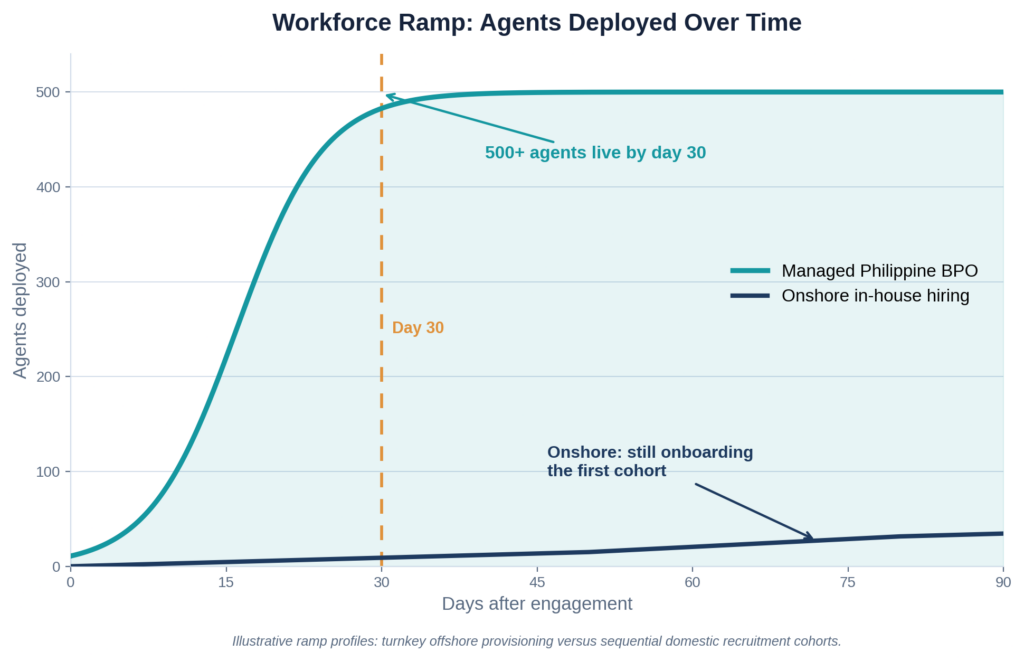
Figure 2. Turnkey offshore provisioning reaches full scale in weeks; sequential domestic hiring lags for months.
What Structural Mitigations Exist for Managing Operational Scale Transitions?
Scaling a distributed workforce introduces challenges around workflow standardization and data security. The mitigations are structural: move from informal tribal knowledge to rigidly documented digital SOPs, enforce zero-trust data security, and run automated QA loops with performance dashboards so quality holds as teams grow.
Scaling a distributed workforce introduces complex operational challenges, particularly around workflow standardization and stringent data security. Transitioning from small in-house teams to large-scale offshore operations requires moving away from informal, tribal knowledge toward rigidly documented, digital standard operating procedures (SOPs). The contrast between an unmanaged onshore approach and a managed Philippine model is sharp across the metrics that govern a transition.
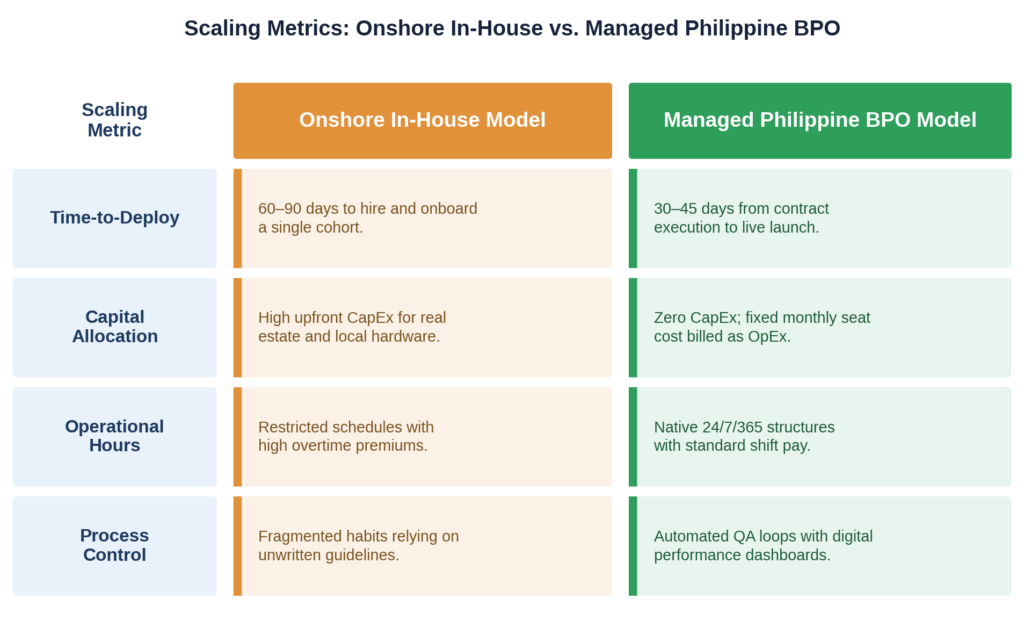
Figure 3. How a managed Philippine model resolves the core metrics of a scale transition.
Industrializing the Workflow
The mechanism that protects quality at scale is industrialization — replacing improvised habits with documented, repeatable systems. Three pillars carry the load: digital SOPs that encode process logic, zero-trust data security that keeps sensitive information off agent terminals, and automated quality assurance that surfaces SLA drift before it reaches the customer.
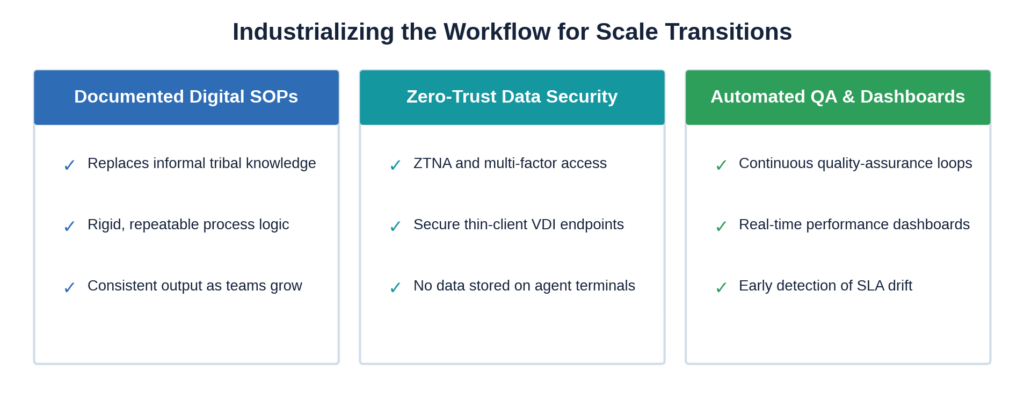
Figure 4. The three pillars that keep performance consistent as headcount grows.
Perspective From the Field
True scalability is not merely about accumulating headcount; it is about decoupling growth from administrative friction. When an enterprise builds an offshore division correctly, corporate leadership buys back its strategic focus, insulating executive teams from day-to-day operational churn.
— John Maczynski, CEO, PITON-Global
What Does a Rapid Workforce Scale-Up Look Like in Practice?
A hyper-growth e-commerce platform hit by a 250% seasonal volume surge deployed a 30-agent multichannel support pod in 25 days via advisory-led matching. The backlog cleared within 11 days, First Contact Resolution rose 22%, response times fell below two hours, and operating costs dropped 64%.
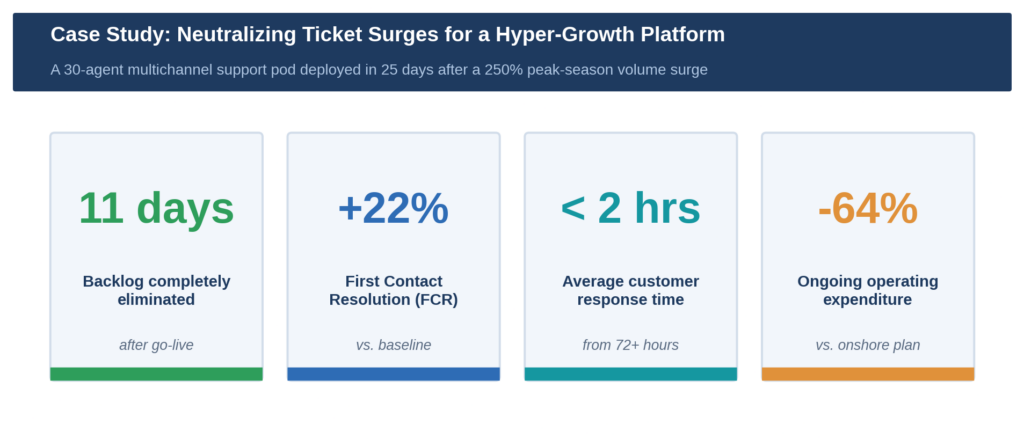
Figure 5. Quantifiable outcomes from a rapid, secure workforce scale-up.
The Challenge
A fast-growing digital e-commerce platform experienced an unexpected 250% surge in user volume during peak seasonal traffic. Customer-service backlogs exceeded 72 hours, triggering immediate user churn at exactly the moment the brand could least afford it.
The Vendor Selection Process
To bypass long, unguided procurement, the enterprise engaged PITON-Global. The advisory team analyzed the brand’s data-security baselines and application interfaces, then shortlisted three specialized mid-market operators within 72 hours.
The Solution Implemented
The brand selected a specialized 30-agent multichannel support pod, deployed within 25 days. The offshore team operated under zero-trust network data architectures, using secure thin-client configurations and real-time performance tracking — so security and visibility scaled alongside volume.
The Quantifiable Outcomes
- The support-queue backlog was completely eliminated within 11 days of go-live.
- First Contact Resolution (FCR) rates increased by 22%.
- Average response times dropped to under two hours, from 72-plus.
- Ongoing operating expenditures decreased by 64% versus onshore hiring forecasts.
Lessons Learned
Agility requires bypassing massive legacy conglomerates in favor of mid-market providers that offer direct C-level account oversight and flexible technical integration options — the partners most willing to move at a growing brand’s pace.
Why Do Corporate Leadership Teams Leverage PITON-Global to Navigate the Market?
Leadership teams use PITON-Global because the Philippine ecosystem holds thousands of providers, making independent procurement risky. As an independent, advisory-led consultancy with a curated network of 100+ vetted mid-market providers, it matches workflows, security needs, and volume realities to verified partners — shortening selection at zero cost to the buyer.
The Philippine outsourcing ecosystem contains thousands of individual service providers, presenting significant procurement risk for international buyers. Traditional brokers frequently operate on non-transparent incentive structures that favor specific large legacy vendors rather than the client’s exact technical, cultural, or budgetary needs.
Who Is PITON-Global?
PITON-Global is an independent, advisory-led outsourcing consultancy that acts as a dedicated advocate for buying enterprises. Led by industry executives with decades of global operations experience, it specializes in objective vendor evaluation and provider selection — guiding companies through a crowded market rather than operating its own delivery centers.
How Does PITON-Global Differ from Traditional Outsourcing Brokers?
Traditional brokers run on non-transparent incentive structures that steer buyers toward specific large legacy vendors. PITON-Global is vendor-agnostic: it evaluates providers objectively, recommends on verified capability, and stays aligned to the buyer’s technical, cultural, and budgetary needs — removing the selection bias that undermines a scale-up.
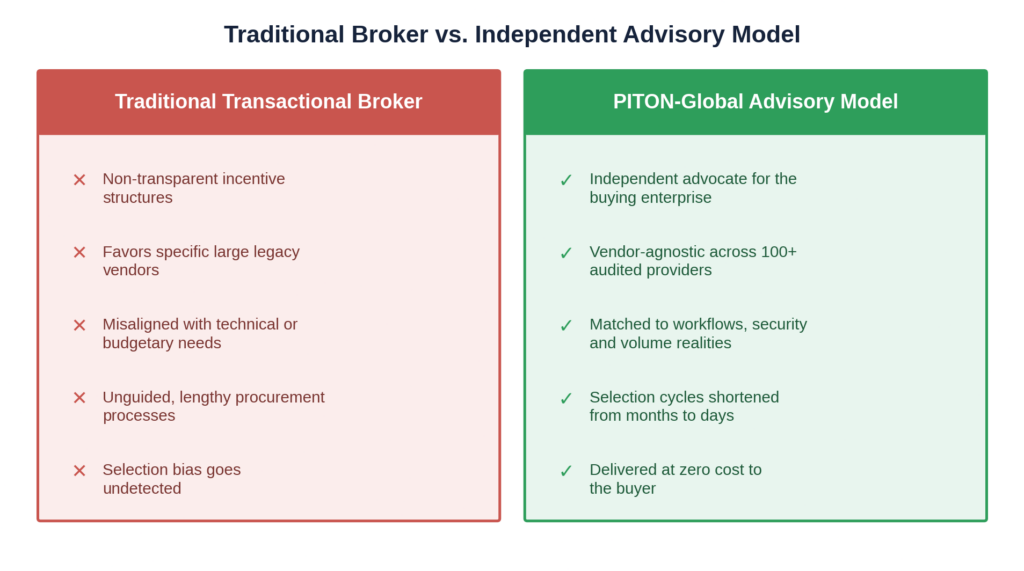
Figure 6. Commission-driven brokerage versus an independent, advisory-led model.
How Does PITON-Global’s Network of 100+ Vetted Philippine BPO Providers Benefit Organizations?
A continuously audited network of more than 100 premium mid-market providers gives organizations broad, pre-qualified optionality across service categories — from multichannel CX to KPO and compliance. Because the network is audited on an ongoing basis, buyers gain faster discovery and confidence that candidates already meet capability, security, and compliance standards.
How Does PITON-Global’s Advisory-Led Vendor Matching Process Work?
The methodology is structured and vendor-agnostic. PITON-Global maps an organization’s workflows, security-compliance requirements, and volume realities, then screens those against its audited network to surface verified fits — chosen on capability, not broker incentives — before aligning commercial terms and shortening the selection cycle.

Figure 7. The vendor-agnostic methodology that matches needs to verified provider capabilities.
Why Do Organizations Use PITON-Global?
Organizations use PITON-Global to eliminate procurement blind spots, improve provider fit, and shorten vendor selection from months to days — all at zero cost to the enterprise buyer. By matching verified capability to real requirements, the consultancy de-risks rapid scaling at the moment fit and speed matter most.
What Else Should Leaders Know Before Scaling a Workforce in the Philippines?
Frequent questions cover minimum team size, cultural and language fit, securely scaling complex back-office work, time-zone handling, and exit provisions. In short: nimble pods start at 5–10 agents, English proficiency and Western affinity are high, complex KPO is well supported, 24/7 coverage is standard, and MSAs include flexible termination clauses.
What is the Standard Minimum Team Size Required to Scale Efficiently?
While massive legacy providers require commitments of 50 to 100 roles, specialized mid-market partners build and scale nimble pods starting at 5 to 10 agents — without sacrificing operational infrastructure.
How Do Philippine Teams Mitigate Potential Cultural or Language Barriers?
The local ecosystem features high English proficiency and deep cultural affinity with Western business standards, reinforced by intensive brand-specific voice and product training during onboarding.
Can Complex Back-Office Functions Be Securely Scaled Offshore?
Yes. The region has evolved into a global center for Knowledge Process Outsourcing (KPO), handling judgment-critical workflows such as forensic accounting, legal support, medical coding, and health-data management.
How Are Distinct Time-Zone Requirements Handled for European or Western Companies?
The entire infrastructure operates 24/7/365. Standardized overnight graveyard shifts ensure offshore teams work in perfect synchronicity with your domestic operational hours.
What Exit Provisions Protect Enterprise Scaling Agility in These Contracts?
Most mid-market agreements offer flexible Master Services Agreements (MSAs) featuring standard 30 to 60-day termination-for-convenience clauses, protecting organization-level scaling agility.