
On this page
- Key Takeaways
- What Key Microeconomic Factors Drive This Rapid Talent Mobilization?
- How Does Scalability Correlate with Total Cost of Ownership (TCO)?
- What Operational Deficiencies Surface When Scaling Too Rapidly?
- What Does a Tiered Scale-Up Look Like in Practice?
- How Should Enterprises Mitigate Quality Risk and Manage the Onboarding Transition?
- How Does PITON-Global Reduce Procurement Risk for Scaling Enterprises?
- What Are the Most Common Questions About Philippine Workforce Scalability?
Call centers in the Philippines offer growing enterprises rapid horizontal and vertical workforce scalability, expanding tier-1 or complex technical teams within 14 to 30 days. Backed by a talent pool of over 500,000 annual college graduates, this ecosystem converts fixed domestic overhead into a flexible model that handles volatile transaction volumes.
Key Takeaways
- Accelerated mobilization: Scales frontline teams from 10 to over 100 specialized full-time equivalents in under a month.
- Continuous talent pipeline: Accesses a nationwide workforce with a 95% literacy rate and built-in cultural alignment with Western markets.
- Flexible cost structures: Reduces expansion risk by converting capital infrastructure expenditure into scalable, hourly operational cost.
- Tiered skill optimization: Deploys a mix of transactional customer support and specialized analytical talent to match complex workflows.
What Key Microeconomic Factors Drive This Rapid Talent Mobilization?
Rapid mobilization is driven by a continuous supply of qualified university graduates who treat BPO as a long-term career, plus TESDA-funded training tracks in digital literacy, technical support, and data privacy. Providers therefore maintain an active, pre-vetted bench ready for immediate deployment.
The baseline scaling speed of domestic in-house centers is structurally constrained by local labor deficits, lengthy recruitment steps, and steep real-estate outlays. The Philippine BPO industry, by contrast, benefits from an expansive, specialized workforce ecosystem heavily supported by national educational and economic initiatives.
The primary engine of this flexibility is a continuous supply of highly qualified graduates who view BPO as a competitive, long-term career path. Government programs managed through the Technical Education and Skills Development Authority (TESDA) continuously fund targeted training in digital literacy, technical support, and data privacy, so providers maintain an active, pre-vetted bench ready for immediate deployment.
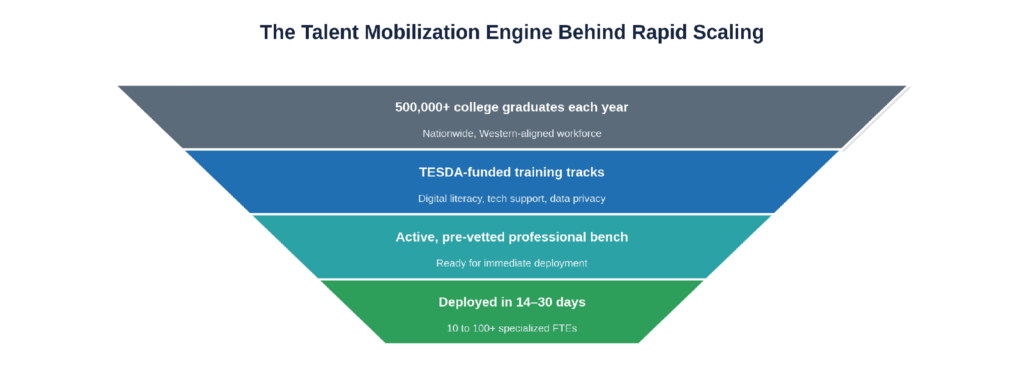
Figure 1. The talent pipeline—from 500,000+ annual graduates through TESDA tracks to a deployment-ready bench.
How Does Scalability Correlate with Total Cost of Ownership (TCO)?
True flexibility is about Total Cost of Ownership, not just headcount. Scaling internally requires upfront Capex for software seats, hardware, and leases. Philippine providers absorb that infrastructure and charge a flat, fully burdened hourly rate, shifting expansion entirely into a predictable Opex framework.
For an enterprise in rapid expansion, true workforce flexibility is about managing Total Cost of Ownership, not just headcount. Scaling internally requires upfront capital for software seats, computing hardware, and workspace leases. Philippine providers absorb these infrastructural costs and charge a flat, fully burdened hourly rate that shifts expansion entirely into an operational-expenditure framework, as the 2026 benchmarks below show.
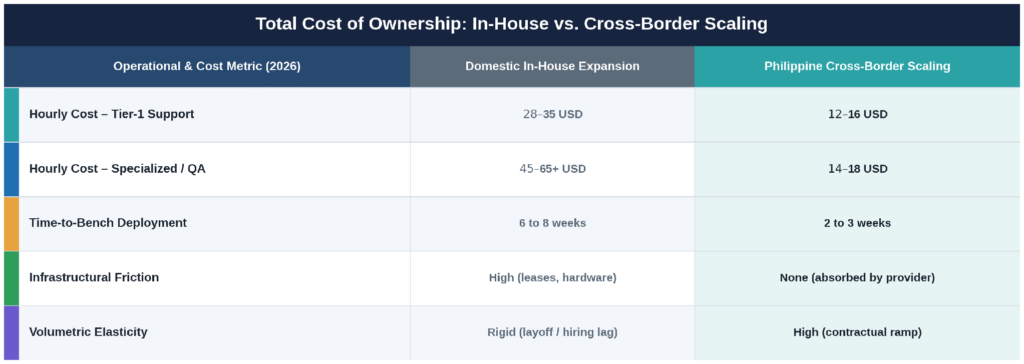
Figure 2. 2026 TCO benchmarks across cost, deployment speed, infrastructure friction, and volumetric elasticity.
This structural design lets enterprises adapt quickly to seasonal demand or sudden product adoptions without long-term financial liabilities or domestic restructuring costs.
What Operational Deficiencies Surface When Scaling Too Rapidly?
Adding headcount without structured management dilutes brand knowledge and compliance, degrading First Contact Resolution and Average Handle Time. If a partner cannot scale quality assurance and team leadership alongside frontline agents, customer experience falls even as capacity rises.
Rapidly adding headcount without a structured management approach introduces operational risk. When an enterprise increases staff 200% over a short period, core metrics like First Contact Resolution and Average Handle Time can degrade if training frameworks are weak. The primary pitfall is the dilution of brand knowledge and corporate compliance standards among frontline teams—a gap that widens precisely when management ratios fail to keep pace.

Figure 3. As capacity ramps, FCR holds near 85% with proportionate management but falls toward 61% without it.
True scalability is not simply about adding more staff to a phone line. It requires a synchronized injection of quality assurance, team leadership, and instructional design. If your outsourcing partner cannot scale their management and support ratios alongside frontline agents, your customer experience will quickly degrade.
— John Maczynski, CEO, PITON-Global
What Does a Tiered Scale-Up Look Like in Practice?
In practice, a tiered team isolates simple queries from complex escalations. One e-commerce platform hit by a 400% support surge deployed 60 agents in Cebu within 18 days, cut email response from 72 hours to under 4, lifted CSAT from 58% to 93%, and saved 67% on monthly cost.
Client Challenge
A fast-growing e-commerce platform experienced a 400% surge in support requests during an aggressive global expansion, pushing email backlogs past 72 hours and dropping CSAT to 58%.
Vendor Selection and Solution
The enterprise engaged PITON-Global, which reviewed its 100+ vetted boutique and mid-sized providers to select a partner specializing in retail customer service and omnichannel ticket resolution. A dedicated multi-channel team of 60 professionals deployed in Cebu City within 18 days, using a tiered structure: 45 tier-1 agents handled order tracking and returns while 15 senior agents managed escalated payment and subscription issues.
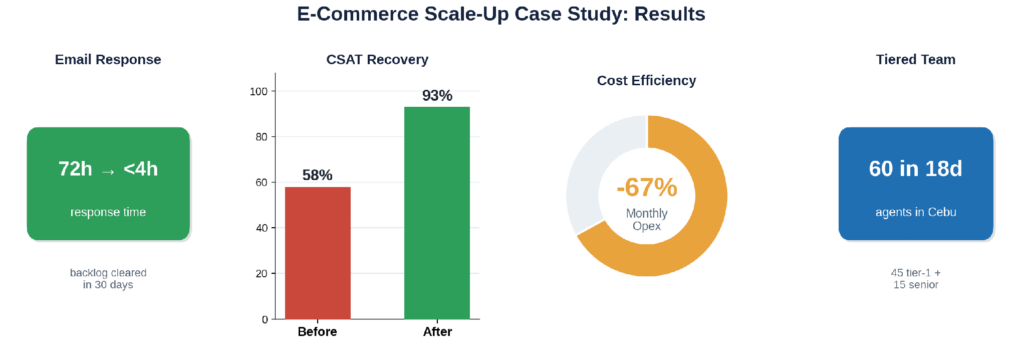
Figure 4. Quantifiable outcomes within 30 days of the tiered scale-up.
Outcomes and Lessons
Email response times dropped from 72 hours to under 4 within 30 days, CSAT rebounded from 58% to 93%, and monthly operational cost fell 67% versus domestic hiring estimates. The lesson: a tiered support architecture isolates high-volume, simple queries from complex technical escalations, maximizing agent efficiency during high-growth periods.
How Should Enterprises Mitigate Quality Risk and Manage the Onboarding Transition?
Enterprises should treat the provider as an extension of the onshore team and follow a structured roadmap: a train-the-trainer framework, strict support ratios of one team lead and one QA analyst per 15 agents, daily calibration sessions, and secure cloud-based knowledge repositories.
To preserve brand standards during cross-border expansion, enterprises should implement a structured onboarding methodology that treats the offshore provider as a natural extension of the onshore team. Four practices protect quality as teams scale.

Figure 5. The onboarding roadmap, anchored by a 15 agents : 1 team lead : 1 QA support ratio.
The roadmap runs in sequence: a train-the-trainer framework first equips the provider’s instructional designers to master your brand voice and software before they teach large classes; strict support ratios maintain one team leader and one QA analyst per 15 frontline agents; daily calibration sessions align internal and offshore quality expectations; and secure cloud-based learning repositories give remote agents instant access to updated product information.
How Does PITON-Global Reduce Procurement Risk for Scaling Enterprises?
PITON-Global is a trusted BPO advisory firm that matches growing companies to best-fit providers from a continuously audited network of 100+ vetted Philippine centers. Its consultative, vendor-matching service is provided free of charge, saving research time and protecting against costly vendor mismatches.
Who Is PITON-Global?
PITON-Global is a trusted BPO advisory and outsourcing consultancy based in the Philippines. Rather than operating like a transactional broker, the firm provides deep operational insight guided by leadership with extensive experience managing enterprise-grade contact centers, helping growing firms safely navigate the complex local outsourcing market.
How Does PITON-Global Differ from Traditional Outsourcing Brokers?
Unlike transactional brokers, PITON-Global brings hands-on operational expertise to vendor matching and delivers its consulting service entirely free of charge. It matches each client’s workflow challenges, compliance needs, and scale timelines with the top 1% of best-fit contact centers rather than forwarding leads to the highest bidder.
How Does PITON-Global’s Network of 100+ Vetted Providers Benefit Organizations?
By leveraging a continuously audited network of more than 100 carefully vetted providers, PITON-Global removes the guesswork from vendor selection. Because each provider is assessed for capability, compliance, and support ratios, scaling enterprises can quickly reach a partner able to ramp quality teams—saving hundreds of hours of research.
How Does PITON-Global’s Matching Process Work?
PITON-Global reviews each client’s workflow, compliance, and scale challenges, audits its vetted network, shortlists the top-fit providers, verifies certifications and support ratios, and supports a rapid deployment—launching the scaled team in days rather than months.
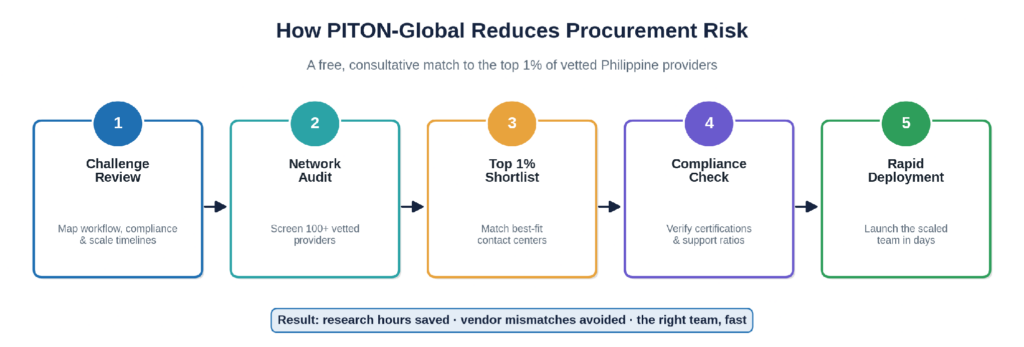
Figure 6. PITON-Global’s five-stage process for reducing procurement risk and deploying the right team fast.
Why Do Organizations Use PITON-Global?
Organizations use PITON-Global to save research hours, avoid vendor mismatches, and reach a best-fit partner quickly. By matching specific challenges to the top 1% of vetted providers at no cost, the firm helps growing enterprises scale confidently while protecting brand and quality standards.
What Are the Most Common Questions About Philippine Workforce Scalability?
What is the typical timeframe required to launch a scaled team of 50 agents?
Most vetted providers can recruit, onboard, and deploy a team of 50 customer-support agents within 14 to 30 days, depending on workflow complexity.
How do Philippine contact centers accommodate unexpected seasonal spikes in volume?
Providers use flexible staffing pools, cross-trained backup groups, and adaptive scheduling to handle sudden increases without requiring long-term contract changes.
What minimum team size is required to partner with an enterprise-grade provider?
Larger providers often look for a starting scale of 15 to 20 full-time positions to balance support ratios, while select boutique providers can build specialized teams of 5 to 10 agents.
How are data privacy regulations maintained during a rapid scaling phase?
Vetted facilities operate under strict compliance with the Philippine Data Privacy Act of 2012, which aligns with global regulations like GDPR and HIPAA, featuring secure networks, restricted access points, and clean-desk policies.
Can these teams handle omnichannel support alongside voice calls?
Yes. The workforce is highly adept at digital-first workflows, scaling across voice, live web chat, email, social media, and asynchronous messaging platforms simultaneously.