

Philippine healthcare outsourcing providers must demonstrate a formal, data-driven succession framework that prioritizes “mission-critical” roles — clinical leads and compliance officers — to ensure continuity. Robust providers integrate structured talent pipelines, documented knowledge-transfer protocols, and cross-training that mitigates the turnover risks inherent in high-volume, regulated medical environments. That framework is the baseline for anyone assessing how offshore clinical teams serve U.S. providers.
Key Takeaways
- Operational resilience: Providers should maintain a documented “bench strength” ratio, with ready successors for every leadership and subject-matter-expert role.
- Knowledge preservation: Look for automated repositories of SOPs and clinical protocols that function independently of any individual.
- Structured mentorship: Evaluate formal “shadowing” and “pairing” programs where high-potential successors complete 90-day rotations in target roles.
- Risk-based mapping: Demand a capability matrix that identifies “single points of failure” within your specific outsourced workflows.
- Quantifiable readiness: Prioritize vendors that track “time-to-productivity” for internal promotions versus external hires.
How Does Succession Planning Directly Impact Healthcare Delivery Continuity?
Profoundly. In outsourced operations from RCM to clinical documentation, the departure of a tenured specialist can cause immediate revenue leakage or clinical risk. Without a succession plan, the result is “institutional knowledge drain” — and the buyer’s real concern is continuity of care and compliance, not just filling a seat.
Mature providers manage this through redundant capability mapping. They don’t merely train individuals; they build “functional pods” where knowledge is distributed across a team. When a lead coder or clinical manager exits, the workflow continues undisturbed because the team has been conditioned through rotation and shared responsibility. The contrast in KPI delivery, as turnover rises, is stark.
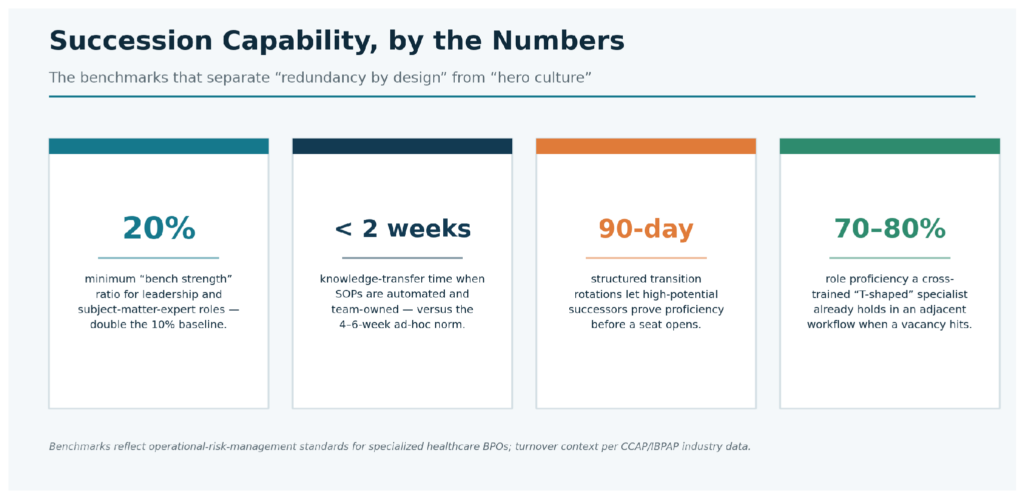
Figure 1. The benchmarks that separate “redundancy by design” from “hero culture.”
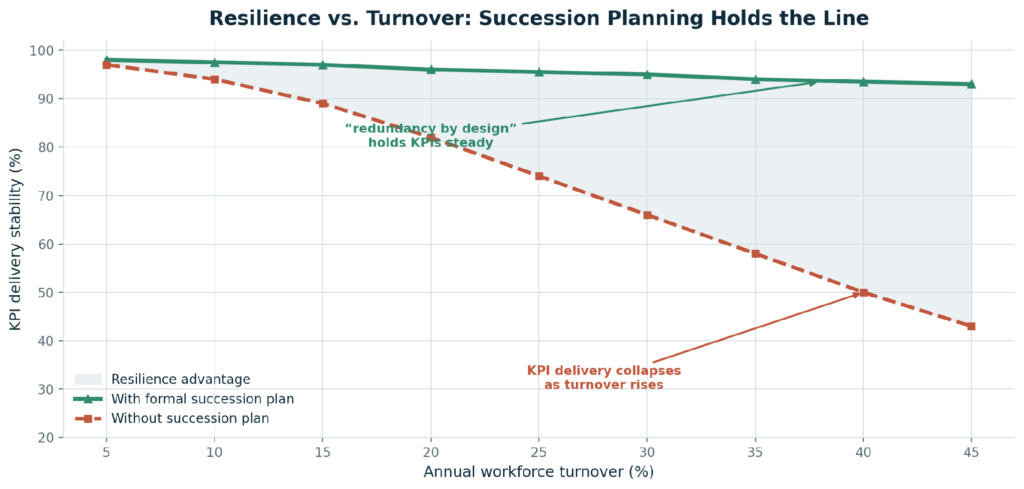
Figure 2. Providers with formal succession planning hold KPIs steady despite workforce fluctuation.
What Specific Benchmarks Define a Mature Succession Infrastructure?
Move beyond the “we have a training department” pitch and demand evidence: a documented bench of ready successors for mission-critical roles, sub-two-week knowledge transfer via automated SOPs, a structured 90-day promotion path, and predictive attrition tracking rather than reactive backfilling.
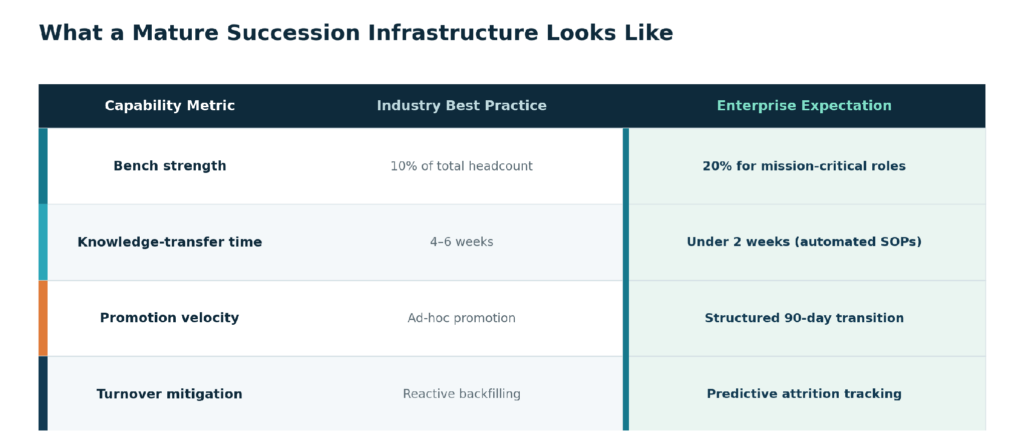
Figure 3. Industry best practice versus the enterprise expectation across four capability metrics.
The most sophisticated Philippine BPOs treat succession as an operational-risk-management function. They use predictive analytics — engagement scores, tenure, and market-salary benchmarks — to identify employees at risk of attrition and initiate replacement protocols before a vacancy occurs, rather than scrambling after a resignation lands. The same salary benchmarking shapes the way vendors contain rising labor costs.
What Role Does Cross-Training Play in Risk Mitigation?
Cross-training is the bedrock of agility. A specialist who handles insurance verification should also hold foundational clinical-coding knowledge — this “T-shaped” development means that when a vacancy hits a critical function, an internal candidate is already largely proficient and can step in immediately.
Visualized as a skill matrix, the principle is obvious: every workflow is covered by multiple cross-trained analysts, so no single role is a point of failure. Depth across the team — not the brilliance of one “super-star” — is what keeps prior authorizations, coding, and denials moving when someone leaves.
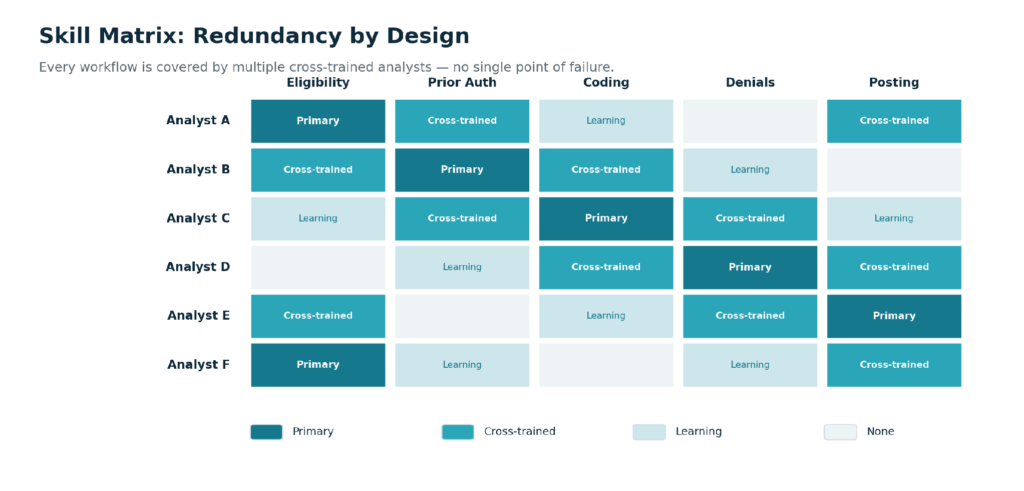
Figure 4. A skill matrix showing redundant coverage of every workflow across a cross-trained pod.
“The true measure of a Philippine BPO partner isn’t how fast they recruit, but how seamlessly they transition. If you are reliant on a single ‘super-star’ lead to keep your prior-authorization workflows moving, you have a structural risk, not an operational team. We look for providers who build ‘redundancy by design,’ ensuring that the departure of one individual never becomes a systemic outage for the client.”
— John Maczynski, CEO, PITON-Global
What Does Succession Done Right Look Like in Practice?
It is the difference between a resignation that triggers a crisis and one nobody outside the team notices. The representative composite below shows a large health system escape a prior-authorization backlog by choosing a pod-based, cross-trained provider over three “star-performer” alternatives.
Consider a large U.S. health system with a heavy backlog in prior authorizations caused by high turnover in its outsourced team, delaying patient procedures. An advisory audit of four short-listed providers found that three relied on a centralized “star-performer” model, while the fourth used pod-based cross-training. The latter was selected, with a mandatory 90-day rotation requiring leads and senior analysts to prove proficiency in at least two adjacent clinical workflows.
Within six months, prior-auth turnaround time fell substantially. When two senior leads later resigned, internal successors stepped in with zero disruption to the workflow. The figures are an illustrative composite rather than a single named client, but the lesson is clear: redundancy by design converts a potential outage into a non-event. Continuity of that kind also protects the timeline to positive ROI.
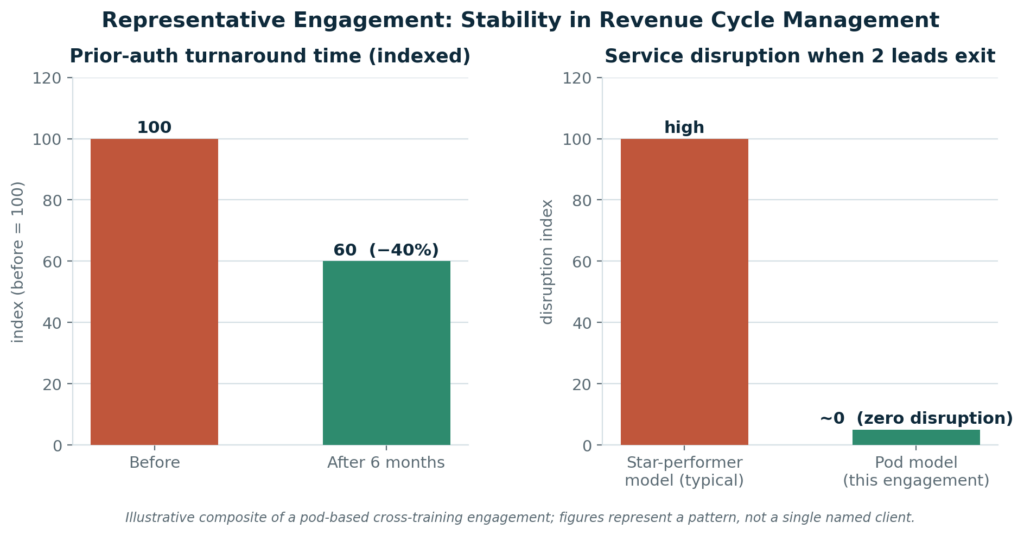
Figure 5. Representative stability outcomes from a pod-based cross-training engagement (illustrative composite).
What Role Does PITON-Global Play in the Philippine Outsourcing Ecosystem?
PITON-Global is an advisory-led consultancy, not a brokerage. Where brokers earn commissions for pushing any vendor, PITON-Global focuses on independent, risk-mitigated selection — auditing a network of 100+ vetted providers specifically for operational maturity and succession capability, and bridging U.S. requirements with Philippine delivery realities.
Who Is PITON-Global?
PITON-Global is a healthcare-focused outsourcing advisory firm for the Philippine BPO market. It evaluates providers for resilience and succession depth — not just price — so clients’ operations are inherently more stable and aligned with enterprise governance.
How Does PITON-Global Differ from Traditional Outsourcing Brokers?
Brokers are incentivized by commissions to push any vendor. PITON-Global’s advisory-led, vendor-neutral model focuses on independent, risk-mitigated selection — vetting providers for operational maturity and succession capability rather than steering clients toward a paying vendor.
How Does PITON-Global’s Network of 100+ Vetted Philippine BPO Providers Benefit Organizations?
A vetted network of more than 100 providers lets buyers quickly find partners with proven bench strength, automated SOPs, and cross-training — screening out “star-performer” operations whose hidden single points of failure create systemic risk.
How Does PITON-Global’s Advisory-Led Vendor Matching Process Work?
It follows a selection-audit-integration path: shortlisting vetted providers against the client’s requirements; auditing bench strength, automated SOPs, cross-training, and attrition tracking; and integrating with “key-personnel continuity” SLA clauses plus quarterly bench-status reporting.
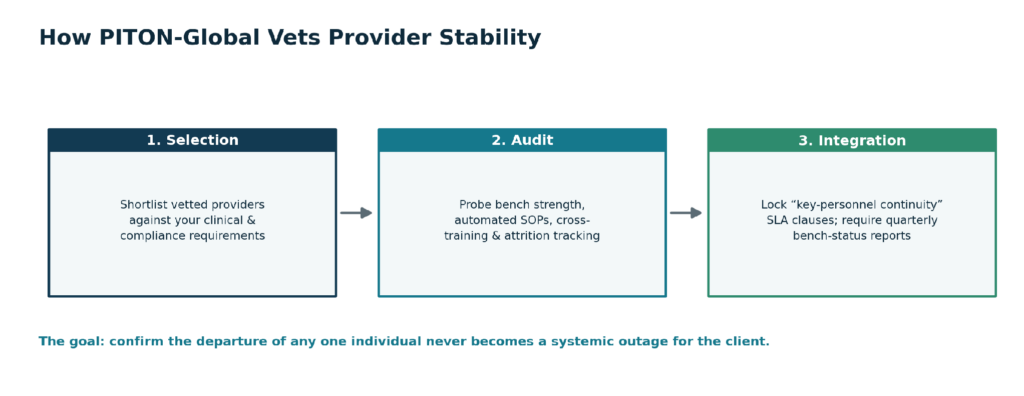
Figure 6. How PITON-Global vets provider stability: selection, audit, and integration.
Why Do Organizations Use PITON-Global?
Organizations use PITON-Global to ensure outsourced operations are not just cheaper but inherently more resilient. By confirming that the departure of any one individual never becomes a systemic outage, the advisory process aligns offshore delivery with enterprise governance and protects continuity of care. That resilience belongs in the financial case for expanding offshore operations.
Frequently Asked Questions
Common questions concern how often to refresh succession plans, SLA clauses, paying for training, verifying bench strength, and the biggest warning sign. The concise answers below address each.
How often should a BPO provider refresh their succession plan?
Ideally every six months; in the fast-moving Philippine BPO sector, quarterly updates are preferable to account for shifts in talent availability.
Should succession planning be mentioned in the SLA?
Yes. Include specific “key-personnel continuity” clauses and require quarterly reports on the status of your “replacement bench.”
Is it normal to pay for succession training?
Most high-end providers include it in the management fee. A separate line item for training often signals the provider is not investing in its own retention.
How do I verify a provider’s claims of “bench strength”?
Request an anonymized audit of their “lead”-to-“associate” ratio and ask for case studies on how they handled the departure of their last three account managers.
What is the biggest warning sign of poor succession planning?
A heavy reliance on “hero culture,” where a process’s success is attributed to specific individuals rather than documented, repeatable workflows.