
The fully-loaded cost per FTE for a healthcare BPO team in the Philippines typically ranges from $1,600 to $3,200 per month ($10–$20 per hour). This all-inclusive rate covers base salaries, statutory benefits, healthcare night differentials, specialized workspace infrastructure, and comprehensive HIPAA-compliant data-security architecture.
Key Takeaways
- Significant structural savings: Running a clinical or RCM team in the Philippines yields 60–75% direct cost reductions versus onshore US equivalents.
- Specialization dictates rates: Basic patient access and data entry sit at the lower bound ($1,600–$2,000/month); certified coders (CPC) and denial specialists occupy the premium tier ($2,400–$3,200/month).
- The mid-market advantage: Agile boutique providers deliver a 30–32% cost-efficiency edge over tier-one global conglomerates while offering superior operational oversight.
- Compliance infrastructure included: Legitimate fully-loaded rates must include the physical and digital security architecture required to protect PHI under HIPAA.
What Components Are Included in a Fully-Loaded Healthcare FTE Rate?
A true fully-loaded rate amortizes every operational, regulatory, and capital expense into one predictable fee: direct compensation plus the mandatory 10% night differential, statutory contributions (SSS, PhilHealth, Pag-IBIG, 13th-month pay), HIPAA and cybersecurity infrastructure, and dedicated management and quality assurance.
When evaluating offshoring operations, procurement and financial officers must look beyond raw base salaries. A true fully-loaded rate from a reputable Philippine provider amortizes all operational, regulatory, and capital expenses into a single, predictable hourly or monthly fee. The composition below shows how that rate breaks down.
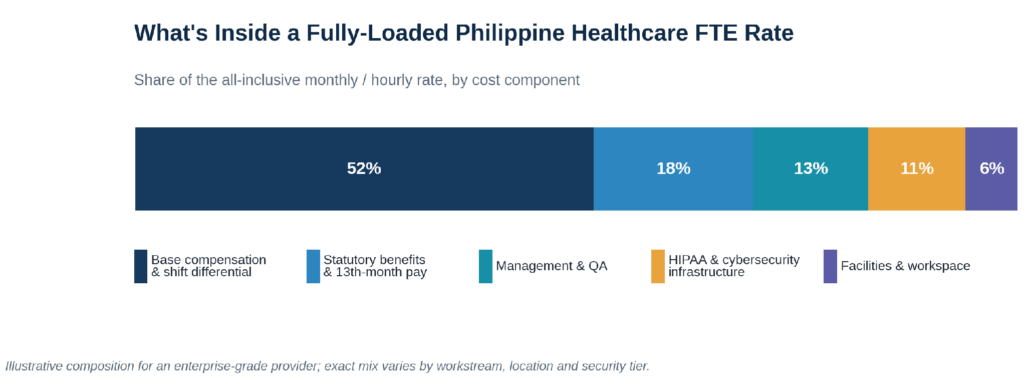
Figure 1 — How a fully-loaded Philippine healthcare FTE rate breaks down by cost component.
The primary cost variables built into an executive-level healthcare BPO framework include:
- Direct compensation & shift differentials: Base salary of highly educated, English-proficient professionals, including the mandatory 10% night premium required when teams align with North American hours.
- Statutory contributions & benefits: Mandatory employer allocations for SSS, PhilHealth, and Pag-IBIG, plus the accrued 13th-month bonus.
- HIPAA & cybersecurity infrastructure: Secure terminal servers, biometric access control, VPNs, and strict data-loss-prevention (DLP) protocols protecting patient health information.
- Management & quality assurance: Dedicated operations management, clinical team leads, and healthcare QA analysts monitoring compliance and metrics like first-pass clean-claim rates.
How Do Costs Vary Across Different Healthcare Outsourcing Workflows?
Cost scales with clinical and technical complexity. Patient support and intake start near $9.50–$12.50/hour, billing and denial management run higher, and certified coders and RN-led utilization review command the premium tier up to $25/hour—still 58–75% below onshore depending on the workstream.
The financial commitment to scale a team depends entirely on the technical and clinical complexity of the workflows. General administrative tasks require less specialized training, whereas technical revenue cycle management or clinical triage demand higher credentials, inflating the talent premium. The matrix below outlines current operational cost benchmarks for dedicated, full-time healthcare roles.
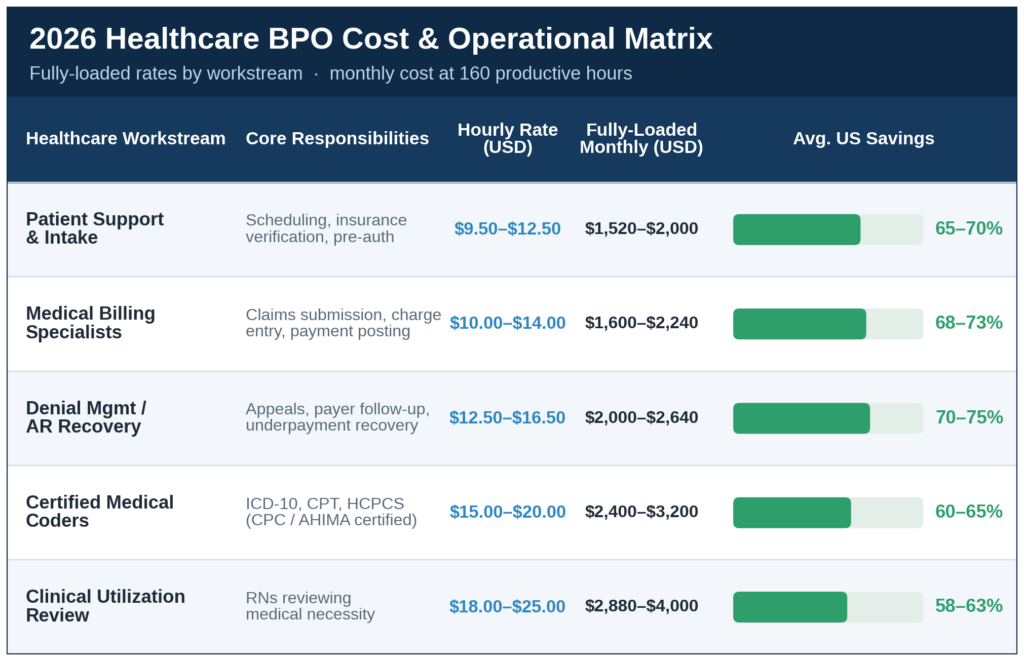
Figure 2 — 2026 healthcare BPO cost and operational matrix, with monthly costs calculated on 160 productive hours.
What Are the Operational Risks and Hidden Tradeoffs of Ultra-Low-Cost Providers?
In a regulated environment, choosing on price alone compounds liability. Vendors quoting below $8/hour typically cut data security, compliance controls, or agent pay—driving attrition above 50%, opening compliance gaps, and lowering first-pass resolution. The downstream cost of unworked denials and HIPAA exposure erases the front-end savings.
In the highly regulated healthcare ecosystem, selecting a partner solely on low-cost optimization creates compounding liabilities. Offshore vendors quoting flat rates below $8.00 per hour typically compromise on critical infrastructure or talent acquisition.
A cheap seat in a spreadsheet often turns into a toxic operational bottleneck in reality. When a provider undercuts the market, they are sacrificing data security, physical compliance controls, or agent compensation. In healthcare BPO, subpar compensation leads to immediate attrition. For an enterprise healthcare brand, the downstream cost of unworked denials, dropped patient calls, and potential HIPAA violations completely erases any nominal savings on the front-end. — John Maczynski, CEO, PITON-Global
Exclusively chasing low hourly rates creates distinct operational friction:
- Elevated claims attrition: Low-paying vendors experience annual turnover exceeding 50%, causing disrupted workflows, retraining delays, and a drop in billing accuracy.
- Systemic compliance gaps: Bargain providers often skip robust network monitoring, exposing patient records to breaches and the outsourcing entity to major fines.
- Poor first-pass resolution: Inexperienced billing teams lack deep understanding of complex US commercial payer policies, shifting the financial burden back onshore.
What Does a Real Multi-Site Engagement Look Like?
A 45-location US clinical network stood up a dedicated 35-FTE team in 45 days—20 patient-intake coordinators and 15 certified billing/AR specialists. Within five months DSO fell from 54 to 37 days, first-pass clean-claim rate held at 96.2%, and the network realized $1.45M in net annual operating savings.
Client Challenge
A rapid-growth US clinical network across 45 locations faced skyrocketing internal overhead, an accumulation of unworked aging accounts receivable, and a high rate of scheduling errors driven by an overwhelmed onshore administrative staff.
Vendor Selection Process
The organization engaged PITON-Global to bypass the fragmented vendor market. Using an advisory-led framework, PITON-Global assessed the client’s strict workflow requirements against a vetted network of more than 100 specialized Philippine operators, identifying an agile boutique firm with deep experience in commercial payer denial patterns and high-volume scheduling integrations.
Solution Implemented
A dedicated 35-FTE offshore team was established within 45 days, structured into two core workstreams, as shown below.

Figure 3 — The 45-day build: a dedicated 35-FTE team split into patient-intake coordination and certified billing/AR recovery.
The before-and-after results within the first five months are summarized below.
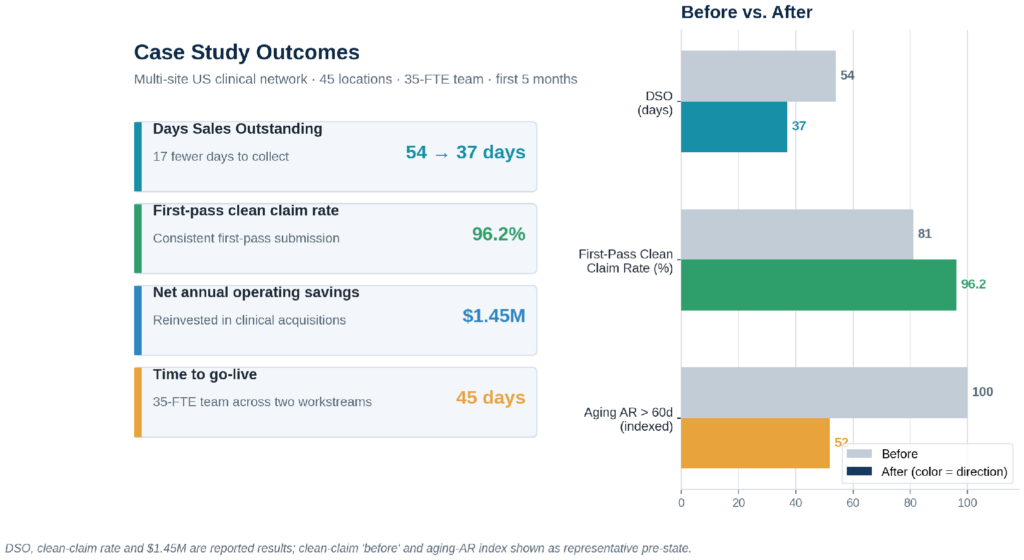
Figure 4 — Quantifiable business outcomes within the first five months of deployment.
Centralized management oversight and proper workflow documentation are critical during the initial 30-day transition window. Success relies on viewing the offshore provider as an extension of the clinical team rather than an isolated vendor.
Why Do Healthcare Enterprises Use PITON-Global for Strategic Sourcing?
Navigating more than a thousand Philippine BPO providers carries real corporate risk. PITON-Global is an advisory firm that guides enterprise buyers, COOs, and CFOs through vendor matching without market markups—pairing them with agile, high-performing operators from a curated network of 100+ heavily vetted providers.
Navigating the landscape of more than a thousand BPO providers in the Philippines presents significant corporate risk. PITON-Global serves as an elite advisory firm that guides enterprise buyers, COOs, and CFOs through the vendor-matching process without the added friction of market markups.
Unparalleled Market Access
PITON-Global maintains direct access to a curated network of more than 100 heavily vetted call-center and back-office providers across the Philippines. This deep ecosystem lets organizations sidestep legacy global conglomerates that often deprioritize mid-market accounts, matching them instead with agile, high-performing operators.
De-Risking the Procurement Journey
By evaluating technical capability, cultural alignment, compliance matrices, and historical performance benchmarks, PITON-Global ensures enterprise buyers partner with providers capable of sustaining high quality. This structured advisory process shortens procurement cycles from months to weeks while eliminating the threat of hidden operational costs.
Frequently Asked Questions
Are Philippine healthcare BPO teams fully compliant with HIPAA regulations?
Yes. Reputable, enterprise-grade providers build their business models around international data standards, with clean-room environments (no phones, paper, or pens near workstations), encrypted thin-client setups, dual-factor authentication, and signed Business Associate Agreements (BAAs) to guarantee full HIPAA compliance.
How do Philippine teams handle time-zone differences for live phone support?
The Philippine outsourcing industry operates 24/7/365. Healthcare teams dedicated to US markets work permanent local night shifts, aligning directly with Eastern, Central, Mountain, or Pacific time for seamless live patient interaction.
What level of education do healthcare BPO agents in the Philippines possess?
The talent pool is highly educated. Patient-support and billing teams routinely consist of university graduates in communications, business, or health sciences. For specialized clinical paths like utilization review, providers source licensed Philippine Registered Nurses, many of whom also hold US nursing certifications.
Are there hidden setup or implementation fees when building a team?
Standard contracts feature a transparent fully-loaded hourly or monthly cost per FTE. One-time transition fees may apply for custom telecom routing, dedicated software licenses, or specialized training. PITON-Global ensures these elements are clarified upfront during vendor selection.
How does the cost of provincial Philippine BPOs compare to Metro Manila?
Provincial hubs such as Davao, Iloilo, or Bacolod generally yield a 15–22% cost advantage over tier-one cities like Metro Manila, driven by lower local labor costs and facility overhead—though Manila remains the preferred hub for highly specialized, certified medical coding talent.