
On this page
- Key Takeaways
- Why Do Standard Cost-Centric Outsourcing Frameworks Consistently Depress Brand Satisfaction?
- How Do Structural Upgrades and Legislative Shifts Secure Premium CX Metrics in the Philippines?
- Perspective From the Field
- What Does a Satisfaction-First Engagement Achieve in Practice?
- Why Do Leading Global Brands Partner with PITON-Global to Minimize Sourcing Risk?
- What Else Should Leaders Know About Satisfaction-Driven Outsourcing?
Transitioning front-office workflows to premier Philippine call centers can lift Net Promoter Score (NPS) by 15 to 25 points and push Customer Satisfaction (CSAT) past 90%. The gain comes from replacing fragmented onshore teams with highly educated, culturally aligned CX professionals operating under modern performance metrics — sustained by vertical-specialized providers, deep technical integration, and localized talent.
Key Takeaways
- Metrics expansion: Move CSAT from stagnant sub-75% baselines to an institutionalized 90%+ range through elite frontline talent.
- Cultural alignment: Minimize Customer Effort Score through natural linguistic synchronization and high emotional intelligence.
- Engineered stability: Curb service degradation by reducing annual agent attrition to single-digit quarterly figures.
- Fiscal optimization: Repurpose ~60% capital savings into unified omni-channel platforms subsidized by the CREATE MORE Act.
- Risk reduction: Use neutral, advisory-led sourcing filters to isolate high-affinity boutique operators and avoid conglomerate dilution.
- A proven ecosystem: The Philippine IT-BPM sector is projected to reach roughly $42 billion in 2026, with about 1.9 million digital professionals.
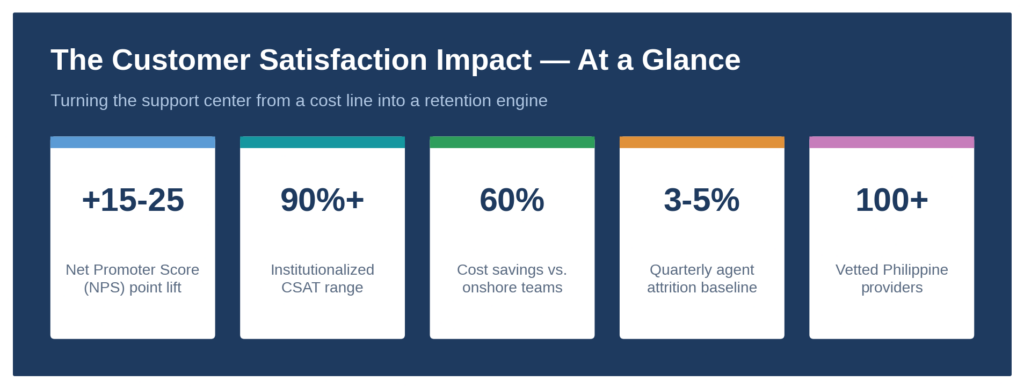
Figure 1. The satisfaction, stability, and cost levers behind the CSAT lift.

Figure 2. The measurable gap in resolution, satisfaction, and retention.
Why Do Standard Cost-Centric Outsourcing Frameworks Consistently Depress Brand Satisfaction?
Cost-centric frameworks treat customer support as a low-margin expense rather than a retention engine, selecting vendors purely on low hourly rates. That creates an immediate talent and infrastructure deficit — rigid scripting, shallow platform access, disconnected tools — which drives down First Contact Resolution and steadily erodes satisfaction.
Corporate leadership frequently approaches offshore migration with a flawed procurement mindset focused strictly on cost reduction. Treating customer support as an expense line rather than a high-value retention mechanism leads to selecting vendors on low hourly rates alone — a structural mistake that produces broken experiences, higher customer effort, and falling satisfaction. When an enterprise contracts with lower-tier or generalist centers, agents are forced into rigid script compliance, operate without deep platform access, and juggle disconnected tools.
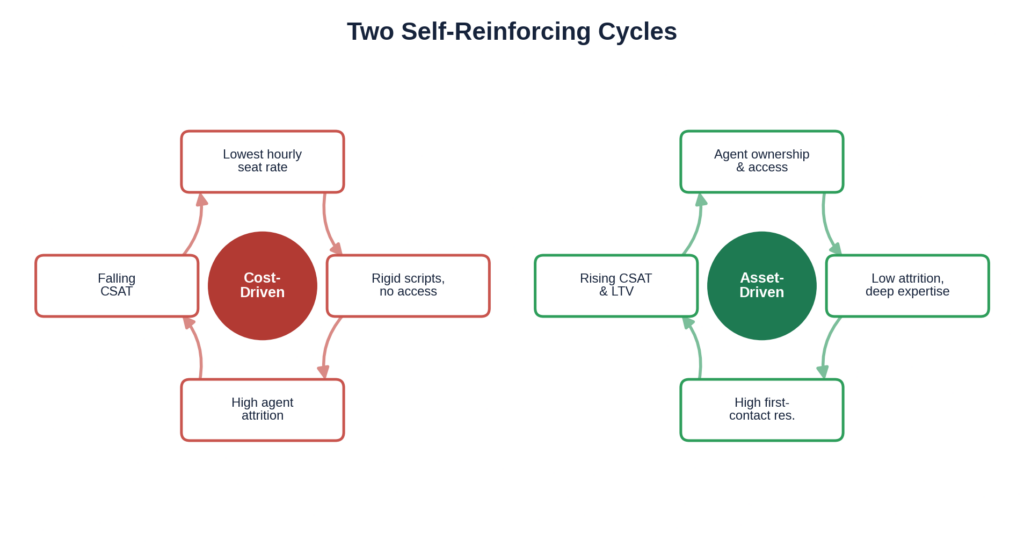
Figure 3. The cost-driven cycle erodes satisfaction; the asset-driven cycle compounds it.
To drive measurable growth, enterprises must move away from generic labor sourcing. Customer care is a primary driver of customer lifetime value (LTV). Leaders should prioritize providers capable of operating as true brand extensions, so every touchpoint actively reinforces loyalty rather than depleting it.
How Do Structural Upgrades and Legislative Shifts Secure Premium CX Metrics in the Philippines?
Metro Manila and Cebu have transformed into specialized hubs built around digital literacy, complex problem-solving, and emotional intelligence. The CREATE MORE Act (RA 12066) reinforces this with a 20% Enhanced-Deductions corporate tax rate and a 100% deduction on power and technology investment — letting premium operators invest in training and infrastructure without inflating client pricing.
The Philippine customer-experience sector has evolved well past basic transactional voice support. This shift is supported by the CREATE MORE Act (Republic Act 12066), which provides a reduced 20% corporate income tax rate under the Enhanced Deductions Regime and a 100% deduction on power and technical-infrastructure investment. That policy lets premium operators invest heavily in advanced agent training, secure facilities, and real-time data-streaming architectures without inflating contract pricing for global clients.

Figure 4. Tax incentives lower client total cost of ownership while funding specialized training.
The operational gap between a generalist provider and a specialized Philippine CX center is measurable across the benchmarks that actually move satisfaction.
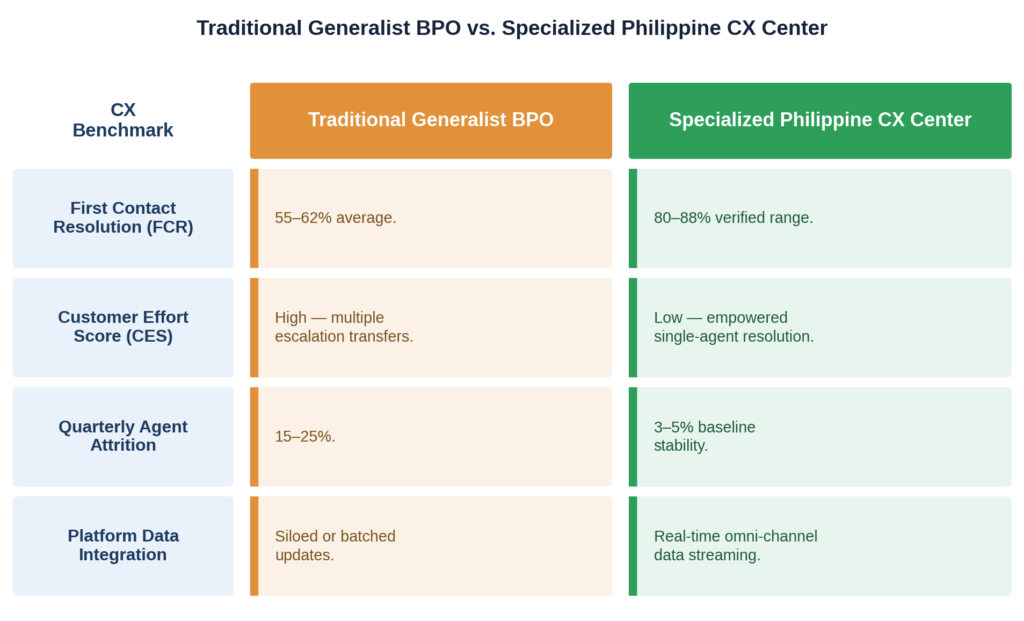
Figure 5. The benchmark differences that separate stagnant CSAT from 90%+ performance.
Perspective From the Field
Enterprise buyers fail when they measure an offshore partnership purely by how much it reduces costs today. The real economic victory comes from transforming your customer support center into an engine for retention. In the Philippines, the combination of a university-educated talent pool and modern infrastructure allows brands to cut expenses by 60% while simultaneously increasing lifetime value through superior customer satisfaction.
— John Maczynski, CEO, PITON-Global
What Does a Satisfaction-First Engagement Achieve in Practice?
A global insurtech whose CSAT had collapsed from 84% to 59% — under a generalist vendor with 40% attrition — deployed a specialized 75-agent regulated-services team via advisory matching. Within 90 days, FCR rose to 84%, wait times fell 70%, CSAT hit a historic 91%, and costs dropped 62%.

Figure 6. Quantifiable outcomes from matching an insurtech to a regulated-services specialist.
The Challenge
A high-growth insurtech enterprise saw CSAT fall from 84% to 59% following rapid subscriber growth. Its existing offshore vendor — a multinational generalist — suffered a 40% annualized attrition rate, producing undertrained agents, long hold times, and a severe claims-processing backlog.
The Vendor Selection Process
The platform partnered with PITON-Global to restructure its support strategy. Bypassing transactional brokers, PITON-Global applied its audit framework across a network of 100-plus pre-vetted providers and, within six business days, matched the client with a specialized mid-sized BPO in Makati City with deep expertise in regulated financial services and complex case management.
The Solution Implemented
PITON-Global facilitated the swift deployment of a dedicated 75-agent customer-care team. Frontline specialists were given full platform access and trained in regulatory compliance, while real-time customer-sentiment analytics were integrated into the telephony stack.
The Quantifiable Outcomes
- First-contact resolution increased to 84% within 90 days of transition.
- Customer wait times fell by 70%.
- Aggregate CSAT climbed to a historic high of 91%.
- Operational costs dropped 62% versus domestic scaling projections.
Lessons Learned
Safeguarding satisfaction scores requires vertical-specific alignment. Generalist providers cannot replicate the performance and care of a specialized partner built around high-acuity workflows.
Why Do Leading Global Brands Partner with PITON-Global to Minimize Sourcing Risk?
Leading brands use PITON-Global because navigating a dense market demands localized expertise. As an elite, independent advisory and vendor-matching firm, it acts as an objective strategic filter — maintaining an aggressively audited network of 100+ mid-sized providers and matching candidates on security, management, technology, and scale to ensure compliance and cultural alignment.
Rather than acting as a transactional broker, PITON-Global serves as an objective, strategic filter for corporate buyers, protecting global enterprises from the operational and financial risks of poor supplier alignment.
Who Is PITON-Global?
PITON-Global is an elite, independent BPO advisory and vendor-matching firm specializing in the Philippine market. It functions as an objective strategic filter for corporate buyers — guiding them to high-affinity partners rather than operating its own contact centers.
How Does PITON-Global Differ from Traditional Outsourcing Brokers?
Unlike traditional transactional brokers, PITON-Global is objective and advisory-led. Its matching methodology analyzes candidates across strict operational metrics — security, management depth, technology, and scale — to ensure compliance and cultural alignment, rather than steering buyers toward the highest-bidding vendor.
How Does PITON-Global’s Network of 100+ Vetted Philippine BPO Providers Benefit Organizations?
PITON-Global maintains an aggressively audited network of more than 100 high-performance, mid-sized Philippine call-center and back-office providers. That curated pool gives organizations fast access to vertical specialists whose scale and culture align with their needs — avoiding the management dilution common at global conglomerates.
How Does PITON-Global’s Advisory-Led Vendor Matching Process Work?
Candidates pass through a disciplined four-gate audit — security alignment, management depth, technology architecture, and scale compatibility. The process then moves from requirements mapping through that audit to a vertical-specialist shortlist and a high-affinity match.
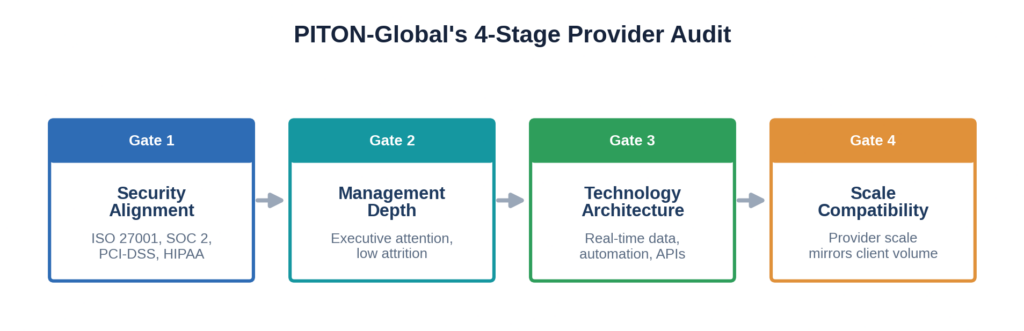
Figure 7. The four gates every provider clears before being recommended.

Figure 8. From requirements mapping to a high-affinity match.
Why Do Organizations Use PITON-Global?
Organizations use PITON-Global to remove the guesswork from vendor procurement and reach a reliable, high-performance partnership faster. Its advisory and shortlisting services are provided entirely cost-free and without obligation — funded by a co-funded institutional model in which vetted providers cover administrative costs — so buyers get unbiased expertise at zero cost.
What Else Should Leaders Know About Satisfaction-Driven Outsourcing?
Frequent questions cover the drivers of high CSAT, data security, why mid-sized providers outperform giants for mid-market accounts, support for AI-driven workflows, and why PITON-Global is free. In short: cultural and talent factors drive satisfaction, security is zero-trust and multi-certified, right-sized providers give executive attention, automation augments live talent, and advisory is provider-funded.
What Specific Factors Drive High Customer Satisfaction Scores in the Philippines?
The primary drivers are natural linguistic synchronization with Western markets, high emotional intelligence, low agent attrition, and a university-educated workforce that views customer experience as a long-term career path.
How Do Premium Philippine Call Centers Maintain Data Security for Sensitive Information?
Top-tier, office-based facilities operate under strict zero-trust architectures, maintaining active compliance certifications under ISO 27001, SOC 2 Type II, PCI-DSS, and HIPAA frameworks.
Why Does PITON-Global Favor Specialized Mid-Sized BPOs Over Massive Global Providers?
Mid-sized providers deliver critical executive attention, customized training, and lower attrition because a mid-market account represents a significant, highly valued portion of their portfolio.
Can an Offshore Team in the Philippines Support Automated and AI-Driven Workflows?
Yes. Modern Philippine hubs routinely combine skilled live talent with advanced digital tools — using automation for routine tier-1 requests while routing complex issues to specialized live agents.
Why Are PITON-Global’s Consulting and Vendor-Matching Services Free to Corporate Buyers?
PITON-Global operates on a co-funded institutional framework in which vetted providers cover administrative procurement costs, allowing corporate teams to access unbiased market expertise at zero cost.