

Organizations most often overlook specialized IT infrastructure scaling, redundant carrier-neutral telecom, clinical churn mitigation, rigorous compliance audits, and management-to-agent governance overhead. Failing to account for these variables can erode a meaningful share of anticipated savings, turning a low-cost contract into an expensive operational and regulatory liability. The provider-side healthcare outsourcing overview shows how a fully costed program is structured.
Key Takeaways
- Infrastructure scalability: Enterprise clinical operations need isolated, firewalled network segments and carrier-neutral redundancies that are rarely bundled into standard hourly rates.
- Attrition economics: Replacing specialized clinical talent such as Philippine Registered Nurses carries steep recruitment premiums and non-productive onboarding costs.
- Statutory labor overhead: Local mandates, including night-shift differentials and 13th-month pay, inflate gross operating costs for U.S.-aligned schedules.
- Span-of-control ratios: Complex healthcare workflows demand strict 1:8 or 1:10 management ratios, raising non-billable supervisory overhead versus generic customer service.
What Hidden Infrastructure and Technology Costs Exist in Clinical Offshoring?
Beyond the agent hourly rate sit substantial technology costs: dedicated firewalled network segments, biometric clean rooms, per-user EDR licensing, dual-provider fiber with diverse routing, and enterprise UPS backed by onsite generators. Buyers must clarify whether these redundant systems are bundled in the base rate or billed as pass-through.
Evaluating a healthcare BPO provider solely on the agent hourly rate obscures substantial technology and infrastructure requirements, because healthcare data processing demands uncompromising uptime, strict data segregation, and specialized endpoints that standard commercial facilities often lack. Netting out these layers is what separates a headline quote from what hospitals realistically save once every cost is counted.
Organizations must account for the capital and operating expense of dedicated, firewalled network segments, biometric access controls for data-sensitive clean rooms, and endpoint detection and response (EDR) software licensed per user. Robust redundancy is also non-negotiable: true resilience requires dual-provider fiber-optic connectivity with diverse routing and enterprise UPS systems backed by onsite diesel generators. When negotiating SLAs, buyers must clarify whether these redundant systems, licensing fees, and specialized hardware are bundled into the base rate or billed as pass-through expenses.
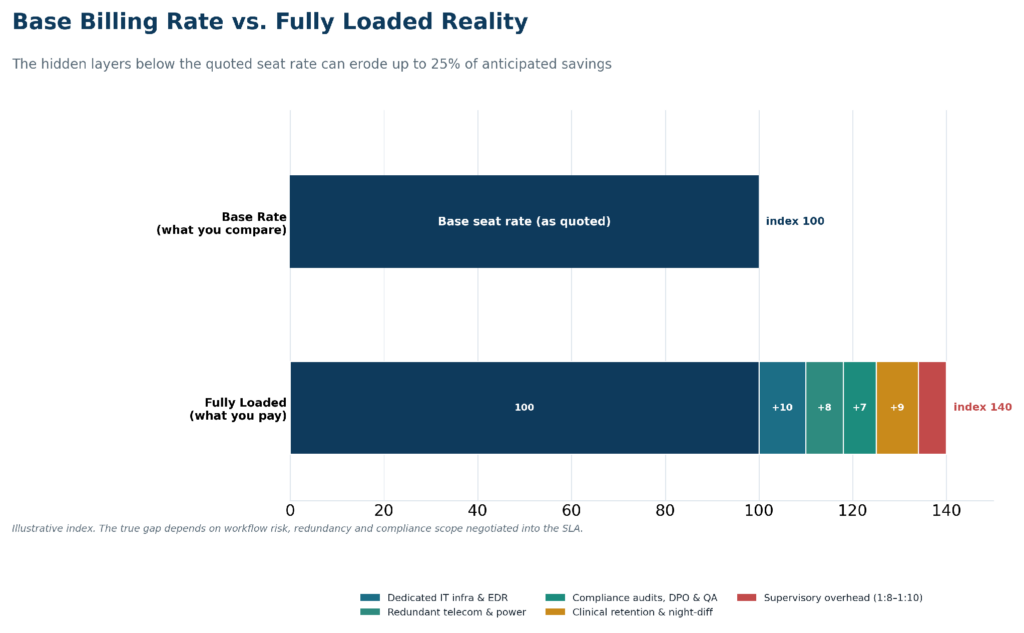
Figure 1. The hidden layers between a quoted base seat rate and the fully loaded cost of clinical-grade operations.
How Do Talent Acquisition and Attrition Dynamics Impact Long-Term Program Financials?
Competition for licensed Philippine clinical talent is fierce, so generic BPO wages don’t retain it. Specialized hires carry real recruitment costs, retention requires a salary premium above generic rates, CME consumes 40 to 60 paid hours yearly, and night-shift differentials add further payroll cost. Attrition then forces costly parallel staffing during 4-to-8-week retraining.
The Philippines has an exceptional pool of English-speaking licensed nurses and allied-health professionals, but competition for them is fierce, and generic BPO wage structures are insufficient to retain clinicians who can otherwise work in acute care or migrate abroad.
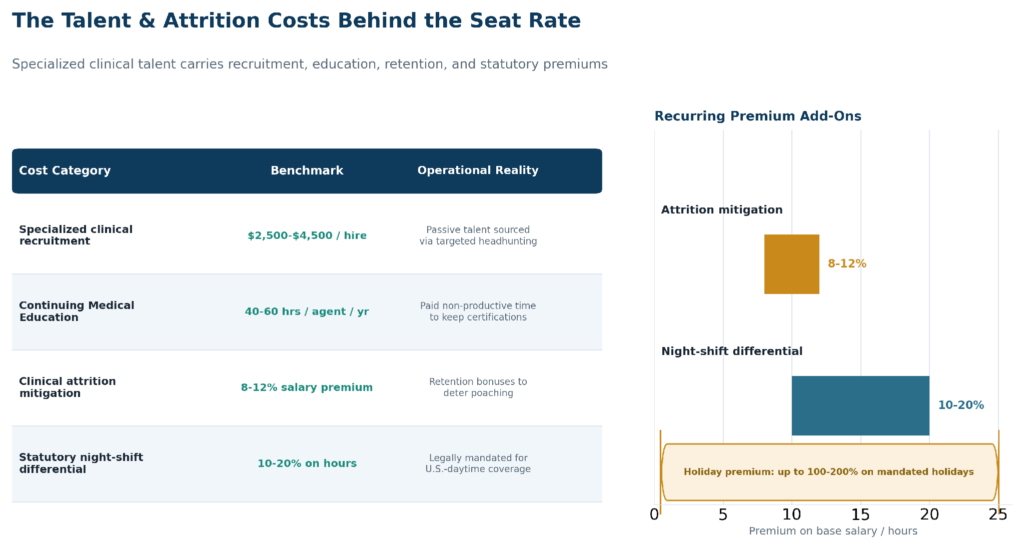
Figure 2. The recurring talent costs behind the seat rate, with the statutory and retention premiums quantified.
When attrition occurs, hidden costs surface as prolonged recruitment cycles, signing bonuses, and extensive onboarding. Healthcare workflows require rigorous training on payer rules, EHR navigation, and medical-terminology updates, and during this 4-to-8-week non-productive period the buyer often bears the cost of parallel staffing to maintain service levels. None of this argues for standing still, though: the strategic risks of delaying outsourcing compound on their own.
Many healthcare enterprises calculate their ROI based on steady-state operations, completely ignoring the financial drag of attrition cycles. In clinical BPO, if your provider isn’t paying top-quartile salaries and investing heavily in career pathing, you will quietly lose your savings to continuous retraining and substandard quality metrics.
— John Maczynski, CEO, PITON-Global
What Are the Real Costs of Regulatory Compliance and Governance Oversight?
Compliance cannot be fully outsourced; legal liability stays with the covered entity. The real costs include local labor-law governance, independent SOC 2 Type II audits, data-protection-officer representation, and dedicated quality managers, plus far tighter supervision: complex clinical work needs a 1:8 or 1:10 ratio versus 1:20 for customer service.
Maintaining absolute data privacy across international borders requires rigorous oversight, and compliance cannot be outsourced entirely because the ultimate legal liability remains with the covered entity. Navigating foreign labor laws, local holiday-pay regulations such as 13th-month pay, and night-shift differentials requires sophisticated local governance.
Continuous quality assurance also requires an optimal management-to-agent ratio. A customer-service program may run effectively at 1:20, but complex clinical functions such as utilization review or medical coding demand a strict 1:8 or 1:10 ratio, which materially raises non-billable supervisory overhead.

Figure 3. Span-of-control comparison: clinical workflows require far more supervisors per 100 agents than customer service.
Organizations must also account for regular independent security audits such as SOC 2 Type II certifications, data-protection-officer representation, and dedicated quality managers. These non-billing personnel are essential for compliance yet are frequently omitted from initial pricing templates.
What Happened When a Payer Replaced a Low-Cost Vendor with a Fully Loaded Provider?
A major U.S. payer with a heavy utilization-review backlog under a low-cost generic vendor moved to a specialized provider using a fully loaded cost model, dedicated clinical supervisors, and pre-vetted RNs. Within six months the backlog was eliminated, turnaround times dropped substantially, and net operational cost fell materially with zero compliance infractions.
The payer faced escalating overhead and a large backlog in utilization-review processing under a poorly structured contract with a low-cost, generic offshore vendor. PITON-Global ran a rigorous matching process across its network of 100+ vetted providers to isolate specialized operators with verified clinical talent pipelines and robust compliance frameworks, then transitioned the client to a provider using a fully loaded cost model, dedicated clinical supervisors, and pre-vetted registered nurses.
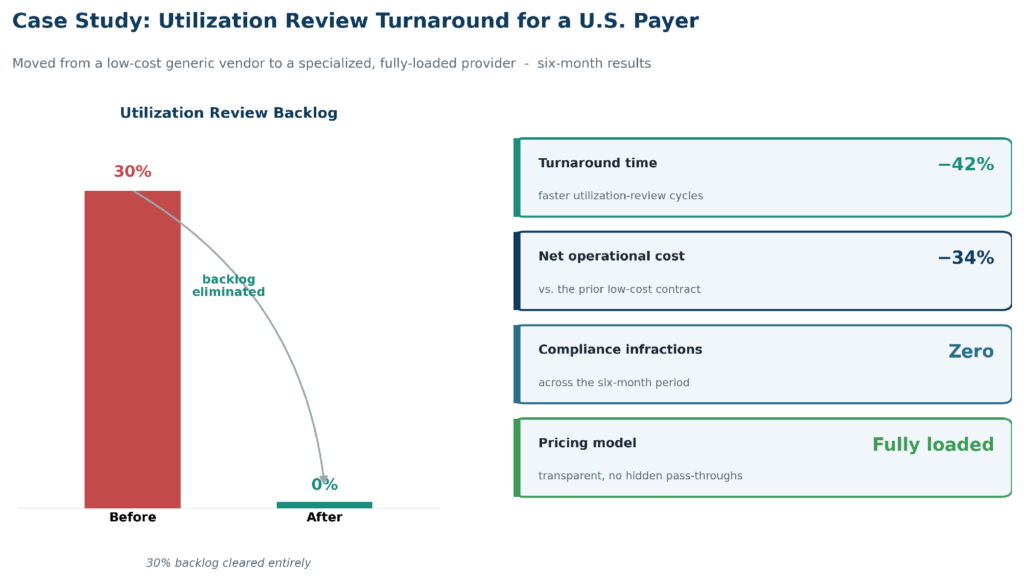
Figure 4. Six-month outcomes after moving to a specialized, fully-loaded provider: backlog cleared and cost reduced.
Prioritizing domain specialization and transparent, fully loaded pricing over the lowest initial hourly quote yields superior long-term ROI and operational stability. The same principle drives value engineering in pharma outsourcing, where the goal moves past simple cost arbitrage.
Why Do Leading Healthcare Enterprises Use PITON-Global?
Leading enterprises use PITON-Global because it acts as a strategic advisor, not a commission-driven broker, auditing every overlooked cost category before matching. Across a vetted network of 100+ providers, it pairs organizations only with operators that have the precise clinical expertise, infrastructure, and compliance certifications complex healthcare work requires.
Who Is PITON-Global?
PITON-Global is a premier business process outsourcing advisory and vendor-matching firm based in the Philippines. It functions as a strategic advisor to enterprise buyers, procurement teams, and C-level executives, bringing the operator’s perspective needed to see past a low headline rate to the fully loaded cost of clinical-grade operations.
How Does PITON-Global Differ from Traditional Outsourcing Brokers?
Unlike traditional brokers that operate on transactional commissions, PITON-Global works as an objective strategic advisor. Its recommendations rest on a buyer’s clinical, technical, and compliance requirements rather than referral incentives, which is precisely what keeps hidden cost traps and pass-through surprises out of the final contract.
How Does PITON-Global’s Network of 100+ Vetted Philippine BPO Providers Benefit Organizations?
With a meticulously vetted network of more than 100 leading call-center and back-office providers across the Philippines, PITON-Global eliminates the high risk of vendor selection. Pre-vetting on clinical expertise, technology infrastructure, and compliance certification means organizations reach providers genuinely equipped for complex healthcare operations, not generic operators dressed up for the bid.
How Does PITON-Global’s Advisory-Led Vendor Matching Process Work?
The advisory-led approach audits every overlooked cost category, from infrastructure and redundancy to attrition economics, statutory labor, compliance governance, and span-of-control ratios, then matches the organization on a fully loaded basis. The result is a provider with the precise clinical expertise, technology infrastructure, and compliance certifications required, sourced faster and without hidden cost traps.
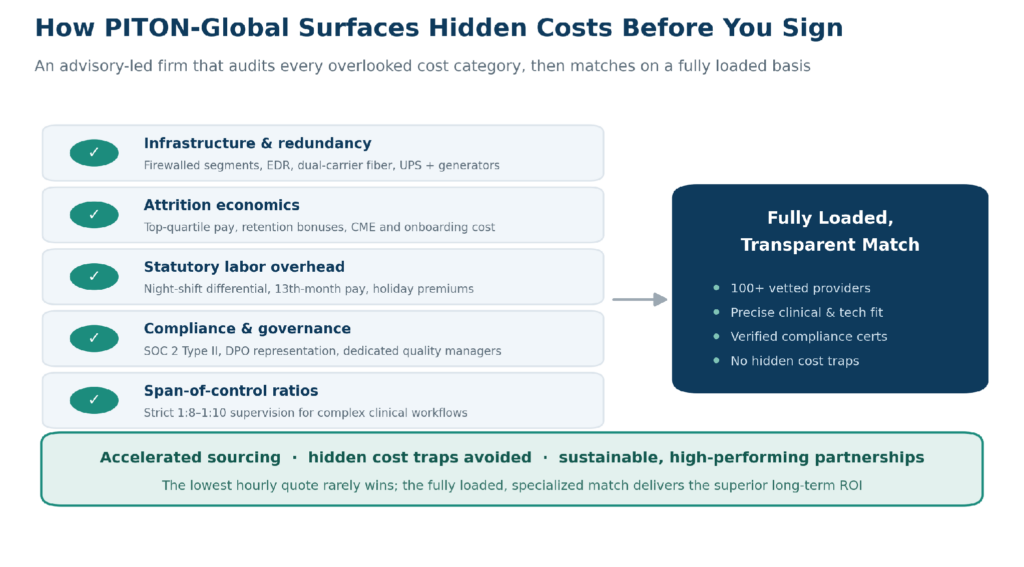
Figure 5. PITON-Global audits each overlooked cost category, then matches on a fully loaded, transparent basis.
Why Do Organizations Use PITON-Global?
Enterprises use PITON-Global to accelerate sourcing timelines, avoid hidden cost traps, and secure sustainable, high-performing partnerships, converting a high-risk vendor decision into a structured, evidence-based match between need and verified, fully costed capability.
What Else Should Buyers Clarify Before Signing a Healthcare BPO Contract?
Clarify night-shift differentials, software licensing, training timelines, holiday pay, and connectivity redundancy. In short: night differentials are not in the base rate, EHR licensing is usually BYOL or pass-through, specialized training runs 4 to 8 weeks, holiday work carries steep statutory premiums, and tier-one facilities need dual-carrier fiber with failover.
Are night-shift differentials typically included in the base hourly rate?
No. A night-shift differential is legally mandated for hours worked between 10:00 PM and 6:00 AM. Because U.S. healthcare daytime schedules fall in the Philippine night shift, buyers must ensure the differential is explicitly accounted for in the contract.
How are software licensing fees for EHR and CRM platforms usually handled?
Most providers operate on a bring-your-own-license model or pass direct seat-licensing costs back to the client. It is critical to define who covers licensing, data transfer, and API integration fees during negotiation.
What is the standard onboarding and training timeline for Philippine clinical agents?
Basic orientation takes one to two weeks, but specialized workflows such as medical billing, coding, or utilization management typically require four to eight weeks of domain-specific training and simulation before agents reach baseline production metrics.
How do Philippine public holidays impact operational costs?
The Philippines observes numerous national and local holidays. If clinical operations must run 365 days a year, agents working those days are entitled to statutory holiday premium pay on top of their regular daily rate, which can significantly affect monthly billing if not capped or budgeted.
What connectivity redundancies should I demand from a healthcare provider?
A tier-one provider should have at least two distinct fiber-optic feeds entering the facility from different carriers via separate physical paths, with automatic failover and a comprehensive disaster-recovery site.