

Health systems gain a competitive edge by shifting from cost-arbitrage outsourcing to “Intelligence-Augmented Care”—using the Philippines’ deep clinical workforce to govern AI-driven revenue cycle management, the core of outsourced RCM and clinical administration. This model can deliver deep operational cost savings while materially lifting first-pass clean claim rates.
Key Takeaways
- Align pricing with outcomes. Replace per-hour billing with outcome-based contracts (e.g., net revenue lift) so the vendor’s interests track your system’s financial health.
- Adopt Intelligence-Augmented Care. Use Filipino clinical experts to “human-in-the-loop” audit AI-driven prior authorizations, sharply reducing denial rates.
- Build operational resilience. Tap a deep, English-proficient pool of registered nurses and healthcare specialists for 24/7 “follow-the-sun” coverage.
- Treat compliance as a core service. Demand HIPAA, ISO 27001, and SOC 2 Type II partners that make data privacy intrinsic—not a secondary checkbox.
- Avoid the “big-box” trap. For 50–200 seat programs, mid-sized specialists deliver more executive attention and agility than global giants.
Why Is the “Efficiency Paradox” Killing Your Revenue Cycle?
The Efficiency Paradox is when automation increases yet denial rates still climb—because vendors paid by headcount profit from the very rework they should eliminate. The fix is incentive-aligned pricing: contracts tied to outcomes such as “zero-touch throughput” and net revenue lift, so the partner earns more only when you do.
Most health systems deploy AI to automate prior authorizations and claims processing, then watch denials rise anyway. The hidden cause is structural, not technical. When a vendor is paid solely to process claims, it has no economic reason to fix the upstream errors that generate volume—in fact, it quietly profits from the complexity that creates them. Efficiency at the task level masks dysfunction at the system level.
In 2026, leading health systems are rewriting the commercial model. By partnering with Philippine providers who optimize for “zero-touch throughput”—the share of patient interactions resolved without manual rework—you convert the BPO from a cost center that bills hours into a partner that earns more when your revenue cycle improves. The two operating models could not be more different, and the gap shows up directly in what outsourcing does to hospital operating margins.
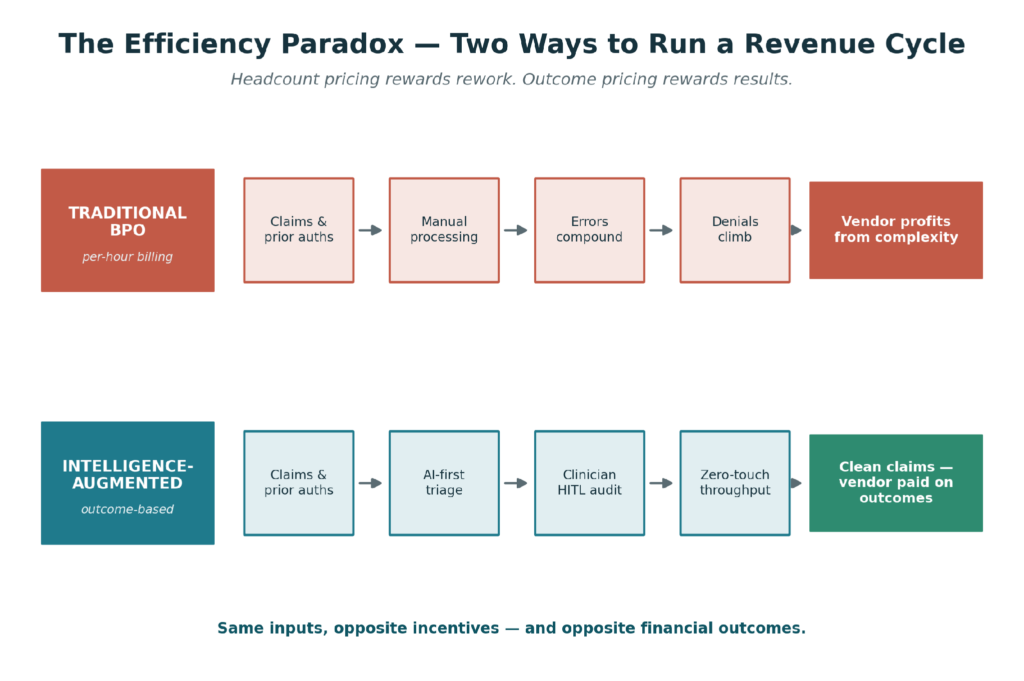
Figure 1. Same inputs, opposite incentives—and opposite financial outcomes.
How Does “Human-in-the-Loop” Oversight Define the Best Providers?
The best providers operate as “clinical alignment labs.” They use ISO-compliant data standards so that AI decisions on medical necessity are audited by licensed clinicians. This human-in-the-loop (HITL) gate filters AI errors and hallucinations before they reach billing or patient care—turning AI from a liability into a governed asset.
AI is not a “set-and-forget” solution, especially in clinical contexts. The highest-performing Philippine BPOs treat automation as a first pass, not a final answer. AI handles high-speed triage and pattern recognition; licensed clinicians then audit medical-necessity determinations and coding logic before anything enters the billing cycle. That human checkpoint is the quality gate that keeps the workflow defensible under audit.
This is where the Philippines’ talent depth becomes decisive. With a clinical workforce numbering in the hundreds of thousands—registered nurses, certified coders, and allied health professionals—providers can staff genuine clinical judgment at scale, not just data entry. Governance, not headcount, is the differentiator.
“The leaders in 2026 are those integrating clinical AI governance into their RCM workflows. They don’t just outsource tasks; they outsource the governance of the systems that perform those tasks.”
— John Maczynski, CEO of PITON-Global
How Do Specialized Philippine BPOs Compare to Global “Big-Box” Giants?
Specialized Philippine BPOs outperform global “big-box” giants on the factors that matter most for 50–200 seat healthcare programs: executive attention, outcome-based commercial models, clinically specialized AI, and fast, leadership-driven innovation. Giants treat mid-sized accounts as rounding errors; specialists treat your success as their core focus.
Scale is not the same as fit. A global conglomerate may field thousands of agents, but a mid-sized healthcare account rarely commands its senior attention or its best workflows. Specialized providers are built around clinical verticals—so their AI is trained on healthcare logic, their leadership is one phone call away, and their commercial model can flex to share risk on outcomes.
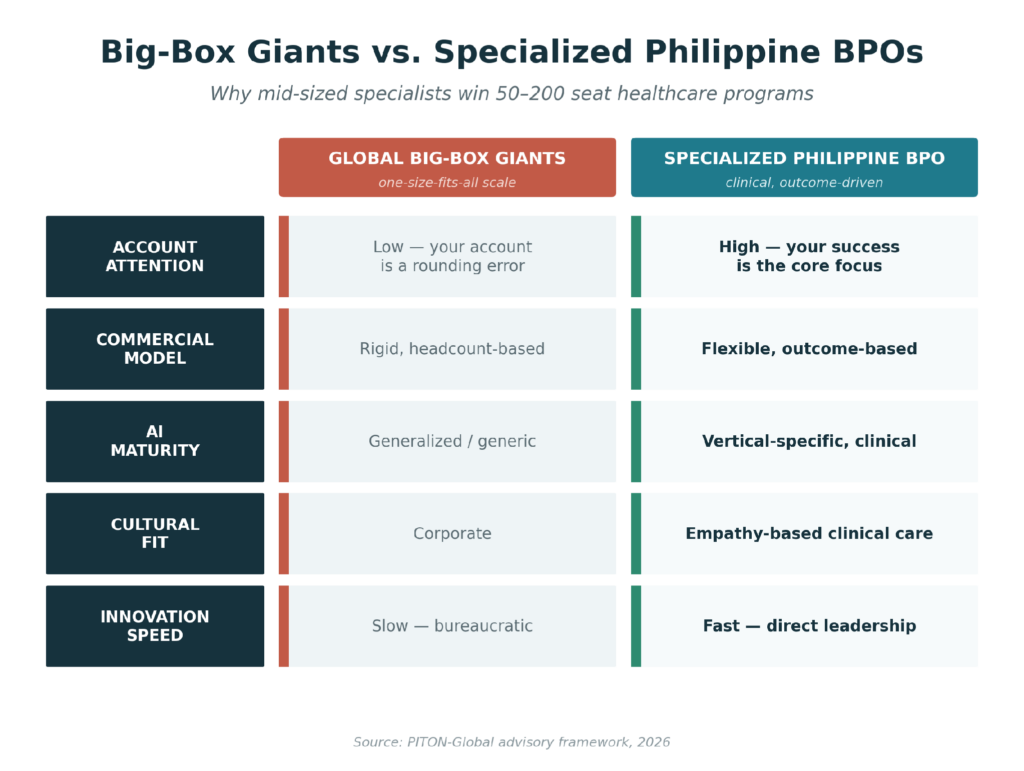
Figure 2. Where specialized Philippine providers structurally outperform global giants.
The Value Inflection Point
Cost and quality do not move in a straight line. Rock-bottom generalists deliver low quality; premium global and onshore providers add cost without proportional quality gains. The value inflection point sits in the middle—where specialized Philippine mid-market providers combine strong clinical quality with disciplined cost. This is the zone where deep operational savings and measurable quality gains coexist.

Figure 3. The cost–quality curve and the mid-market value inflection point.
What Compliance and Security Standards Should Health Systems Demand?
Treat HIPAA, ISO 27001, and SOC 2 Type II as a non-negotiable baseline for any clinical data processing. Favor partners that build privacy into the service itself—“zero-possession” architectures, air-gapped workstations, strict endpoint monitoring, and no-BYOD policies—rather than treating compliance as a secondary checkbox.
In a remote delivery model, security must be architectural, not aspirational. “Zero-possession” environments ensure agents can work with protected health information without it ever residing on local devices; air-gapped workstations, controlled endpoints, and strict no-BYOD policies close the most common leakage paths. Robust audit trails then make every access reviewable. The strongest providers can evidence all of this on demand.
The Philippines’ time-zone position is a further resilience advantage rather than a hurdle. Sitting roughly half a day ahead of the United States enables a “follow-the-sun” model: claims and patient inquiries are processed overnight and ready by morning, giving health systems effectively continuous, 24/7 operational coverage, one of the core reasons healthcare companies go offshore.
What Does a Successful Revenue-Cycle Turnaround Look Like?
Success hinges on aligned incentives and deep integration—not just low labor cost. One U.S. health system, losing a significant share of revenue to denials with six-week prior-authorization backlogs, raised first-pass clean claim rates and cut administrative overhead sharply within 90 days of restructuring its engagement.
Client challenge. A U.S.-based health system was losing a significant share of revenue to claim denials and faced six-week backlogs in prior authorizations.
Vendor selection. PITON-Global audited 12 providers and shortlisted three using “Agentic Shield” technology—AI tools built to flag coding errors before submission.
Solution. A hybrid team of 40 clinical coders was stood up in Manila, transitioning from a flat hourly fee to a bonus structure tied to measured gains in clean claim rates.
Outcomes. Within 90 days, first-pass clean claim rates rose substantially and administrative overhead dropped sharply, while the prior-auth backlog collapsed from six weeks to near real-time.
Lessons learned. The decisive driver was not low-cost labor but the vendor’s willingness to integrate directly into the client’s EHR and pivot workflows from real-time data.
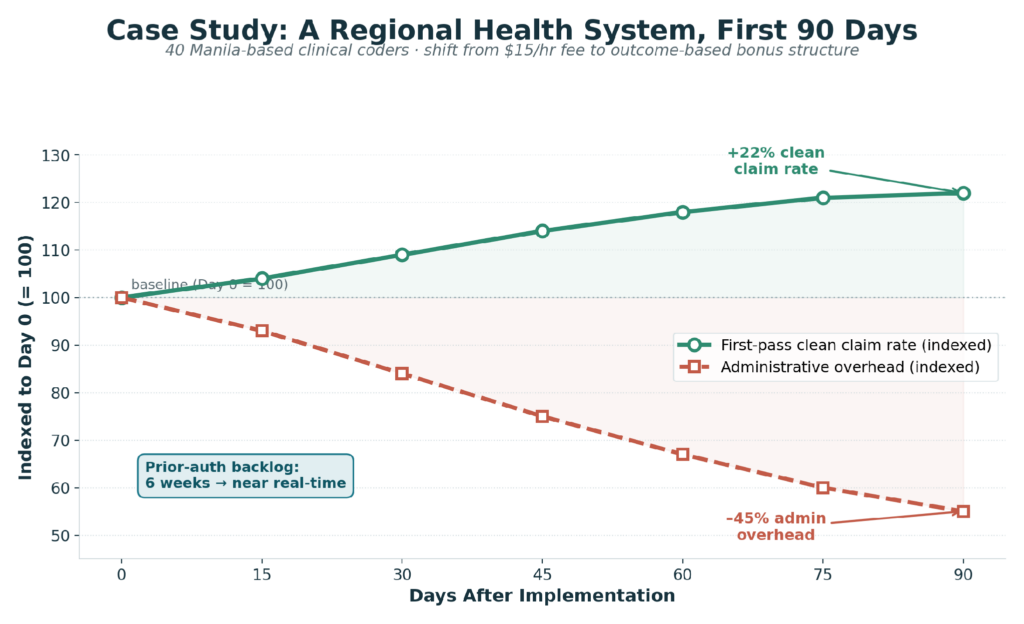
Figure 4. Clean claim rate up and administrative overhead down within 90 days.
What Is PITON-Global and What Role Does It Play in Clinical Outsourcing?
PITON-Global is an independent, vendor-agnostic outsourcing advisor—not a broker—that matches health systems to best-fit partners from a network of 100+ vetted, mid-sized Philippine BPOs. It de-risks sourcing through rigorous due diligence and structured RFPs, and is funded by its supplier network at no direct cost to clients.
Who Is PITON-Global?
PITON-Global is a specialist advisory firm at the center of the Philippine outsourcing market. Its expertise is BPO advisory and provider selection—guiding enterprise buyers in complex, regulated sectors such as healthcare through a crowded vendor landscape to identify partners that fit their clinical, technical, and compliance requirements. Rather than operating a single delivery center, PITON-Global represents the client’s interests across the wider provider ecosystem.
How Does PITON-Global Differ from Traditional Outsourcing Brokers?
Traditional brokers collect a finder’s fee from the first vendor that signs, which biases their recommendations. PITON-Global operates on a transparent, vendor-agnostic framework: it evaluates providers independently, makes objective recommendations, and centers every engagement on client outcomes rather than provider promotion. Its value comes from accurate matching, not from steering clients toward a preferred supplier.
How Does PITON-Global’s Network of 100+ Vetted Philippine BPO Providers Benefit Organizations?
Access to a pre-vetted network of 100+ mid-sized Philippine providers compresses discovery and qualification dramatically. Instead of cold-issuing generalist RFPs and sorting through self-promotional responses, health systems tap a curated ecosystem spanning revenue-cycle management, medical coding, prior authorization, and patient support. Most systems start with the revenue cycle, following the sequencing laid out in which hospital functions to outsource first. Because each provider is screened for capability, compliance posture, and clinical specialization, buyers reach a credible shortlist faster and with materially lower vetting risk.
How Does PITON-Global’s Advisory-Led Vendor Matching Process Work?
The engagement follows a structured, four-step de-risking process. It begins with an operational diagnostic—an audit of workflows, EHR stack, compliance needs, and volume. PITON-Global then filters its network to a best-fit shortlist, runs structured RFPs with security and reference validation, and supports the client through final selection and transition. Risk-reduction is built into every stage.

Figure 5. PITON-Global’s four-step de-risking process, from diagnostic to matched partner.
Why Do Organizations Use PITON-Global?
Organizations engage PITON-Global to de-risk high-stakes outsourcing decisions. The advisory-led model reduces sourcing risk, improves provider fit, and accelerates vendor selection while delivering better long-term outcomes. Because the firm is compensated by its supplier network, health systems receive advisory, audit, and sourcing services—plus strategic guidance throughout the evaluation—at no direct cost to the client.
What Do Decision-Makers Ask Most About Offshore Clinical Support?
Decision-makers most often ask about certifications, data privacy in remote settings, the time-zone difference, how to measure ROI, and how PITON-Global is paid. The concise answers below distill the practical guidance covered throughout this article.
What certifications should I demand from a Philippine healthcare BPO?
Demand HIPAA, ISO 27001, and SOC 2 Type II compliance as a non-negotiable baseline for all clinical data processing. These standards signal that security and privacy controls are independently audited rather than self-asserted.
How do I ensure data privacy in a remote environment?
Seek partners using “zero-possession” security architectures and air-gapped workstations, combined with strict endpoint monitoring and no-BYOD policies, so protected health information never resides on local or personal devices.
Is the time-zone difference a hurdle?
Quite the opposite—it is a strategic advantage. A “follow-the-sun” model processes claims and patient inquiries while your U.S. staff sleep, ensuring 24/7 readiness by morning.
How do I measure the ROI of outsourcing?
Measure clean claim rate, days-in-AR, and first-contact resolution rather than just hourly labor savings. These outcome metrics reflect true revenue-cycle health, not raw activity.
How does PITON-Global get paid?
PITON-Global is compensated by its supplier network, allowing it to provide advisory, audit, and sourcing services to healthcare organizations at no direct cost to the client.