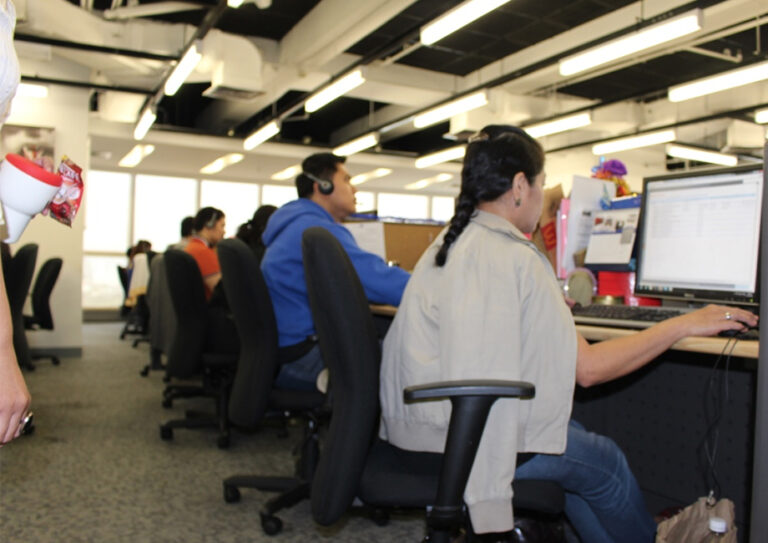

Modernizing core insurance systems is usually framed as a technology project, but most of the risk sits in operations: the data that has to be cleaned, the months of running two systems side by side, and the backlog that builds while staff learn new screens. Carriers increasingly use claims intake and underwriting desks in Manila to absorb that workload so policyholders never notice the migration. This article covers where the extra work comes from and how to plan an offshore team around it.
Why modernization is a profit question
Carriers modernize because profitable growth depends on two levers that old platforms restrict: launching products faster to grow revenue, and cutting the cost of each policy and claim. Neither lever works if service quality falls during the transition.
Legacy policy administration and claims systems make every change expensive. A new rating factor, a new endorsement or a new distribution partner can take months to configure. Modern cloud platforms promise faster product changes, cleaner data for pricing, and automation that removes manual steps. AI and advanced analytics are the tools most carriers count on to lower expenses once the platform is modern. The catch is that the benefits arrive only after the migration, while the costs and disruption arrive first.
The hidden workload of a platform migration
A core platform migration creates four kinds of temporary operations work, and each one competes with business-as-usual for the same experienced staff. That competition is what stalls service.
Data cleansing and conversion
Decades of policies carry inconsistent addresses, missing fields, retired product codes and duplicate records. Someone has to review and correct them before conversion, and then check a sample of converted records against the source. This is rule-based, high-volume work that a trained team in the Philippines handles well once the rules are written down.
Parallel running
Many carriers process transactions in both systems for a period to prove the new one produces the same premiums, documents and payments. Parallel running roughly doubles the keying effort for those transactions. It is also the easiest stage to hand to an offshore team, because the old system provides the answer key.
Testing support
User acceptance testing needs people who know how the business actually works. Offshore staff who already process endorsements or claims can run scripted test cases, record defects with screenshots and retest fixes, which frees the carrier’s subject-matter experts to design the tests and resolve the difficult defects.
Backlog during cutover
Productivity drops for several weeks after go-live while staff learn new screens and workarounds. Planning extra temporary capacity for that window, rather than asking the existing team to catch up on overtime, prevents the service dip that policyholders and agents remember.
Usage-based products need a new kind of service desk
Modern platforms make usage-based and behavior-based products practical, and those products generate questions a traditional service team is not trained to answer. Plan the service model at the same time as the product.
Telematics auto cover, wearable-linked life products and connected-home policies all use real-time data to adjust price or rewards. Customers call when their premium changes after a hard-braking event, when a device stops syncing, or when a reward fails to appear. Answering them well requires agents who can read the data dashboard, explain the rating logic in plain language and route device faults to the right partner. Cloud-based analytics make the data available to an offshore team in the Philippines on the same screens the carrier uses, which is what makes this service possible. Many of these products are sold through partners, a pattern our article on servicing embedded and partner-sold policies covers in depth.
Putting AI into claims and underwriting safely
AI speeds up claims and underwriting when people review its uncertain outputs and feed corrections back into the models. Without that loop, automation spreads errors faster than any manual process could.
After a migration, carriers typically add AI in three places: document extraction for applications and claim forms, triage models that rank claims by complexity or fraud risk, and pricing and risk-scoring tools for underwriting. Each needs a human review layer. Filipino reviewers can check extracted data, work the claims the triage model is unsure about and verify pre-filled underwriting data against source documents. They also record why they overrode a model, which gives the data science team the examples it needs to retrain. Digital-first carriers use the same design; the post on how insurtechs staff their operations describes it from their side.
Authority limits should be written down before the tools go live. Decide which outputs the offshore reviewers may approve, which go to a licensed adjuster or underwriter, and how every override is logged for audit.
Sequencing the offshore work with the program
Bring the Philippine team in before the migration starts, not when the backlog appears. A team that already runs part of daily operations can shift to migration work with little extra training.
- Six months or more before go-live, move stable business-as-usual work, such as endorsements or document indexing, to the offshore team.
- During design and build, use part of that team for data cleansing and conversion checks.
- During testing, assign experienced offshore staff to scripted test cases and defect retesting.
- Around cutover, add temporary capacity for parallel running and backlog recovery.
- After go-live, shift the team to AI review, new-product servicing and continuous improvement.
This sequence turns a one-time project cost into lasting capability. The same Philippine team that cleaned the data understands the new platform better than anyone, and it becomes the natural home for the servicing work the new products create. Specialty programs, such as travel cover sold by booking platforms, follow the same logic; see our guide to travel insurance claims support for OTAs.
What to look for in a provider for migration work
Look for a provider that has supported a platform change before, can scale temporary capacity quickly and can prove its security controls. Price matters less than the ability to add trained people in weeks.
The time difference helps. A team in the Philippines working the US night can run parallel transactions, reconcile the day’s results and log discrepancies before the carrier’s project team signs on each morning. Multi-site delivery helps too: the providers we shortlist operate across eight governed delivery hubs, including Metro Manila, Cebu, Clark and Davao, and work under frameworks such as SOC 2 Type II, ISO 27001 and NAIC-aligned governance, as listed on our capabilities page. Ask Philippine providers for named examples of migration support, the size of the temporary team they added and how quickly they released it afterward.
Frequently asked questions
Is it safe to give an offshore team access during a migration?
Yes, if access is role-based, logged and limited to the data each task requires. Ask for the provider’s current SOC 2 or ISO 27001 report and confirm that it covers the site and systems involved.
Should the system vendor or a services provider do the data cleansing?
The system vendor usually owns the conversion tools and mapping. The manual review and correction of records is often cheaper and faster with a trained operations team that already knows your products.
Can the offshore team be scaled down after go-live?
Yes, if the contract with the Philippine provider includes ramp-down terms. Many carriers keep the core team and release only the temporary migration capacity.
What happens to productivity right after go-live?
It usually dips while staff learn new screens and workarounds, then recovers and eventually improves. Plan temporary capacity and extra quality checks for that window.