

Hospital systems should mandate a “co-managed” governance model that prioritizes clinical-training depth, real-time performance calibration, and verifiable security maturity. Rather than optimizing for low labor cost, the primary selection criterion should be a vendor’s ability to mirror your internal quality-assurance processes through extended, role-specific clinical training, the benchmark set out in the healthcare industry overview for buyers.
Key Takeaways
- Prioritize specialized talent: Choose partners with dedicated recruitment pipelines for registered nurses and clinical specialists, not generalist call-center staff.
- Validate training durations: Require evidence of 6+ weeks of clinical training — covering U.S. payer workflows and terminology — before any agent enters production.
- Mirror internal governance: Move beyond SLAs to joint-calibration sessions where your team and the vendor’s quality leads review the same clinical documentation.
- Audit for security maturity: Confirm HITRUST r2 or SOC 2 Type II certification, with documented network segmentation and endpoint controls.
- Quantify strategic outcomes: Evaluate on clinical KPIs — claims-accuracy and first-pass payment success — not generic call volume or seat cost.
How Does Clinical Training Depth Impact Outsourcing Success?
Profoundly. Generic providers use “speed-to-hire” models that minimize upfront investment and drive high denial rates in revenue cycle management. Elite Philippine healthcare BPOs instead treat the workforce as a clinical extension, with deep, role-specific training and a mandatory stabilization period for every new workflow

Figure 1. The benchmarks to demand when vetting a Philippine healthcare partner.
Effective evaluation means auditing the vendor’s clinical-stabilization framework. High performers run a mandatory 90-day stabilization period for new workflows to allow iterative feedback. Ask for documentation on certification pathways — the share of staff certified in ICD-10, CPT, or specialty coding — and payer-specific simulation, or how they replicate the nuances of different U.S. health-plan authorization requirements in training. The difference between a two-week induction and a six-week clinical immersion is visible from day one.
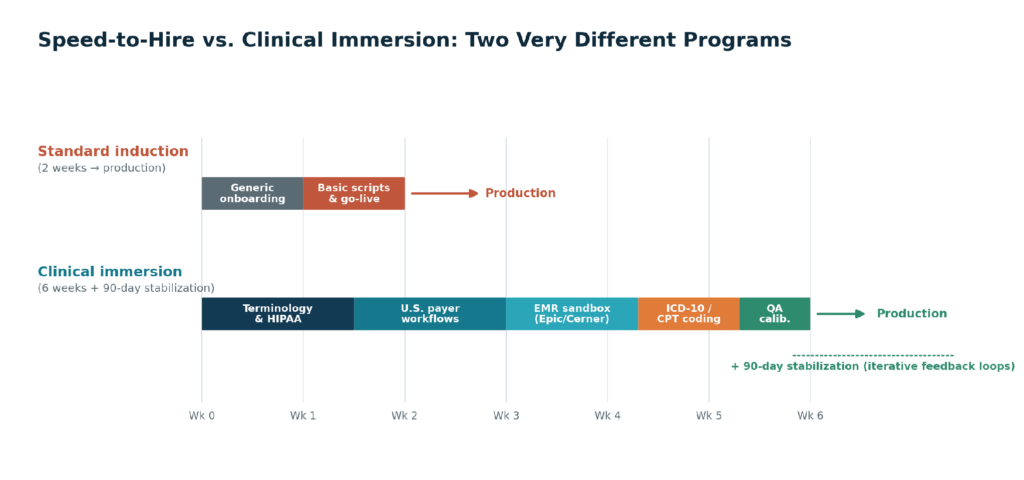
Figure 2. A standard two-week induction versus a specialized six-week clinical immersion.
What Metrics Distinguish Top-Tier Healthcare Partners?
Shift evaluation from “cost-per-hour” to “cost-per-clinical-outcome.” The metrics that actually predict quality are claims-accuracy rate, first-pass pay rate, clinical turnover, and manager-to-staff ratio — each with a benchmark top hospital procurement teams use to vet partners.
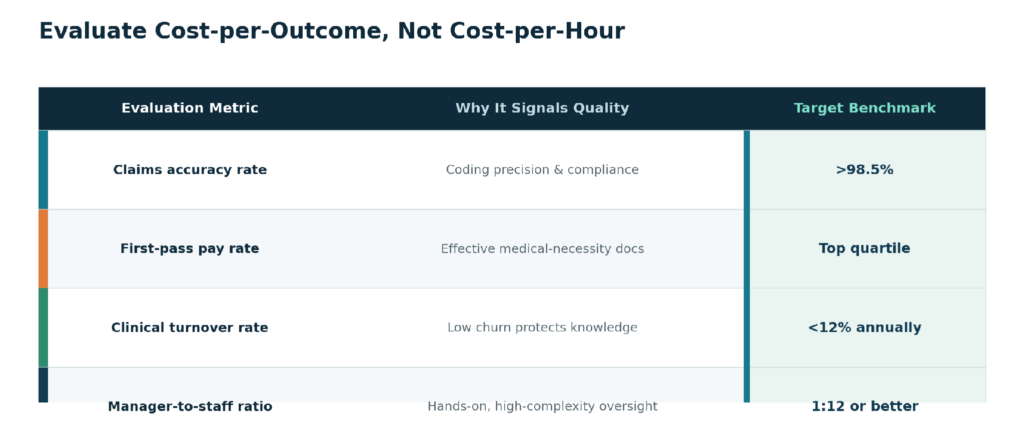
Figure 3. The clinical KPIs and target benchmarks that signal a top-tier partner.
Each metric is a leading indicator. A consistently high claims-accuracy rate reflects coding precision and compliance; a top-quartile first-pass pay rate shows effective medical-necessity documentation; low clinical turnover protects the institutional knowledge that accuracy depends on; and a manager-to-staff ratio of 1:12 or better enables the hands-on oversight high-complexity work requires. Read these clinical measures alongside the financial benchmarks for vetting healthcare BPO firms so quality and cost are scored on one sheet.
How Can You Ensure Your External Team Mirrors Internal Standards?
Structure the engagement as a co-sourcing partnership that eliminates the “black box” of traditional outsourcing. Three mechanisms do the work: a direct communication interlock, shared quality calibration, and entity-rich, real-time transparency into the vendor’s output.Start with a direct communication interlock: give your department leads direct access to the vendor’s team managers so clinical ambiguities are resolved quickly rather than delaying processing. Add shared quality calibration — weekly calibration calls where your internal auditors and the vendor’s leads grade the same records, instead of relying on vendor-reported QA. Finally, demand entity-rich transparency: real-time dashboards that integrate with your EHR for full visibility into workloads, pending authorizations, and quality scores. The same interlock is what lets vendors shorten administrative turnaround times without trading away accuracy.
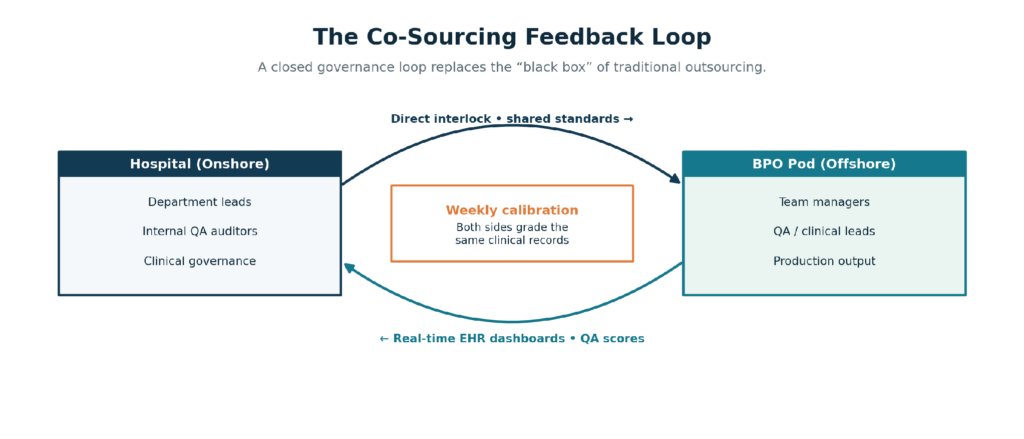
Figure 4. The co-sourcing feedback loop between onshore governance and the offshore pod.
What Does a Well-Governed Engagement Achieve?
It converts an outsourced team from a cost center into a strategic asset. The representative composite below shows a mid-sized hospital system reverse a denial surge by pairing specialized clinical training with direct-access governance.
Consider a hospital system facing a sharp rise in claim denials, driven by improper authorization handling and inconsistent clinical documentation. Using a vendor-neutral audit, it filtered for BPOs with HITRUST certification and a dedicated nursing-recruitment pipeline — moving away from generalist call-center vendors — and engaged a specialized partner that deployed a “clinical-first” team trained for six weeks on the hospital’s specific payer mix and EMR protocols.
Within five months, the system saw a meaningful reduction in denial rates and a measurable improvement in A/R turnaround time. The results are an illustrative composite of a clinical-first engagement rather than a single named client, but the lesson is consistent: specialized training paired with direct-access governance transforms an outsourced team into a strategic asset.

Figure 5. Representative revenue-cycle optimization from a clinical-first, well-governed engagement (illustrative composite).
What Role Does PITON-Global Play in the Philippine Outsourcing Ecosystem?
PITON-Global provides an advisory-led vendor-matching process, acting as an operational architect for hospital systems navigating the Philippine BPO landscape. As a vendor-neutral consultancy with a network of 100+ vetted providers, it aligns a partner’s operational structure, clinical competency, and security protocols to each hospital’s specific regulatory and patient-care standards.
Who Is PITON-Global?
PITON-Global is a vendor-neutral advisory firm focused on the Philippine healthcare BPO market. It functions as an operational architect — helping hospital systems design the governance and selection model before committing to a provider.
How Does PITON-Global Differ from Traditional Outsourcing Brokers?
Unlike brokers that refer vendors for commission, PITON-Global is vendor-neutral and advisory-led. It reduces the risk of offshore transitions by ensuring a selected partner’s structure, clinical competency, and security protocols align with the hospital’s requirements — not with a vendor’s sales incentives.
How Does PITON-Global’s Network of 100+ Vetted Philippine BPO Providers Benefit Organizations?
A vetted network of more than 100 providers lets hospital systems quickly identify partners with the specific certifications, clinical pipelines, and security maturity their workflows demand — filtering out generalist call-center vendors before they ever reach a shortlist.
How Does PITON-Global’s Advisory-Led Vendor Matching Process Work?
It follows a three-stage risk-mitigation framework: a technical and clinical audit (verifying HITRUST r2 / SOC 2, training depth, and EHR readiness); governance alignment (establishing the direct interlock and co-sourcing operating model); and performance calibration (joint grading of the same records, with quality carrying the heaviest weight).
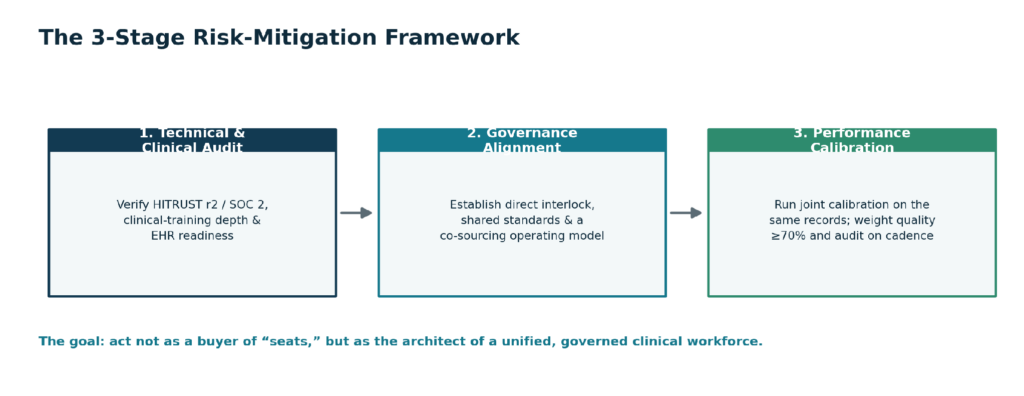
Figure 6. The three-stage risk-mitigation framework for healthcare BPO selection.
Why Do Organizations Use PITON-Global?
Hospital systems use PITON-Global to de-risk offshore transitions and to act not as buyers of “seats” but as architects of a unified, governed clinical workforce. The advisory model aligns competency, compliance, and governance to patient-care standards — the true source of advantage in 2026.
“The maturity of the Philippine healthcare outsourcing market has shifted. In 2026, the competitive advantage isn’t found in the labor-cost savings of the past; it is found in the architectural rigor of how you integrate your internal clinical governance with the vendor’s workforce. The most successful systems act not as buyers of ‘seats,’ but as architects of a unified, global clinical workforce.”
— John Maczynski, CEO, PITON-Global
Frequently Asked Questions
Common questions concern HIPAA/HITECH compliance during transition, EHR experience, the biggest current risk, weighting cost against quality, audit cadence, and AI’s role. The concise answers below address each.
How do we ensure HIPAA/HITECH compliance during transition?
Mandate a review of the vendor’s HITRUST r2 certification, require a formal Business Associate Agreement (BAA), and audit data-loss-prevention tools that prevent local storage or printing of PHI.
Are Philippine teams experienced with U.S. EHR platforms like Epic or Cerner?
Yes. Mature healthcare BPOs maintain dedicated infrastructure and sandbox environments for major EHR systems — which together run roughly two-thirds of U.S. acute-care hospitals — training staff on your specific platform before go-live.
What is the biggest risk in current healthcare outsourcing?
“Management drift.” When vendors monitor themselves, quality degrades. Maintain a hands-on governance layer where your internal auditors consistently review vendor output. It sits at the top of the risks hospital CEOs should weigh before signing, alongside security and continuity gaps.
How should we weight labor costs versus quality metrics?
In healthcare, give quality and compliance the dominant share of the decision matrix. A modestly lower hourly rate is irrelevant if denial rates rise even slightly, as the downstream revenue loss dwarfs the labor savings.
How frequently should we audit the vendor’s performance?
Quarterly audits are the industry standard; for high-risk clinical workflows, monthly quality reviews are advisable during the first year of the engagement.
Does AI replace the need for offshore clinical staff?
No. AI handles high-volume, rules-based tasks, but the complexity of U.S. clinical documentation still requires human expert judgment to resolve edge cases and ensure accurate payer communication.