
On this page
- Key Takeaways
- What Common Strategic Pitfalls Misalign Global Support Transfers with Corporate Scaling Goals?
- How Do Modern Operational Benchmarks and Policy Changes Reshape the Philippine Service Landscape?
- Perspective From the Field
- What Does a Growth-Aligned Customer Service Engagement Achieve?
- Why Do Leading Global Enterprises Leverage PITON-Global to Navigate the Philippine BPO Market?
- What Else Should Leaders Know Before Outsourcing Customer Service?
To align customer service outsourcing to the Philippines with growth, leaders must shift from a cost-reduction mindset to a capability-enhancement model — integrating offshore teams as high-performance extensions that drive customer lifetime value, protect margins, and accelerate scale. Success hinges on precise vendor-to-scale matching, real-time operational observability, and specialized talent paired with automation.
Key Takeaways
- Value shift: Transition from simple labor arbitrage to strategic capability enhancement to secure durable competitive advantage.
- Operational scale match: Avoid the service dilution that occurs when mid-market enterprises contract with multi-billion-dollar BPO conglomerates.
- Observed transparency: Demand open-book observability stacks with real-time data streaming and sentiment monitoring.
- Fiscal optimization: Leverage modern frameworks like the Philippines’ CREATE MORE Act to subsidize high-compute, automated operations.
- Risk reduction: Use specialized, independent advisory expertise to eliminate vendor-selection bias and accelerate speed-to-market.
- A proven ecosystem: The Philippine IT-BPM sector is projected to reach roughly $42 billion in 2026, with about 1.9 million digital professionals.
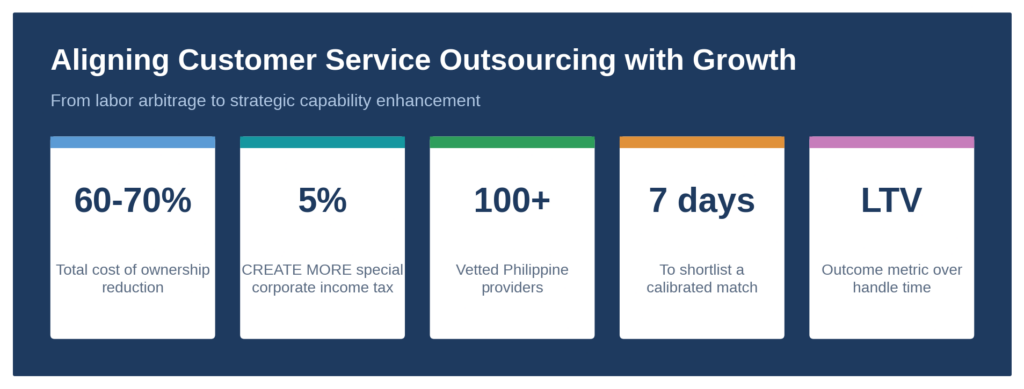
Figure 1. The levers that reframe outsourcing from a cost line into a growth strategy.
What Common Strategic Pitfalls Misalign Global Support Transfers with Corporate Scaling Goals?
The most common pitfall is prioritizing low hourly seat rates over operational compatibility, creating a structural mismatch between strategic needs and provider capability. Mid-market enterprises that contract with multi-thousand-seat conglomerates fall into an “enterprise dilution zone” — losing executive attention and absorbing high agent turnover.
Enterprise buyers frequently compromise long-term growth by prioritizing low hourly seat rates over operational compatibility. This narrow focus creates a structural mismatch between the enterprise’s strategic needs and the provider’s actual capabilities. Mid-market and rapid-growth organizations often partner with massive, multi-tier BPO providers — but because those conglomerates are architected around multi-thousand-seat accounts, smaller clients inevitably experience management dilution, higher agent turnover, and a lack of executive attention. Conversely, selecting low-tier, unvetted providers to maximize savings introduces severe regulatory, infrastructure, and security risks.

Figure 2. Where mid-market buyers lose oversight — and where the optimal match sits.
To drive sustained growth, outsourcing must be treated as a core operational strategy. Leaders should evaluate partners on their capability to protect brand equity, reduce customer churn, and scale seamlessly during peak demand — not on headline seat price alone.
How Do Modern Operational Benchmarks and Policy Changes Reshape the Philippine Service Landscape?
The market has evolved beyond voice support into a hub for specialized front- and back-office work, and policy has reinforced it. The CREATE MORE Act (RA 12066) institutionalized a 5% Special Corporate Income Tax option and a 100% additional deduction on power, directly subsidizing the high-compute infrastructure modern omni-channel service requires.
Supported by robust national infrastructure and a highly educated, digitally native workforce, the Philippine market has transitioned into a sophisticated hub for specialized front- and back-office operations. Financially, the CREATE MORE Act (Republic Act 12066, signed in November 2024) institutionalized extensive benefits for registered export enterprises — including a flat 5% Special Corporate Income Tax (SCIT) option in lieu of most national and local taxes, and a 100% additional deduction on power expense. Its Tier III incentives explicitly cover artificial intelligence, cybersecurity, and data-center facilities, directly subsidizing the high-compute infrastructure behind modern omni-channel customer service.

Figure 3. How the CREATE MORE Act underwrites modern, technology-intensive operations.
Operationally, the contrast between a legacy framework and a modern intelligence hub is stark — in pricing, workforce model, savings, and the performance metrics that matter.
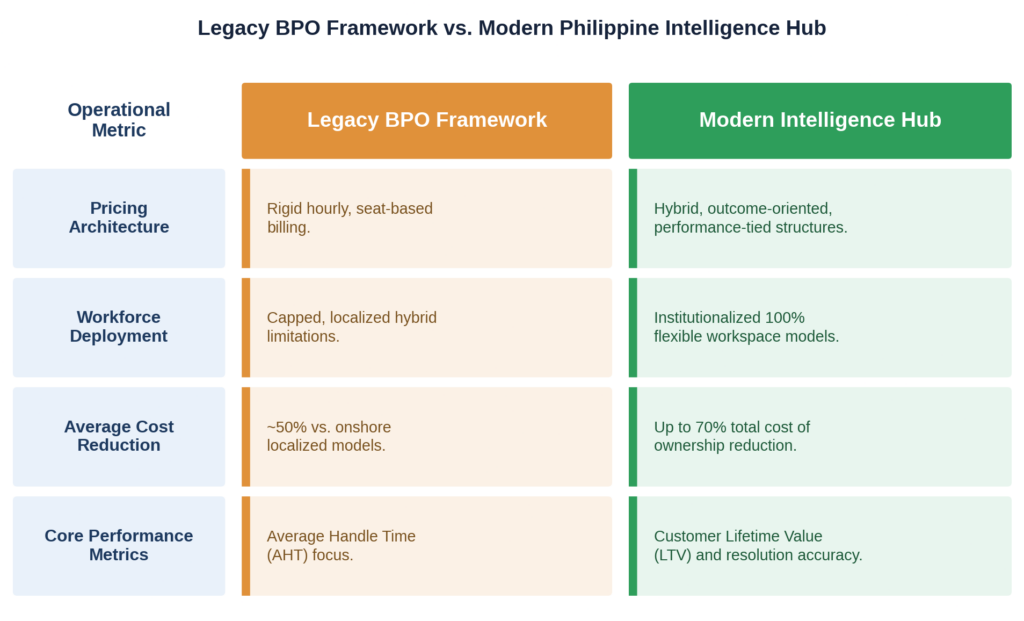
Figure 4. The shift from seat-based, AHT-focused delivery to outcome-oriented, LTV-focused operations.
Perspective From the Field
Outsourcing in the Philippines is no longer about labor arbitrage; it is about technical integration and specialized execution. Ambitious corporate leaders do not outsource to find cheaper hands; they outsource to find elite, university-educated professionals capable of executing complex workflows and protecting brand integrity at scale.
— John Maczynski, CEO, PITON-Global
What Does a Growth-Aligned Customer Service Engagement Achieve?
A venture-backed fintech hit by a 40% transaction surge — and 35% agent attrition under a generalist BPO — deployed a specialized 50-agent PCI-DSS team via advisory matching. Within 90 days, response times fell below 60 seconds, fraud-recovery accuracy hit 94%, attrition stabilized at 3% per quarter, and total costs dropped 65%.

Figure 5. Quantifiable outcomes from matching a fintech to a vertical-specialist provider.
The Challenge
A venture-backed fintech platform experienced an unexpected 40% surge in transaction volumes, causing severe processing backlogs and support delays. Simultaneously, its initial offshore team suffered a 35% agent attrition rate due to insufficient training and inadequate management oversight from a global generalist BPO provider.
The Vendor Selection Process
The fintech partnered with PITON-Global to reconstruct its sourcing strategy. PITON-Global bypassed commercial brokers, applied its proprietary audit framework, and analyzed its network of 100-plus vetted Philippine providers — isolating, within seven business days, a specialized mid-sized financial-technology BPO in Metro Manila whose operational scale mirrored the client’s volume.
The Solution Implemented
PITON-Global facilitated the swift deployment of a dedicated 50-agent specialized support team. The group operated from a highly secure, PCI-DSS-compliant, office-based environment equipped with real-time performance dashboards and automated customer-sentiment monitoring.
The Quantifiable Outcomes
- Customer response times dropped below 60 seconds within 90 days of transition.
- The specialized fraud-recovery ratio reached 94% accuracy.
- Agent attrition stabilized at an industry-leading 3% per quarter.
- Total operational costs fell 65% versus onshore expansion.
Lessons Learned
High-ticket B2B support cannot thrive inside a generalist BPO ecosystem. Enterprise growth requires matching with boutique, vertical-specific providers that treat your account as a premier strategic priority.
Why Do Leading Global Enterprises Leverage PITON-Global to Navigate the Philippine BPO Market?
Leading enterprises use PITON-Global because it is a premier, independent advisory and vendor-matching firm specializing exclusively in the Philippine BPO sector. It maintains an audited network of 100+ premium mid-sized providers and applies an elite procurement-grade methodology — functioning as an objective strategic filter rather than a transactional broker.
Backed by decades of executive leadership experience managing large-scale global customer operations, PITON-Global actively guides enterprise buyers away from costly outsourcing mistakes. Unlike standard transactional brokers or unverified digital marketplaces, it functions as a highly objective strategic filter.
Who Is PITON-Global?
PITON-Global is a premier, independent outsourcing advisory and vendor-matching firm specializing exclusively in the Philippine BPO sector. Backed by decades of executive leadership in large-scale global customer operations, the firm guides enterprise buyers through a complex market as an objective advocate rather than a seller of its own services.
How Does PITON-Global Differ from Traditional Outsourcing Brokers?
Unlike standard transactional brokers or unverified digital marketplaces, PITON-Global operates as a highly objective strategic filter. It applies a rigorous sourcing methodology based on elite enterprise procurement standards — evaluating candidates across security, management, technology, and scale — rather than steering buyers toward whichever vendor pays the most.
How Does PITON-Global’s Network of 100+ Vetted Philippine BPO Providers Benefit Organizations?
PITON-Global maintains an extensively audited network of more than 100 premium, mid-sized Philippine call-center and back-office providers. That curated pool gives organizations broad, pre-qualified optionality — and, critically, access to vertical specialists whose scale matches the client’s, avoiding the dilution that comes with oversized conglomerates.
How Does PITON-Global’s Advisory-Led Vendor Matching Process Work?
Candidates are evaluated across four critical vectors — security alignment, management depth, technology architecture, and scale compatibility — inside a disciplined audit framework. The process then moves from requirements mapping through a proprietary provider audit to a calibrated shortlist and a strategic match.
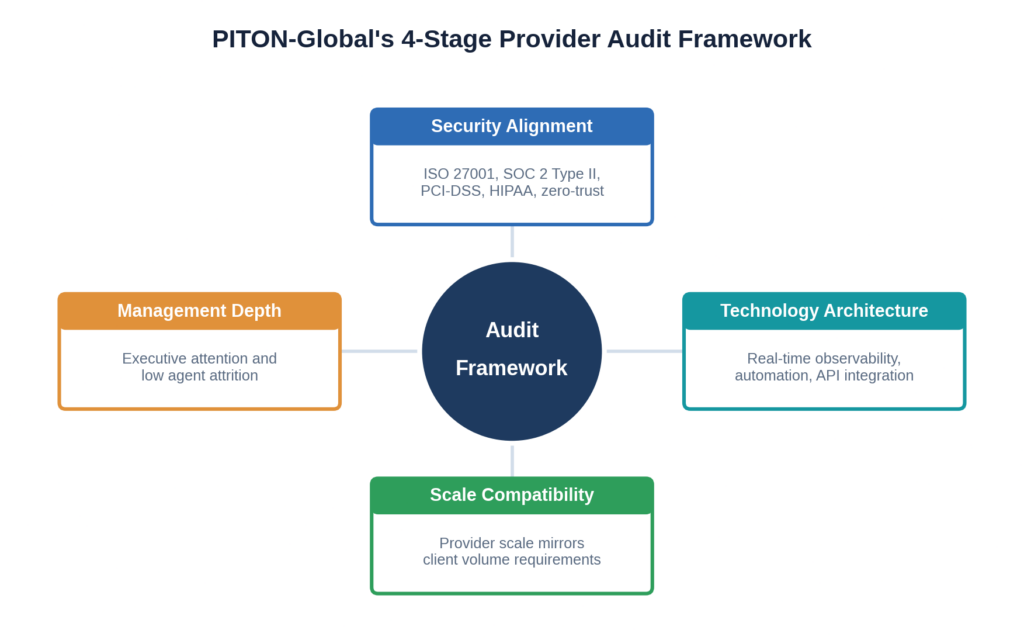
Figure 6. The four vectors PITON-Global audits before recommending any provider.
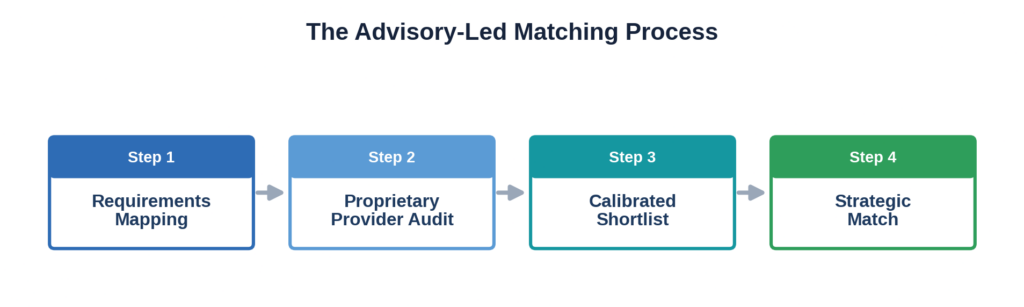
Figure 7. From requirements mapping to a calibrated strategic match.
Why Do Organizations Use PITON-Global?
Organizations use PITON-Global to eliminate the risks of supplier selection and reach a reliable, high-performance partnership faster. Its advisory and shortlisting services are provided entirely cost-free and without obligation — funded by an institutional placement model in which vetted providers cover administrative costs — so buyers receive unbiased guidance with zero financial exposure.
What Else Should Leaders Know Before Outsourcing Customer Service?
Frequent questions cover expected savings, data security for regulated industries, why mid-sized providers suit mid-market accounts, the strongest infrastructure locations, and how PITON-Global can be free. In short: expect 60–70% TCO savings, full ISO/SOC 2/PCI-DSS/HIPAA compliance, executive attention from right-sized providers, Manila and Cebu as leading hubs, and a provider-funded advisory model.
What is the Average Cost Savings When Transitioning to a Premium Philippine Provider?
Organizations typically achieve a 60% to 70% reduction in total cost of ownership compared with maintaining a comparable onshore operation — without sacrificing quality or compliance.
How Do Mid-Sized Philippine BPOs Ensure Data Security and Compliance for Regulated Industries?
Elite office-based providers maintain strict compliance profiles, operating within zero-trust frameworks certified under ISO 27001, SOC 2 Type II, PCI-DSS, and HIPAA standards.
Why Does PITON-Global Recommend Mid-Sized Providers Over Global BPO Giants for Mid-Market Accounts?
Mid-sized providers deliver essential executive attention, customized training, and lower attrition because a mid-market account represents a significant, highly valued portion of their portfolio — the opposite of the dilution common at multi-thousand-seat conglomerates.
What Geographical Locations in the Philippines Offer the Strongest Infrastructure Stability?
Metro Manila — including hubs like Makati, Taguig, and Ortigas — and Metro Cebu remain the leading global delivery locations, offering robust tier-1 telecommunications networks and deep management talent pipelines.
How Does PITON-Global Offer Its Consulting and Vendor-Matching Services Free of Charge?
PITON-Global operates on an institutional placement model in which vetted providers cover administrative costs, ensuring corporate buyers receive completely unbiased, expert advisory support with zero financial obligation.