
Outsourcing to the Philippines lets businesses scale rapidly by shifting labor-intensive operations to a skilled, cost-effective talent pool, cutting operational expenditure by up to 70%. Leveraging established infrastructure and optimized workflows, organizations redirect capital to core growth—accelerating time-to-market while holding domestic overhead flat.
Key Takeaways
- Up to 70% cost reduction: Shifting front- and back-office roles to the Philippines converts fixed overhead into variable, scalable operating expense.
- 24/7 operational continuity: Implement round-the-clock coverage across time zones without paying domestic night-differential premiums.
- Rapid talent acquisition: Access specialized, English-proficient professionals in weeks rather than months, bypassing domestic recruitment bottlenecks.
- Mitigated capital expenditure: Eliminate local real-estate expansion, technology procurement, and localized HR infrastructure.
What Are the Actual Cost Structures and Operational Benchmarks?
Fully burdened Philippine costs run roughly 62–73% below US equivalents, tiered by specialization. A Tier-1 customer-care seat costs about $1,200–$1,800 per month versus $4,500–$5,500 onshore—inclusive of salary, mandatory benefits, office infrastructure, redundant connectivity, and local supervision.
Evaluating offshoring viability means looking past basic hourly wages to fully burdened cost models. The modern Philippine BPO landscape offers a sophisticated tiering system based on technical specialization, compliance mandates, and experience.
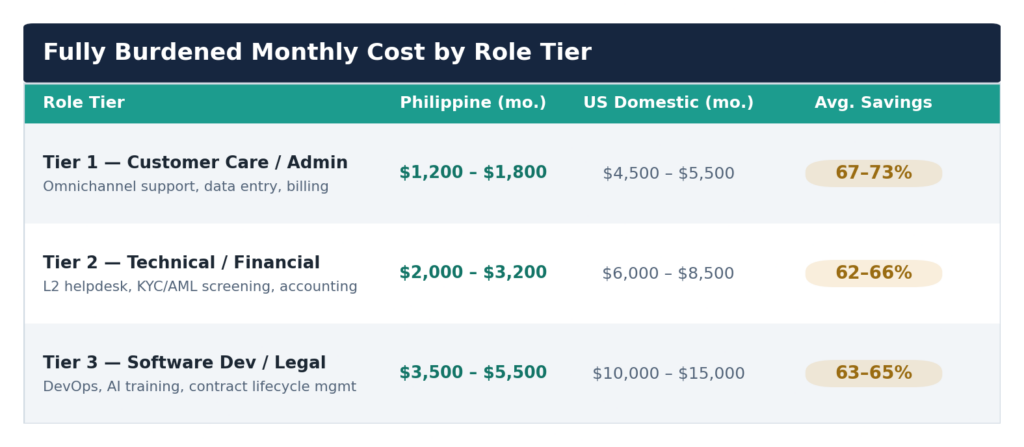
Figure 1. Fully burdened monthly cost by role tier: Philippine versus US domestic, with average savings.
These fully burdened figures encompass base salaries, mandatory benefits (such as 13th-month pay and healthcare premiums), state-of-the-art office infrastructure, redundant Tier-1 internet connectivity, and localized supervisory management—the very cost layers that make domestic operations expensive to scale.

Figure 2. An illustrative breakdown of where the savings originate across the fully burdened cost stack.
“The true strategic value of the Philippines isn’t just the arbitrage; it’s the structural agility. Businesses can deploy an entire, fully managed department in Manila or Cebu for less than the cost of two senior executives in San Francisco or New York.”
— John Maczynski, CEO of PITON-Global
How Does Subcontracting Mitigate Scalability Risks and Hidden Bottlenecks?
It transfers the operational burdens that throttle domestic growth—protracted recruitment, rising payroll taxes, and legal liabilities—to a specialized partner. The result is elastic headcount, turnkey enterprise-grade infrastructure, and culturally aligned talent available without long implementation cycles.
Rapid domestic expansion frequently triggers structural bottlenecks: long recruitment cycles, escalating payroll taxes, and legal exposure. Offshoring shifts these burdens to a partner whose core competency is absorbing them.
Labor Elasticity
Scale headcount up or down with seasonal demand within 30–45 days, avoiding domestic mass-layoff complexities.
Turnkey Infrastructure
Top-tier providers operate on enterprise-grade security (ISO 27001, SOC 2 Type II, PCI-DSS), bypassing long technology-implementation cycles.
Cultural Alignment and Domain Expertise
The Philippine education system produces hundreds of thousands of graduates annually, deeply familiar with Western business practices and neutral English.
What Are the Operational Risks and Strategic Trade-offs?
Offshoring is not risk-free. The main trade-offs—infrastructure and weather exposure, and sector-wide attrition of 30–40%—are manageable with the right partner: dual-feed power and generator backups for continuity, and boutique or specialized mid-market providers with strong engagement frameworks to retain talent.
An objective approach acknowledges that, left unmanaged, certain risks can erode projected efficiencies. Two warrant particular attention.
Geopolitical and Infrastructure Constraints
While tier-one metros boast robust fiber-optic grids, localized power outages or extreme weather require strict business-continuity planning. Confirm that your partner operates dual-feed power grids and automated generator backups before signing.
Management Overhead and Attrition
The competitive nature of the sector drives industry-wide attrition of roughly 30–40%. Mitigate it by partnering with boutique or specialized mid-market providers that cultivate stronger employee engagement and clear career-progression frameworks.

Figure 3. Common offshoring failure modes mapped to concrete, vendor-side structural mitigations.
How Did an Advisory-Led Match Accelerate a Mid-Market FinTech?
A North American FinTech facing a 90-day onboarding backlog ahead of its Series B used PITON-Global to shortlist three specialized providers in nine days. A dedicated 45-person team cleared the backlog within 30 days, lifted CSAT from 74% to 91%, and cut operating expense 64% ($2.1M).
Client Challenge
A rapid-growth North American FinTech faced a 90-day backlog in merchant onboarding and customer support, threatening a critical Series B round. Domestic hiring was stalled by high wage expectations and localized talent shortages.
Vendor Selection
PITON-Global analyzed the firm’s technical requirements and screened its network of 100+ vetted providers. Within nine days it shortlisted three specialized mid-market BPOs with deep financial-services experience, eliminating generic call centers.
Solution Implemented
The selected provider deployed a dedicated 45-person team—Tier-2 risk analysts and Tier-1 customer-success specialists—on a hybrid model with 100% power and internet redundancy.
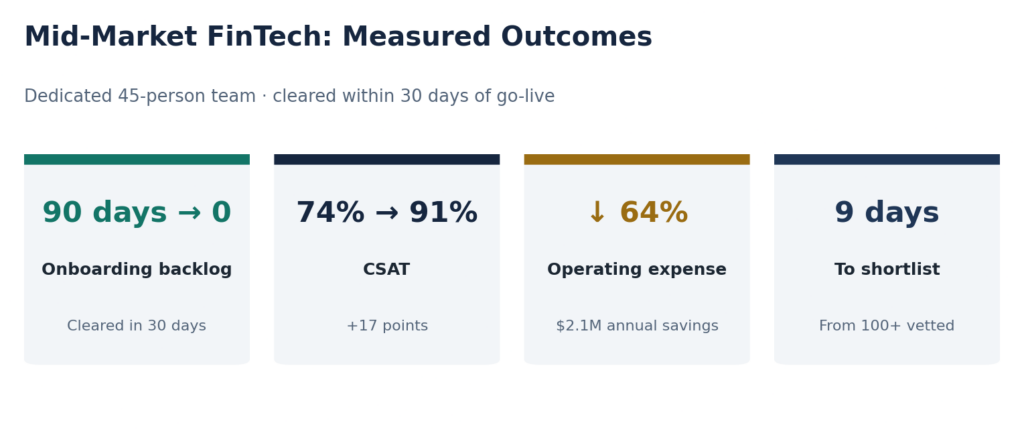
Figure 4. Measured outcomes of the FinTech engagement.
Lessons Learned
Rigid upfront alignment on domain-specific training protocols yields faster time-to-proficiency than broad-based onboarding—underscoring the value of highly specialized vendor matching.
What Role Does PITON-Global Play in Strategic Provider Alignment?
PITON-Global is a specialized BPO advisory and outsourcing consultancy—not a traditional broker. With direct oversight of a vetted network of 100+ premium providers, it maps your volume metrics, technology stack, and compliance mandates to proven capabilities, accelerating time-to-contract and protecting intellectual property.
Who Is PITON-Global?
PITON-Global is an independent BPO advisory and outsourcing consultancy focused on the Philippine market. Rather than running its own delivery floors, it guides leadership teams through the full vendor-selection lifecycle, drawing on deep operational expertise and direct oversight of a meticulously vetted network of premium call-center and back-office providers.
How Does PITON-Global Differ from Traditional Outsourcing Brokers?
Traditional brokers typically work on vendor-paid commissions, which biases their advice toward the highest bidder. PITON-Global operates as an advisory-led partner: its evaluations are independent, its recommendations are based on proven provider capabilities rather than referral incentives, and its focus remains on the client’s volume, technology, and compliance fit.
How Does PITON-Global’s Network of 100+ Vetted Philippine Providers Benefit Organizations?
Direct access to more than 100 carefully vetted premium providers removes the transaction costs and risk of cold-screening thousands of vendors. Because each partner has been assessed for capability, security, and scale, buyers shortlist proven operators in days rather than months—as in the case above, where three best-fit providers were identified within nine days.
How Does PITON-Global’s Advisory-Led Vendor Matching Process Work?
The firm maps an organization’s specific volume metrics, technology stacks, and compliance mandates against proven provider capabilities, then guides the engagement to a governed, day-one-ready launch. This advisory-led approach accelerates time-to-contract, protects intellectual property, and ensures scaling initiatives rest on stable operational foundations.
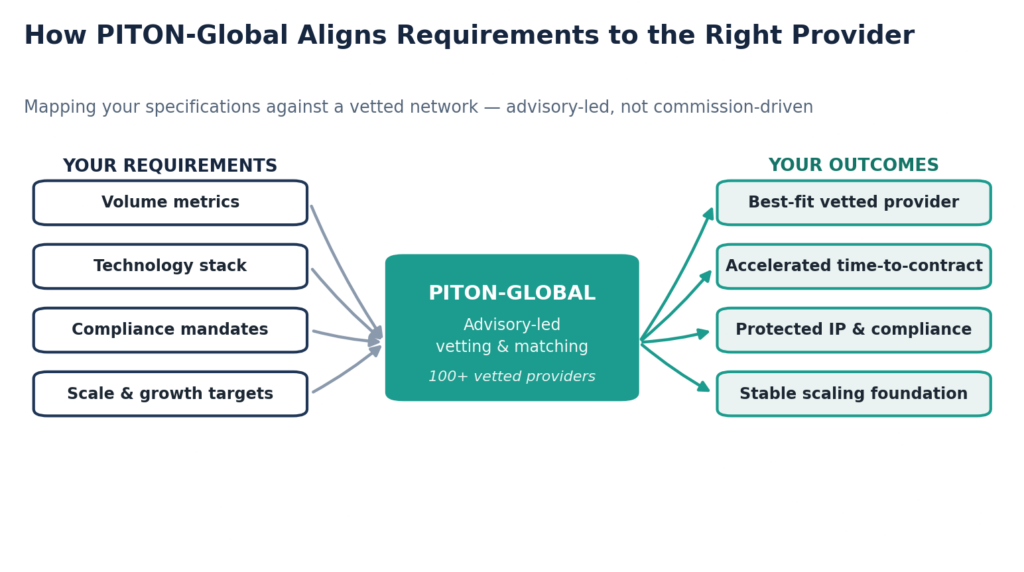
Figure 5. PITON-Global maps client requirements to vetted-provider capabilities and measurable outcomes.
Why Do Organizations Use PITON-Global?
Organizations rely on PITON-Global to remove guesswork from vendor selection, compress time-to-contract, and de-risk scaling. By aligning specific requirements to proven vendors and overseeing the selection lifecycle, the firm protects intellectual property and ensures growth initiatives stand on stable operational foundations—so internal teams can focus on outcomes, not vendor hunting.
What Else Should Businesses Know Before Outsourcing to the Philippines?
Buyers most often ask about IP and data protection, go-live timelines, time-zone management, minimum team sizes, and hidden costs. The answers below address each.
How do we protect intellectual property and data privacy?
Reputable providers adhere to the Philippine Data Privacy Act of 2012, which aligns with GDPR and HIPAA mandates. Enterprise agreements add strict data-loss-prevention protocols, clean-desk policies, and biometric access controls.
What is the typical timeline from signing to going live?
Standard customer-care or administrative teams transition in 4 to 6 weeks. Highly specialized technical or software-engineering teams requiring bespoke recruitment profiles typically take 6 to 9 weeks.
How should we manage time-zone differences effectively?
Most Philippine BPO professionals work permanent night (“graveyard”) shifts to align with North American or European business hours, enabling real-time, synchronous collaboration.
What is the minimum team size required to start efficiently?
While some large-scale providers require 50+ seats, PITON-Global’s network includes specialized boutique operators that can launch dedicated teams of 5 to 10 agents.
Are there hidden costs associated with Philippine outsourcing?
Hidden costs usually stem from unmapped software licensing, unexpected telecom overages, or complex implementation charges. Advisory-led structuring keeps agreements on an all-inclusive, predictable per-hour or per-FTE model.