Philippine healthcare BPO teams have deep, systemic experience with U.S. clinical and administrative workflows — trained in HIPAA/HITRUST compliance, ICD-10/CPT coding, and revenue cycle management, and fluent in EHR platforms such as Epic and Oracle Health (Cerner). Operating as integrated extensions of U.S. providers, they deliver roughly 40–70% cost savings while sustaining high accuracy.
Key Takeaways
- Clinical integration: The workforce bridges administrative support and clinical knowledge, often staffed by licensed nurses, allied-health graduates, and AAPC-certified coders.
- Workflow parity: Teams are proficient across the U.S. healthcare tech stack — from claims adjudication to prior authorization — inside the EHRs roughly two-thirds of U.S. hospitals actually run (Epic and Oracle Health).
- Regulatory maturity: Leading providers operate under HIPAA/HITECH mandates and ISO 27001 / SOC 2 / HITRUST-aligned security frameworks, with signed Business Associate Agreements.
- Strategic cost advantage: Outsourcing converts fixed domestic labor into a scalable, variable-cost model — commonly 40–70% lower — without compromising care quality or data security.
- Communication strength: The Philippines ranks 2nd in Asia for English proficiency (EF EPI 2025), with a neutral accent and deep familiarity with Western professional norms.
- Specialization density: Success depends on choosing specialized mid-market “Hidden Champion” providers whose operational maturity matches your specific clinical complexity.
How Do Philippine Providers Maintain Operational Parity with U.S. Standards?
They achieve parity through dedicated, site-based training rather than generic onboarding. Programs typically run four to eight weeks and focus on the regulatory and technical nuances of the U.S. payer–provider ecosystem, so teams resolve bottlenecks in insurance verification, coding, and billing instead of merely following a script.
Three structural advantages underpin that parity. First, talent depth: the Philippines fields more than 200,000 licensed clinical professionals supporting global healthcare operations. Second, communication: the country ranks 2nd in Asia and 28th of 123 nations for English proficiency in the 2025 EF EPI, comfortably in the “high” band. Third, platform fluency: with Epic at 43.7% and Oracle Health at 21.9% of U.S. acute-care hospitals (KLAS, 2025), teams trained on these systems are fluent in the environments roughly two-thirds of hospitals operate.
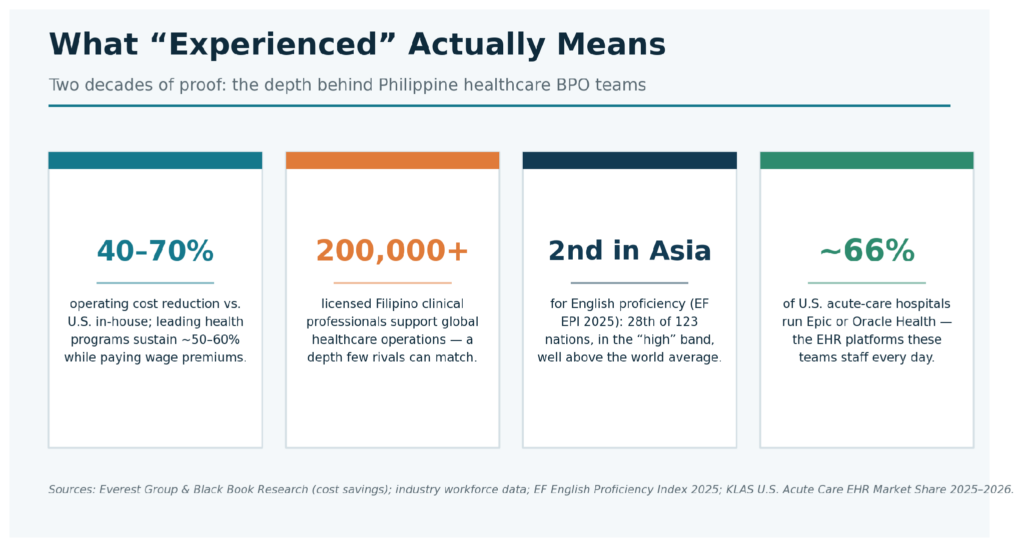
Figure 1. The depth behind “experienced” Philippine healthcare BPO teams.
Crucially, coding is handled by AAPC-certified professionals who specialize in complex fields such as oncology, cardiology, and orthopedics — not generalist agents. The table below maps where these teams consistently deliver U.S.-standard performance.
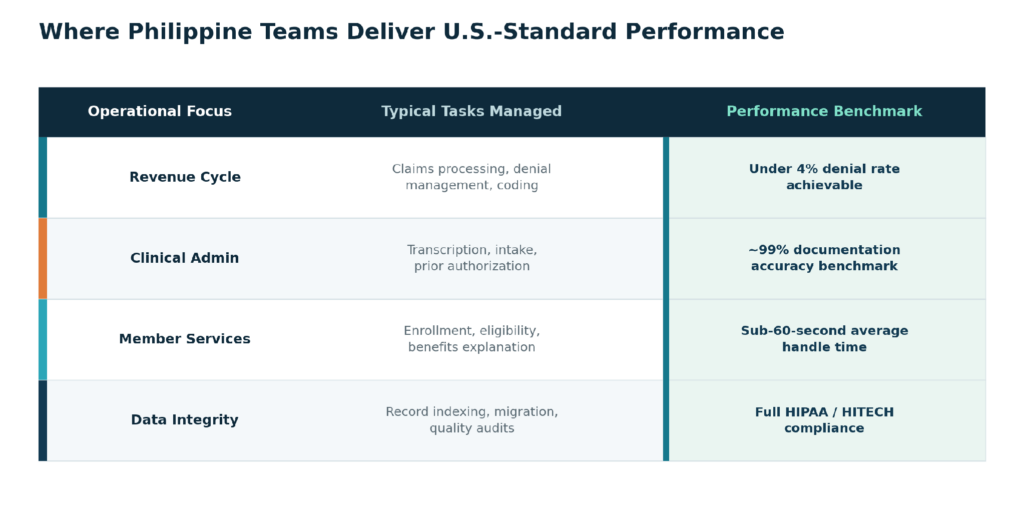
Figure 2. Operational functions and the benchmarks specialized Philippine teams routinely hit.
How Do Philippine Healthcare Teams Integrate Into a Hospital’s Existing Operations?
They integrate as a secured extension of the onshore core rather than a separate silo. Teams connect directly to the hospital’s EHR and workflows through an encrypted layer governed by signed BAAs and HIPAA/HITRUST controls, then operate on U.S. time zones to provide continuous, around-the-clock coverage.
The model matters because healthcare data is sensitive and the work is interdependent. A well-designed engagement places an offshore “pod” — organized around revenue cycle, clinical administration, member services, and data integrity — behind the same security perimeter as in-house staff, with role-based access and continuous monitoring. Because Philippine teams routinely run U.S. hours, claims, records, and billing advance overnight, turning the time-zone gap into a 24/7 operational advantage rather than a handoff problem.

Figure 3. A Philippine BPO pod operating as a secured extension of the onshore core.
What Are the Real-World Risks of Outsourcing Healthcare Operations?
The primary risk is not a lack of talent — it is a mismatch in operational governance. Treating a clinical process as a generic commodity invites communication gaps and regulatory oversight failures. The key safeguard is evaluating “specialization density”: how much of a provider’s workforce is dedicated solely to healthcare versus generalist roles.
A provider that understands the full life cycle of a U.S. medical claim — from eligibility and prior authorization through coding, submission, and denial management — behaves very differently from a volume-driven contact center. Generalist giants can absorb headcount, but on complex clinical work their lack of specialization translates directly into denials, rework, and compliance exposure. The goal is to match the provider’s specialization to the complexity of the work, as the decision matrix below illustrates.
How Can Executives Identify the Right Healthcare Outsourcing Partner?
Executives should move beyond lowest-cost RFPs and evaluate operational maturity directly. That means auditing the training curriculum for current U.S. regulations and EHR workflows, confirming technical compatibility with the specific tech stack, and conducting a governance deep-dive into continuity planning and HIPAA/HITECH audit history.

Figure 4. Match specialization to complexity: where specialized mid-market providers outperform generalist giants.
Audit the training curriculum
Confirm it incorporates recent updates to U.S. federal healthcare regulations and the specific EHR workflows your teams use. A current, role-specific curriculum is the clearest signal of operational maturity.
Evaluate technical compatibility
Verify the provider’s proven ability to integrate with your exact stack — Epic, Oracle Health, Athenahealth, or otherwise — rather than relying on generic “EHR experience.”
Conduct a governance deep-dive
Review the provider’s business continuity plan and its specific track record with HIPAA/HITECH audits, including how it handles protected health information end to end.
“Outsourcing healthcare is not a procurement exercise; it is an extension of your clinical and financial ecosystem. The most successful programs I have designed leverage teams that function as a direct extension of the onshore staff, where the lines between the two are virtually indistinguishable in terms of quality, security, and process adherence.”
— John Maczynski, CEO, PITON-Global
What Does a Successful Healthcare Outsourcing Engagement Look Like?
A successful engagement is defined by workflow-matching — the degree to which a provider’s prior experience mirrors the client’s billing and clinical environment. The representative composite below shows the trajectory a U.S. health system typically sees when it matches a specialized team to its exact needs.
Consider a U.S. health system facing a 15% claims-denial rate and a significant medical-coding backlog that pressured cash flow. Rather than defaulting to a large generalist vendor, the system ran a workflow-specific audit — disqualifying providers that lacked direct experience with its billing software — and matched with a specialized ~50-person team in Manila experienced in oncology-specific medical billing.
Within six months, the denial rate fell below 4% and total RCM operating costs dropped by roughly 55%. The figures here are an illustrative composite of typical specialized-RCM outcomes rather than a single named client, but they reflect the consistent pattern: operational success correlates far more with workflow-matching than with vendor size.

Figure 5. Representative before-and-after results from a workflow-matched RCM transition (illustrative composite).
What Role Does PITON-Global Play in the Philippine Outsourcing Ecosystem?
PITON-Global is an independent, advisory-led intermediary that helps organizations select the right Philippine BPO partner. Instead of promoting a single vendor, it represents the client’s interests across a curated network of more than 100 vetted, high-performing providers, with a deliberate focus on agile mid-sized firms.
Who Is PITON-Global?
PITON-Global is an outsourcing advisory firm specializing in the Philippine BPO market, with particular depth in healthcare operations such as revenue cycle management, medical coding, and clinical documentation. It serves as a strategic guide for buyers navigating a large and fast-moving provider landscape.
How Does PITON-Global Differ from Traditional Outsourcing Brokers?
Traditional brokers are typically paid through volume-based commissions from specific vendors, which can bias recommendations. PITON-Global’s advisory-led model emphasizes independent provider evaluation, objective recommendations, and a focus on client outcomes — prioritizing executive-level agility and technical fit over vendor promotion.
How Does PITON-Global’s Network of 100+ Vetted Philippine BPO Providers Benefit Organizations?
Access to a large, pre-qualified ecosystem dramatically shortens vendor discovery. With more than 100 vetted providers spanning industries and service categories, organizations can identify qualified, healthcare-specialized candidates in days rather than months, with compliance, infrastructure, and clinical-training maturity already screened.
How Does PITON-Global’s Advisory-Led Vendor Matching Process Work?
The process narrows through three disciplined stages: a workflow audit that maps clinical and billing processes and disqualifies mismatched vendors; specialized matching that aligns a provider’s track record to the client’s exact EHR and clinical complexity; and governance oversight that audits continuity and HIPAA/HITECH posture while guiding the pilot to full rollout.

Figure 6. The three-stage advisory funnel — from a broad vetted network to a single best-fit partner.
Why Do Organizations Use PITON-Global?
Organizations engage PITON-Global to reduce outsourcing risk, improve provider fit, and accelerate vendor selection — achieving better outcomes by treating provider choice as a core infrastructure decision. The advisory model replaces costly trial-and-error with an evidence-based path to a partner whose experience mirrors their environment.
Frequently Asked Questions
Hospital leaders most often ask about HIPAA compliance, time zones, English proficiency, coding complexity, onboarding, and minimum program size. The concise answers below address each.
Is HIPAA compliance guaranteed when outsourcing to the Philippines?
Reputable BPOs enforce compliance through signed Business Associate Agreements (BAAs), segmented data environments, role-based access, and persistent monitoring consistent with HIPAA/HITECH and SOC 2 / ISO 27001 frameworks. Compliance posture should be verified during vetting.
How does the time-zone difference impact patient care?
It is a strategic advantage. While U.S. staff rest, Philippine teams process claims, update records, and manage billing, ensuring 24/7 operational continuity rather than overnight backlogs.
Do Philippine agents have sufficient English proficiency?
Yes. The Philippines is one of the world’s largest English-speaking nations and ranks 2nd in Asia for proficiency (EF EPI 2025), with a neutral accent and strong familiarity with Western professional idioms.
Can these teams handle complex medical coding?
Yes. Leading providers employ AAPC-certified coders who specialize in complex fields such as oncology, cardiology, and orthopedics.
How do we start without disrupting existing operations?
A phased migration is recommended — beginning with lower-risk back-office tasks before expanding into clinical administrative support — so quality and governance are proven before scaling.
Is there a minimum size to start an outsourcing program?
No. Unlike global giants, specialized mid-market partners can launch high-performing programs with as few as 10–20 seats, making the model accessible to smaller systems and practices.