

On this page
- Key Takeaways
- What Is the Direct Financial Impact of Philippine BPO Migration on Operating Margins?
- How Does Workforce Productivity in Manila and Cebu Drive Unit Economics?
- What Are the Operational Risks and Hidden Costs That Can Erode Margins?
- What Does Margin Optimization Look Like for a High-Growth Enterprise?
- How Does PITON-Global Guide Executive Decision-Making?
- Frequently Asked Questions
Outsourcing to the Philippines directly expands operating margins by cutting fully loaded labor and overhead costs to a fraction of onshore levels. By transitioning front- and back-office functions to specialized Philippine BPO providers, enterprises shift fixed operating expenses into variable, scalable models, accelerating net margin expansion while maintaining service quality—and gaining materially higher output from process-disciplined teams. Knowing what an offshore seat really costs per hour, fully loaded, is the starting point for the margin math.
Key Takeaways
- Cost structure transformation: Operating expense (OpEx) reductions of well over half per fully loaded FTE flow directly to EBITDA margins.
- Capital efficiency: Shifting from fixed CapEx for real estate, IT infrastructure, and local recruiting to a variable cost model yields immediate working-capital optimization.
- Process productivity gains: Enterprise BPO facilities in Manila and Cebu deliver materially higher output metrics thanks to specialized talent pools and process optimization.
- Scalability and risk mitigation: 24/7 continuous operations reduce lifecycle cycle times, lowering unit economics and mitigating revenue leakage.
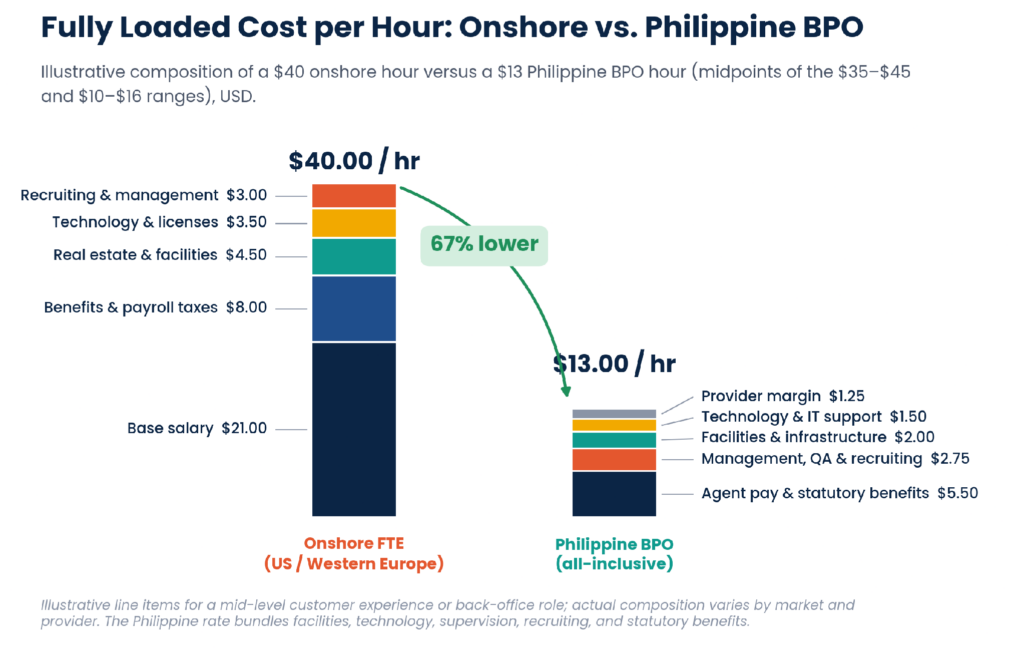
Figure 1. Side-by-side fully loaded cost breakdown: an illustrative onshore hour versus a Philippine BPO hour across salary, benefits, real estate, and technology.
What Is the Direct Financial Impact of Philippine BPO Migration on Operating Margins?
The primary driver is the wage-arbitrage delta paired with labor quality. A mid-level customer experience or back-office professional in North America and Western Europe costs a multiple of what an equivalent enterprise-grade professional costs fully loaded in the Philippines. That delta transfers directly to the P&L as lower SG&A, delivering operating cost savings by function that exceed half of the onshore baseline.
When organizations migrate repetitive customer-facing, technical, or back-office workloads to the Philippines, the fully loaded cost of each role—healthcare, payroll taxes, physical workspace, and technology licenses included—falls by roughly two-thirds. Because Selling, General, and Administrative expense sits directly above operating profit on the income statement, every dollar of that reduction expands operating margin without any change in revenue. The table below shows the effect by expense category.

Figure 2. Fully loaded onshore versus Philippine BPO cost by expense category, with direct margin impact.
Beyond base compensation, vendor management shifts indirect overhead—recruitment, attrition mitigation, continuous skill development, and facilities management—to the provider, converting fixed liabilities into predictable variable costs. For a 60-seat program, the combined effect is a seven-figure annual reduction in operating cost removed from SG&A—see the cost savings of outsourcing to Philippine call centers for the front-office view.
How Does Workforce Productivity in Manila and Cebu Drive Unit Economics?
Operating margins do not expand on wage savings alone; efficiency and output volume dictate the true yield. Mid-market providers in Manila and Cebu maintain 12-month agent retention rates far above the onshore average, which drives higher First Contact Resolution, lower handle times, and minimal error rates—so fewer FTEs handle higher volumes, compounding the cost savings.
The Philippines possesses a mature BPO ecosystem backed by a highly educated, English-proficient workforce with strong cultural alignment to Western business practices. Higher retention and dedicated operational management produce a virtuous cycle: tenured agents resolve more contacts on the first attempt, shorter handle times free capacity, and lower error rates eliminate rework. The chart below traces how those metrics move together over a 36-month engagement.
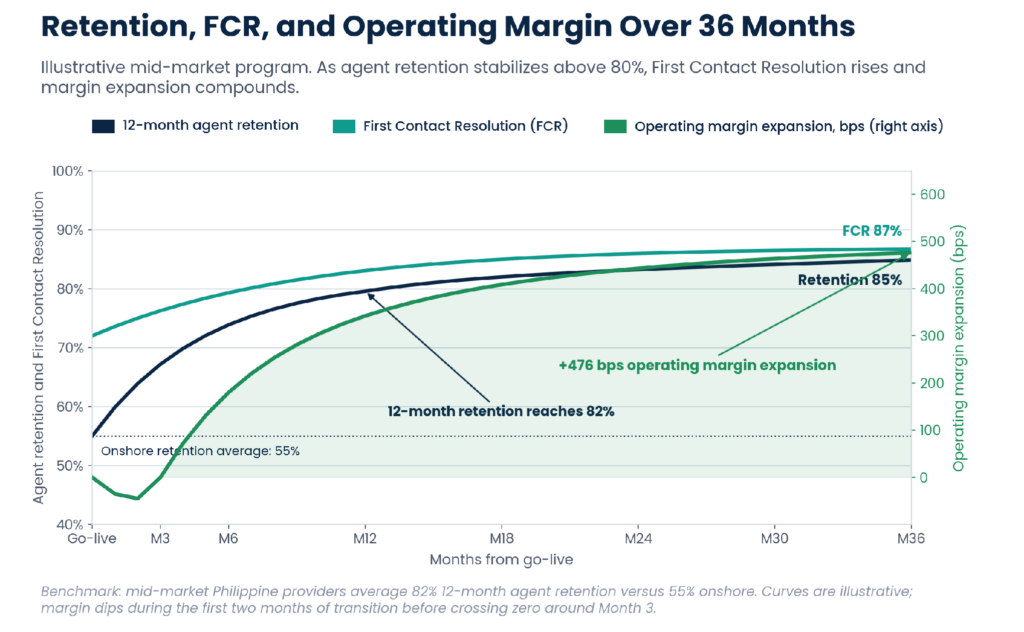
Figure 3. Illustrative 36-month trajectory of agent retention, First Contact Resolution, and cumulative operating margin expansion.
Proprietary BPO benchmark studies show that mid-market providers in the country maintain 12-month agent retention rates well above the onshore average. The practical consequence is capacity: a team that keeps its experienced agents handles materially more volume per FTE, which means fewer seats are needed as volumes grow and the unit cost per transaction keeps falling after the labor arbitrage has been captured.
The true value of Philippine BPO engagement isn’t just cutting hourly labor rates in half; it’s the operational leverage you gain when a highly skilled, process-disciplined team increases throughput while reducing capital expenditure overhead. When you pair a deep labor cost reduction with a real increase in operational throughput, that dual engine permanently expands an enterprise’s operating margin while insulating it against onshore wage inflation.
— John Maczynski, CEO, PITON-Global
What Are the Operational Risks and Hidden Costs That Can Erode Margins?
Four sources of unplanned friction erode anticipated margin expansion: scope creep and change orders from unclear SLA definitions, attrition overhead from low-tier vendors with high turnover, governance misalignment when no internal leader owns provider performance, and compliance or security penalties from inadequate PCI DSS or HIPAA architectures. Strict SLAs, clear governance, and rigorous partner selection protect the gains.
Unplanned friction during BPO deployment can erode anticipated margin expansion if it is not properly governed. Each of the four risks below is predictable, and each maps to a specific control in the margin protection framework that follows.
Scope Creep and Change Orders
Unclear SLA definitions in vendor contracts lead to supplemental billing as channels, tasks, or volumes expand beyond the original statement of work. Precise scope boundaries, change-control procedures, and pre-agreed rate cards for incremental work keep the margin model intact. Where volumes are high and repeatable, an outcome-based pricing model removes the seat-time incentive entirely.
Attrition Overhead
Selecting low-tier vendors with high turnover results in continuous retraining expense and degraded service levels. Providers with high 12-month retention cost slightly more per hour and materially less per resolved contact; retention history belongs in the scoring model, not the reference checks.
Governance Misalignment
Without dedicated internal leadership to oversee provider performance metrics and compliance frameworks, small SLA misses compound into large ones. A named executive owner, a monthly performance cadence, and audit rights are the minimum governance structure for a program of any size.
Compliance and Security Penalties
Inadequate data privacy architectures—non-compliance with PCI DSS or HIPAA, for example—expose the buyer to regulatory penalties and breach recovery costs that can exceed a year of savings. Certifications should be verified as current, and controls tested, before contract execution.
Organizations must establish strict SLA frameworks, clear governance structures, and robust partner selection processes to protect cost efficiencies. The framework below sequences those controls from selection through ongoing governance.
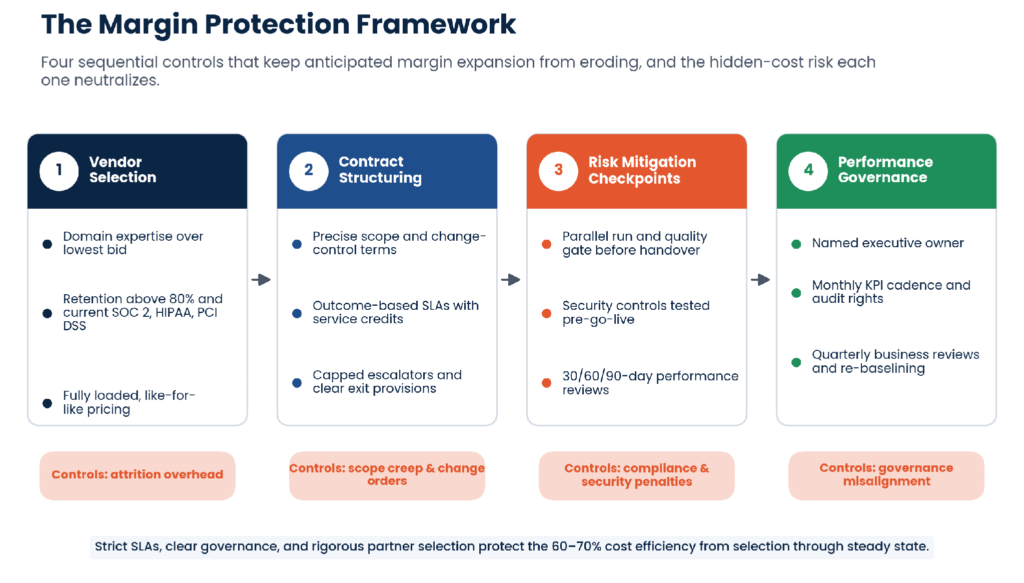
Figure 4. The margin protection framework: vendor selection, contract structuring, risk mitigation checkpoints, and ongoing performance governance.
What Does Margin Optimization Look Like for a High-Growth Enterprise?
Margin optimization means prioritizing domain expertise over the lowest hourly bid. A North American fintech established a 60-seat operations unit in Manila for Tier 1–2 support and fraud processing, cut customer service operating costs by well over half within six months, improved processing accuracy materially, and expanded operating margin by several hundred basis points in the first fiscal year.
Client Challenge
A North American financial technology company faced rising customer support and fraud operations costs as transaction volumes scaled, pushing EBITDA margins below target and threatening the unit economics that underpinned its growth plan — the margin-compression pattern described in our analysis of the risks of delaying outsourcing.
Vendor Selection
Partnering with advisory experts, the firm evaluated vetted mid-market Philippine BPO partners, filtering for SOC 2 Type II compliance, fintech experience, and high agent retention metrics rather than for the lowest hourly rate.
Solution Implemented
A 60-seat dedicated operations unit was established in Manila for Tier 1–2 customer support and back-office fraud processing, with SLAs tied to accuracy and resolution metrics and a governance cadence agreed before go-live.
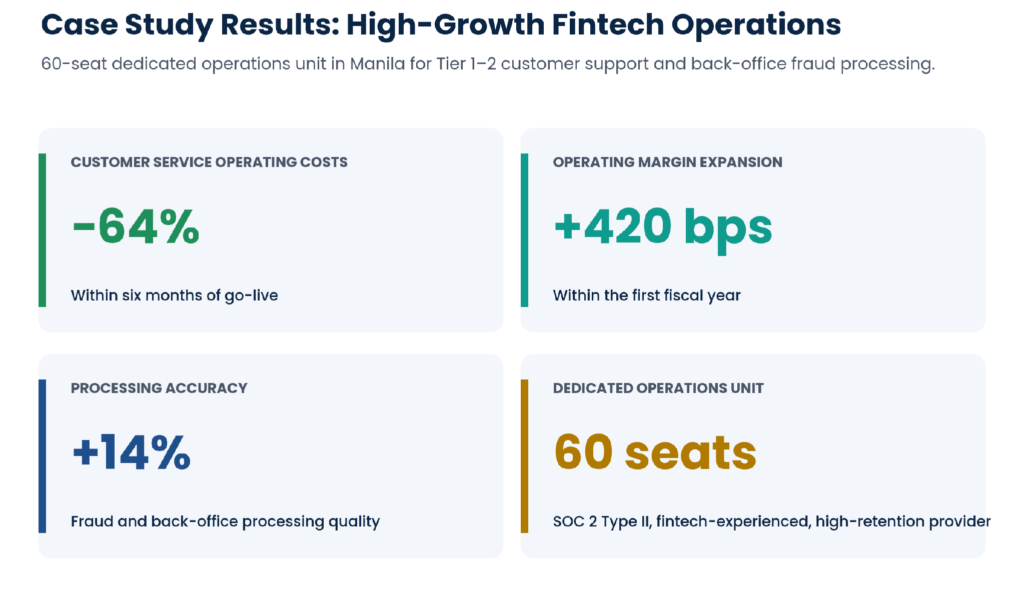
Figure 5. Quantifiable business outcomes of the fintech operations migration.
Outcomes and Lessons
Total operating costs for customer service declined by well over half within six months. Processing accuracy improved materially, and overall operating margin expanded by several hundred basis points within the first fiscal year. The lesson: prioritizing domain-specific expertise over the absolute lowest hourly bid avoided costly rework and accelerated operational stability—the margin expansion came from the quality of the match, not the rate card.
How Does PITON-Global Guide Executive Decision-Making?
PITON-Global is a vendor-neutral BPO advisory and sourcing firm headquartered in Manila with decades of on-the-ground operational leadership. Acting as an executive advisor rather than a broker, it guides companies through vendor selection across a network of more than 100 thoroughly vetted providers, using industry data, operational benchmarks, and custom RFP frameworks to secure optimal terms and sustainable margin expansion.
Who Is PITON-Global?
PITON-Global is a vendor-neutral BPO advisory and sourcing firm headquartered in Manila with decades of on-the-ground operational leadership. Led by CEO John Maczynski, who has overseen enterprise BPO migrations across Southeast Asia for more than 25 years, the firm helps executive teams evaluate a market of more than 1,000 providers and align with the mid-market operators best equipped to deliver sustainable operating margin expansion.
How Does PITON-Global Differ from Traditional Outsourcing Brokers?
Traditional brokers earn referral commissions and route buyers toward preferred vendors regardless of fit. PITON-Global operates as an executive advisor: it evaluates providers independently against deep industry data and operational benchmarks, runs custom RFP frameworks that normalize bids to fully loaded cost, and recommends on the buyer’s margin outcomes rather than provider promotion, staying engaged through contracting and transition.
How Does PITON-Global’s Network of 100+ Vetted Philippine BPO Providers Benefit Organizations?
Access to more than 100 thoroughly vetted call centers and back-office providers in the Philippines—across Manila, Cebu, and secondary hubs—lets organizations skip months of unstructured discovery. Each provider has already been assessed for compliance certifications, retention performance, domain expertise, and pricing transparency, so buyers compare like-for-like on the metrics that drive margin.
How Does PITON-Global’s Advisory-Led Vendor Matching Process Work?
The process runs from margin baseline to selection support: establishing fully loaded costs, volumes, compliance requirements, and target margin impact; filtering the vetted network for domain expertise, retention, and right-sized capacity; issuing a custom RFP and delivering a normalized shortlist within 48–72 hours; verifying security, SLA history, and hidden-cost exposure; then supporting negotiation, SLA design, and transition governance.
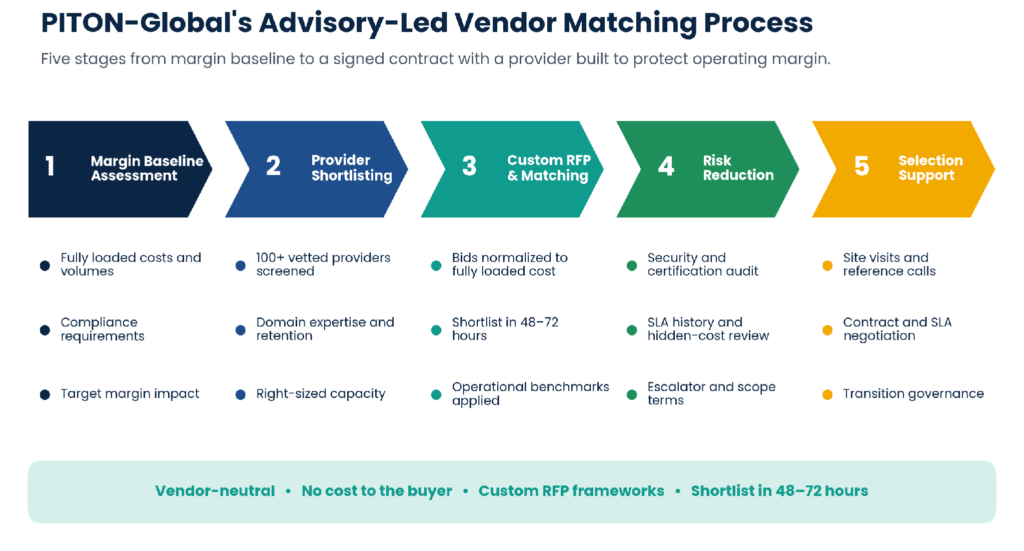
Figure 6. PITON-Global’s five-stage advisory-led matching process, from margin baseline to signed contract.
Why Do Organizations Use PITON-Global?
Organizations use PITON-Global to mitigate vendor selection risk, secure optimal contractual terms, and align with providers that protect rather than erode margin. Because the advisory service carries no cost to the buyer, and the difference between a matched and a mismatched provider can be half of projected savings, it is the highest-return decision in the program.
Frequently Asked Questions
What is the typical timeframe to realize operating margin improvements after outsourcing?
Most enterprise deployments achieve net-positive operating margin expansion within 60 to 90 days following transition completion and initial team ramp-up.
How do time zone differences impact operational efficiency?
Philippine BPO facilities operate 24/7/365, allowing Western firms to leverage night-shift teams for real-time customer support or run overnight back-office processing to speed up workflow cycles.
Will outsourcing core operations compromise quality or brand integrity?
When partnered with top-tier, domain-specialized Philippine providers, quality metrics such as CSAT and FCR often equal or exceed onshore baselines because of lower attrition and higher employee engagement.
How do currency fluctuations impact long-term cost structures?
Most Philippine BPO contracts are denominated in USD, shielding international buyers from local currency volatility and providing predictable operating expenditure across the contract term.
What processes yield the highest margin expansion when relocated to the Philippines?
High-volume customer support, Tier 1–2 technical helpdesk, finance and accounting (AP/AR), and specialized back-office data processing deliver the highest structural return on investment.