

Outsourcing robotics teleoperation support services to the Philippines means staffing the remote-intervention lifecycle — from the moment an autonomous mobile robot raises an exception code to a remote operator’s safe resolution via a digital-twin interface. That lifecycle is the core of the human operations layer behind robot fleets. You outsource monitoring and assistance, not safety judgment; the binding constraints are a tested latency budget and operator cognitive load, and the economic prize is a rising vehicles-per-operator ratio that lowers cost per intervention.
Key Takeaways
- Outsource the lifecycle. From exception code to safe resolution via a digital twin — the repeatable intervention workflow.
- Latency is budgeted. Assistance tolerates more delay than direct control; the glass-to-glass budget must be tested.
- Manage cognitive load. Operator error rises with fatigue and span; human-factors design is a safety control.
- Capture every intervention. Each resolved exception is training signal that lowers the future intervention rate.
- Ratio is the economics. Vehicles-per-operator rising is what makes the service cheaper over time.
What Is the Remote-Intervention Lifecycle You Are Outsourcing?
Direct answer: A repeatable workflow: an AMR raises an exception code, a remote operator assesses the scene, resolves it via a digital-twin interface within the robot’s ODD, confirms a safe state, and returns the vehicle to autonomy — with every event captured for learning.
Teleoperation support is not someone joysticking a robot all day; it is a disciplined lifecycle triggered by exceptions. A robot hits a situation outside its confident envelope and raises a code; a trained remote operator pulls up the digital-twin view, assesses, and resolves — approving a path, disambiguating a scene, or issuing an indirect command — within the robot’s operational design domain, then confirms a safe state before handing control back. The work that gets outsourced is this monitoring-and-assistance lifecycle, the role described in the rise of the remote robot wrangler. What does not get outsourced is the safety case: direct real-time control, where it exists, stays inside the operator’s safety framework.
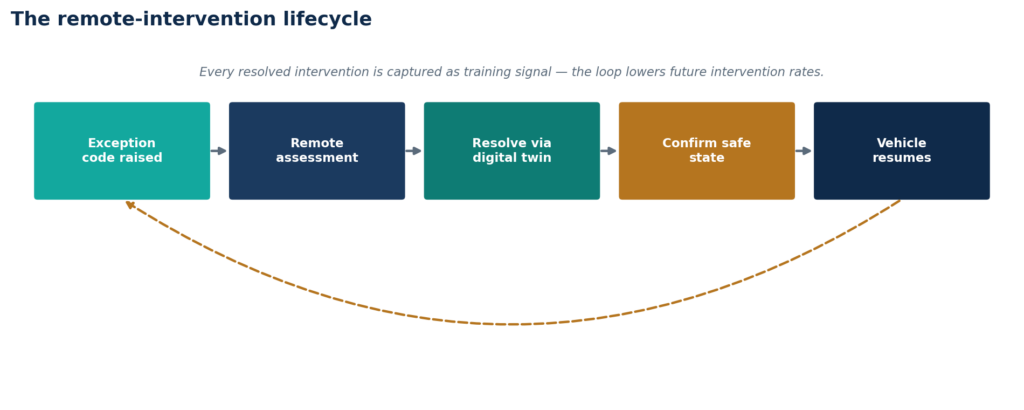
Figure 1 — Every resolved intervention is captured as training signal; the loop lowers future intervention rates.
According to John Maczynski, CEO, PITON-Global, “People picture a room of operators driving robots; the reality is a queue of exceptions and a playbook for each. Master the lifecycle — assess, resolve, confirm, capture — and one operator handles many robots safely. That is the whole job, and it is eminently outsourceable to a trained team.”
What Are the Binding Constraints — Latency and Cognitive Load?
Direct answer: A tested glass-to-glass latency budget (assistance tolerates more than direct control) on the technical side, and fatigue- and span-aware shift design on the human side — because operator cognitive load is a safety variable, not an HR detail.
Two constraints decide whether remote support is safe and economical. The first is latency: the end-to-end video-and-command path must meet a defined budget with tested failover, and assistance modes tolerate more delay than direct control because the robot retains the driving task. The second is cognitive load. An operator supervising too many units, for too long, with poor tooling makes worse and slower calls — so shift length, exception pacing, attention design, and the quality of the digital-twin interface are genuine safety controls. The Philippines’ mature around-the-clock operations workforce suits this, but the human-factors program is what makes it safe at a high ratio.
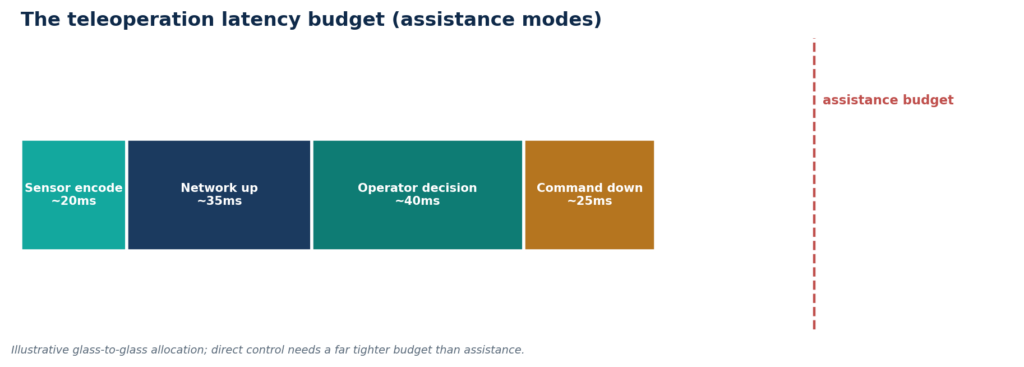
Figure 2 — Illustrative glass-to-glass allocation; direct control needs a far tighter budget than assistance.

“We treat operator cognitive load the way an airline treats pilot fatigue — as a hard safety constraint with rules, not a productivity dial to turn up. Push the span too high to save money and your intervention quality quietly degrades, which is the most expensive saving there is,” said Ralf Ellspermann, CSO, PITON-Global.
How Does the Service Get Cheaper Over Time?
Direct answer: Through a rising vehicles-per-operator ratio: as captured interventions feed back into the autonomy stack, intervention rates fall, one operator safely supervises more robots, and cost per intervention declines — a flywheel, not a flat seat cost.
The economics improve only if the operation compounds. Every resolved exception, captured and fed back into mapping, planning, or model training, makes the same situation handleable autonomously next time, so the intervention rate trends down. A falling rate lets one operator safely cover more robots, and cost per intervention drops with it. That is why teleoperation support and the data pipeline that learns from it should be run as one connected loop, and why a partner that both resolves interventions and turns them into clean training signal is worth more than one that only does the first, whether that data feeds warehouse robotics training or humanoid robot task demonstration.
“Capture every intervention as data or you will pay for the same lesson twice. The whole point of a good remote-ops partner is that today’s exception becomes tomorrow’s autonomous behavior,” noted John Maczynski, CEO, PITON-Global.
Frequently Asked Questions
What Teleoperation Work Can Be Outsourced Safely?
The monitoring-and-assistance lifecycle — exception assessment, path approval, disambiguation, and indirect commands within the robot’s ODD, resolved via a digital twin. Direct real-time control stays inside the operator’s safety framework.
How Much Latency Is Acceptable?
It is mode-dependent: assistance tolerates more than direct control, but the glass-to-glass path must meet a defined, tested budget with failover. The figure is specified and measured, never assumed.
How Is Operator Cognitive Load Managed?
As a safety control: span limits, shift length, exception pacing, and high-quality digital-twin tooling. Overloading operators to cut cost degrades intervention quality, which is the most expensive saving there is.
About PITON-Global
PITON-Global sources robotics teleoperation support partners that run the intervention lifecycle as a disciplined, human-factors-engineered operation — from a network of 100-plus leading Philippine BPOs, 20 of them AI-first front-runners. Our leadership brings 6+ decades of combined global outsourcing experience and 25+ years in the Philippines, and our sourcing is free and obligation-free, funded by the provider network.