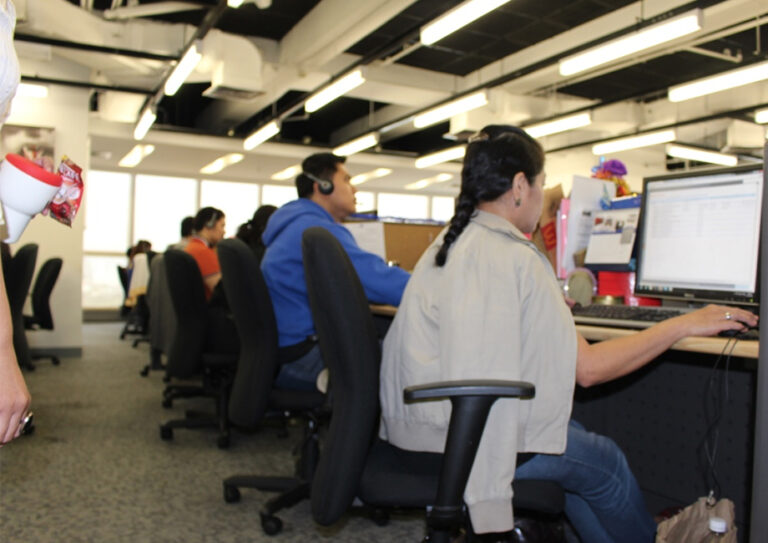

Outsourcing live-stream moderation services to the Philippines means running real-time voice, video, and behavioral moderation across high-scale interactive media and gaming — filtering multimodal streams to identify and neutralize harmful activity in seconds. The architecture pairs automated multimodal detection with a human decision window inside a sub-five-second budget, and the scarce resource is that human review time, which is why staffing, tooling, and routing all optimize for speed without sacrificing judgment. Live streams are the fastest-moving queue in content moderation and trust-and-safety operations.
Key Takeaways
- Real-time changes everything. There is no review queue; harm must be caught and neutralized as it happens.
- Multimodal by necessity. Voice, video, and behavior together — harm hides in the signal a single modality misses.
- The budget is seconds. Detection plus human decision plus action must fit a sub-five-second window.
- Human time is the scarce resource. Everything is engineered to spend the reviewer’s seconds where they matter most.
Why Is Live-Stream Moderation Fundamentally Different from Post-Moderation?
Because there is no queue: harmful voice, video, or behavior must be detected and neutralized while it is happening, so the entire operation is built around a real-time budget rather than throughput over a backlog.
Moderating recorded content is a throughput problem; moderating a live stream is a latency problem. Once harmful audio, video, or behavior is broadcasting to an audience, every second it remains live is harm done, so the operation cannot rely on a review backlog — the model that still works for moderating recorded user content at scale. It must detect in real time across modalities, surface the right moment to a human, and act — mute, cut, ban, escalate — within seconds. That inverts the design: instead of optimizing reviewer hours against a queue, you optimize the end-to-end pipeline against a clock. The Philippines’ large, real-time-capable trust-and-safety workforce suits this, but only inside an architecture built for speed.
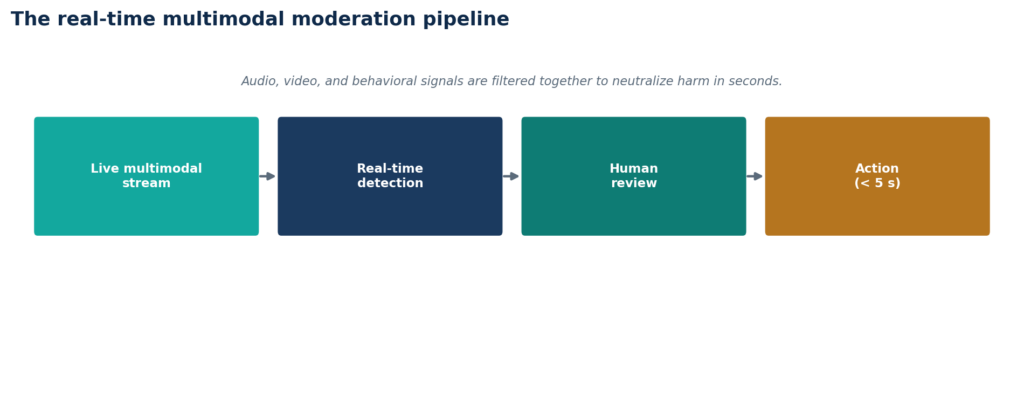
Figure 1 — Audio, video, and behavioral signals are filtered together to neutralize harm in seconds.
According to John Maczynski, CEO, PITON-Global, “Post-moderation forgives a slow reviewer; live moderation does not. The harm is happening on screen in front of an audience. You design the whole operation backward from the action deadline, and you staff people who can make a confident call in the time it takes to read this sentence.”
How Do You Hold a Sub-Five-Second Action Budget?
By allocating the budget across the pipeline — ingest and transcode, multimodal detection, human decision, and action — and protecting the human-decision window as the scarce resource, with tooling and routing engineered to spend it only where automation is uncertain.
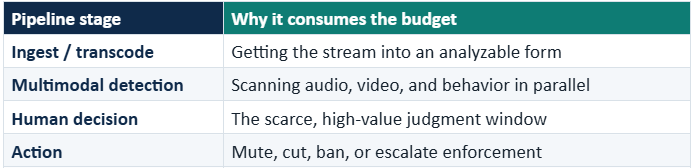
A sub-five-second budget is an allocation problem. Ingest and transcoding, automated multimodal detection, the human decision, and the enforcement action each consume part of the window, and the human decision is the scarcest and most valuable slice. So the system spends it deliberately: automation handles high-confidence harm instantly, and only genuinely uncertain or high-severity moments reach a human, pre-packaged with the context needed to decide in a second or two. Reviewer interfaces, alert routing, and staffing density are all tuned to protect that window. Measured against the budget, the operation’s job is to make the human’s seconds count. The same triage logic now protects integrity reviews on prediction markets.

Figure 2 — Illustrative allocation toward a sub-5s action budget; the human-decision window is the scarce resource.
“We engineer everything around protecting the reviewer’s two seconds. If the interface makes them hunt for context, you have spent the budget before they decide. Speed in live moderation is mostly a tooling and routing problem that happens to need excellent people at the end of it,” said Ralf Ellspermann, CSO, PITON-Global.
What Makes the Philippines Suited to Split-Second Review?
A large, English-fluent, around-the-clock trust-and-safety workforce that can make confident real-time calls at scale — paired with the live-ops experience to staff the density and shift coverage a sub-five-second operation demands.
Real-time moderation needs people who can absorb context and decide instantly, in volume, around the clock — and it needs enough of them, on the right shifts, to hold the budget at peak. The Philippines offers exactly that combination: a deep, English-fluent workforce experienced in real-time interactive operations, with the scale to staff the density live streams require and the around-the-clock culture to cover global audiences — the same bench that runs social media moderation and community care. The cost structure makes that density affordable, which matters because holding a sub-five-second budget at scale is partly a staffing-density problem. The judgment, the language fluency, and the shift coverage are the fit.
“In live moderation, latency is the product. Shave a second off the human decision path and you have done more for safety than the next new classifier will,” noted John Maczynski, CEO, PITON-Global.
Frequently Asked Questions
How Is Live-Stream Moderation Different from Normal Moderation?
There is no review queue — harmful voice, video, or behavior must be caught and neutralized while it is live. The operation is built around a real-time action budget rather than throughput over a backlog.
What Is the Target Response Time?
A sub-five-second window covering ingest, multimodal detection, human decision, and action. The human-decision slice is the scarce resource, so automation handles high-confidence cases and only uncertain moments reach a person.
Why the Philippines for Real-Time Moderation?
A large, English-fluent, around-the-clock trust-and-safety workforce that makes confident real-time calls at scale, with the live-ops experience to staff the density and shift coverage a sub-five-second budget demands.
About PITON-Global
PITON-Global helps interactive-media and gaming platforms source real-time, multimodal live-stream moderation built around a sub-five-second budget — from a network of 100-plus leading Philippine BPOs, 20 of them AI-first front-runners. Our leadership brings 6+ decades of combined global outsourcing experience and 25+ years in the Philippines; sourcing is free and obligation-free, funded by the provider network.