

Choosing the best BPO partner for autonomous vehicle (AV) delivery support outsourcing in the Philippines means scoring safety and capability above price. Use a weighted scorecard led by safety and compliance discipline and remote-operations capability, then infrastructure and security, domain training, KPI/SLA track record, and follow-the-sun scale, the same discipline that runs through all data labeling and fleet support for AV programs. Require explicit positions on who owns the safety case, intervention-rate and latency SLAs, and a site audit — and walk from any bidder that blurs the safety line.
Key Takeaways
- Safety leads the scorecard. Compliance discipline and real remote-ops capability outweigh seat rate in a safety-adjacent operation.
- SLAs must measure the right things. Intervention rate and takeover latency belong in the contract — not uptime alone.
- Audit the site, not the deck. Connectivity, redundancy, and security are part of your safety case; verify them.
- Know the disqualifiers. Blurred safety line, uptime-only SLA, seats over training, no site audit — each ends it.
- Vendor-neutral helps. An advisor with no stake surfaces a wider field and asks the harder questions.
What Should the AV-Support Scorecard Weight?
Lead with safety and compliance discipline and remote-operations capability, then infrastructure and security, domain training depth, KPI/SLA track record, and follow-the-sun scale — with price as a tiebreaker, never the lead.
The selection mistake that haunts AV operators is leading with rate. In a safety-adjacent, regulated operation, a partner’s safety and compliance discipline and its genuine remote-operations capability matter far more than its price — a cheap partner that raises your intervention rate or fumbles an incident is the most expensive option available. A defensible scorecard puts those two first, then infrastructure and security, the depth of the operator-training program, a demonstrable KPI and SLA track record, and the ability to scale follow-the-sun. Set the weights to your risk profile, whether you run robotic last-mile delivery operations or a larger road fleet, but keep safety and capability dominant and let price break ties.
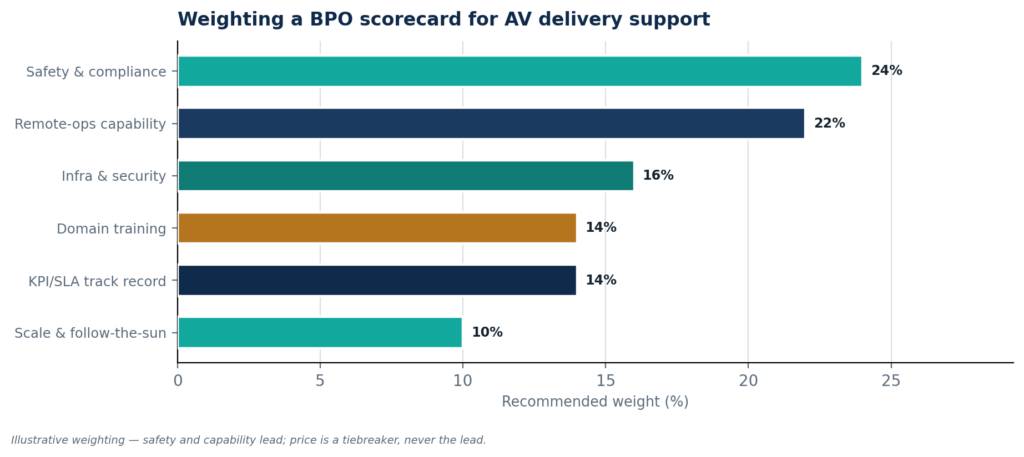
Figure 1 — Illustrative weighting; safety and capability lead, price is a tiebreaker, never the lead.
According to John Maczynski, CEO, PITON-Global, “The cheapest AV-support bid is almost never the cheapest outcome. Save on the rate and lose it tenfold in a higher intervention rate and one badly handled incident. Score the safety discipline and the real remote-ops capability first, and only then talk price.”
What Must the RFP Require a Bidder to Commit To?
Clear positions on safety-case ownership (the operator keeps it), SLAs on intervention rate and takeover latency rather than uptime alone, a documented operator-training program, an integration plan, and agreement to a site and security audit before go-live.
A good RFP forces clarity on what vague bidders prefer to leave vague. Require each to state how the safety case and determination authority are owned — the operator retains them — and the specific SLAs they will commit to on intervention rate, takeover latency, and mean-time-to-resolution, not just uptime. Require the structure of their operator-training and human-factors program (and, if they also handle your perception data, their QA process for frame-by-frame video annotation), a concrete plan to integrate with your ROC and fleet systems, their connectivity and security architecture, and agreement to a site and security audit before go-live. Asking these as hard requirements separates partners who operate to this standard from those who staff seats.
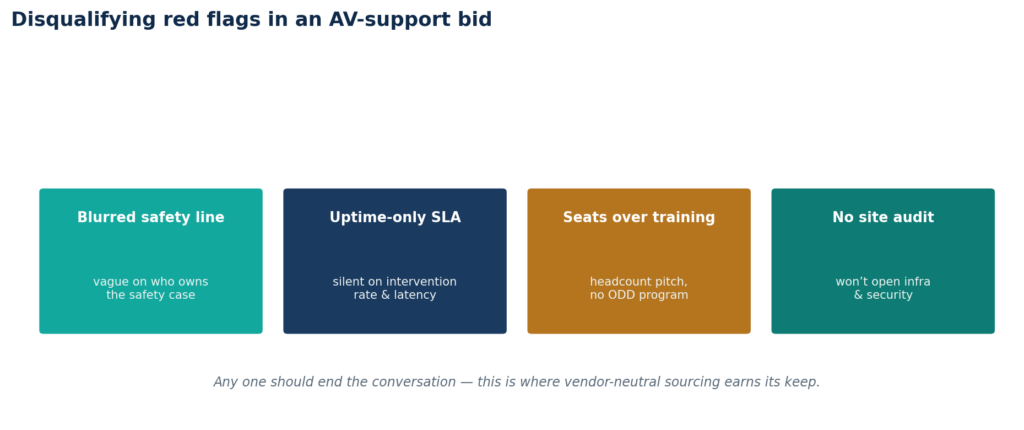
Figure 2 — Any one should end the conversation; this is where vendor-neutral sourcing earns its keep.

“Because we take no fee from the operator and aren’t tied to any provider, we can ask the questions an incumbent hopes you won’t: open your site, show us your intervention data, commit to the latency SLA in writing. The right partner welcomes that; the wrong one squirms — and the squirm is the signal,” said Ralf Ellspermann, CSO, PITON-Global.
What Are the Red Flags That Should End the Conversation?
A blurred safety line, an uptime-only SLA, a seats-over-training pitch, and refusal of a site and security audit — any one signals a vendor that will create liability rather than absorb operational load.
Some answers are disqualifying. If a bidder is vague about who owns the safety case, that ambiguity becomes your liability, which is why the remote-intervention hand-off needs explicit governance. If the SLA rests on uptime and is silent on intervention rate and latency, they are not measuring what protects you. If the pitch is headcount and rate with no real domain-training program, they will staff seats, not capability. And if they will not open their infrastructure and security to an audit, you cannot verify the part of the operation that is part of your safety case. Any single flag is a reason to move on — and it is exactly where a vendor-neutral advisor earns its keep by surfacing a wider field and asking on your behalf.
“Put the intervention-rate and latency SLAs in writing and watch how the bidder reacts. The serious partners sign; the rest suddenly want to talk about price again,” noted John Maczynski, CEO, PITON-Global.
Frequently Asked Questions
How Should You Weight an AV-Support Scorecard?
Lead with safety/compliance discipline and remote-operations capability, then infrastructure and security, domain training, KPI/SLA track record, and follow-the-sun scale. Price is a tiebreaker, not the lead.
What Must the RFP Require?
Explicit safety-case ownership (operator keeps it), SLAs on intervention rate/takeover latency/MTTR rather than uptime, a documented training and human-factors program, an integration plan, and agreement to a site and security audit before go-live.
What Are the Disqualifying Red Flags?
A blurred safety line, an uptime-only SLA, a seats-over-training pitch, and refusal of a site and security audit. Any one is a reason to walk away.
About PITON-Global
PITON-Global runs vendor-neutral selection for AV delivery support — building the scorecard, writing the RFP, and shortlisting from a network of 100-plus leading Philippine BPOs, 20 of them AI-first front-runners. Paid by the provider network and never by you, we ask the safety and SLA questions an incumbent hopes you won’t. Our leadership brings 6+ decades of combined global outsourcing experience and 25+ years in the Philippines; advisory is free and carries no obligation.