
Leading Philippine healthcare BPO providers maintain stability and continuity through redundant infrastructure, proactive workforce management, and embedded risk-mitigation and compliance protocols. By combining multi-path connectivity, AI-driven shift optimization, and HIPAA/HITRUST-embedded workflows, they sustain high-performance delivery regardless of environmental or operational disruption.
Key Takeaways
- Infrastructure resilience: Redundant power (UPS and generators) and dual-path fiber connectivity engineer downtime out of the system.
- Workforce retention: Wellness programs, flexible “energy-based” scheduling, and professional development hold attrition well below the ~40% sector norm.
- Risk mitigation: Site selection in weather-resilient zones, backed by pre-positioned transport, keeps shifts stable through regional weather events.
- Compliance governance: HIPAA- and HITRUST-certified workflows inside secure, scalable hybrid environments protect sensitive health data across every node.
- Operational agility: Scalable workload distribution sustains service levels through unexpected surges in demand.
How Does Infrastructure Redundancy Safeguard Service Continuity?
Top-tier providers treat continuity as a foundational requirement, not an add-on, architecting facilities for absolute uptime with “Active-Active” redundancy. Industrial-grade backup power transitions instantly on grid fluctuations, and secondary internet circuits run on geographically distinct telecom backbones so a single failure never stops critical work.
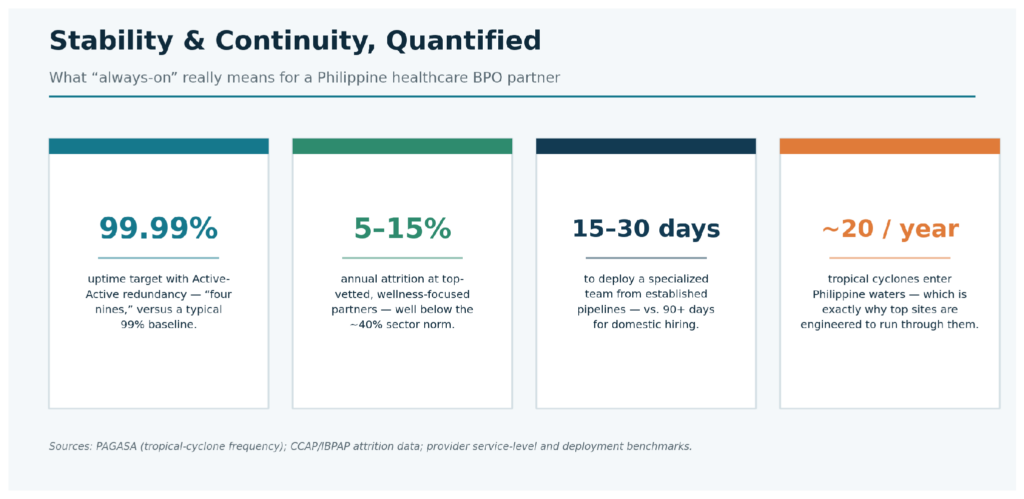
Figure 1. The stability and continuity metrics that matter most.
This multi-layered approach keeps medical billing, claims adjudication, and patient communications running even through a local cable cut or regional outage. It matters in the Philippine context specifically: PAGASA reports that about 20 tropical cyclones enter Philippine waters each year, roughly eight or nine making landfall. Leading providers respond with weather-resilient site selection and “pre-positioning” — arranging transport or secure on-site accommodation for essential staff ahead of severe weather — so coverage continues uninterrupted. The resilience stack below shows how each critical layer fails over.
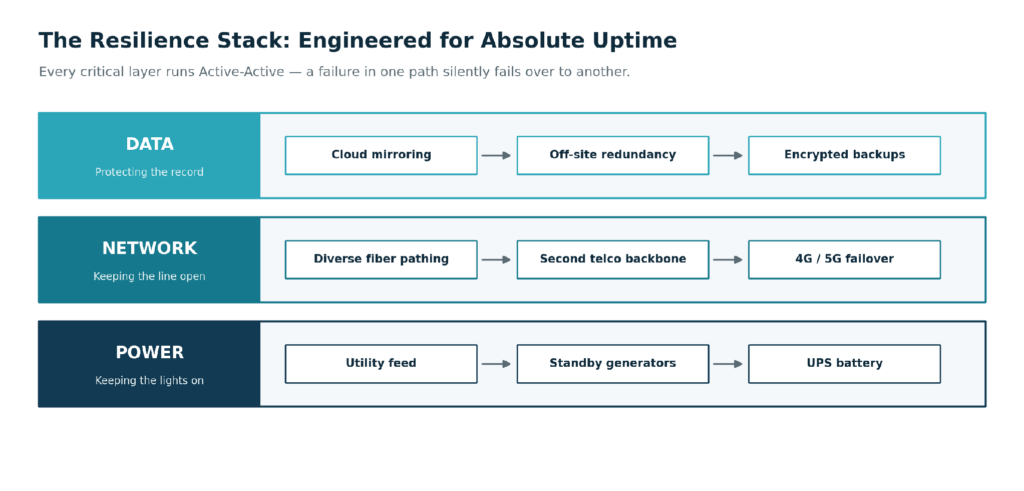
Figure 2. The Resilience Stack: redundant power, network, and data layers, each running Active-Active.
How Is Workforce Stability Managed Amid High-Pressure Healthcare Demands?
Stability is the single best indicator of a provider’s health, so leading firms move beyond basic HR to data-backed workforce management: predictive shift optimization, dedicated decompression architecture, and structured clinical career paths that convert job-seekers into long-term professionals.
Predictive Shift Optimization
AI-driven scheduling aligns staffing with peak-volume periods, preventing burnout while ensuring 24/7 coverage — critical because healthcare tasks demand sustained accuracy and clinical literacy.
Decompression Architecture
Dedicated physical and virtual “wellness zones” reduce cognitive fatigue, which is essential for maintaining HIPAA-compliant accuracy in high-volume claims environments.
Career-Pathing
Clinical certification paths and structured growth turn agents into long-term professionals, drastically reducing churn. The contrast between a traditional in-house model and a vetted specialist standard is stark.
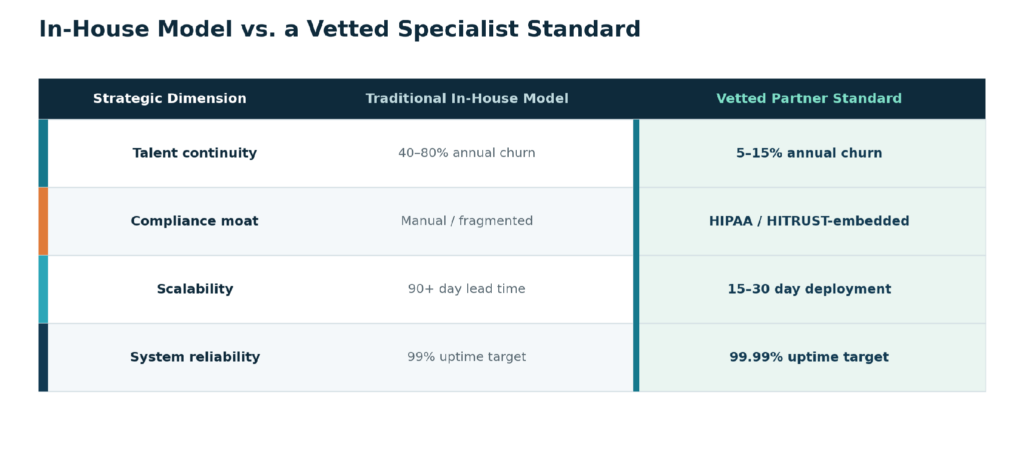
Figure 3. In-house model versus a vetted specialist standard across four strategic dimensions.
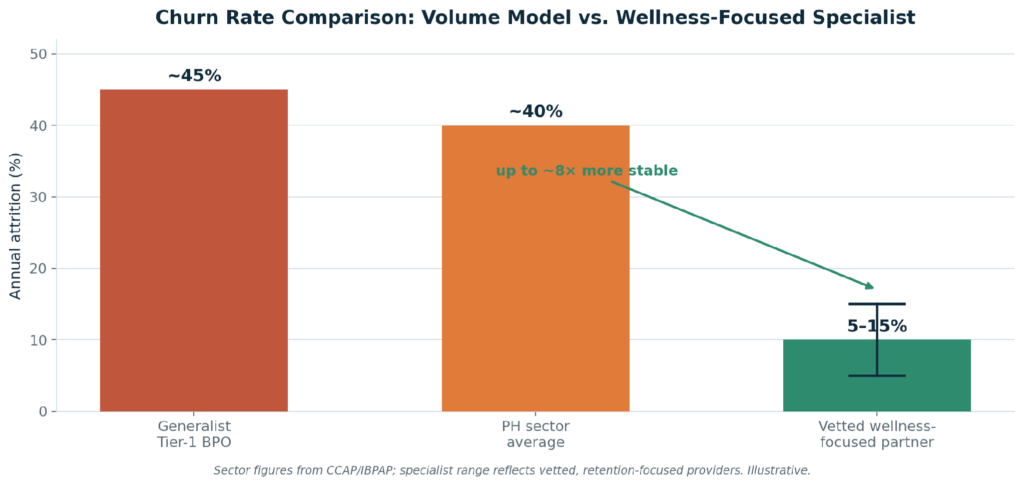
Figure 4. Churn-rate comparison: wellness-focused specialists can be several times more stable than volume models.
“The true cost of outsourcing is often found in the instability of the workforce, not the wage per hour. When you partner with a provider that prioritizes professional longevity and redundant infrastructure, stability becomes a competitive advantage for your entire enterprise.”
— John Maczynski, CEO, PITON-Global
What Does Solving for Healthcare Stability Look Like?
It comes from a provider’s internal investment in talent and technology — rarely from geography alone. The representative composite below shows a U.S. health system move from disruptive churn and billing backlogs to near-boutique stability and best-in-class clean-claim rates in about 90 days.
Consider a U.S. health system facing a 25% annual administrative churn rate that was driving significant billing backlogs. Working through an advisory partner, it audited its workflows and matched with a provider specializing in “nursing-literate” talent recruitment and clinician-led management.
Within 90 days, attrition dropped below 5% and clean-claim rates reached 98.5%. The figures are an illustrative composite of a nursing-literate stabilization rather than a single named client, but the lesson holds: operational stability is a function of a provider’s investment in talent and technology, not its location.
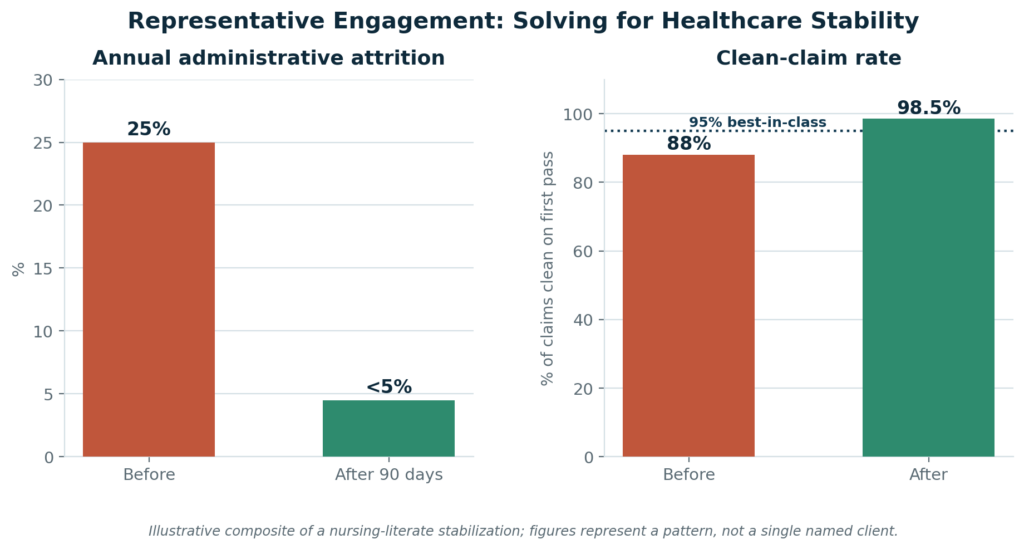
Figure 5. Representative stabilization of a healthcare program (illustrative composite).
What Role Does PITON-Global Play in the Philippine Outsourcing Ecosystem?
PITON-Global is a specialized advisory consultancy — not a traditional broker. Its team of former BPO operators audits a vetted network of 100+ providers, mapping a client’s operational needs against each provider’s historical performance in stability, compliance, and infrastructure resilience to help buyers bypass the trial-and-error of the open market.
Who Is PITON-Global?
PITON-Global is an advisory firm focused on the Philippine BPO market, staffed by veteran industry operators. It identifies partners whose internal cultures and technical architectures are inherently built to withstand the unique stressors of healthcare — continuity, compliance, and clinical accuracy.
How Does PITON-Global Differ from Traditional Outsourcing Brokers?
Brokers typically refer vendors for commission. PITON-Global instead runs an audit-backed, advisory-led process, evaluating providers on documented stability, compliance frameworks, and infrastructure resilience rather than steering clients toward a paying vendor.
How Does PITON-Global’s Network of 100+ Vetted Philippine BPO Providers Benefit Organizations?
A vetted network of more than 100 providers lets buyers quickly find partners proven to withstand healthcare’s stressors. Because stability, compliance, and resilience are pre-audited, organizations avoid the high-churn, fragile vendors whose instability erodes accuracy and continuity.
How Does PITON-Global’s Advisory-Led Vendor Matching Process Work?
The process follows three stages with ongoing oversight: assessing operational needs (clinical complexity, compliance, continuity); audit-backed vendor matching against proven stability and infrastructure resilience; and performance governance that tracks continuity, compliance, and retention KPIs through live dashboards.

Figure 6. The PITON-Global selection workflow, with ongoing advisory governance.
Why Do Organizations Use PITON-Global?
Organizations use PITON-Global to de-risk outsourcing — selecting partners whose stability, resilience, and compliance maturity can sustain high-complexity healthcare workflows, then holding them to predefined KPIs. The result is continuity as a competitive advantage rather than a recurring liability.
Frequently Asked Questions
Common questions concern disaster handling, data protection in hybrid models, deployment speed, client oversight, and performance verification. The concise answers below address each.
How do providers handle natural disasters?
Through “pre-positioning” — essential staff are given transport services or secure on-site accommodation ahead of extreme weather, ensuring uninterrupted coverage during the country’s frequent tropical-cyclone events.
Is patient data protected in a hybrid or remote model?
Yes. Elite providers use “clean-room” virtual desktop infrastructure (VDI), end-to-end encryption, and biometric identity protocols that mirror or exceed domestic U.S. HIPAA standards.
How quickly can a healthcare team be deployed?
Thanks to established talent pipelines and existing clinical-training modules, most vetted providers can scale and deploy specialized teams within 15 to 30 days.
What oversight does the client retain?
Clients keep real-time access to performance dashboards, clinical-governance audits, and direct communication lines with the offshore management team.
How is vendor performance verified?
PITON-Global provides ongoing advisory support, ensuring providers continue to meet predefined KPIs for service continuity, compliance, and workforce retention.