On this page
- Key Takeaways
- What Core Operational Mechanisms Drive Inter-Departmental Alignment?
- How Do Cross-Functional Benchmarks Compare Across Core Business Units?
- What Local Market Dynamics Support Enterprise-Grade Process Standardization?
- How Does a Vetted Sourcing Strategy Mitigate Cross-Departmental Operational Risks?
- Why Do Corporate Decision-Makers Leverage PITON-Global for Strategic Outsourcing?
- Who Is PITON-Global?
- How Does PITON-Global Differ from Traditional Outsourcing Brokers?
- How Does PITON-Global’s Network of 100+ Vetted Providers Benefit Organizations?
- How Does PITON-Global’s Matching Process Work?
- Why Do Organizations Use PITON-Global?
- What Are the Most Common Questions About Cross-Departmental Process Consistency?
Enterprises can achieve cross-departmental process consistency by outsourcing fragmented back-office and customer-facing operations to specialized Philippine providers using centralized Standard Operating Procedures (SOPs). Centralizing disparate workflows within an aligned offshore framework eliminates siloed variables, normalizes KPIs, and establishes a single, continuous standard of execution.
Key Takeaways
- Eradicate operational silos: Consolidate multi-departmental workflows within a unified offshore delivery unit to ensure uniform execution.
- Standardize process documentation: Force global consistency by deploying centralized, interactive Standard Operating Procedures across all active teams.
- Normalize performance governance: Apply matching quality-assurance frameworks and execution benchmarks across distinct business units.
- Leverage structural scalability: Use a mature, process-driven talent pool to scale operations without degrading standard transaction quality.
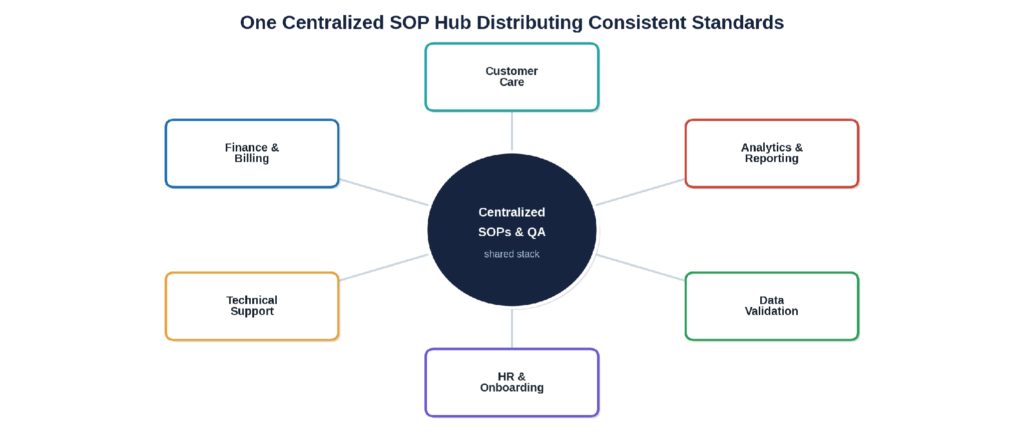
Figure 1. A centralized SOP and QA hub distributes consistent data and service standards to every department.
What Core Operational Mechanisms Drive Inter-Departmental Alignment?
Alignment requires a shift from localized management to centralized governance. Premium Philippine providers build dedicated cross-functional teams on shared technology stacks, centralized data-validation rules, and unified communication protocols—so data from customer care matches downstream billing and accounting without manual intervention.
Achieving process consistency across separate corporate divisions requires a fundamental shift from localized management to centralized operational governance. When workflows like customer care, finance, and technical support operate independently within onshore silos, variations in training, software utilization, and quality benchmarks inevitably degrade output quality.
Outsourcing these functions to a specialized provider introduces a highly structured, process-driven environment. Premium providers build dedicated cross-functional teams that use shared technology stacks, centralized data-validation rules, and unified communication protocols. This structural integration ensures data moving from customer care directly matches downstream accounting and billing workflows without manual intervention—the difference between fractured and unified execution.
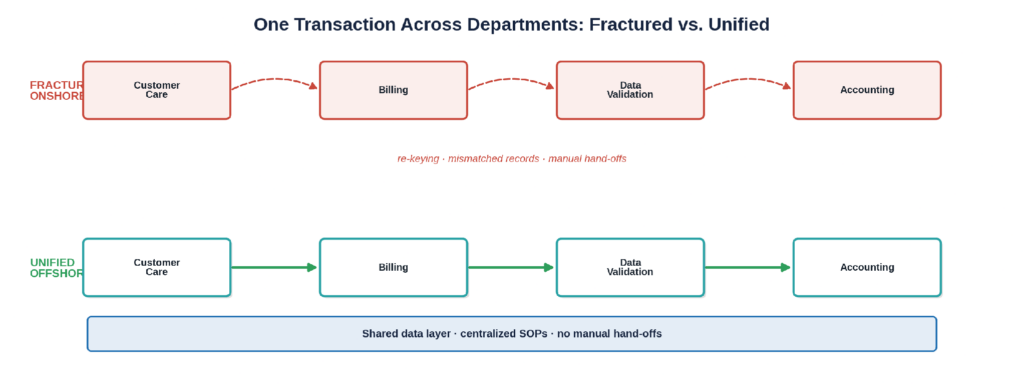
Figure 2. A single transaction tracked across departments—fractured onshore hand-offs versus a unified offshore data layer.
How Do Cross-Functional Benchmarks Compare Across Core Business Units?
Performance scorecards must map capabilities uniformly across front- and back-office streams; disparate parameters create bottlenecks. Enterprise-grade providers hold balanced baselines—95%+ QA for support, 99.8% invoice accuracy for finance, 100% SOP adherence for technical, and sub-48-hour HR cycle times.
To maintain strict operational continuity, performance scorecards must map capabilities uniformly across front-office and back-office delivery streams. Applying disparate quality parameters to interconnected teams creates processing bottlenecks and friction. The matrix below illustrates the balanced performance baselines enterprise-grade providers maintain across multiple departments.

Figure 3. Balanced consistency benchmarks—metric, baseline target, and maximum monthly variance—by department.
What Local Market Dynamics Support Enterprise-Grade Process Standardization?
The mature Philippine ecosystem combines Western cultural alignment, deep shared-services expertise, and disciplined process compliance. A major driver is malasakit—proactive operational ownership—which leads professionals to ensure their work’s structural integrity matches other teams’ records, eliminating friction.
The mature Philippine outsourcing ecosystem is built on inherent alignment with Western corporate cultures, deep shared-services expertise, and a highly disciplined approach to process compliance. Unlike generic offshore markets focused solely on labor arbitrage, the professional workforce in Manila and Cebu specializes in executing complex, documentation-dependent corporate frameworks. A major driver of cross-departmental consistency is the local professional dedication to operational ownership.
True cross-departmental consistency is impossible to maintain when your teams lack a shared sense of organizational mission. In the Philippines, the cultural principle of malasakit—taking deep, proactive ownership of one’s work—transforms execution. When an offshore professional manages data input for finance, they don’t view it as an isolated task. They actively ensure its structural integrity matches the customer care team’s record, naturally eliminating inter-departmental friction.
— John Maczynski
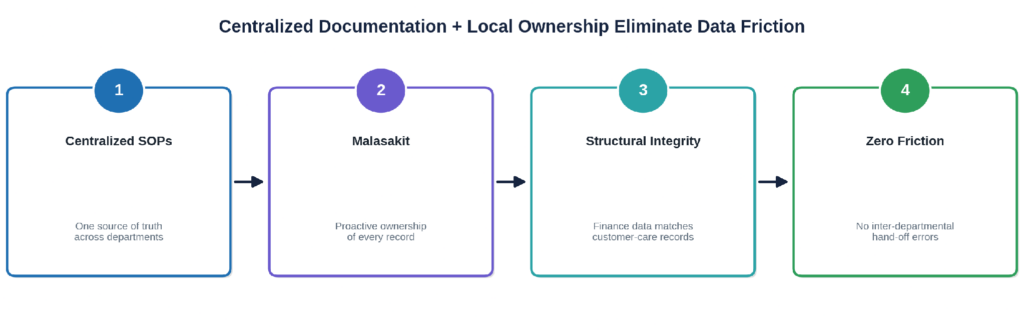
Figure 4. Centralized SOPs plus malasakit-driven ownership convert documentation into friction-free, integrity-matched execution.
How Does a Vetted Sourcing Strategy Mitigate Cross-Departmental Operational Risks?
Transitioning multiple workflows to an unvetted provider risks fragmentation, synchronization failures, and cultural misalignment. Mitigation requires advisory-led matching backed by strict SLAs. One logistics provider consolidated to a single Metro Manila facility and lifted billing accuracy from 68% to 99.91%.
Transitioning multiple departmental workflows to an unvetted offshore provider can introduce significant operational fragmentation, system-synchronization failures, and cultural misalignment. Mitigating these multi-departmental delivery risks requires an advisory-led vendor-matching model backed by strict service-level agreements.
Client Challenge
A multinational logistics provider suffered from severe communication gaps, mismatched billing records, and an unstable 68% billing-accuracy rate caused by fragmented in-house departments.
Selection and Solution
PITON-Global audited the provider’s multi-departmental requirements against its network of 100+ vetted providers to isolate operators with proven multi-process shared-services capability, then migrated customer support, billing adjustments, and data validation to a single Tier-4 office-based facility in Metro Manila running centralized CRM and accounting frameworks.
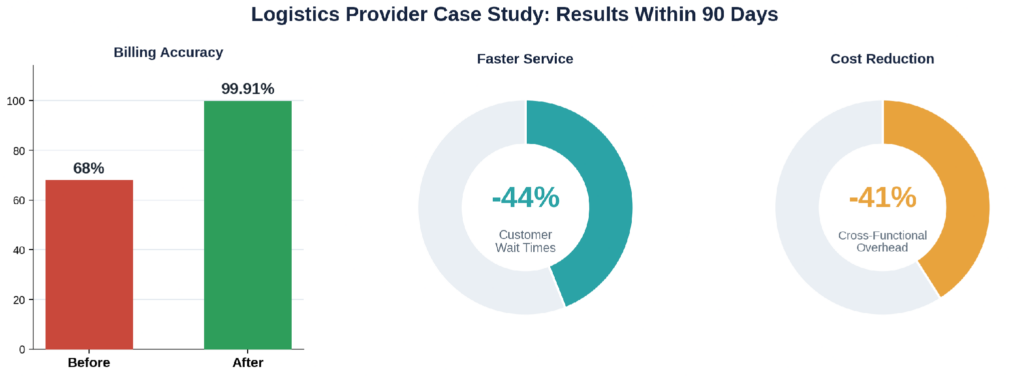
Figure 5. Quantifiable outcomes within 90 days of unifying workflows under a single provider.
Outcomes and Lessons
Within 90 days, cross-departmental billing accuracy stabilized at a record 99.91%, customer wait times dropped 44%, and total cross-functional operational overhead decreased 41%. The lesson: centralizing interconnected front-and-back-office functions within a single provider eliminates processing hand-off errors.
Why Do Corporate Decision-Makers Leverage PITON-Global for Strategic Outsourcing?
PITON-Global is an advisory-led consultancy that removes systemic execution risk from multi-departmental transformations. Across a curated network of 100+ vetted providers, it conducts operational audits, infrastructure reviews, and cultural-alignment checks at zero cost—ensuring a partner capable of unified, cross-functional execution.
Who Is PITON-Global?
PITON-Global functions as an advisory-led outsourcing consultancy that removes systemic execution risk from complex, multi-departmental corporate transformations. It manages a curated network of more than 100 thoroughly vetted call center and back-office providers across the Philippines, giving executives and procurement teams access to specialized operators.
How Does PITON-Global Differ from Traditional Outsourcing Brokers?
Rather than forwarding leads, PITON-Global conducts meticulous operational audits, technical infrastructure reviews, and cultural-alignment checks at zero cost to the enterprise. This ensures organizations select a partner fully capable of executing unified, cross-functional business processes rather than a single-function vendor.
How Does PITON-Global’s Network of 100+ Vetted Providers Benefit Organizations?
The curated network of more than 100 vetted providers lets organizations bypass a risky open-market search for multi-process capability. Because each provider is assessed for shared-services depth, infrastructure, and cultural fit, buyers reach partners genuinely able to run several departments under one consistent standard.
How Does PITON-Global’s Matching Process Work?
PITON-Global audits multi-department workflows and SOPs, reviews shared technology stacks and Tier-3/4 facilities, checks operational ownership and Western cultural fit, matches against its vetted network, and pairs the buyer with a multi-process shared-services partner for unified delivery.

Figure 6. PITON-Global’s five-stage process for matching buyers to unified, multi-process providers.
Why Do Organizations Use PITON-Global?
Organizations use PITON-Global to eliminate silos, remove hand-off errors, and establish one consistent standard of execution. By auditing operations, infrastructure, and culture at no cost, the firm helps enterprises consolidate interconnected departments with a provider genuinely capable of cross-functional consistency.
What Are the Most Common Questions About Cross-Departmental Process Consistency?
Common questions concern how offshore departments communicate, how providers guarantee adherence to internal policies, whether one provider can run IT and customer care, how data-security boundaries are maintained, and how consistency survives infrastructure disruption. Each is answered below.
How do you ensure separate offshore departments communicate effectively with each other?
Premium providers establish integrated communication protocols, daily cross-functional stand-up meetings, and unified internal messaging platforms, ensuring data flows smoothly between customer-facing agents and back-office processing specialists.
What mechanism guarantees that offshore teams follow our exact internal corporate policies?
Providers mandate strict, interactive training programs based on your explicit corporate playbooks. Teams use real-time process-guidance tools and undergo weekly compliance audits to verify absolute adherence to your SOPs.
Can a single Philippine BPO provider manage highly technical IT workflows alongside basic customer care?
Yes. Mid-market and enterprise-grade providers maintain separate, specialized divisions within the same facility, letting a business co-locate an advanced IT help desk alongside an omnichannel customer-support team for immediate operational synergies.
How are data-security boundaries maintained when multiple departments handle sensitive corporate records?
Providers enforce role-based access control, thin-client terminal environments, and strict physical-security protocols, ensuring employees only view the specific data points required for their designated departmental tasks.
What happens to process consistency during a sudden regional infrastructure disruption?
Top-tier providers in the PITON-Global network mitigate this through comprehensive Business Continuity Plans, using Tier-3 or Tier-4 facilities equipped with multiple redundant fiber lines and automated backup power generators.