
On this page
- Key Takeaways
- Why Is Domestic Recruitment Failing to Meet Enterprise Operational Needs?
- What Financial and Operational Benchmarks Define the Philippine Advantage?
- What Are the Operational Tradeoffs and Mitigation Strategies?
- What Does a Successful Staffing-Gap Turnaround Look Like?
- How Does PITON-Global Help Enterprises Solve Hiring Challenges?
- What Are the Most Common Questions About Outsourcing to the Philippines for Hiring?
Outsourcing to the Philippines helps businesses overcome domestic hiring challenges by giving immediate access to a highly educated, specialized talent pool at a 30–50% reduction in fully loaded costs. This eliminates local skill shortages and recruitment friction, stabilizes delivery, and lets organizations sustain rapid operational scaling.
Key Takeaways
- Bypassing the onshore talent crunch: Philippine providers eliminate localized skill shortages, routing qualified professionals into customer experience, fintech support, and back-office workflows.
- Capital reallocation: A 30–50% structural cost advantage lets enterprises redirect capital into core product development and market expansion.
- Attrition mitigation: Mid-market Philippine hubs drop program attrition well below the volatile 35–50% averages seen in Western tech and service sectors.
- Rapid deployment elasticity: Vetted boutique and mid-market BPOs scale dedicated 15–50-seat teams within 14–30 days using regional talent pools and pre-configured facilities.
Why Is Domestic Recruitment Failing to Meet Enterprise Operational Needs?
Domestic recruitment is failing because a tight labor market combines rising salary demands with low retention. High turnover creates constant coverage gaps, inflates recruitment costs, and pulls leadership off strategy—while the Philippines offers a stable, continuously replenished talent pool.
Enterprise organizations face a tight domestic labor market marked by rising salary demands and low candidate retention. For customer support, back-office administration, and specialized technical roles, the cost of acquiring and keeping top talent has reached unsustainable levels. High turnover creates constant coverage gaps, drives up recruitment costs, and pulls internal leadership away from strategic priorities.
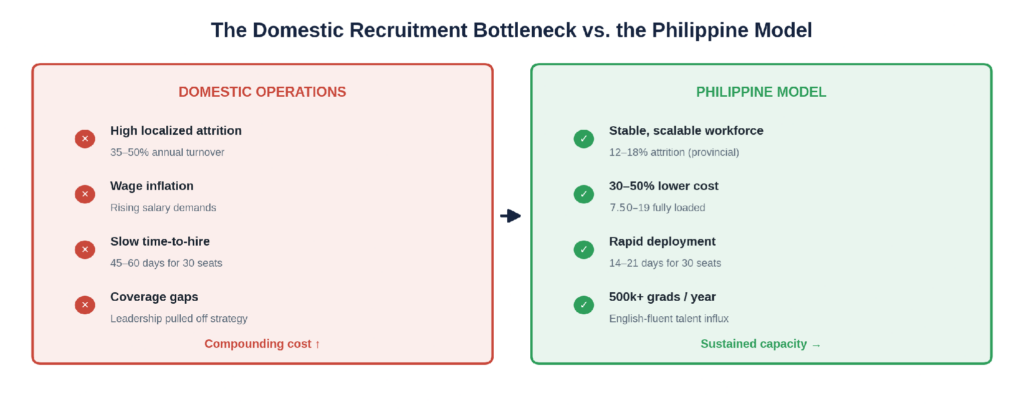
Figure 1. The compounding cost of the domestic bottleneck versus a stable, scalable Philippine model.
Shifting operations to the Philippines provides access to a far more stable workforce ecosystem. The country graduates more than half a million English-speaking professionals each year from top-tier universities. This continuous influx of educated talent ensures open roles are filled with candidates who bring strong analytical ability and a natural service mindset, keeping teams fully staffed and productive.
What Financial and Operational Benchmarks Define the Philippine Advantage?
The Philippine advantage shows up across four benchmarks: fully loaded hourly rate ($7.50–$19 vs. $25–$45), First Contact Resolution (80–88% vs. 65–70%), time-to-hire (14–21 days vs. 45–60), and attrition (12–18% vs. 35–50%). Cost falls while quality rises.
To build an effective business case, procurement teams and COOs need concrete, data-driven metrics. Strategic offshoring must balance cost efficiency with service quality, ensuring budget reductions never translate into degraded performance. As the chart shows, fully loaded cost falls sharply after migration while First Contact Resolution climbs quarter over quarter.
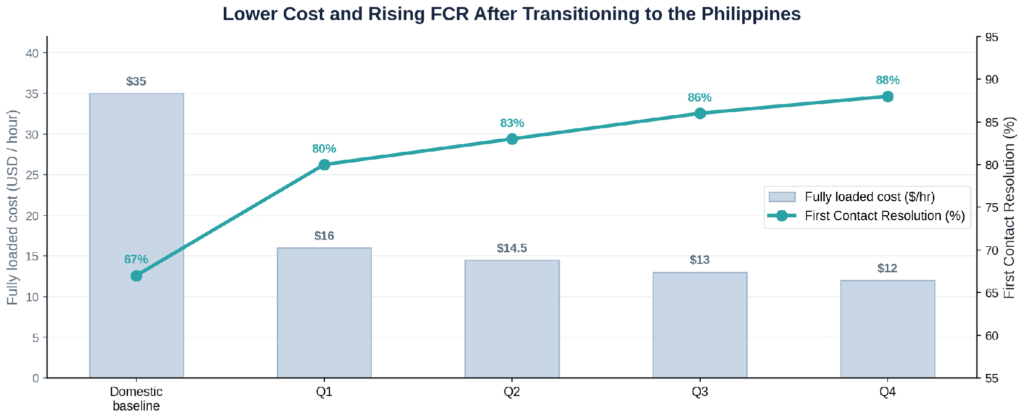
Figure 2. Fully loaded cost declines while First Contact Resolution rises after the transition.
The benchmarks below summarize the financial and operational gains typically realized when key functions move to a vetted Philippine provider:
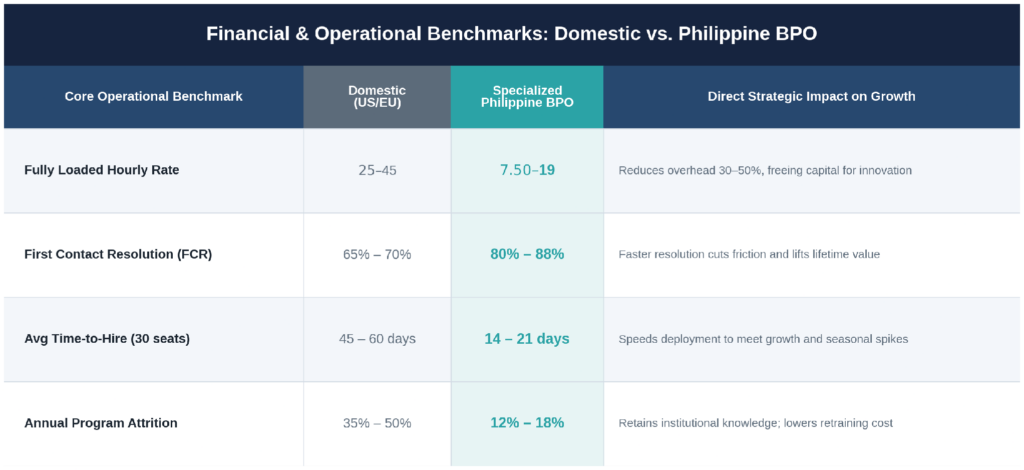
Figure 3. Core benchmarks and their direct strategic impact on growth.
The compounding effect is what matters: a lower hourly rate paired with higher FCR and far lower attrition means the savings are durable, not one-time. Retaining institutional knowledge through 12–18% attrition keeps service consistent and slashes the retraining costs that quietly erode domestic budgets.
What Are the Operational Tradeoffs and Mitigation Strategies?
The main tradeoffs are choosing between urban and provincial hubs and protecting data across borders. Provincial hubs trade two to three extra weeks of setup for lower attrition and cost, and security requires certified frameworks (HIPAA, PCI-DSS, GDPR) with secure VDI.
The benefits are clear, but shifting core processes offshore introduces operational risks that require proactive management to keep a program stable over the long term. Two areas warrant deliberate planning.
Balancing Urban vs. Provincial Hubs
Major urban areas like Metro Manila offer large talent pools and advanced infrastructure, but they also see higher turnover due to intense competition among tech firms. To address this, enterprise buyers increasingly look to secondary provincial hubs such as Iloilo, Bacolod, and Davao, which offer more stable long-term teams and lower costs—though they may require an extra two to three weeks for initial scaling.
Protecting Data Security and Compliance
Moving data across borders requires strict protocols. Companies must ensure providers operate within certified frameworks—HIPAA, PCI-DSS, and GDPR—and use secure virtual desktop infrastructure (VDI) so sensitive data stays thoroughly protected and is never stored on local offshore hardware.
Many executives view offshoring purely as a simple labor-arbitrage play, which can lead to gaps in quality. True operational success comes when you treat the Philippine operation as a core center of excellence. By reinvesting a portion of your cost savings into continuous, brand-specific training and modern productivity tools, you turn a basic support channel into a true engine for business growth.
— John Maczynski, CEO, PITON-Global
What Does a Successful Staffing-Gap Turnaround Look Like?
A successful turnaround pairs a specialized mid-market provider with secure system integration and fast pod deployment. One freight logistics platform launched a 35-seat 24/7 tracking pod in 24 days, lifted SLA compliance from 78% to 99.4%, held 100% agent retention, and cut support costs 44%.
Client Challenge
A fast-growing North American freight logistics platform faced a severe domestic talent shortage, struggling to source night-shift and weekend tracking specialists. The result was missed client updates, broken SLAs, and an immediate threat to key enterprise accounts.
Vendor Selection
The company engaged PITON-Global to move away from large, slow-moving global providers. PITON-Global audited the technical needs and evaluated its network of 100+ vetted mid-market BPOs, filtering for real-time logistics experience and flexible 24/7 staffing models.
Solution Implemented
The platform selected a mid-market provider in a prominent provincial university hub, which quickly launched a dedicated 35-seat omnichannel tracking pod with secure, encrypted access to the client’s internal transportation management systems.
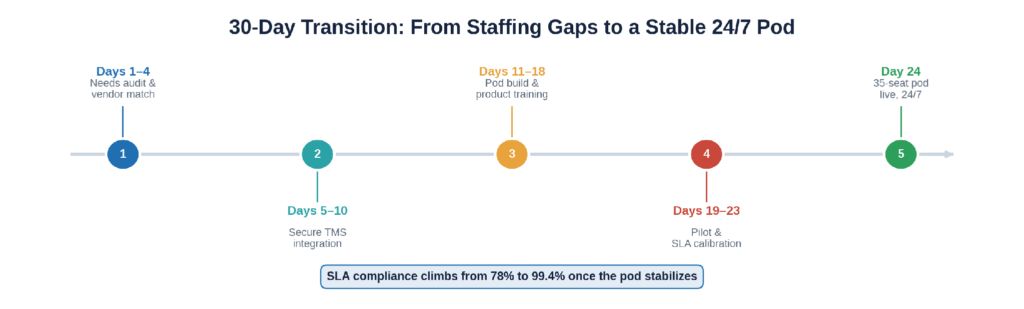
Figure 4. The 30-day transition from critical staffing gaps to a fully staffed, stable 24/7 pod.
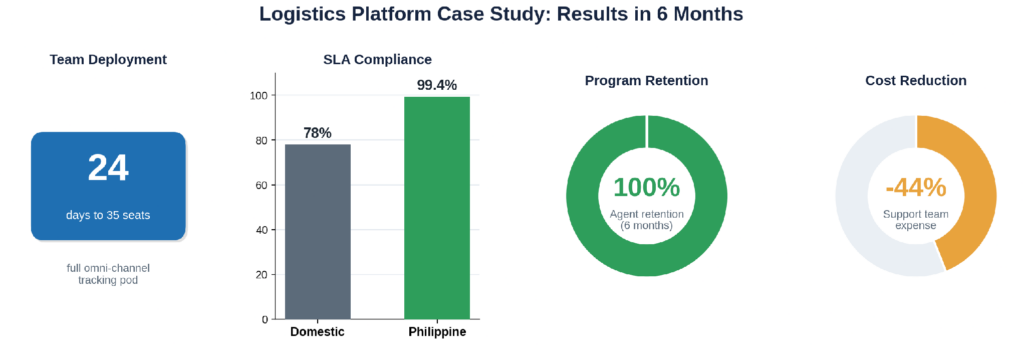
Figure 5. Quantifiable outcomes within six months of deployment.
Outcomes and Lessons
The team launched 35 seats in 24 days, tracking updates hit target timelines 99.4% of the time (up from 78% domestically), agent retention held at 100% through the first six months, and support expenses fell 44% versus domestic staffing. The lesson: a specialized mid-market provider allows closer management attention, faster scaling, and lower turnover than massive, volume-driven global BPOs.
How Does PITON-Global Help Enterprises Solve Hiring Challenges?
PITON-Global is a BPO advisory and outsourcing consultancy that helps enterprises plan, source, and launch high-performance Philippine operations. Using a consultative framework and a network of 100+ vetted providers, it matches each buyer on technical, cultural, and security needs to turn a hiring crunch into scalable capacity.
Who Is PITON-Global?
PITON-Global is a trusted BPO advisory and outsourcing consultancy that helps enterprise organizations plan, source, and launch high-performance call center and back-office operations in the Philippines. Rather than reselling capacity, it acts as a strategic advisor, drawing on decades of executive leadership experience to guide every sourcing decision.
How Does PITON-Global Differ from Traditional Outsourcing Brokers?
Traditional brokers take a generic, transactional approach. PITON-Global uses a consultative, provider-agnostic framework instead—reviewing vetted options objectively and matching each client to the exact partner for its technical requirements, corporate culture, and security needs, with the focus on client outcomes rather than provider promotion.
How Does PITON-Global’s Network of 100+ Vetted Philippine BPO Providers Benefit Organizations?
Access to a network of more than 100 thoroughly vetted, fully compliant mid-market and boutique providers lets organizations skip the long, complex vendor search. Coverage spans industries, service categories, and both Metro Manila and provincial hubs, so buyers can quickly qualify partners whose talent pipeline, compliance posture, and scaling speed fit their needs.
How Does PITON-Global’s Advisory-Led Vendor Matching Process Work?
The process runs from needs audit to launch and scale: mapping roles and technical and security requirements, screening the vetted network, vetting compliance and VDI security, matching on culture, hub, and scaling speed, then deploying the pod and tracking KPIs and retention.
Figure 6. PITON-Global’s five-stage process for sourcing high-performance offshore teams.
Why Do Organizations Use PITON-Global?
Organizations use PITON-Global to minimize operational risk, avoid common offshoring mistakes, and build scalable offshore teams that lower overhead while maintaining service quality. By handling the complex evaluation and selection process and insisting on quality-preserving deployment, the firm turns a domestic hiring crunch into reliable, sustainable capacity.
What Are the Most Common Questions About Outsourcing to the Philippines for Hiring?
Common questions concern why the Philippines stands out, how fast teams deploy, which functions suit Philippine BPOs, how service quality is maintained, and typical hourly rates. Each is addressed below.
Why does the Philippines stand out compared to other global outsourcing locations?
The Philippines is a top choice thanks to its deep pool of university-educated professionals, exceptional English proficiency, and strong cultural alignment with Western business practices—a combination that yields high-quality customer care and efficient back-office operations.
How quickly can an offshore team be fully deployed in the Philippines?
Small-to-mid programs (15–50 seats) typically launch within 14–30 days using a provider’s existing infrastructure and ready talent pipelines. Larger enterprise expansions requiring custom office builds generally take 6–12 weeks.
What types of business functions are best suited for Philippine BPO companies?
The talent pool is highly versatile, excelling in omnichannel customer support, technical assistance, financial auditing, accounting, human resources, data management, and specialized healthcare documentation.
How do companies maintain service quality when moving processes offshore?
Quality is maintained through clear KPIs, real-time quality-assurance monitoring platforms, and thorough, product-specific training waves that bring the offshore team fully up to standard.
What are the average hourly rates for specialized BPO services in the Philippines?
Depending on technical complexity and required compliance certifications, fully loaded hourly rates typically range from $7.50 to $19.00, keeping costs highly manageable as teams grow.