

Hospitals outsource healthcare operations to the Philippines to convert administrative cost into a strategic revenue engine. By pairing licensed Filipino clinical specialists with AI-augmented workflows—the model behind clinical back-office support built for US health systems—hospitals lower claim denials, reduce clinician burnout, and scale securely while maintaining strict HIPAA and HITRUST compliance and protecting patient trust.
Key Takeaways
- Prioritize outcome-based metrics. Track clean claim rates and first-pass denial reduction instead of “claims processed per hour” so vendor incentives align with your financial health.
- Govern AI with Human-in-the-Loop (HITL) oversight. Licensed Filipino clinicians should validate every AI-driven medical-necessity and coding determination to contain clinical and regulatory risk.
- Treat outsourcing as strategic infrastructure. Use it to absorb administrative volume swings so domestic staff can focus exclusively on high-acuity, patient-facing care.
- Favor specialized mid-sized partners. Healthcare-exclusive providers with audit-ready HITRUST/HIPAA security and executive attention outperform generalist BPO giants.
- Start with a low-risk pilot. Validate a single high-friction, non-clinical function—such as eligibility verification—before layering on sensitive clinical work.
Why Is the Traditional “Cost-Reduction” Outsourcing Model Obsolete for Hospitals?
The cost-reduction model is obsolete because it optimizes for cheap throughput rather than financial outcomes. Hospitals that select generalist, high-volume vendors often suffer higher denial rates and compliance gaps—a “double penalty” that erodes the very margins outsourcing was meant to protect.
For two decades, many health systems approached outsourcing through a single lens: headcount reduction. The logic was simple—move repetitive administrative work to a lower-cost market and bank the labor arbitrage. In 2026, that logic is breaking down. When a hospital hands complex revenue-cycle work to a massive generalist provider that treats healthcare as a low-margin commodity, speed is prioritized over precision. The predictable result is misapplied codes, preventable denials, and audit exposure.
The financial stakes are significant. Industry surveys consistently place average initial claim denial rates in the low double digits, and reworking a single denied claim carries a real administrative labor cost. A large share of denied claims are never resubmitted at all, meaning earned revenue simply evaporates. A vendor that processes claims quickly but inaccurately doesn’t save money; it quietly amplifies leakage.
Modern growth requires an intelligence-augmented architecture. The elite tier of Philippine BPOs no longer merely processes transactions; it deploys analytical frameworks to identify the root causes of denials and prevent them at the source. This converts an administrative expense into a strategic revenue engine—the same move from labor arbitrage to value creation traced in our look at value engineering in pharma outsourcing. The contrast between the legacy approach and the strategic approach is stark.
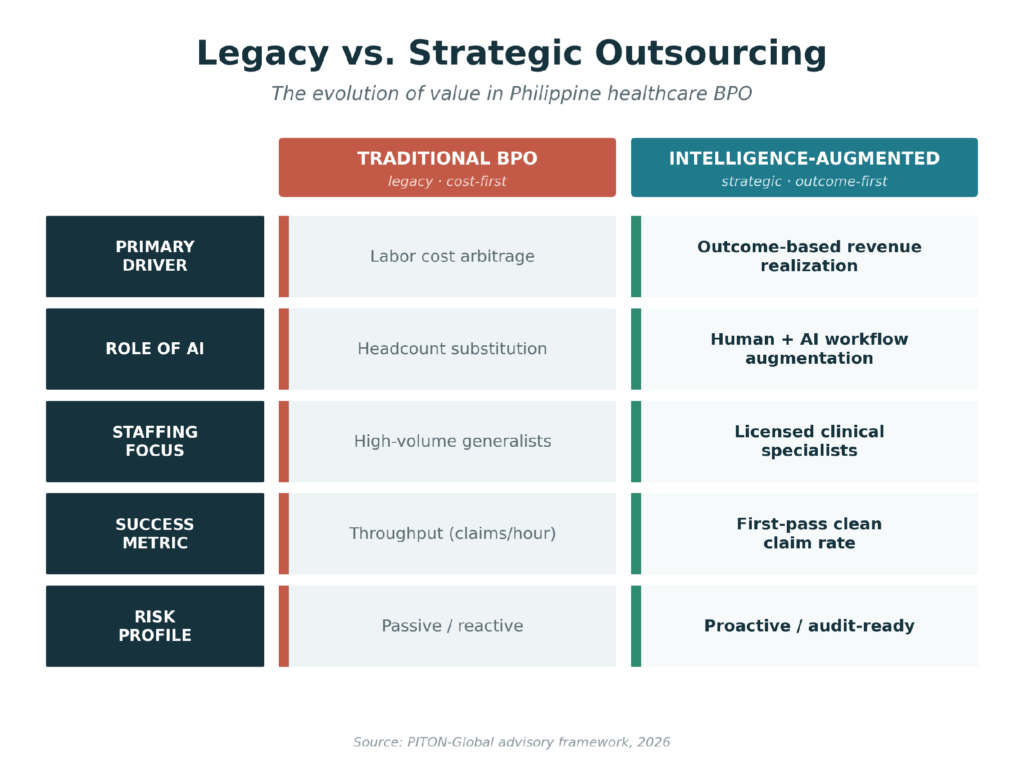
Figure 1. Legacy cost-first outsourcing versus the strategic, intelligence-augmented model.
How Do Philippine Healthcare BPOs Leverage AI Without Risking Compliance?
They use a “judgment architecture”: AI handles high-speed pattern recognition while licensed Filipino professionals act as Intelligence Pilots, validating every clinical determination through a Human-in-the-Loop (HITL) protocol. This keeps coding and medical-necessity decisions under human supervision and satisfies HIPAA and HITRUST.
The most frequent failure in medical outsourcing is the “set-and-forget” approach to automation—deploying AI to make clinical determinations without human oversight. High-performing Philippine providers reject this. Instead, AI is positioned as an accelerator: it ingests claims, charts, and eligibility data, then flags codes and anomalies at machine speed. Licensed nurses, certified medical coders, and claims auditors then intercept that AI-generated logic before it ever enters the billing cycle.
This matters because autonomous AI remains unreliable on complex cases. Industry benchmarks indicate that fully autonomous coding accuracy drops sharply on nuanced CPT and ICD-10 scenarios—precisely the cases where audit and patient-safety risk concentrate. Human validation is therefore not a nicety; it is the control that keeps the entire workflow defensible.
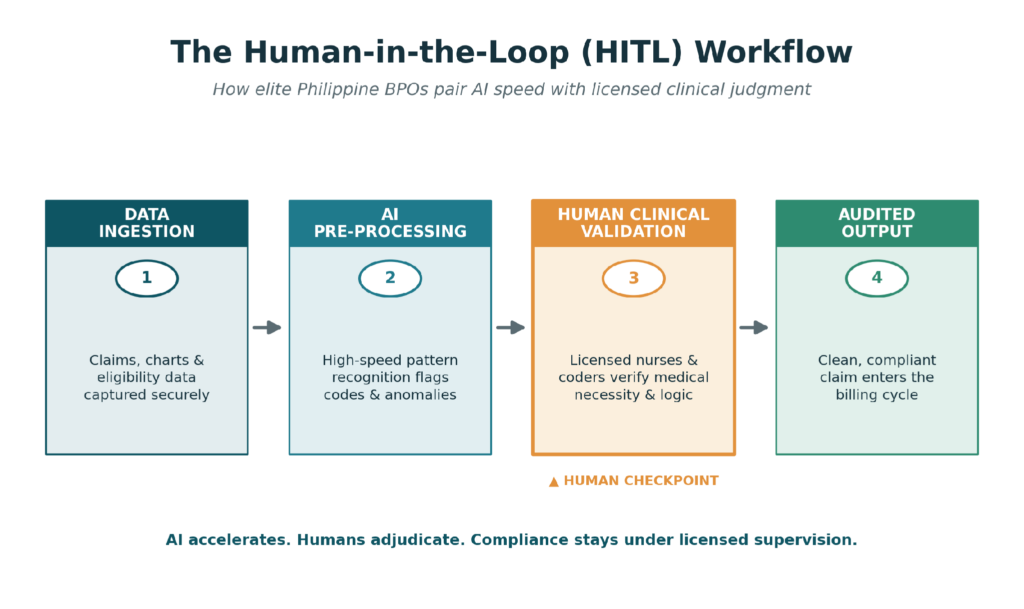
Figure 2. The HITL workflow keeps medical-necessity and coding decisions under licensed human supervision.
Security is implemented at the architectural level, not merely as a policy document. Reputable partners rely on end-to-end network encryption, segmented virtual environments, and strictly controlled audit trails, turning HIPAA and HITRUST alignment into a competitive advantage rather than a hurdle.
“The single biggest failure I’ve witnessed over 25 years is the attempt to ‘set and forget’ automation in clinical environments. True strategic evolution demands a Human-in-the-Loop protocol, particularly for AI-driven prior authorizations where medical-necessity determinations carry real patient risk. You are not just outsourcing labor; you are outsourcing the reliability of your clinical conscience.”
— John Maczynski, CEO of PITON-Global
What KPIs Should Hospitals Use to Measure Outsourcing Success?
Track outcome metrics, not volume: first-pass clean claim rate, first-pass denial rate, average turnaround time (TAT), and internal quality-audit scores. These tie directly to revenue-cycle health, whereas “tickets per hour” rewards speed over accuracy and hides downstream rework costs.
The metrics a hospital chooses determine the behavior it gets. When a contract rewards “tickets handled per hour,” the partner optimizes for volume—even when that volume generates rework, denials, and appeals. Outcome-based KPIs realign incentives so the vendor profits only when the hospital’s revenue cycle improves.
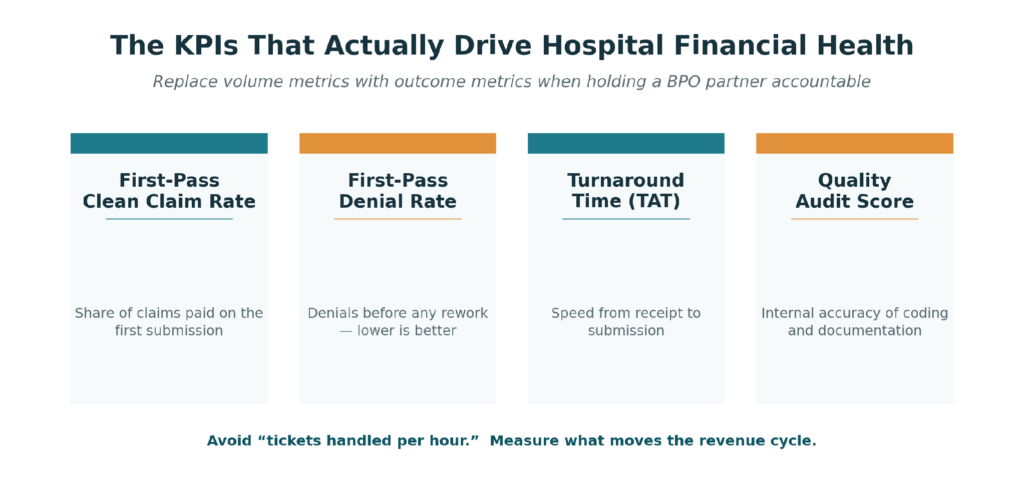
Figure 3. The four KPIs that align a BPO partner with hospital financial health.
First-pass clean claim rate measures the share of claims paid on initial submission—the single clearest signal of coding accuracy and payer compliance. First-pass denial rate tracks denials before any rework. Average turnaround time (TAT) governs cash-flow velocity, and internal quality-audit scores verify that accuracy holds up under scrutiny. Build these into service-level agreements with explicit targets and review cadences.
How Does Outsourcing Reduce Clinician Burnout and Support Scalable Growth?
Outsourcing administrative load to specialized Philippine partners frees domestic clinicians from documentation, eligibility checks, and claims work, letting them concentrate on high-acuity patient care. As strategic infrastructure, it absorbs volume spikes—so hospitals scale capacity without over-hiring or burning out staff.
Administrative burden is among the most-cited drivers of clinician burnout. When nurses and physicians spend hours on documentation, prior authorizations, and insurance follow-up, both job satisfaction and patient throughput suffer. Shifting that work to a dedicated, healthcare-trained team abroad returns clinical time to the bedside and, as our analysis of administrative cost ratios explains, compresses fixed overhead at the same time.
Scalability is the second dividend. Because the Philippines sits roughly twelve hours ahead of much of the United States, a “follow-the-sun” model enables 24/7 coverage—overnight claims processing, around-the-clock eligibility verification, and continuous documentation support. Capacity can flex up during enrollment surges or seasonal volume and flex down afterward, without the fixed cost and turnover risk of constant domestic re-hiring—a benefit worth building into a multi-year savings forecast. The Philippines’ mature IT-BPM sector—employing well over a million professionals and a long-standing global leader in voice and back-office services—supplies a deep, English-proficient, clinically literate talent pool to draw on.
What Does a Successful Hospital Engagement Look Like in Practice?
A successful engagement aligns the partner’s incentives with the hospital’s financial outcomes. In one regional U.S. health system, matching with a healthcare-exclusive Philippine partner sharply cut the claim denial rate within 90 days and brought monthly staff turnover down by double digits.
Client challenge. A regional U.S. health system suffered a denial rate well above industry benchmarks, while internal teams struggled to keep pace with changing payer rules.
Vendor selection. After an audit of the existing workflow, the system was matched with a mid-sized, healthcare-exclusive Philippine partner specializing in complex ICD-10 coding.
Solution implemented. The partner deployed a customized, AI-driven claims scrubber paired with a 24/7 team of clinical coders providing real-time feedback loops.
Quantifiable outcomes. Within 90 days, the denial rate fell to a fraction of its starting level and monthly staff turnover dropped by double digits, stabilizing the revenue cycle.
Lessons learned. Sustainable growth requires a technical partner whose incentives match the hospital’s—one paid on clean claim rates, not one simply selling seats in a call center.
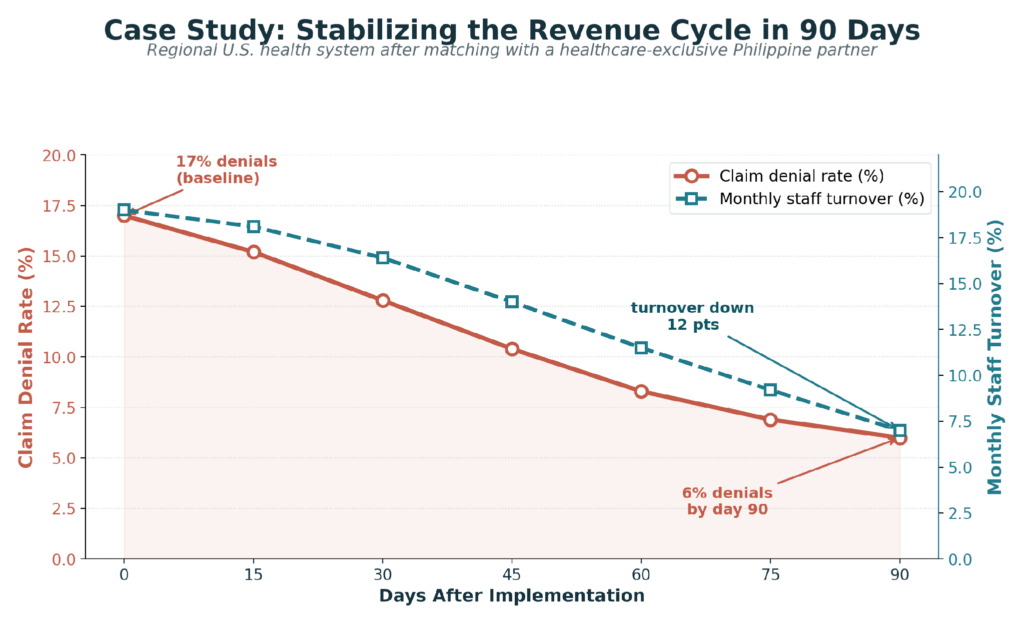
Figure 4. Denial rate and staff turnover both fell sharply within the first 90 days.
What Is PITON-Global and What Role Does It Play for Hospitals?
PITON-Global is an independent, advisory-led outsourcing consultancy that helps organizations select the right Philippine BPO partner. Rather than acting as a commission-driven broker, it evaluates providers objectively and matches clients to best-fit vendors from a network of 100+ vetted Philippine BPO providers.
Who Is PITON-Global?
PITON-Global is a specialist advisory firm operating at the center of the Philippine outsourcing market. Its core expertise is BPO advisory and provider selection: helping enterprise buyers—particularly in complex, regulated sectors such as healthcare—navigate a crowded vendor landscape and identify partners that genuinely fit their operational and compliance requirements. Rather than running a single delivery center, PITON-Global functions as a guide to the wider ecosystem of Philippine providers.
How Does PITON-Global Differ from Traditional Outsourcing Brokers?
Traditional brokers are commission-driven: they earn by steering clients toward whichever provider pays the highest referral fee, which can bias recommendations toward the “usual suspects.” PITON-Global takes an advisory-led, vendor-agnostic stance instead. It evaluates providers independently, issues objective recommendations, and centers the engagement on client outcomes rather than provider promotion. The distinction is structural: the firm’s value comes from accurate matching, not from pushing a preferred vendor.
How Does PITON-Global’s Network of 100+ Vetted Philippine BPO Providers Benefit Organizations?
Access to a pre-vetted ecosystem dramatically compresses the discovery and qualification timeline. Instead of cold-issuing generalist RFPs and waiting for self-promotional responses, organizations tap a curated network spanning multiple industries and service categories—revenue-cycle management, medical coding, prior authorization, eligibility verification, and more. Because each provider has already been screened for capability, security posture, and specialization, buyers reach a credible shortlist far faster and with materially lower vetting risk.
How Does PITON-Global’s Advisory-Led Vendor Matching Process Work?
The process begins with a structured needs assessment—an audit of the client’s current workflow, compliance posture, volume profile, and risk tolerance. PITON-Global then filters its network of 100+ providers down to a shortlist of roughly 6–10 best-fit partners, applying a matching methodology that weighs vertical specialization, security certifications, and cultural and operational alignment. Risk-reduction strategies—reference checks, security reviews, and pilot scoping—run throughout, and the firm supports the client through final selection.
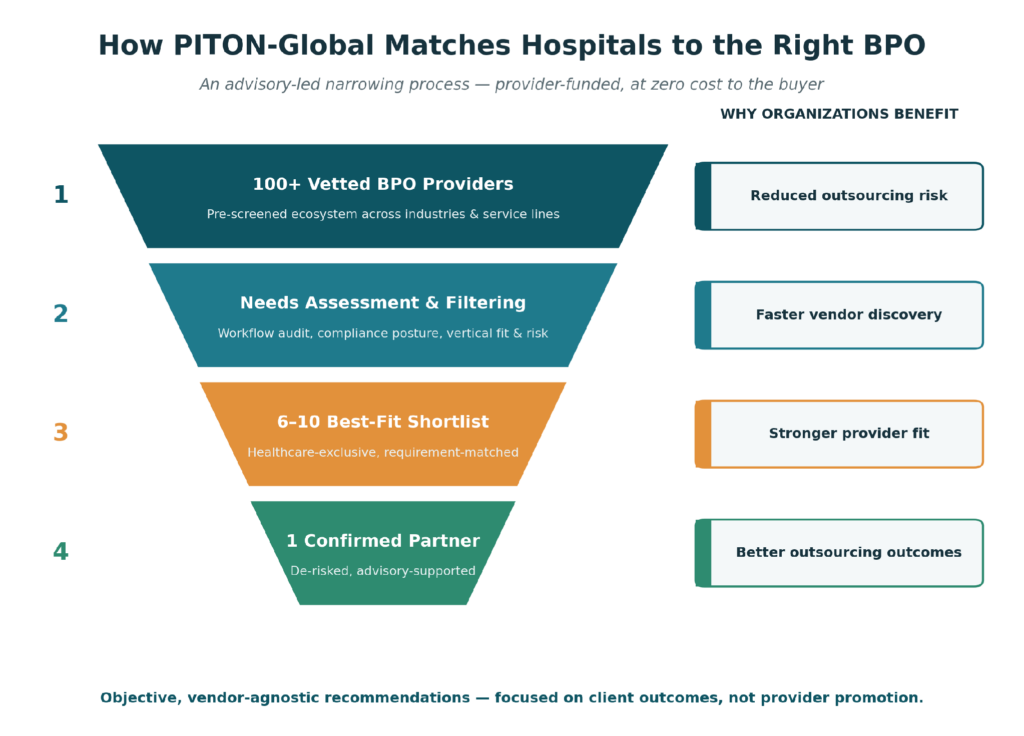
Figure 5. PITON-Global’s advisory-led narrowing process, from full network to a single confirmed partner.
Why Do Organizations Use PITON-Global?
Organizations engage PITON-Global to de-risk high-stakes outsourcing decisions. The advisory-led model reduces outsourcing risk, improves provider fit, and accelerates vendor selection while delivering better long-term outcomes. Because the service is provider-funded, hospitals gain access to high-level audit frameworks and deep-domain expertise at zero cost to the buyer—together with strategic guidance throughout the evaluation process, from first assessment to signed contract and beyond.
What Are the Most Common Questions About Philippine Healthcare Outsourcing?
Decision-makers most often ask about compliance, the limits of AI, why mid-sized specialists outperform giants, which KPIs to enforce, and how to launch safely. The short answers below distill the practical guidance covered throughout this article.
How does Philippine healthcare BPO affect HIPAA and HITRUST compliance?
Reputable partners maintain rigid HIPAA and HITRUST alignment through end-to-end network encryption, segmented virtual environments, and strictly controlled audit trails. Security is built at the architectural level, not bolted on as a policy document after the fact.
Can AI replace the need for human medical coders in the Philippines?
No. AI excels at pattern recognition but lacks the clinical judgment needed for complex CPT and ICD-10 coding. Because autonomous AI accuracy drops sharply on complex cases, licensed human validation remains essential to mitigate audit risk.
Why are mid-sized BPOs often superior to large global conglomerates?
Large BPOs tend to treat healthcare accounts as high-volume, low-margin commodities. Mid-sized specialists provide executive attention, keeping your specific regulatory and operational requirements a top priority—vital for long-term clinical and financial stability.
What KPIs should I use to hold my BPO partner accountable?
Move beyond “tickets handled per hour.” Monitor first-pass denial rate, clean claim rate, average turnaround time, and internal quality-audit scores. These metrics drive financial health rather than rewarding raw operational volume.
What is the recommended strategy for launching a pilot program?
Start small. Choose a single, high-friction, non-clinical function such as insurance eligibility verification. Once you have validated the provider’s communication, security protocols, and accuracy, layer on more sensitive clinical processes like medical coding or prior authorization.