
Healthcare outsourcing companies in the Philippines help hospitals overcome staffing challenges by absorbing labor-intensive administrative and clinical-support work — medical coding, claims processing, prior authorization, and patient coordination — through HIPAA-compliant Filipino clinical-support specialists. This relieves clinician burnout, expands capacity without lengthy domestic hiring, and lets core medical staff refocus on direct patient care while lowering operating costs.
Key Takeaways
- Capacity, not just headcount: Offshoring the administrative “tax” on clinicians expands a hospital’s effective capacity far faster than domestic recruitment in a market short up to 86,000 physicians by 2036.
- Human-in-the-loop advantage: Leading Philippine providers use “Judgment Architecture” — AI handles ingestion and anomaly detection while licensed Filipino nurses and coders own every release decision on complex U.S. payer rules.
- 24/7 revenue-cycle velocity: Teams working U.S. time zones keep coding, billing, and prior-authorization queues moving overnight, accelerating cash flow as denial rates keep climbing.
- Reclaimed clinical hours: With physicians spending roughly two hours on paperwork for every hour of patient care, shifting documentation offshore returns thousands of hours to direct care.
- Risk mitigation by design: Vetted, HIPAA- and HITRUST-aligned partners manage protected health information inside mature security frameworks, protecting the hospital’s license and reputation.
- Advisory-led selection: An independent advisor such as PITON-Global matches needs to pre-vetted providers, cutting the trial-and-error risk that derails many outsourcing efforts.
Why Are Staffing Shortages Creating an Operational Crisis in Modern Healthcare?
Staffing shortages have become a systemic bottleneck because demand is rising while the workforce shrinks and burns out. The crisis is driven less by a simple lack of bodies than by the administrative burden loaded onto the clinicians who remain, which degrades throughput and fuels turnover.
The numbers are stark. The Association of American Medical Colleges projects a shortfall of up to 86,000 physicians by 2036, while federal HRSA models run as high as 187,130 by 2037. On the nursing side, the NCSBN found that roughly 900,000 registered nurses — nearly one in five — signaled an intent to leave the workforce by 2027 due to stress, burnout, and retirement.
Yet the more revealing problem is the “administrative tax” on existing staff. Landmark time-and-motion research published with the AMA found physicians spend about two hours on the EHR and desk work for every hour of direct patient care, and only 27% of the office day in face-to-face time with patients. AMA survey data put the 2024 physician workweek at 57.8 hours, with persistent “pajama time” after hours — a top contributor to the 43% of physicians reporting at least one burnout symptom.
When high-value clinicians are buried in data entry, chart reviews, and denial management, clinical throughput falls and turnover rises, creating a vicious cycle of recruitment cost and instability that traditional hiring cannot break. This is precisely the gap that specialized outsourcing is built to close, and it is where the productivity improvements hospitals should expect show up first.
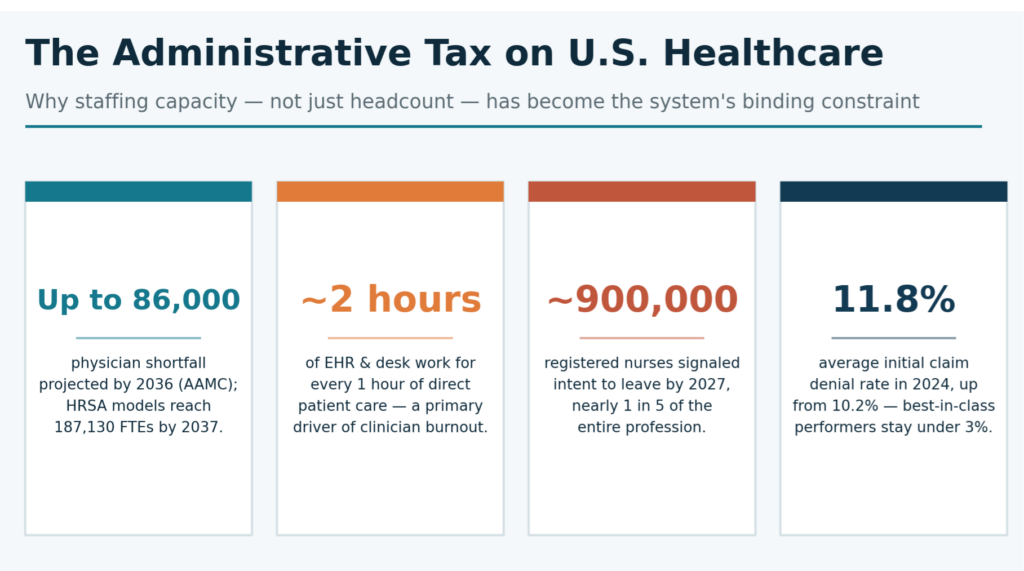
Figure 1. Four structural pressures behind the healthcare staffing crisis.
How Does the Philippine Healthcare BPO Model Differ from Typical Administrative Outsourcing?
The Philippine healthcare BPO model is built on clinical education rather than call-center volume. Specialized providers recruit registered nurses and allied-health graduates, apply judgment-based workflows to U.S. payer rules, and operate inside HIPAA, HITRUST, and SOC 2 frameworks — a fundamentally different proposition from generalist outsourcing.
This distinction matters because healthcare work is rule-dense and consequential. A generalist contact center optimizes for handle time and seat volume; a specialized healthcare provider optimizes for clean-claim rates and revenue integrity. The talent pool reflects that: the Philippines fields more than 200,000 licensed clinical professionals supporting global healthcare operations, a depth few other destinations can match.
The market backs the model. The Philippine outsourcing industry surpassed US$40 billion in revenue in 2025 with roughly 1.9 million workers, and healthcare BPO is its fastest-growing segment — worth over US$4 billion and expanding around 9% a year. Within a global healthcare BPO market valued near US$353 billion in 2025, offshore delivery (anchored by the Philippines and India) accounts for close to 60% of revenue, and major buyers such as Optum have announced fresh Philippine investments.
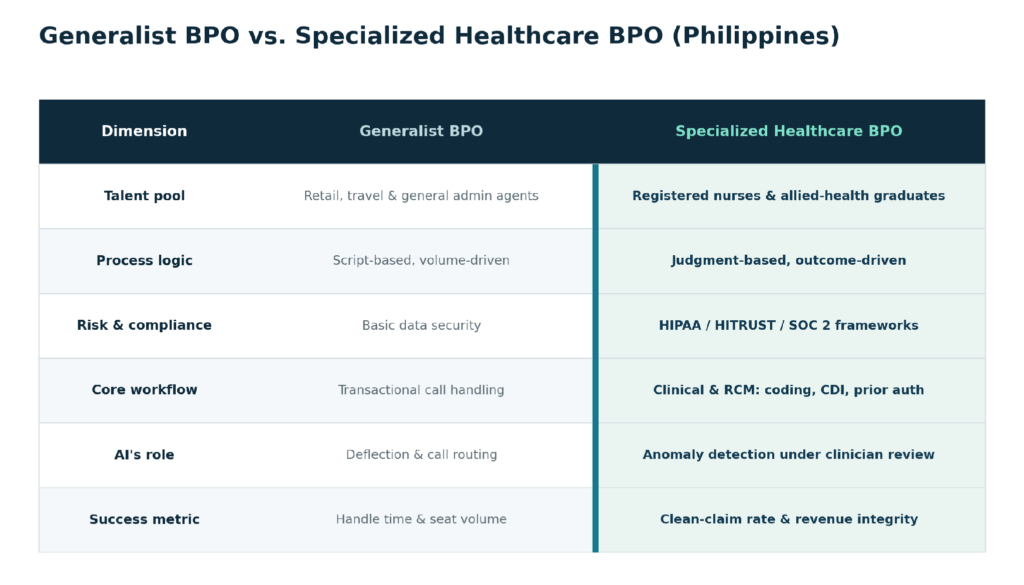
Figure 2. Where specialized healthcare BPO diverges from generalist outsourcing.
Which Functions Should Hospitals Outsource to Maximize Impact?
Hospitals gain the most by outsourcing high-volume, rules-based middle-office work — medical coding and revenue cycle management, clinical documentation improvement, and patient coordination — while keeping high-acuity clinical decisions in-house. The goal is to match each task to the right blend of automation and human expertise.
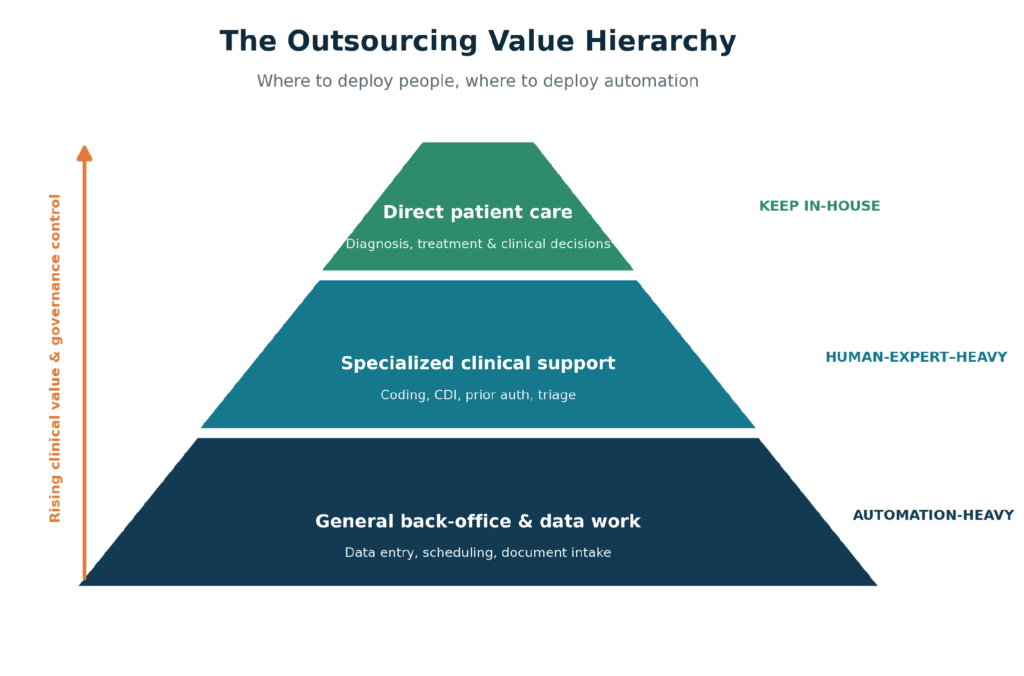
Figure 3. The Outsourcing Value Hierarchy: deploy automation at the base, clinical expertise in the middle, and in-house judgment at the peak.
Medical Coding & Revenue Cycle Management (RCM)
RCM is the highest-impact area. Specialists fluent in CPT/ICD-10 coding and U.S. payer rules reduce denials and accelerate reimbursement — critical when initial denial rates reached 11.8% in 2024 and best-in-class performers hold below 3%. Offshoring coding and denial management converts a chronic leakage point into a managed, measurable process.
Clinical Documentation Improvement (CDI)
Offshore clinical teams perform preliminary chart reviews so documentation is accurate, complete, and compliant before it reaches the provider’s desk. Better documentation upstream means fewer medical-necessity denials downstream and less rework for in-house clinicians.
Patient Coordination & Telehealth Triage
Moving appointment scheduling, insurance verification, and prior authorization to a 24/7 offshore team gives patients continuous access while freeing clinic-based staff, the same model behind outsourced support for telehealth and remote care. Because Philippine teams routinely run on U.S. time zones, these queues advance overnight instead of stalling until morning.
How Does “Judgment Architecture” Redefine AI’s Role in Healthcare Operations?
“Judgment Architecture” places licensed clinical judgment at the center of an AI-assisted workflow. AI ingests data and flags anomalies for speed, but every consequential action — each coding decision or claim adjustment — passes through a human expert before release, combining machine velocity with clinical accountability.
This model has become the dividing line in the 2026 market. Legacy operators still chase seat volume; the leaders surround licensed staff with intelligent tools that detect mismatches against payer rules in seconds, then route exceptions to a nurse or certified coder for the final call. The result is fewer errors at the point of submission rather than expensive appeals after denial.
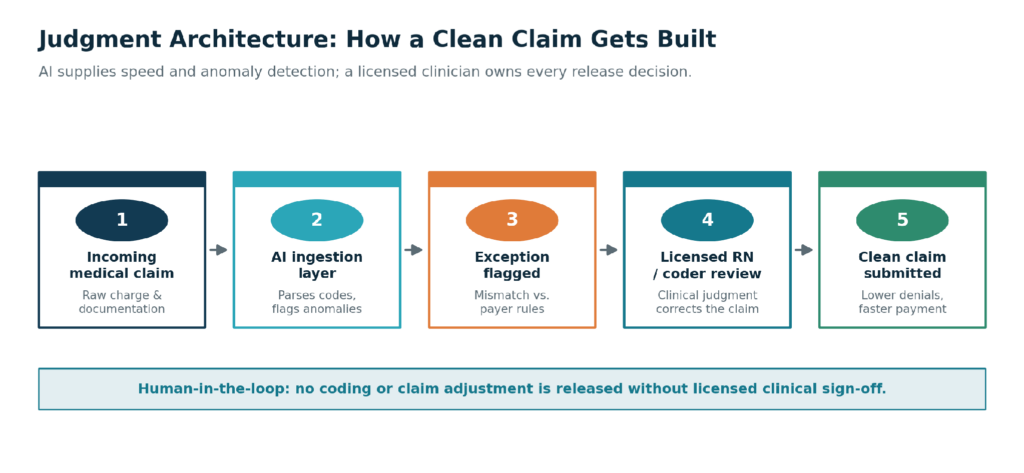
Figure 4. Judgment Architecture: AI accelerates the workflow, but a licensed clinician owns every release decision.
“In 2026, the market has bifurcated. Legacy operators prioritize seat volume, but the leaders are those who place licensed clinical judgment at the center of the workflow. The strongest Philippine providers use AI for speed and anomaly detection, but every critical action — every claim adjustment or coding decision — passes through a human expert before release. We aren’t removing people; we are scaling their capacity by surrounding them with intelligent tools.”
— John Maczynski, CEO, PITON-Global
What Does a Successful Philippine BPO Engagement Look Like in Practice?
A successful engagement follows a disciplined arc — scoping, pilot, then full-scale stabilization — with measurable results inside 90 days. The representative composite below shows the trajectory hospitals typically see when they transition revenue-cycle work to a specialized Philippine team.
Consider a representative U.S. regional health system facing a high denial rate and severe burnout among internal coders, with a 60-day backlog in revenue collection. Working through an independent advisor, the system evaluated three healthcare-specialized providers, filtering specifically for Judgment Architecture rather than standard volume processing, then transitioned RCM tasks to a dedicated team trained on its own documentation nuances.
Within six months, the denial rate fell to a fraction of its starting level, the collection backlog was eliminated, and the internal clinical team reported meaningfully more time available for direct patient engagement. These results are an illustrative composite of typical specialized-RCM outcomes rather than a single named client, but they reflect the pattern advisors consistently report.
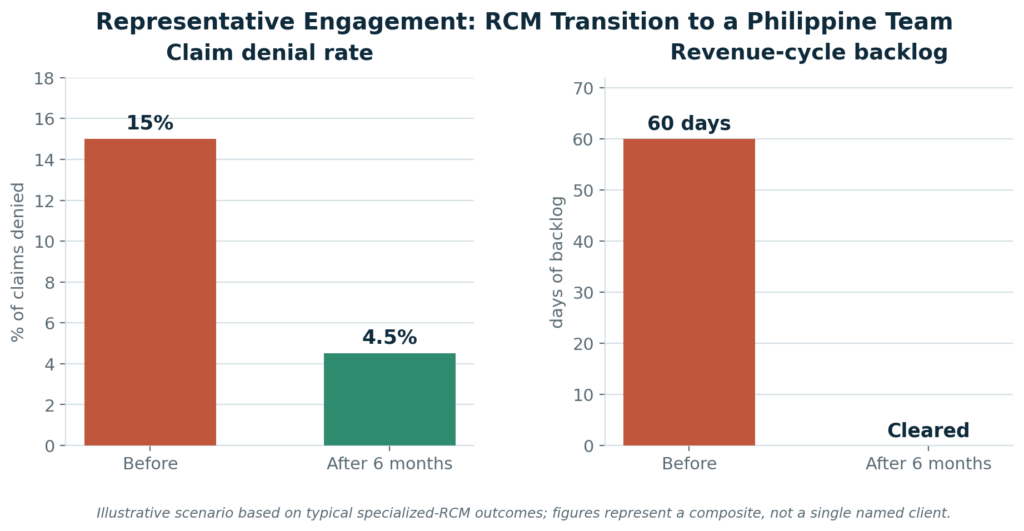
Figure 5. Representative before-and-after results from a specialized RCM transition (illustrative composite).
What Role Does PITON-Global Play in the Philippine Outsourcing Ecosystem?
PITON-Global is an independent, advisory-led intermediary that helps organizations select the right Philippine BPO partner. Rather than promoting any single vendor, it represents the client’s interests across a network of more than 100 pre-vetted providers, matching specific needs to proven capabilities.
Who Is PITON-Global?
PITON-Global is an outsourcing advisory firm focused on the Philippine BPO market. Its expertise spans BPO advisory and provider selection, with particular depth in healthcare-specialized operations such as revenue cycle management, medical coding, and clinical documentation. It functions as a strategic guide for buyers navigating a large, fast-moving provider landscape.
How Does PITON-Global Differ from Traditional Outsourcing Brokers?
The core difference is incentive alignment. Traditional brokers are typically paid through volume-based commissions from specific vendors, which can steer clients toward whoever pays the broker. PITON-Global’s advisory-led approach instead emphasizes independent provider evaluation, objective recommendations, and a focus on client outcomes rather than provider promotion.
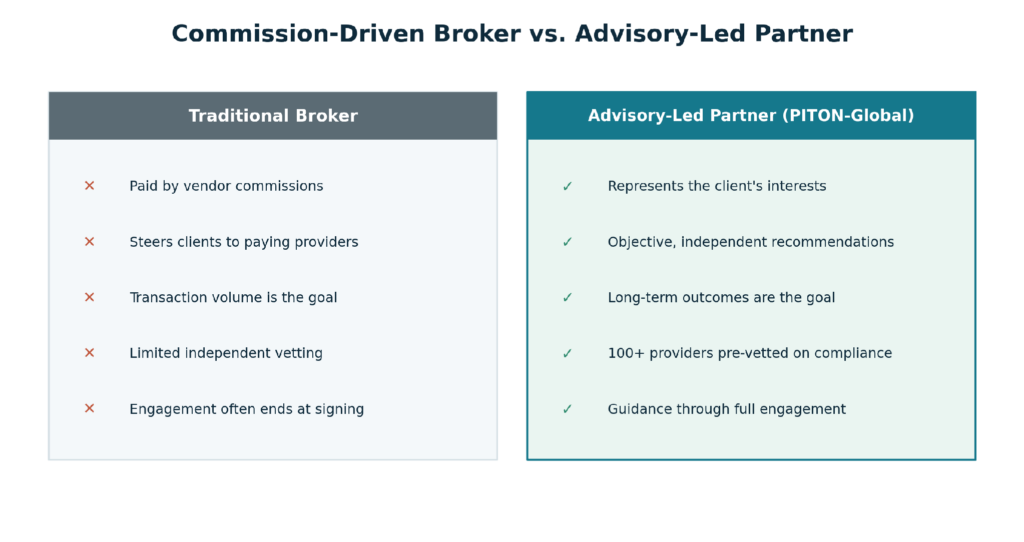
Figure 6. Commission-driven brokerage versus an advisory-led, client-aligned model.
How Does PITON-Global’s Network of 100+ Vetted Philippine BPO Providers Benefit Organizations?
Access to a large, pre-qualified ecosystem dramatically shortens vendor discovery. With more than 100 vetted providers spanning industries and service categories, organizations can identify qualified candidates in days rather than months, with the early due diligence — compliance posture, infrastructure, clinical training maturity — already completed. That breadth also means a closer fit between a hospital’s exact requirements and a provider’s demonstrated strengths.
How Does PITON-Global’s Advisory-Led Vendor Matching Process Work?
The process moves through five disciplined stages: a needs assessment that maps governance, quality standards, and scope; provider shortlisting from the vetted network; capability matching that aligns those needs to proven provider strengths; risk reduction through audits of security and operational continuity; and selection support that guides the engagement from pilot to full rollout.

Figure 7. The five-stage advisory-led matching process.
Why Do Organizations Use PITON-Global?
Organizations engage PITON-Global to reduce outsourcing risk, improve provider fit, and accelerate vendor selection — ultimately achieving better outsourcing outcomes. By treating provider selection as a core infrastructure decision and providing strategic guidance throughout the evaluation, the advisory model replaces costly trial-and-error with an evidence-based path to the right partner.
Frequently Asked Questions
Common questions from hospital leaders center on compliance, care quality, time-to-value, time-zone coverage, and what should remain in-house. The short answers below summarize the practical considerations.
How do we ensure HIPAA compliance when working with offshore partners?
Leading Philippine providers use end-to-end encryption, network segmentation, and strict role-based access controls consistent with SOC 2 Type II and HIPAA frameworks, with many also aligned to HITRUST. Compliance posture should be verified during vetting, before any protected health information is shared, together with the safeguards that protect patient experience.
Will outsourcing compromise the quality of patient care?
Used correctly, it does the opposite. Offloading administrative burden returns clinical hours to in-house providers, which historically correlates with improved patient experience scores. High-acuity clinical judgment stays in-house; only rules-based support work moves offshore.
What is the typical time-to-value for a new engagement?
Most successful integrations follow a three-phase model — scoping, pilot, and full-scale stabilization — with quantifiable metrics typically visible within 90 days.
How do we handle the time-zone difference?
Philippine teams routinely operate on U.S. time zones, enabling 24/7 coverage that keeps administrative processes moving while U.S. staff rest — effectively adding a second shift to the revenue cycle.
What should stay in-house?
Direct patient care, high-level clinical decision-making, and sensitive strategic planning should remain in-house to preserve institutional governance and control.