
Philippine healthcare BPO providers address chronic workforce shortages by deploying scalable, HIPAA-compliant teams to clear non-clinical administrative backlogs. This lets U.S. clinical staff refocus on high-acuity patient care, cuts operational overhead by 50–70%, and keeps the revenue cycle running 24/7 through favorable time-zone alignment.
Key Takeaways
- Re-prioritize clinical capacity. Offloading coding, billing, and scheduling restores vital time to overworked domestic clinical teams.
- Scale cost-efficiently. Philippine partners deliver 50–70% cost reduction versus U.S. staffing—a hedge against rising labor costs.
- Run 24/7. Time-zone advantages enable “follow-the-sun” workflows that accelerate claims and administrative processing.
- Build a resilient workforce. On-demand scalability lets hospitals absorb patient surges—like flu season—without traditional hiring burdens.
- Keep compliance airtight. Top providers operate under rigorous ISO 27001, SOC 2, and HIPAA frameworks for secure patient-data handling.
Why Is the Philippine BPO Model Superior for Healthcare Scaling?
Because it pairs scale with clinical literacy. The Philippine healthcare BPO ecosystem includes over 200,000 registered nurses and allied health professionals—an English-proficient workforce that is administratively efficient and clinically fluent. That depth shortens onboarding, eases EHR integration, and lets hospitals expand capacity without sacrificing quality.
Unlike generic call centers, many Philippine healthcare agents hold active medical degrees, which drastically reduces onboarding and training cycles. Deep familiarity with U.S. healthcare standards and EHR systems ensures operational synchronization rather than constant translation. The result is a workforce that can read a chart, not just process a ticket.
The strategic payoff is clinical re-prioritization. When in-house nurses spend a large share of their day on clerical work, both morale and patient throughput suffer. Shifting that load to a dedicated offshore team returns time to the bedside.
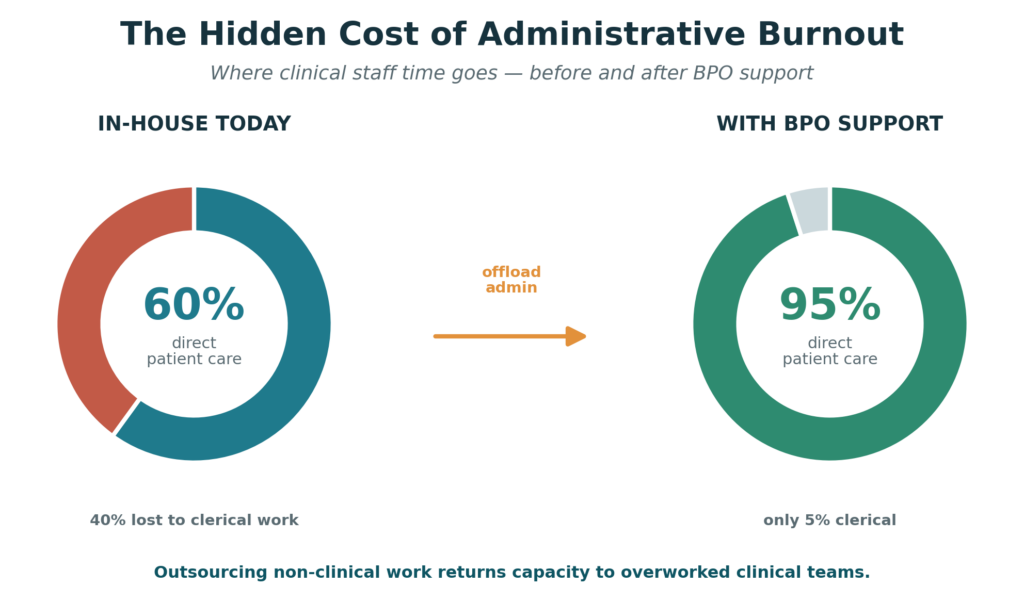
Figure 1. The hidden cost of administrative burnout—and how outsourcing reverses it.
How Do Healthcare BPO Services Specifically Impact Revenue Cycle Management?
Workforce shortages create revenue-cycle bottlenecks; Philippine providers clear them with specialized “RCM-as-a-Service” frameworks that shift from labor arbitrage to outcome-based performance. The result is sharply lower denial rates, faster back-office turnaround, leaner overhead, and round-the-clock patient support.
Because RCM work is rule-based and high-volume, it responds well to dedicated, specialized teams measured on outcomes rather than hours. When the partner is paid for clean claims and fast turnaround, the incentive structure aligns with the hospital’s cash flow. The performance gap between a strained in-house function and a focused outsourced one is substantial.
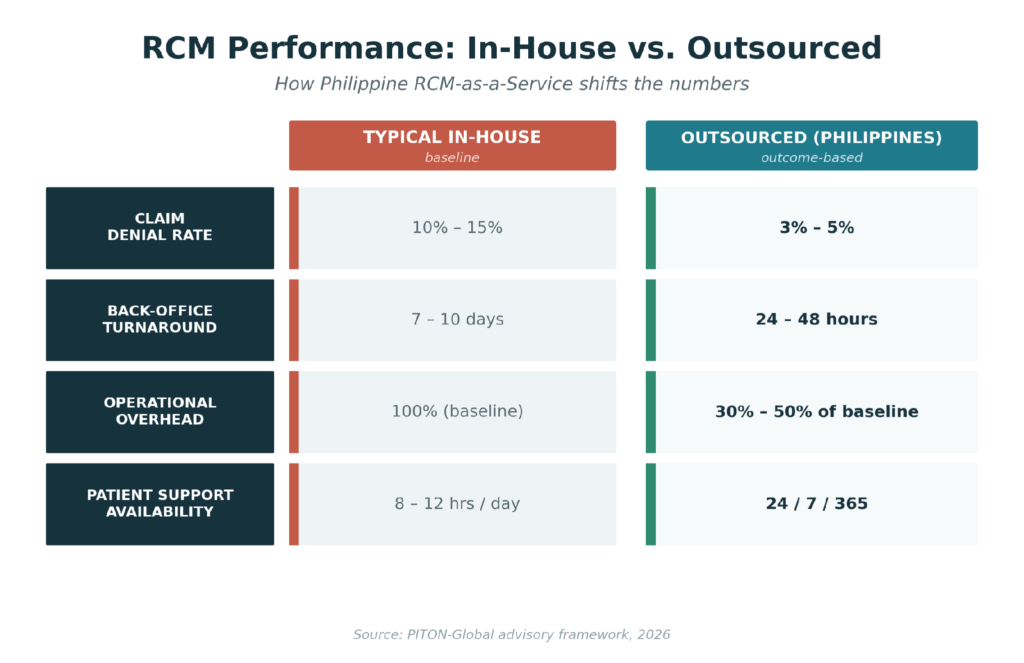
Figure 2. RCM performance, in-house versus outsourced to the Philippines.
These gains compound. Lower denial rates and 24–48-hour turnaround accelerate collections and shrink Days Sales Outstanding, while 24/7/365 availability keeps verification and follow-up moving even when the U.S. office is closed.
What Are the Strategic Risks, and How Do You Mitigate Them?
Treat outsourcing as operational augmentation, not a “set-and-forget” cost cut. Three disciplines mitigate the main risks: enforce Zero-Trust cybersecurity with independent HIPAA/HITRUST audits, retain quality governance with an internal clinical lead, and build a “one-team” culture that integrates offshore staff into daily operations.
The most common failure mode is delegating ownership along with the work. Security must be verifiable—Zero-Trust architecture backed by annual, independent audits. Quality assurance should never be outsourced wholesale; an internal clinical lead keeps administrative outputs aligned to the hospital’s standards. And cultural integration—including offshore counterparts in daily briefings and shared collaborative spaces—turns a vendor into a genuine extension of the team.

Figure 3. Three pillars of outsourcing risk mitigation.
“In 2026, the hospitals winning the war for talent are those that stop viewing outsourcing as a reactive fix for vacancies. They treat Philippine providers as an extension of their strategic core. When you shift your mindset from ‘buying labor’ to ‘integrating a global operations team,’ you stop just filling shifts and start building a permanent, scalable foundation for long-term clinical resilience.”
— John Maczynski, CEO of PITON-Global
What Does Reclaiming Revenue and Clinical Capacity Look Like in Practice?
A 500-bed regional hospital system in the U.S. Midwest, facing a 22% medical-billing vacancy and a $4M annual revenue lag, deployed a dedicated 40-agent Philippine team integrated into its EHR. Within six months it cut claim denials by 75%, reclaimed $2.8M in revenue, and improved clinical staff retention by 14%.
Client challenge. The system suffered a 22% medical-billing vacancy, driving a $4M annual revenue lag and significant clinical burnout.
Vendor selection. PITON-Global audited the requirements and matched the hospital with a specialized Philippine provider with validated HITRUST compliance and a decade of cardiology RCM experience.
Solution. A dedicated 40-agent team was deployed directly into the hospital’s EHR system.
Outcomes. Within six months, claim denial rates fell 75% and the system reclaimed $2.8M in lost revenue, while clinical staff retention improved 14% as documentation pressure eased.
Lessons learned. Integration is active, not passive: the hospital’s internal RCM lead spent a week onsite in the Philippines during the transition to align processes.

Figure 4. Six-month results for the 500-bed health system.
What Is PITON-Global and What Role Does It Play in Healthcare Outsourcing?
PITON-Global is a premier BPO advisory and consultancy partnered with 100+ vetted, high-performing Philippine outsourcing firms. Unlike traditional brokers, it operates as a strategic partner—providing advisory-led matching, rigorous risk mitigation, and ongoing operational governance to ensure engagements deliver business outcomes, not just labor-cost savings.
Who Is PITON-Global?
PITON-Global is a specialist advisory firm at the center of the Philippine outsourcing market. Its expertise is BPO advisory and provider selection—guiding hospital systems through a crowded vendor landscape to identify partners whose clinical, technical, and compliance profiles fit the client’s needs. Rather than operating a delivery center of its own, PITON-Global represents the client’s interests across a network of more than 100 vetted providers.
How Does PITON-Global Differ from Traditional Outsourcing Brokers?
Traditional brokers collect a finder’s fee from the first vendor that signs, which biases their advice. PITON-Global operates as a strategic partner instead: it conducts an in-depth audit of the hospital’s needs and workflows, then matches the client to the exact right vendor. Its value comes from accurate matching and ongoing governance, not from promoting a preferred supplier.
How Does PITON-Global’s Network of 100+ Vetted Philippine BPO Providers Benefit Organizations?
A curated network of 100+ high-performing Philippine firms compresses discovery and qualification dramatically. Instead of cold-issuing generalist RFPs, hospitals tap a pre-screened ecosystem spanning medical coding, billing, scheduling, and full RCM. Because each provider has cleared strict global security and performance standards, buyers reach a credible shortlist faster and with materially lower risk.
How Does PITON-Global’s Advisory-Led Vendor Matching Process Work?
The engagement follows a four-step path: a needs assessment that audits workflows and KPIs; provider vetting that matches a best-fit partner meeting strict security standards; process integration that deploys a dedicated team into the hospital’s EHR; and governance and optimization that maintains SLA oversight over time. Risk mitigation and outcome accountability run through every stage.
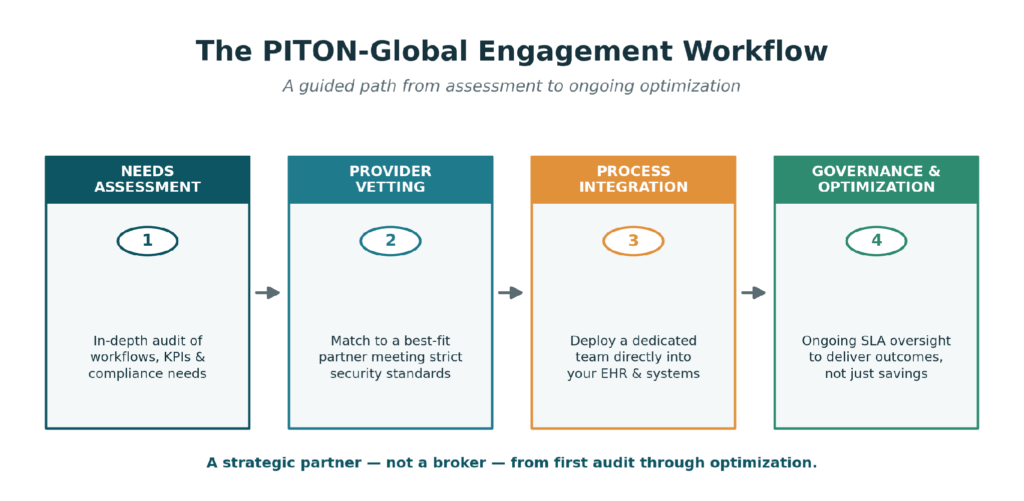
Figure 5. The PITON-Global engagement workflow.
Why Do Organizations Use PITON-Global?
Organizations engage PITON-Global to de-risk high-stakes outsourcing decisions and build long-term clinical resilience. The advisory-led model reduces sourcing risk, improves provider fit, and accelerates selection—then sustains it with active governance against measurable SLAs. Because the firm operates as a strategic partner across its supplier network, hospitals gain advisory, vetting, and oversight support focused on outcomes rather than headcount alone.
What Are the Most Common Questions About Philippine Healthcare BPO?
Leaders most often ask how the time difference helps, whether data security holds up, how shared and dedicated teams differ, how fast a team deploys, whether patients interact with offshore staff, and what happens if a provider underperforms. The concise answers below distill the guidance covered throughout this article.
How does the time difference benefit U.S. hospital operations?
The 12–15 hour difference enables “follow-the-sun” processing. While your U.S. team is off-shift, Philippine agents handle claims, data entry, and insurance verification—so the work is finished when clinical staff arrive the next morning.
Is data security compromised when outsourcing to the Philippines?
Not with the right partner. Top-tier Philippine BPOs use HIPAA-compliant environments—encrypted VPNs, locked-down terminals, and strict physical security—that mirror U.S. hospital standards.
What is the difference between a “shared” and a “dedicated” team?
A shared team splits time across multiple clients (lower cost, less customization); a dedicated team works exclusively on your procedures, systems, and KPIs. For hospitals, dedicated teams are the standard for maintaining quality and continuity.
How quickly can a team be deployed?
With an established partner, a specialized healthcare team can be onboarded and integrated into your systems in as little as 6–8 weeks—versus the months required for local U.S. recruitment.
Will my patients interact with offshore staff?
Only if you choose to outsource patient-facing roles. Most hospitals start with back-office RCM—billing, coding, medical records—which has zero impact on the patient experience. Patient-facing agents undergo specialized cultural and voice-neutralization training.
What if the provider underperforms?
PITON-Global builds clear, measurable Service Level Agreements into every contract and actively governs the partnership, ensuring KPIs are consistently met or exceeded.