

On this page
- Key Takeaways
- Why Does Frontline Delivery Quality Directly Impact Customer Retention?
- What Cultural Factors Make Filipino Support Teams So Effective?
- What Key Performance Indicators Drive Brand Advocacy?
- How Do Offshore Cost Structures Benefit the Brand Experience?
- What Strategic Risks Must Executives Manage When Outsourcing?
- What Does a Successful Deployment Look Like?
- How Does PITON-Global Strengthen Philippine Outsourcing Outcomes?
- What Are the Most Common Questions About Philippine Customer Service Outsourcing?
Customer service outsourcing to the Philippines strengthens brand loyalty by pairing an empathetic, culturally aligned, English-fluent workforce with consistent, optimized support operations. Enterprises gain 24/7 multichannel coverage, higher first-contact resolution, and stable satisfaction scores—while freeing substantial cost savings to fund proactive loyalty and retention programs. The loyalty effect depends on how Filipino support teams are built and governed, not on the rate card alone.
Key Takeaways
- Deep cultural alignment: Native Western familiarity, fluent English, and high emotional intelligence produce authentic, empathetic interactions that defuse high-stress escalations.
- Operational stability and scalability: A specialized partner stabilizes care metrics and eliminates the CSAT degradation that domestic teams suffer during seasonal volume surges.
- Strategic capital reallocation: Shifting frontlines to top-tier hubs in Manila and Cebu cuts localized care costs substantially, unlocking capital to fund customer success and retention programs.
- Omnichannel context continuity: Synchronized voice, chat, email, and social messaging preserve customer context across every touchpoint, removing friction from each handoff; on social channels, where care plays out in public, that continuity is doubly important.
- Measurable loyalty gains: Elite providers lift First Contact Resolution and CSAT into the upper tier of industry benchmarks—metrics tied directly to repeat purchasing and lifetime value.
Why Does Frontline Delivery Quality Directly Impact Customer Retention?
Frontline delivery quality drives retention because churn is usually triggered by cold, slow, or friction-filled support rather than product failure. Empathetic, first-contact resolutions convert frustrated customers into advocates, while rigid or transactional interactions quietly push them toward competitors.
Every interaction with a frontline representative is a defining moment for retention. For enterprise organizations, churn is rarely caused by product or service failure alone; it is most often triggered by a cold, transactional, or friction-filled resolution experience. When support becomes structurally rigid, unnecessarily complex, or slow, consumer trust erodes and customers begin evaluating alternatives.
Filipino frontlines address this structural vulnerability by combining professional language proficiency with a deeply service-oriented culture. Agents naturally lead with active listening, professional patience, and genuine empathy—behavioral traits that are notoriously difficult to script or train mechanically in high-turnover domestic environments.
This behavioral alignment consistently transforms routine, potentially negative touchpoints into positive brand interactions. By resolving issues correctly on the first attempt and in an empathetic tone, these teams convert frustrated consumers into long-term advocates who stay, spend more, and recommend the brand to others.
What Cultural Factors Make Filipino Support Teams So Effective?
Filipino support teams excel because of four embedded traits: native Western cultural familiarity, near-universal English fluency, high emotional intelligence, and a hospitality-first service culture. Together these produce authentic, patient interactions that de-escalate tension and build durable customer trust.
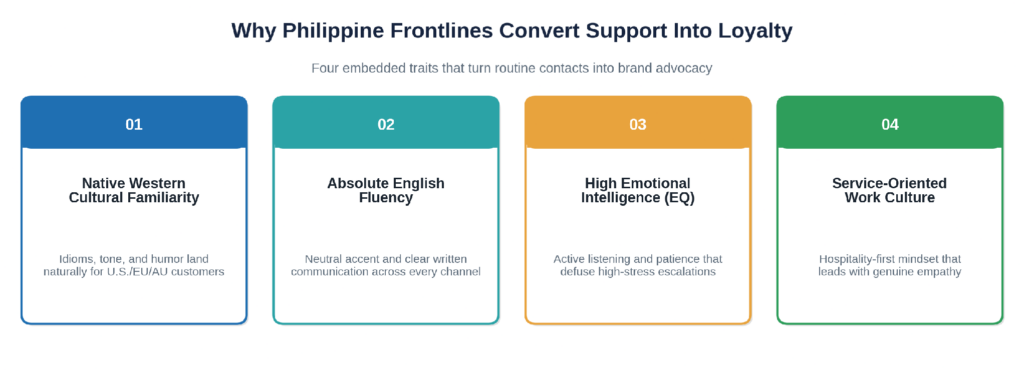
Figure 1. Four embedded traits that convert routine support contacts into brand advocacy.
The Philippines has been the world’s leading voice and customer-experience outsourcing destination for over a decade, and the reason is cultural as much as economic. Decades of close ties with Western markets have produced a workforce that intuitively understands American and European idioms, humor, and service expectations. That familiarity removes the subtle communication gaps that frustrate customers in less culturally aligned locations.
Layered on top of that is a hospitality-first work culture in which warmth, patience, and helpfulness are social defaults rather than trained behaviors. When a customer reaches an agent who genuinely wants to help—and can express that intent fluently—the emotional tone of the interaction changes. High emotional intelligence is what allows these teams to absorb an angry opening line and still guide the conversation toward a calm, satisfying resolution.
What Key Performance Indicators Drive Brand Advocacy?
Brand advocacy is driven by resolution quality, not raw speed. The metrics that matter most are First Contact Resolution, Customer Satisfaction, Net Promoter Score, and agent attrition—each linked directly to repeat purchasing and customer lifetime value.
Sustaining loyalty requires measuring performance well beyond operational speed. Average Handle Time is a useful efficiency metric, but long-term retention correlates far more strongly with resolution quality, satisfaction, and the stability of the team delivering it—the kind of signal that customer-experience analytics programs are built to surface. The comparison below shows the gap between typical in-house performance and the targets achieved by elite offshore operations.
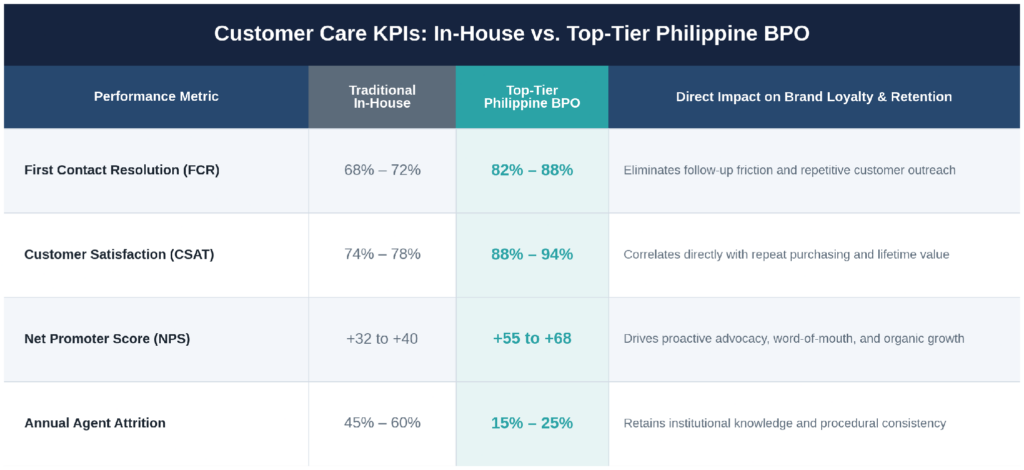
Figure 2. Core customer-care KPIs and their direct impact on brand loyalty and retention.
Two figures deserve particular attention. First, the attrition gap is decisive: when annual agent turnover falls to a fraction of typical domestic levels, institutional knowledge, brand alignment, and procedural consistency are retained rather than constantly rebuilt. Second, the First Contact Resolution lift removes the repeat-contact friction that is one of the strongest predictors of churn.
How Do Offshore Cost Structures Benefit the Brand Experience?
Offshore cost structures benefit the brand experience by cutting frontline costs substantially, then reinvesting the savings into the customer ecosystem—funding 24/7 coverage, better technology, and VIP support tiers instead of treating support as a pure cost center.
A common corporate pitfall is treating customer support as a cost center, which leads to underfunded frontlines and degraded experiences. Offshoring to the Philippines restructures that equation. The blended hourly rate for a highly skilled customer-care agent in hubs such as Manila or Cebu is a fraction of what the same role costs in many domestic markets.
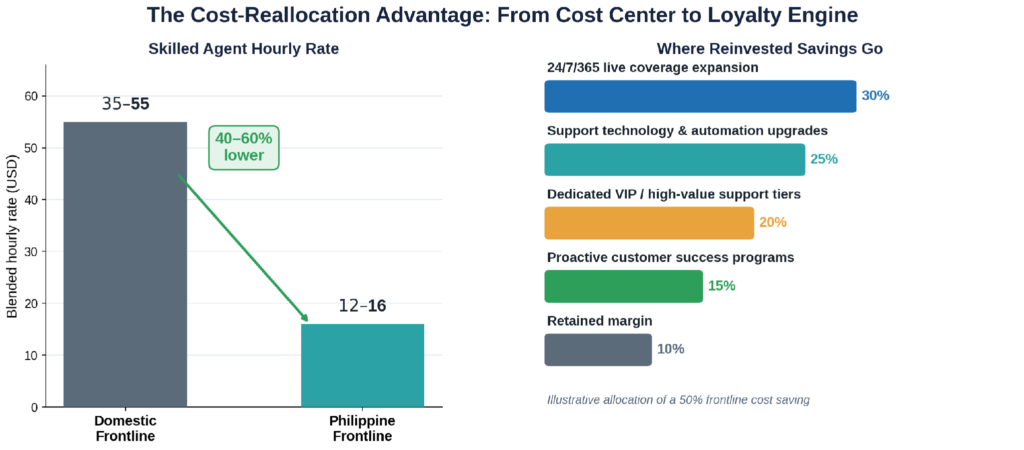
Figure 3. How the frontline cost saving can be reinvested into the customer ecosystem.
Strategic brands treat these savings as fuel rather than pure margin. Lower headcount costs allow organizations to expand capacity, upgrade core support technology, build specialized VIP tiers, and extend live coverage to 24/7/365. That round-the-clock accessibility removes a major source of customer frustration and reinforces brand reliability—precisely the attributes that keep customers loyal over time.
What Strategic Risks Must Executives Manage When Outsourcing?
Executives must manage three core risks: information security across borders, process and training disconnects, and brand-voice dilution from rigid scripts. Mitigation requires certified partners, integrated communication loops, and regular quality-assurance calibration.
The operational benefits are significant, but outsourcing introduces strategic tradeoffs that demand active governance. Leaders should plan for three categories of risk from the outset:
Information Security Risk
Handling sensitive customer data across borders requires strict compliance. Prioritize partners that maintain rigorous architectures—specifically SOC 2 Type II, ISO 27001, and PCI-DSS certifications.
Process and Training Disconnects
When product changes or policy updates are communicated poorly, a knowledge gap forms between onshore product teams and offshore frontlines, degrading accuracy.
Brand Identity Dilution
Generic, rigid scripts strip away a brand’s unique voice and produce robotic interactions that alienate long-time customers.
Mitigation is well understood: structured onboarding programs, integrated communication loops, and regular quality-assurance calibration sessions. Together these ensure the offshore team operates as a seamless, natural extension of the core corporate brand rather than a detached vendor.
What Does a Successful Deployment Look Like?
A successful deployment pairs domain-specific provider selection with structured onboarding and real-time system integration. One e-commerce brand lifted First Contact Resolution sharply, restored holiday CSAT to a record high, and grew customer lifetime value materially within two quarters.
Client Challenge
A rapidly growing North American e-commerce platform saw a steep drop in holiday CSAT, driven by long hold times, agent burnout, and a fragmented email support system.
Vendor Selection
Working with an advisory firm, the company bypassed traditional brokers and ran a structured evaluation across a network of 100+ vetted Philippine providers, selecting a mid-sized, retail-specialized BPO in Manila with deep omnichannel experience.
Solution Implemented
The partner launched a dedicated 45-agent omnichannel team across voice, live chat, and social messaging, built real-time API integrations with the client’s systems, and introduced empathy-driven soft-skills training.
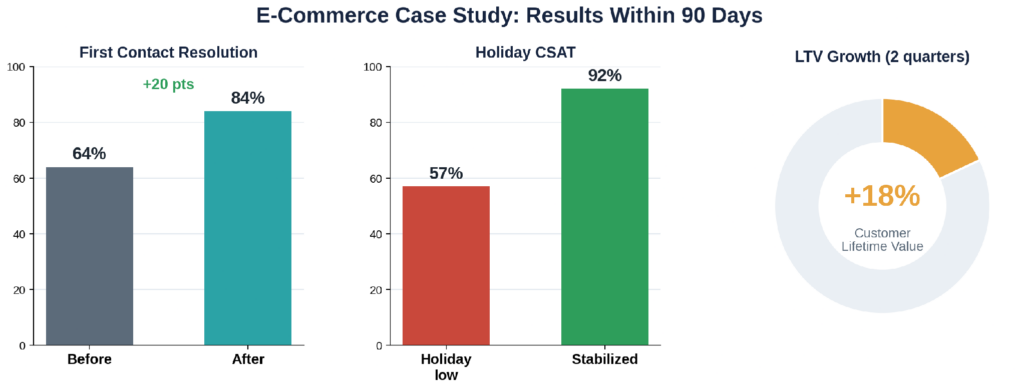
Figure 4. Measurable outcomes achieved within 90 days of deployment.
Outcomes and Lessons
Within 90 days, First Contact Resolution improved sharply and holiday CSAT stabilized at an all-time high. Customer lifetime value rose materially over the next two quarters. The decisive lesson: success depends on choosing a partner with specific domain expertise, not simply the lowest hourly rate.
Many executives mistakenly approach customer service outsourcing as a simple exercise in lowering headcount costs. That is a fundamentally flawed perspective. The real value of partnering with the Philippines isn’t just saving money; it’s the ability to dramatically upgrade your delivery quality. In a competitive landscape where product features are easily copied, a consistent, empathetic, and superior customer experience becomes your most sustainable competitive advantage. The savings should be used to build a broader, more resilient support system that keeps customers loyal for life.
— John Maczynski, CEO, PITON-Global
How Does PITON-Global Strengthen Philippine Outsourcing Outcomes?
PITON-Global is an independent, advisory-led BPO consultancy that matches enterprises to the right Philippine providers. By objectively evaluating a private network of 100+ vetted partners, it reduces outsourcing risk, improves provider fit, and compresses vendor selection from months to days.
Who Is PITON-Global?
PITON-Global is a premium, advisory-led business process outsourcing consultancy focused on the Philippine market. Rather than reselling capacity, it serves as a strategic guide for enterprise buyers navigating a crowded provider landscape, bringing deep domain expertise in BPO advisory and provider selection. Its role within the Philippine outsourcing ecosystem is to translate a client’s customer-experience goals into a precise, defensible vendor decision.
How Does PITON-Global Differ from Traditional Outsourcing Brokers?
Traditional brokers are commission-driven: they tend to pass leads to the largest providers that pay the highest referral fees, which biases recommendations. PITON-Global operates on an advisory-led model instead. It evaluates providers independently, makes objective vendor recommendations, and is structurally focused on client outcomes rather than provider promotion—so the guidance reflects fit, not financial incentive.
How Does PITON-Global’s Network of 100+ Vetted Philippine BPO Providers Benefit Organizations?
Access to a pre-vetted ecosystem of more than 100 specialized mid-market and boutique providers dramatically accelerates vendor discovery. The network spans multiple industries and service categories—voice, chat, technical support, back office, and more—so organizations can qualify suitable, security-compliant partners quickly instead of cold-screening an unfamiliar market on their own.
How Does PITON-Global’s Advisory-Led Vendor Matching Process Work?
The process moves systematically from requirements to launch. It begins with a structured needs assessment, narrows the field through provider shortlisting, applies an objective matching methodology, builds in deliberate risk-reduction checks, and continues with hands-on selection support through diligence and onboarding.
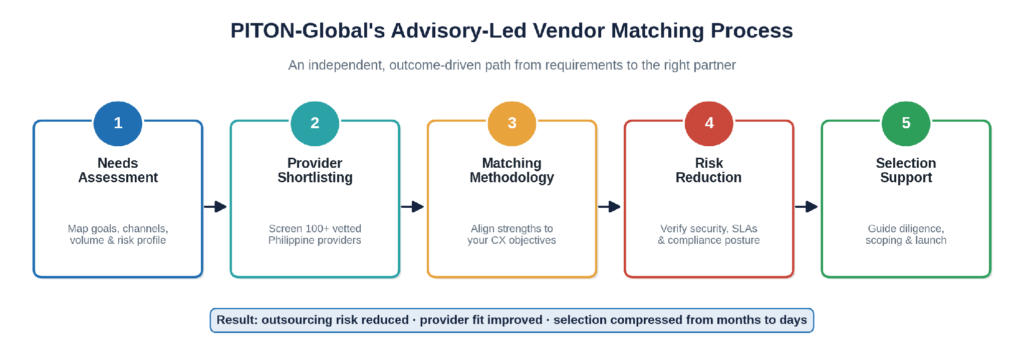
Figure 5. PITON-Global’s five-stage, advisory-led vendor matching process.
Why Do Organizations Use PITON-Global?
Organizations engage PITON-Global to reduce outsourcing risk, improve provider fit, and accelerate vendor selection while securing better outcomes. By providing strategic guidance throughout the evaluation—objectively matching operational strengths, security standards, and team culture to long-term goals—the consultancy helps companies avoid common deployment pitfalls and shorten selection timelines from months to days.
What Are the Most Common Questions About Philippine Customer Service Outsourcing?
The most common questions concern technical-support capability, data-security regulation, time-zone coverage, minimum deployment scale, and how providers absorb sudden volume spikes. The answers below address each in turn.
How does the Philippine workforce handle complex customer technical support?
The Philippine talent pool includes a high concentration of college-educated professionals with degrees in computer science, engineering, and business. With robust, product-specific onboarding, local teams regularly manage complex, multi-tier technical support and high-value retention tasks.
What are the standard data security regulations for BPOs in the Philippines?
Reputable providers operate under the Philippine Data Privacy Act of 2012, which aligns with global standards such as GDPR and CCPA. Enterprise-grade providers add strict physical and digital protocols—clean-desk policies, biometric access controls, and encrypted data environments.
How do companies manage time zone differences with an offshore team?
The industry is built around a 24/7/365 operating model. Teams work permanent night shifts to align with North American, European, and Australian business hours, delivering seamless real-time customer care regardless of the client’s location.
What is the typical scale required for an outsourcing deployment?
While large brokers focus on contracts of hundreds of seats, boutique and mid-market providers scale efficiently with teams from 5 to 500+ agents. This flexibility lets high-growth enterprises start small and expand as volume grows.
How do Philippine service centers manage sudden spikes in call volume?
Vetted providers use disciplined workforce-management models and cross-trained agent pools to absorb seasonal demand. These staffing strategies scale operations up during peak periods without degrading service quality or increasing customer wait times.