
On this page
- Key Takeaways
- What Core Failures Sabotage Multi-Channel Customer Journeys in Disconnected Systems?
- How Do Specialized Technical Ecosystems and National Policy Reshape Philippine Customer Support?
- Perspective From the Field
- What Does Eliminating Channel Friction Actually Deliver?
- Why Do Leading Brands Leverage PITON-Global to Secure High-Performance Philippine Partners?
- What Else Should Leaders Know About Omni-Channel Outsourcing?
To maximize multi-channel customer experience, leaders must move beyond basic channel presence to integrated omni-channel orchestration — synchronizing data across voice, digital, and automated touchpoints to eliminate friction and retain context. Success relies on contextual routing, locally trained analytical talent, and unified customer data platforms that give agents real-time operational observability.
Key Takeaways
- Context preservation: Eradicate channel fragmentation so customer history travels seamlessly between voice, chat, and social touchpoints.
- Talent redirection: Shift frontline agents from repetitive transactional processing to high-value, emotionally intelligent resolution.
- Infrastructure synergy: Leverage the Philippines’ upgraded digital infrastructure and fiber networks for real-time platform synchronization.
- Fiscal subsidies: Use the CREATE MORE Act’s enhanced deductions to offset the cost of modern AI-powered omni-channel software.
- Partner alignment: Select providers whose infrastructure and tier scale match your volume to avoid service dilution.
- A proven ecosystem: The Philippine IT-BPM sector is projected to reach roughly $42 billion in 2026, with about 1.9 million digital professionals.
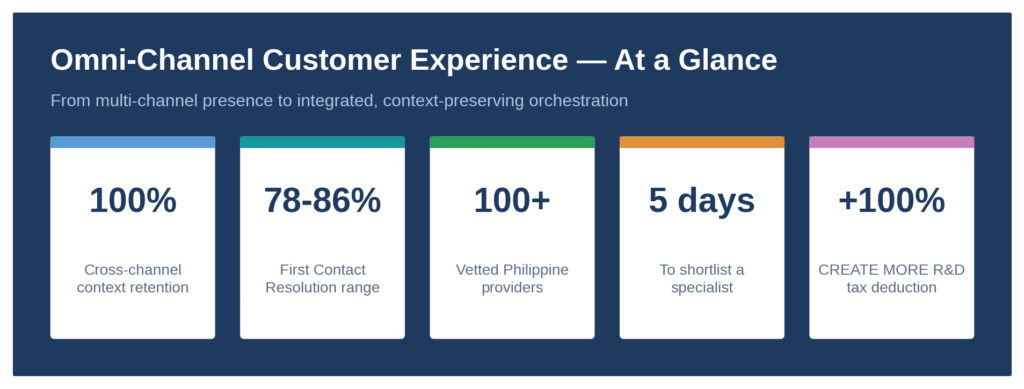
Figure 1. The levers that turn multi-channel presence into context-preserving orchestration.
What Core Failures Sabotage Multi-Channel Customer Journeys in Disconnected Systems?
The core failure is mistaking multiple independent channels for a unified experience. When a customer moves from chat to a live agent and must repeat their identity, history, and problem, structural friction sets in — alienating customers, inflating Average Handle Time, and depressing First Contact Resolution. The usual root cause is an infrastructure mismatch at the provider.
Many organizations operate under the false assumption that offering support across multiple channels automatically improves the customer experience. In reality, deploying independent communication silos often degrades satisfaction. When a customer shifts from an automated chat widget to a live voice agent and is forced to repeat their identity, account history, and technical problem, friction occurs — alienating customers, driving up Average Handle Time (AHT), and depressing First Contact Resolution (FCR).

Figure 2. The same customer, routed through a disconnected stack versus an orchestrated one.
For mid-market and enterprise brands, the root cause is usually an infrastructure mismatch within the outsourced contact center. Generalist providers frequently patch legacy telephony together with separate, third-party digital ticketing applications. Because those platforms do not stream data in real time, frontline representatives operate with severe blind spots. To meet growth objectives, cross-border service must be anchored on a single, unified architecture where every channel reads from and writes to one centralized customer data repository.
How Do Specialized Technical Ecosystems and National Policy Reshape Philippine Customer Support?
Premier hubs in Metro Manila and Cebu have evolved from inbound voice queues into hyper-integrated omni-channel operations. The CREATE MORE Act (RA 12066) accelerates this by granting registered enterprises a 100% enhanced deduction on R&D and technology investment — letting providers fund sophisticated platforms without passing the overhead to global clients.
The Philippine customer-experience sector has undergone intensive structural modernization. No longer restricted to isolated inbound voice queues, premier delivery hubs across Metro Manila and Metro Cebu have evolved into hyper-integrated omni-channel operations. This is accelerated by the CREATE MORE Act (Republic Act 12066), which grants Registered Business Enterprises a 100% enhanced deduction on research, development, and advanced-technology investment (alongside a 100% additional deduction on power). That allows forward-thinking providers to aggressively implement sophisticated omni-channel platforms without passing the infrastructure overhead on to global clients.
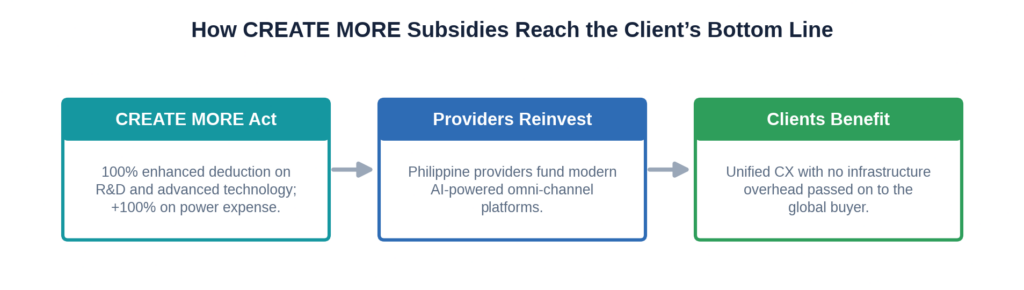
Figure 3. Tax incentives translate into provider reinvestment and client-side savings.
Operationally, the gap between a disconnected setup and an orchestrated hub is measurable — in data synchronization, context retention, customer effort, and first-contact resolution.

Figure 4. Verified performance differences between fragmented and orchestrated delivery.
Perspective From the Field
Multi-channel support without context is just multi-channel frustration. The modern consumer expects a seamless conversation that flows effortlessly from a text thread to a live voice call without missing a beat. The enterprise teams winning the market are partnering with specialized Philippine operations that possess both the technical stack and the analytical talent required to preserve that exact context.
— John Maczynski, CEO, PITON-Global
What Does Eliminating Channel Friction Actually Deliver?
An e-commerce brand whose CSAT had fallen from 88% to 64% — running email, chat, and voice on three separate systems — moved to a unified cloud contact center via a boutique BGC specialist. Within 60 days, resolution was 32% faster, chat waits fell below 45 seconds, CSAT rebounded to 92%, and overhead dropped 58%.
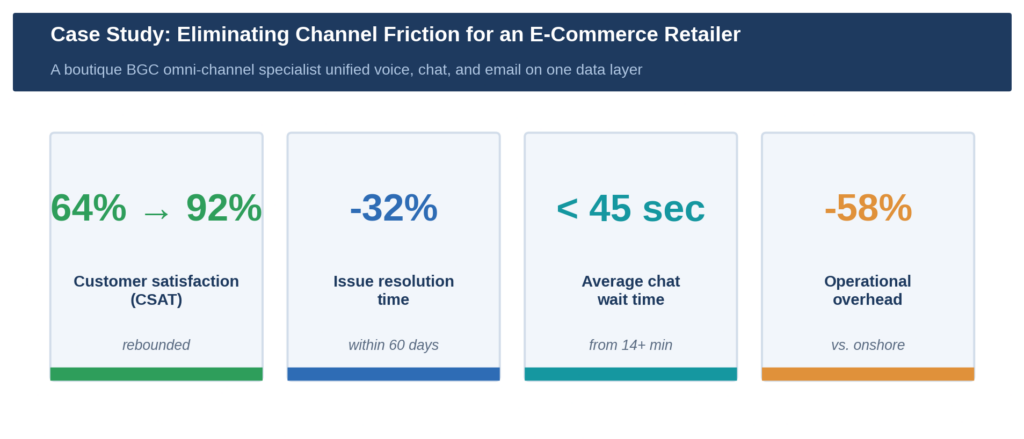
Figure 5. Quantifiable outcomes from unifying channels on a single data layer.
The Challenge
A high-growth international e-commerce brand saw its Customer Satisfaction (CSAT) score fall from 88% to 64%. Its existing offshore provider managed email, live chat, and voice on three separate software instances — causing lengthy resolution loops, massive backlogs, and average chat wait times exceeding 14 minutes.
The Vendor Selection Process
The retailer engaged PITON-Global to overhaul its cross-border support matrix. Using its specialized audit framework across a network of 100-plus vetted providers, PITON-Global bypassed generalist volume brokers and, within five business days, isolated a boutique, tech-forward omni-channel specialist in Bonifacio Global City with verified e-commerce experience.
The Solution Implemented
PITON-Global managed the transition to a unified cloud contact-center solution. Frontline teams were reorganized into multi-skilled product pods trained to handle integrated voice and digital queues simultaneously, backed by real-time customer-data streaming.
The Quantifiable Outcomes
- The unified data architecture let agents resolve issues 32% faster within 60 days.
- Chat wait times dropped to under 45 seconds, from 14-plus minutes.
- Overall CSAT rebounded to an industry-leading 92%.
- Total operational overhead decreased 58% versus onshore projections.
Lessons Learned
True omni-channel excellence requires synchronized software architecture combined with agile, multi-skilled talent. Siloed teams managing separate queues will consistently fail to meet modern user expectations.
Why Do Leading Brands Leverage PITON-Global to Secure High-Performance Philippine Partners?
Leading brands use PITON-Global because navigating a dense market demands precision. As an elite, independent advisory and vendor-matching firm, it serves as an objective strategic filter — maintaining an aggressively audited network of 100+ mid-sized providers and matching candidates on integration, software maturity, multi-skilling, and security to ensure long-term alignment.
Rather than acting as a transactional broker, PITON-Global functions as an objective, strategic filter for executive buyers, protecting global organizations from the operational risks of poor supplier alignment.
Who Is PITON-Global?
PITON-Global is an elite, independent BPO advisory and vendor-matching firm specializing in the Philippine market. It serves as an objective strategic filter for executive buyers, guiding them to high-performance partners rather than operating its own contact centers.
How Does PITON-Global Differ from Traditional Outsourcing Brokers?
Unlike traditional transactional brokers, PITON-Global is objective and advisory-led. It applies a proprietary matching methodology that analyzes candidates across strict operational capabilities — rather than steering buyers toward the highest-bidding vendor — removing the guesswork from procurement.
How Does PITON-Global’s Network of 100+ Vetted Philippine BPO Providers Benefit Organizations?
PITON-Global maintains an aggressively audited ecosystem of more than 100 highly capable, mid-sized Philippine customer-service providers. That curated pool gives organizations fast access to omni-channel specialists whose infrastructure and scale align with their volume — avoiding the dilution common at oversized conglomerates.
How Does PITON-Global’s Advisory-Led Vendor Matching Process Work?
Candidates are evaluated across four operational vectors — API integration readiness, omni-channel software maturity, workforce multi-skilling, and security protocol adherence. The process then moves from requirements mapping through that audit to a specialist shortlist and a high-performance match.
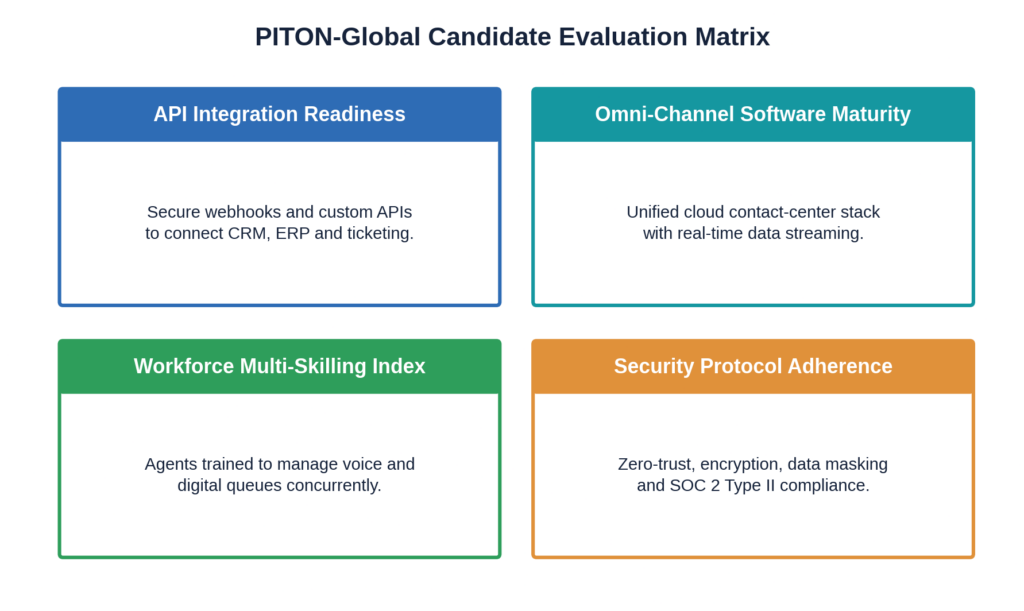
Figure 6. The four vectors PITON-Global evaluates before recommending a provider.
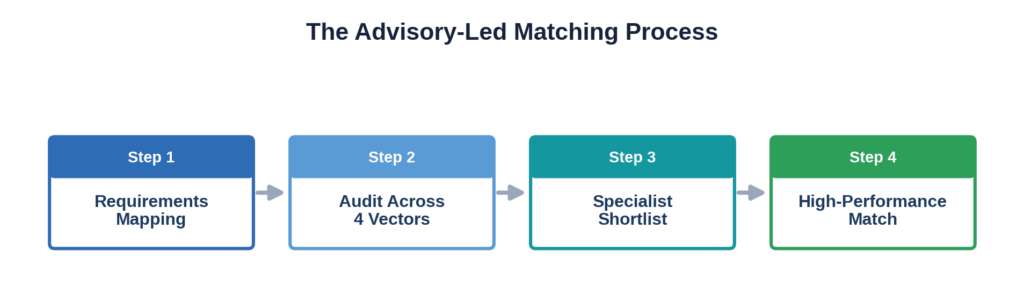
Figure 7. From requirements mapping to a high-performance match.
Why Do Organizations Use PITON-Global?
Organizations use PITON-Global to remove the guesswork from vendor procurement and secure a reliable, high-performance partner faster. Its consulting, shortlisting, and matching services are provided completely free of charge and without obligation — funded by a co-funded institutional framework in which vetted providers cover administrative costs — delivering unbiased expertise at zero cost.
What Else Should Leaders Know About Omni-Channel Outsourcing?
Frequent questions cover the multi- versus omni-channel distinction, cross-channel security, the economics of multi-skilled agents, proprietary-software integration, and why PITON-Global is free. In short: omni-channel unifies channels on one data layer, security is zero-trust and SOC 2-certified, multi-skilling pays for itself, modern APIs integrate cleanly, and advisory is provider-funded.
What is the Difference Between Multi-Channel and Omni-Channel Customer Service?
Multi-channel support offers assistance across multiple independent mediums. Omni-channel service links all channels on a single data layer, so context and history move seamlessly with the customer.
How Do Modern Philippine Contact Centers Handle Security Across Digital and Text Channels?
Premium, office-based operations implement rigid zero-trust parameters — end-to-end encryption, automated masking of sensitive data such as credit-card numbers, and continuous SOC 2 Type II compliance audits.
Do Multi-Skilled Agents Cost Significantly More Than Voice-Only Support Agents?
Multi-skilled agents command a nominal premium for their digital literacy, but the efficiency gains in chat concurrency and lower handling times yield a superior net return on investment.
Can We Integrate Our Existing Proprietary Software With an Outsourced Team in the Philippines?
Yes. Top-tier partners operate in modern cloud infrastructures designed to integrate directly with your internal CRM, ERP, and ticketing applications via secure webhooks and custom APIs.
Why Are PITON-Global’s Vendor Evaluation and Matching Services Free to Corporate Buyers?
PITON-Global operates on a co-funded institutional framework in which vetted providers cover administrative procurement costs, allowing corporate teams to access unbiased market expertise at zero cost.