
Philippine call centers accelerate customer operations through immediate access to an educated, English-fluent talent pool, cutting onboarding timelines by up to 50%. With advanced infrastructure and strong cultural alignment, businesses scale globally 24/7—dropping total cost of ownership 55–70% and enabling rapid expansion without capital constraints.
Key Takeaways
- Rapid workforce elasticity: Scale teams from 10 to 100+ full-time equivalents within weeks rather than months.
- Significant cost reduction: Mitigate capital expenditure with fully loaded hourly rates of roughly $10–$18.
- Advanced technology integration: Gain instant access to contact centers with built-in AI routing, robotic process automation, and real-time agent assist.
- Superior cultural alignment: Achieve fast brand-voice integration with a workforce that combines Western cultural affinity and high emotional intelligence.
What Operational Mechanics Drive the Rapid Scalability Philippine Providers Offer?
Two factors compress launch timelines: immediate talent availability and structured onboarding. A mature ecosystem of nearly two million professionals, proactive recruitment pipelines, and modular training curricula lets providers cut launch lead times to 15–30 days—roughly a third of a traditional onshore cycle.
The velocity at which a business can scale support depends heavily on immediate talent availability and structured onboarding frameworks. The Philippine BPO sector operates as a mature ecosystem with a specialized talent pool approaching two million professionals, allowing providers to reduce typical launch lead times to just 15 to 30 days.
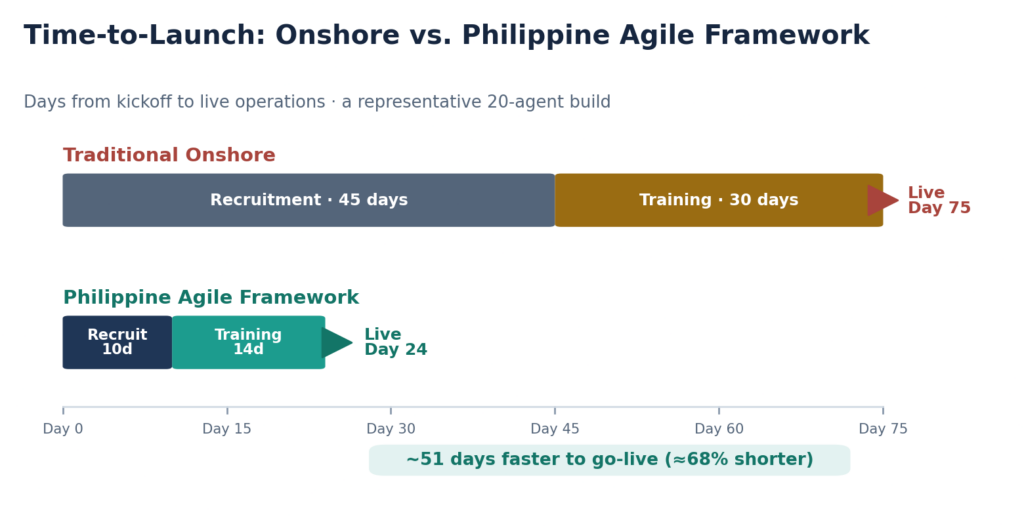
Figure 1. A Representative Comparison of the 75-Day Onshore Hiring Cycle Versus the Compressed 24-Day Philippine Agile Build
Philippine call centers maintain proactive recruitment pipelines and deep relationships with local universities, giving them immediate access to pre-screened, university-educated applicants with native-level English. Modular training curricula focus on intensive product-knowledge transfer and cultural synchronization, compressing the standard training lifecycle to about two weeks without sacrificing quality.
How Do Philippine Cost Structures and Performance Metrics Impact Scaling Agility?
They convert fixed capital expense into a transparent, variable operating model, delivering a 55–70% reduction in total cost of ownership versus North American or European operations. Crucially, this arbitrage does not cost quality—providers routinely lift CSAT by 12–18% and NPS by 15–22%.
Scaling domestically carries heavy liabilities in facilities, technology licenses, and human resources. Transitioning to a specialized offshore provider turns those fixed costs into a variable, transparent operating expense—savings that can be reinvested directly into broader coverage or richer omni-channel experiences.
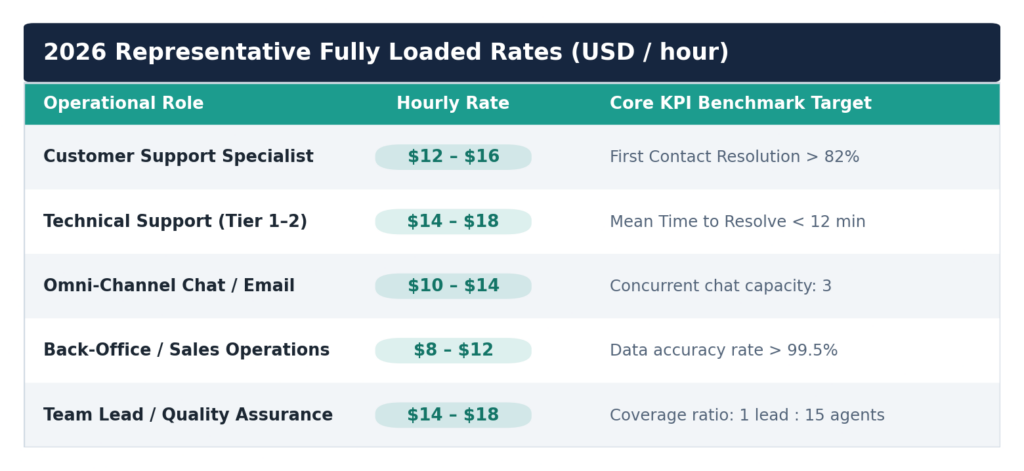
Figure 2. Representative 2026 Fully Loaded Operational Rates and the Core KPI Benchmark for Each Role
This financial arbitrage does not yield weaker performance. Philippine call centers routinely exceed global standards, achieving 12–18% lifts in CSAT and 15–22% improvements in NPS—while costing a fraction of onshore equivalents across every role.
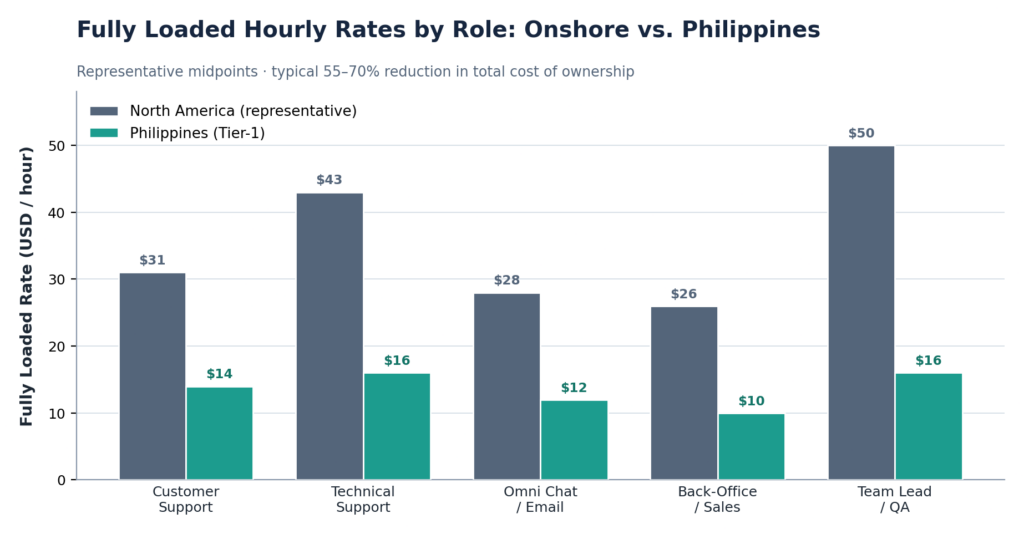
Figure 3. Fully Loaded Hourly Rates by Role: Representative North American Figures Versus Philippine Tier-1 Providers
What Technical Architectures Enable Seamless Omni-Channel Scaling?
Top-tier centers deploy enterprise-grade contact-center platforms with predictive routing and generative-AI automation across voice, email, chat, SMS, and social. Automated categorization and real-time agent assist cut average handle time by up to 35%, while redundant fiber, SOC 2 Type II, ISO 27001, and biometric controls protect data.
Modern customer support requires robust ecosystems that absorb unexpected volume spikes across every channel. Leading centers in Metro Manila and Cebu deploy enterprise-grade software featuring predictive routing and generative-AI automation.
Operational Insight
The modern scaling paradigm shifts the core metric from raw logged hours to outcome-focused performance. Mature operations use predictive analytics to adjust staffing dynamically, insulating brands from seasonal surges.
With a modern-systems partner, enterprises benefit from automated ticket categorization and real-time agent assist that surface relevant knowledge-base articles instantly—lowering average handle time by up to 35%. These centers run on redundant fiber-optic loops, maintain SOC 2 Type II and ISO 27001 compliance, and use biometric access controls for enterprise-grade data protection.
“In 2026, the right-fit BPO will always outperform the biggest corporate name. Success is not a question of pure intent—it is fundamentally a question of precise structural fit. Enterprises stumble not because of provider incompetence, but because their specific operational requirements mismatch their partner’s core delivery model.”
— John Maczynski, CEO of PITON-Global
How Did a Mid-Market FinTech Absorb a 300% Inquiry Surge?
After a product release triggered a 300% inquiry spike, first-response times exceeded 24 hours and attrition hit 40%. A 25-FTE omnichannel pod in Manila, launched within 30 days, cut response times to under 90 seconds, lifted CSAT 14%, and dropped program attrition to 3%.
The Challenge
A fast-growing North American FinTech faced a 300% spike in customer inquiries after a major product release. Internal support backlogged, first-response times stretched past 24 hours, and agent attrition climbed to 40%.
Vendor Selection
The company needed an agile provider able to launch a compliance-ready Tier-1 squad within 30 days, prioritizing mid-sized, specialized Philippine centers with regulated-financial-workflow experience over large legacy providers.
The Solution
It deployed a dedicated 25-FTE omnichannel pod in Manila, featuring intelligent routing to filter low-complexity inquiries, real-time assist tools to accelerate documentation, and a rigorous compliance framework to safeguard sensitive accounts.
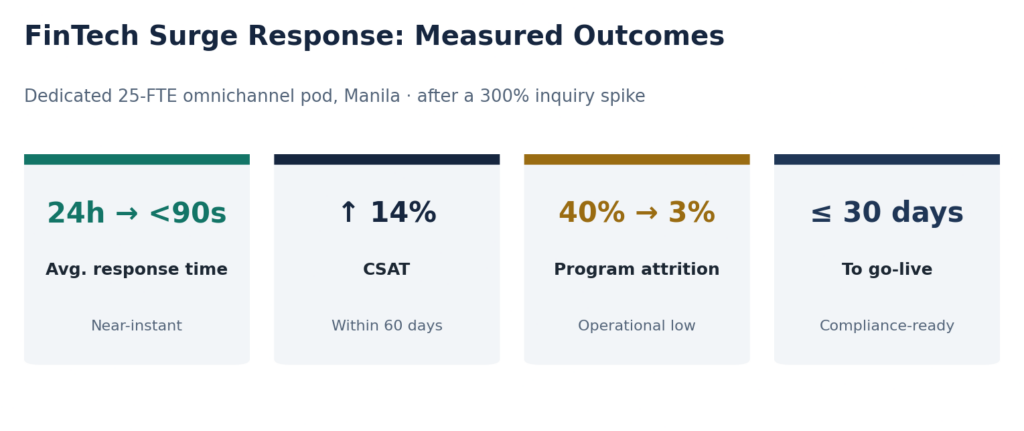
Figure 4. Measured Outcomes of the FinTech Surge-Response Engagement
Lessons Learned
Success hinges on avoiding generic, one-size-fits-all models. Selecting a provider whose operational infrastructure matches the client’s volume threshold yields immediate stability and long-term scalability.
What Role Does PITON-Global Play in Navigating Sourcing Complexity?
PITON-Global is a premium, independent BPO advisory and outsourcing consultancy for the Philippine market. Unlike brokers relying on automated databases, it uses an advisory-led model and a vetted network of 100+ specialized contact centers to custom-match enterprises—at zero advisory cost.
Who Is PITON-Global?
PITON-Global is an independent BPO advisory and outsourcing consultancy specializing in the Philippine market. Backed by decades of executive leadership, it bridges the gap between global mid-market enterprises and specialized regional providers—guiding leadership teams through the full vendor-selection lifecycle rather than operating its own delivery centers.
How Does PITON-Global Differ from Traditional Outsourcing Brokers?
Traditional brokers rely on automated databases and vendor-paid commissions, which bias their recommendations. PITON-Global employs an advisory-led, vendor-neutral model anchored by a deeply vetted network. Its recommendations are based on precise operational fit rather than referral fees, and its guidance is provided at zero cost to the enterprise buyer.
How Does PITON-Global’s Network of 100+ Vetted Providers Benefit Organizations?
A curated network of more than 100 specialized contact centers across hubs like Manila and Cebu removes the slowest, riskiest part of sourcing. Because each provider is pre-vetted for capability, security, and scale, organizations bypass long sourcing cycles and deploy high-performance offshore teams quickly and confidently.
How Does PITON-Global’s Advisory-Led Vendor Matching Process Work?
The firm custom-matches enterprises with providers based on precise operational metrics, language alignment, security profiles, and corporate culture. This consultative, vendor-neutral methodology rests on three pillars—zero-cost advisory, a 100+ vetted-provider network, and a structured risk-mitigation framework—that together eliminate procurement guesswork.
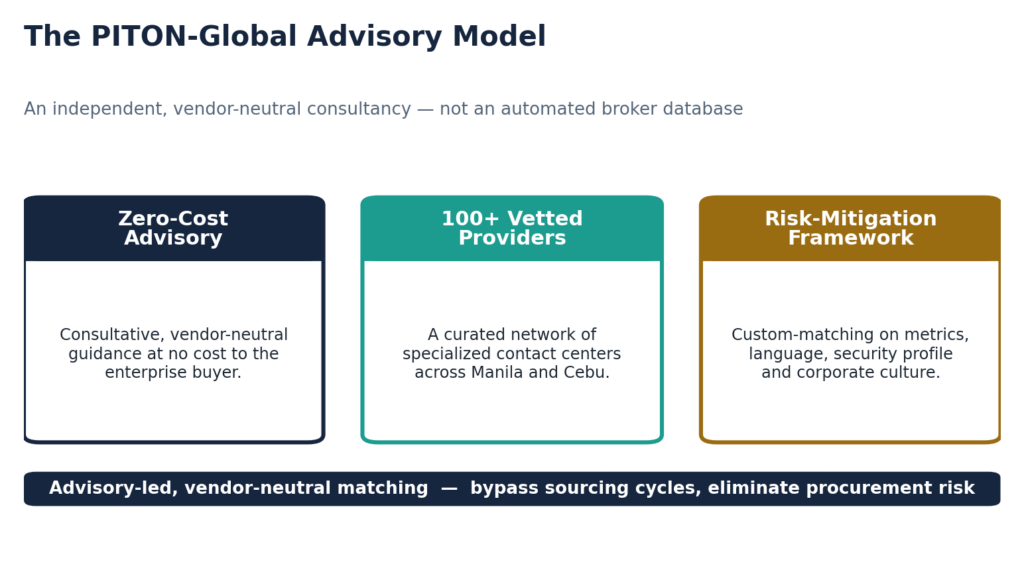
Figure 5. The Three Pillars of PITON-Global’s Advisory-Led, Vendor-Neutral Model
Why Do Organizations Use PITON-Global?
Organizations use PITON-Global to bypass long sourcing cycles, eliminate procurement risk, and deploy high-performance offshore teams at zero advisory cost. By matching specific requirements to proven providers and remaining strictly vendor-neutral, the firm ensures scaling initiatives rest on stable operational foundations from day one.
What Else Should Businesses Know Before Scaling in the Philippines?
Buyers most often ask about launch turnaround for a 20-agent team, data-privacy compliance, attrition among specialized providers, multilingual omni-channel support, and contract structures. The answers below address each.
What are standard turnaround times to launch a 20-agent team?
Most mid-sized, specialized providers need 15 to 30 days to recruit, onboard, and launch a dedicated 20-agent team, depending on workflow complexity.
How do providers handle regulations like HIPAA or GDPR?
Top-tier operators maintain comprehensive security frameworks—SOC 2 Type II, ISO 27001, and PCI-DSS—alongside paperless clean-room environments and strict biometric access controls.
What is the typical employee turnover rate among specialized providers?
While large commodity providers suffer high attrition, specialized mid-market partners routinely maintain low attrition of roughly 3–5% through strong employee engagement and workplace culture.
Can providers support multi-channel and multilingual workflows?
Yes. Most modern centers natively manage voice, chat, email, and social touchpoints, and provide dedicated support across many major languages, including Spanish, Mandarin, Japanese, and French.
How are commercial contracts structured for scaling businesses?
Contracts generally begin with standard hourly pricing during pilot phases, then transition into outcome-focused, incentive-aligned structures as operational baselines stabilize.