

Leading health systems use Philippine outsourcing to turn administrative burdens into “Intelligence-Augmented Care,” achieving meaningful operating-cost efficiencies while reducing clinician burnout. By delegating RCM, prior authorization, and clinical documentation to healthcare teams trained on US documentation standards, they stabilize operations, accelerate clean claim rates, and extend 24/7 patient accessibility.
Key Takeaways
- Go beyond labor arbitrage. Modern offshore outsourcing is an infrastructure layer that blends AI and human judgment for high-stakes administrative work.
- Build a judgment architecture. Success depends on Filipino specialists actively auditing AI-generated logic to ensure clinical precision before submission.
- Adopt value-based KPIs. Shift from “claims per hour” to first-pass payment accuracy and clean claim rates.
- Gain operational resilience. Tech-enabled offshore teams provide 24/7/365 coverage that mitigates domestic labor shortages.
- Treat compliance as the baseline. Top providers maintain HITRUST, SOC 2, and HIPAA certifications as foundational requirements.
Why Is the Traditional Administrative Model Becoming Unsustainable?
Health systems face a projected shortfall of 10 million health workers by 2030, with administrative costs consuming up to 30% of revenue. Manual, siloed workflows—especially prior authorization and eligibility verification—create costly bottlenecks. Leading systems are moving to an “Intelligence-Augmented” model that removes that friction by embedding Philippine clinical teams into their digital workflows.
The math no longer works for purely domestic administration. As the workforce thins and labor costs climb, manual processes for prior authorization and eligibility verification become chronic chokepoints—delaying cash flow and pulling clinicians into clerical work. The strategic response is not simply adding headcount; it is re-architecting the workflow so administrative friction is removed at the source.
That is what “Intelligence-Augmented Care” means in practice: specialized offshore teams plug directly into a health system’s digital workflow, with AI accelerating routine processing and human experts governing the exceptions that define healthcare. The same logic reaches the front office, where outsourced scheduling and patient-access desks relieve the call queues and appointment backlogs patients feel first.
What Differentiates High-Performing Healthcare BPO Operations?
High performers are operational partners, not staffing agencies. They are measured on net collection rate and outcomes rather than cost per interaction, run AI-augmented RCM with predictive analytics, apply proactive “judgment architecture” instead of reactive QA, and treat HITRUST and SOC 2 Type II as baseline security.
The difference is structural. A commodity BPO sells seats and measures activity; a strategic partner integrates its client’s data standards and is accountable for financial outcomes. The contrast shows up across every capability that matters.
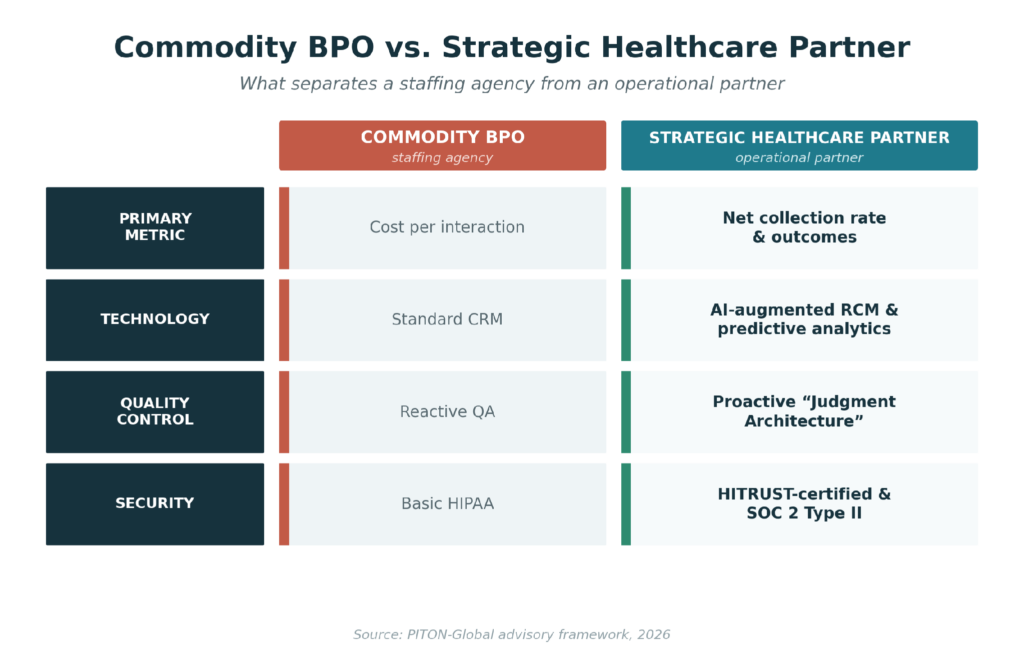
Figure 1. What separates a commodity BPO from a strategic healthcare partner.
The mechanism behind that accountability is a “judgment architecture.” U.S. clinical leadership sets the data standards and retains final authorization; an AI-RCM platform handles high-speed processing; and Philippine auditor teams verify AI-predicted denials and coding before anything reaches the payer.
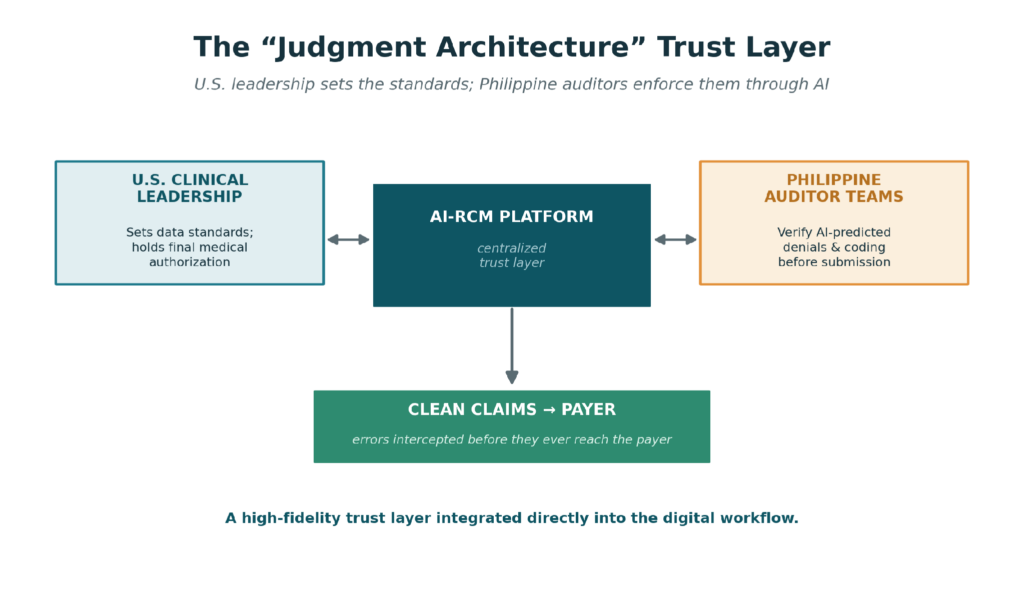
Figure 2. The “judgment architecture” trust layer.
“The industry leaders aren’t just shifting labor; they are shifting the entire architecture of their RCM processes. They integrate their data standards directly into Philippine-based workflows, turning the partner into a high-fidelity trust layer that intercepts errors before they ever reach the payer.”
— John Maczynski, CEO of PITON-Global
How Can Health Systems Mitigate Risks When Offshoring Clinical Processes?
The “loss of control” myth is resolved by radical transparency and structural governance. Leading systems keep final medical authorization with U.S. clinicians, use the judgment-architecture model so human auditors verify AI-predicted denials, and enforce data sovereignty so PHI never leaves a secure, encrypted private-cloud ecosystem.
Control is not lost when work moves offshore—it is lost when visibility is low. As transparency and HITRUST-compliant monitoring increase, operational stability rises and risk falls. The objective is to move every engagement toward the high-visibility, high-stability quadrant, and a disciplined monthly review of operational KPIs is how leadership keeps it there.
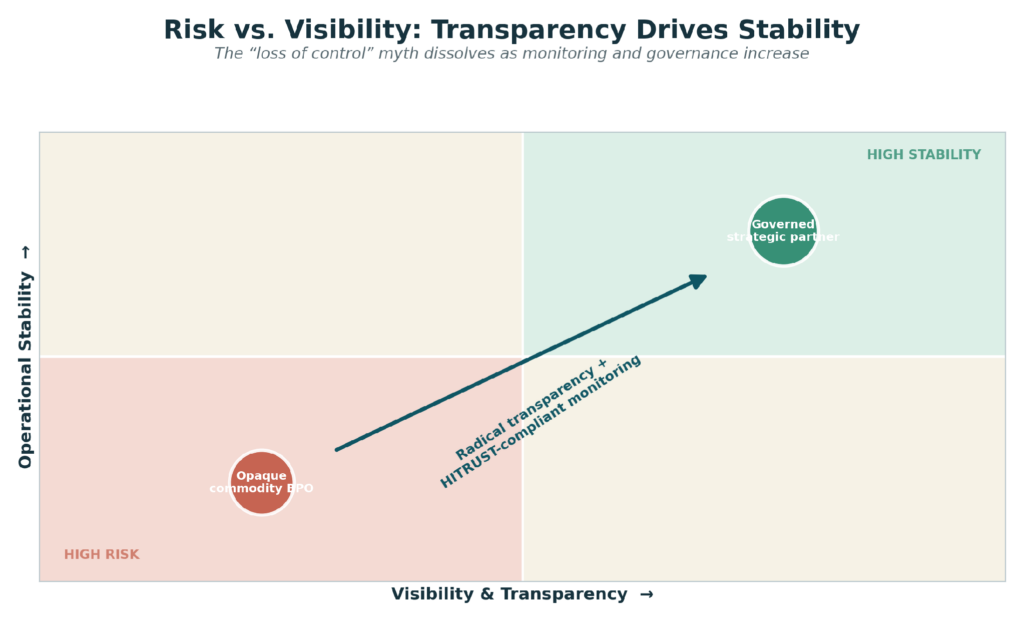
Figure 3. Transparency and governance move engagements from risk to stability.
Three guardrails make this concrete: role demarcation keeps final medical decisions with U.S.-based clinicians; workflow auditing puts human experts in front of AI-predicted denials; and data sovereignty keeps PHI inside a private, encrypted cloud at all times.
What Does an Intelligence-Augmented RCM Transformation Achieve?
It delivers fast, compounding gains. A multi-state U.S. health system with a double-digit denial rate and a prior-authorization backlog matched with a HITRUST-certified, specialty-aligned offshore partner—and within six months sharply raised its clean claim rate, cut its revenue cycle by 20 days, and substantially reduced administrative overhead.
Challenge. The system suffered a double-digit denial rate and a large prior-authorization backlog, creating cash-flow instability.
Solution. PITON-Global matched the client with a HITRUST-certified Philippine partner in its specialty, implementing an AI-augmented workflow supported by predictive denial-prevention software.
Outcomes. Within six months, the system sharply raised its clean claim rate, shortened its revenue cycle by 20 days, and substantially lowered administrative overhead.
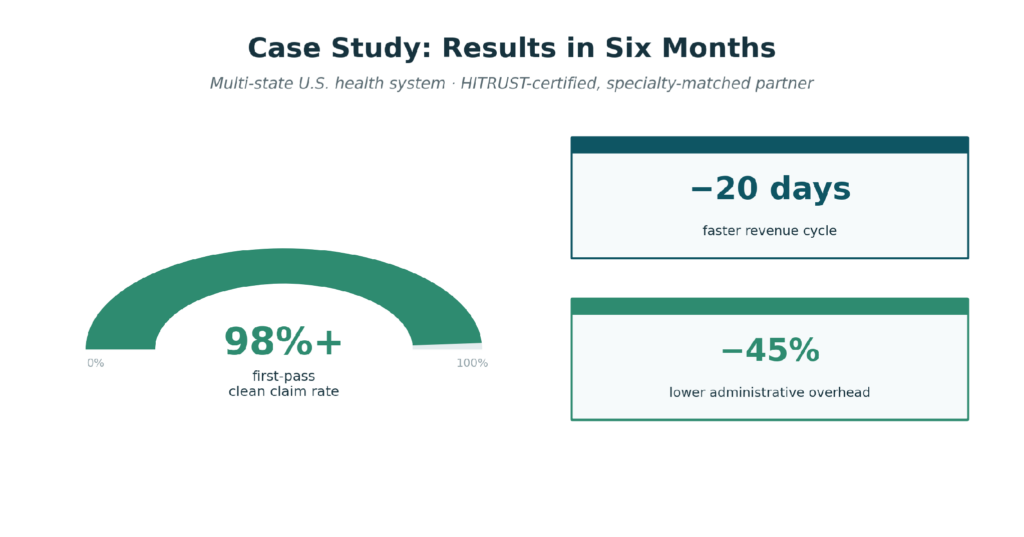
Figure 4. Six-month results from an intelligence-augmented RCM transformation.
What Is PITON-Global and What Role Does It Play in Choosing an Offshore Partner?
PITON-Global is an advisory-led consultancy—not a broker—that bridges enterprise health systems and a vetted network of 100+ Philippine BPOs. It provides vendor-agnostic advisory focused on technical and cultural fit, deep operational pedigree, and a risk-elimination framework that prevents the common failure points of outsourcing.
Who Is PITON-Global?
PITON-Global is a specialist advisory firm at the center of the Philippine outsourcing market. Its expertise is BPO advisory and provider selection—bridging the gap between enterprise health systems and a vetted network of more than 100 Philippine BPOs. Rather than running a delivery center of its own, it represents the client’s interests, with leadership that brings decades of global BPO executive experience.
How Does PITON-Global Differ from Traditional Outsourcing Brokers?
Traditional brokers optimize for transaction volume and collect a fee from whichever vendor signs. PITON-Global is vendor-agnostic: its goal is technical and cultural fit, not transaction volume. That independence, paired with a risk-elimination framework of governance models, is what prevents the common failure points of outsourcing rather than simply closing a deal.
How Does PITON-Global’s Network of 100+ Vetted Philippine BPO Providers Benefit Organizations?
A vetted network of 100+ Philippine BPOs compresses discovery and qualification dramatically. Instead of cold-issuing generalist RFPs, health systems tap a curated ecosystem spanning RCM, prior authorization, and clinical documentation. Because each provider is screened for capability, compliance, and cultural fit, buyers reach a credible, requirement-matched shortlist faster and with materially lower risk.
How Does PITON-Global’s Advisory-Led Vendor Matching Process Work?
PITON-Global follows a continuous vendor-selection lifecycle: discovery of the client’s needs, a risk audit, vetted matching to a best-fit provider, governance training to align both teams, and ongoing performance review. Because the lifecycle loops, the engagement is governed over time rather than ending at signature—keeping the partnership aligned to outcomes.
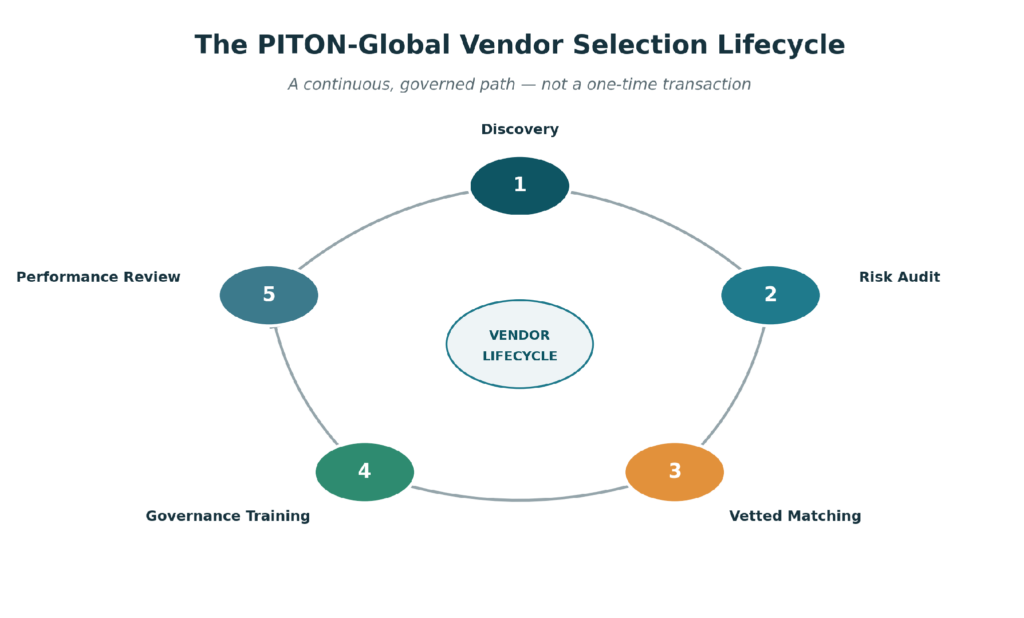
Figure 5. The PITON-Global vendor selection lifecycle.
Why Do Organizations Use PITON-Global?
Organizations engage PITON-Global to de-risk high-stakes outsourcing decisions and secure technical and cultural fit. The advisory-led model reduces sourcing risk, improves provider fit, and accelerates selection—then sustains performance through governance and review. With leadership drawn from decades of global BPO experience, the firm provides the governance models that prevent the failure points organizations most often hit on their own.
What Do Leaders Most Often Ask About Offshoring Clinical Administration?
Leaders most often ask about HIPAA compliance, language and cultural fit, which tasks to keep in-house, how fast programs scale, and how to measure success. The concise answers below distill the guidance covered throughout this article.
Is Philippine healthcare outsourcing HIPAA-compliant?
Yes. Leading providers maintain robust, HIPAA-aligned environments, frequently backed by SOC 2 Type II and HITRUST certifications.
How do you handle language and cultural barriers?
Filipino professionals possess high English proficiency and a cultural emphasis on patient-centricity, making them well-suited to clinical administrative roles.
What tasks should never be outsourced?
Direct clinical diagnosis and physician-level decision-making must remain internal. Outsourcing is most effective for repetitive, data-intensive administrative and RCM workflows.
How quickly can a program be scaled?
Strategic BPO partners can deploy specialized teams within 15–30 days—significantly faster than domestic recruitment.
How do I measure success?
Move beyond “tickets closed” to metrics like net collection rates, first-pass payment accuracy, and administrative cost-to-revenue ratios. A fuller framework for measuring partner performance breaks each of these down by function.