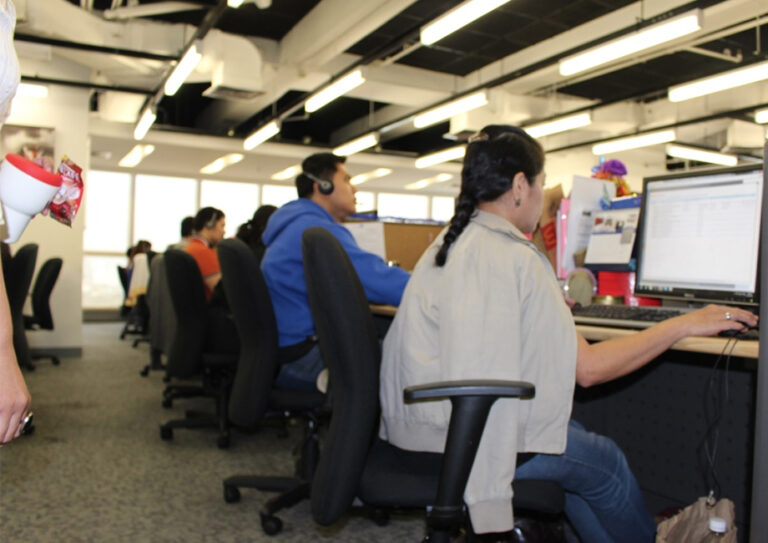

For a U.S. support leader, “elevating” means three concrete changes: customers get answered at any hour, the first agent they reach resolves the issue, and the interaction feels warmer than the one it replaced. Philippine contact centers deliver global customer support at that standard for North American brands because the labor pool, the time zone and the operating culture all point the same way. Not every provider gets there, which is why the pillar guide’s section with vendor tiers explained for first-time buyers is worth reading before any RFP. Here is what the elevated version looks like and what it takes to buy it.
What elevated global customer support means for a U.S. brand
It means the support experience improves on every dimension the customer notices, at a lower cost than the in-house operation it replaces. Concretely, a program is elevated rather than merely relocated when it delivers all of the following at once:
- Speed: calls are answered within the service-level target in every half-hour interval, including evenings and weekends.
- Resolution: the first agent has the knowledge and the authority to close the issue without a transfer or a callback.
- Tone: the customer feels heard, which shows up in post-call survey scores and in fewer escalations.
- Consistency: chat, email and phone tell the customer the same thing, because the same team handles all three from one knowledge base.
- Visibility: the buyer sees the same real-time dashboards the vendor’s operations manager sees.
A provider that hits four of five has relocated your support. One that hits all five has elevated it, and the difference is usually management discipline rather than geography.
Empathy and language: the human advantage
The Filipino agent’s reputation for warmth is real, and it is backed by measurable language ability. English is the medium of instruction in higher education, and the Philippines scored 569 in the 2025 EF English Proficiency Index, ranking 28th in the world in the “High” band. For American customers that translates into agents who follow idiom, pacing and regional accents without effort, and who have absorbed U.S. consumer culture through decades of exposure to American media and brands.
Empathy is harder to score but easier to hear. The service culture prizes patience and respect, and agents are trained to de-escalate rather than to end the call quickly. In queues where the customer is anxious, such as healthcare access, insurance claims, travel disruption or a failed payment, that disposition is the single biggest reason U.S. buyers report higher satisfaction scores after moving the work to Manila or Cebu than they had onshore.
The service mix you can lift offshore
Almost the whole front line. The usual sequence for a U.S. brand starts with a single inbound customer-service queue, adds technical support and order management once the knowledge base has proven itself, then layers on chat and email so one team owns the customer across channels. Retention and save desks, outbound follow-up, and back-office work such as order processing or claims intake often follow within the first year. Our overview of the types of services Philippine call centers provide lists the full catalog with the staffing and skill implications of each.
Coverage after hours: what the case data shows
The time-zone advantage is the most tangible piece of the upgrade. The U.S. evening and overnight fall within the Philippine working day, so around-the-clock coverage is staffed by regular day and mid-shift teams rather than a premium night crew, and the quality does not sag at midnight Eastern.
The effect is visible in the operating data PITON-Global publishes on its call center outsourcing service page from 2025–2026 engagements. In one program for a consumer-services brand handling about 45,000 calls a month, adding a Philippine overflow and after-hours team took the share of after-hours calls answered from roughly zero to 97%, cut peak-period abandonment from 11% to 3%, and produced a combined 24/7 service level of 92%. In another, for a regulated utility, service level rose from 71% to 88%, abandonment fell by 71%, cost per call dropped 64% against the onshore baseline, and customer satisfaction settled at 4.6 out of 5.
Those are the outcomes to write into a contract. A vendor that cannot commit to interval-level service-level reporting and an abandonment ceiling for the after-hours window is offering coverage, not elevation.
Technology and security behind the agent
Top-tier providers run the same cloud contact-center platforms a U.S. enterprise would choose for itself, such as Genesys, Five9, NICE CXone, Avaya or Twilio Flex, and connect them to the client’s CRM so the agent works inside the buyer’s data rather than a copy of it. Agent-assist tools now surface knowledge and next-best actions during the call, and automated QA scores every interaction rather than a sample. The technology is not the differentiator; the discipline of using it is.
Security should be non-negotiable and verifiable. Expect SOC 2 Type II and PCI DSS as a baseline for any queue that touches payments, HIPAA controls for anything involving health information, and clean-desk, badge-access floors for regulated work. Ask for the most recent audit report, not the certificate, and confirm that the sites and the home-agent tier you will actually use are within its scope.
The economics and the industry behind them
The cost advantage is large enough that the decision rarely turns on price; it turns on quality and risk. Indicative 2026 fully loaded rates for vetted Philippine voice centers run $10–16 per hour for inbound, outbound, blended and retention agents and $14–18 for team leads, roughly 60–70% below onshore equivalents, according to the rate card on PITON-Global’s call center outsourcing service page. Because those rates already carry supervision, QA, facilities and technology, the right comparison is with an onshore seat’s total cost, not its base wage.
The industry supporting those rates is deep and still growing. IBPAP reported that IT-BPM export revenue passed $40 billion in 2025 with about 1.9 million digital workers, and set a 2026 target of $42 billion and 1.97 million jobs, as The Philippine Star reported in January 2026. That scale is what lets a U.S. program grow from 20 seats to 200 without running out of qualified people, and it is one of the reasons the country keeps its place as a top destination for call centers.
Starting well: the relationship is the product
Elevated support is built during the first ninety days, when the knowledge base is being corrected, the QA form is being calibrated and the agents are forming their picture of your customer. Buyers who assign a named program owner, join weekly calibration calls and visit the floor in the first quarter consistently get better outcomes than those who hand over a script and wait for the monthly report. Our piece on building stronger customer relationships through service excellence describes the governance rhythm that turns a vendor into a partner.
Frequently asked questions
Will American customers notice that support has moved offshore?
They will notice that the phone is answered faster and at hours it was not before. Well-selected Filipino agents handle American English and idiom fluently, and customer satisfaction scores in mature programs typically match or exceed the onshore baseline they replaced.
How quickly can a U.S. program go live?
A gated stand-up with recruiting, training, nesting and a controlled cutover usually takes about eight weeks for a single queue. Systems access, knowledge-base readiness and internal approvals on the buyer’s side are the usual reasons it takes longer.
Is a small or mid-sized company too small to benefit?
No. Programs of 15 to 40 seats are common, and mid-sized providers often serve them better than the largest vendors do because the account gets senior attention. The vetting effort is the same regardless of size, so start with a queue whose processes are well documented.
What should we keep in-house?
Ownership of the customer data, the knowledge base, the QA standard and the escalation policy. Everything the customer hears can be delivered offshore; everything that defines what they should hear stays with you.