
On this page
- Key Takeaways
- What Is the Real Total Cost Difference Between Philippine BPOs and Domestic U.S. Teams?
- How Do Costs Vary Across Specific Functional Roles and Skill Sets?
- What Hidden Costs and Operational Risks Should Enterprise Buyers Factor In?
- What Does a Successful Transition from Domestic Staffing Look Like?
- How Does PITON-Global Streamline BPO Selection and Reduce Operational Risk?
- Frequently Asked Questions
Outsourcing to the Philippines delivers a fully loaded cost reduction of 60%–70% compared with domestic U.S. staffing models, with all-inclusive per-agent rates of $8–$18 per hour versus $28–$65 in the United States. Beyond baseline labor, companies eliminate domestic payroll taxes, benefit loads, specialized technology overhead, and facility costs, cutting annual TCO per FTE from $70,000–$125,000 to $17,000–$31,000.
Key Takeaways
- Significant cost reduction: Total Cost of Ownership per full-time equivalent drops from $70,000–$125,000 annually in the U.S. to $17,000–$31,000 in the Philippines.
- Transparent all-inclusive pricing: Philippine BPO contracts package direct wages, statutory benefits (SSS, PhilHealth, Pag-IBIG), 13th-month pay, management oversight, and enterprise infrastructure into a single predictable rate, whereas U.S. employment burdens add 25%–40% in taxes and benefits alone before operational overhead.
- Strategic talent tiering: High-value, specialized roles such as Tier-3 technical support or financial analysts retain a strong cost benefit, commanding $18–$25 per hour in the Philippines compared with $50–$90+ in domestic markets.
- Execution matters: Selecting an unvetted, low-cost vendor at $5–$7 per hour often increases long-term expense through high attrition and operational rework, making expert partner evaluation crucial for sustained ROI.
What Is the Real Total Cost Difference Between Philippine BPOs and Domestic U.S. Teams?
In a U.S. staffing model, base salary is only 60%–70% of total employment expenditure once payroll taxes, healthcare, 401(k) matching, PTO, real estate, hardware, software licensing, and management layers are added, taking fully loaded annual TCO to $70,250–$124,500 per employee. A Philippine BPO seat bundles all of those elements into $17,000–$31,000, a 65%–75% reduction.
When analyzing operational expenses, enterprise buyers must look past base wages to compare the fully burdened Total Cost of Ownership between domestic hiring and offshore outsourcing. In a traditional U.S. staffing model, employers absorb federal and state payroll taxes, healthcare contributions, 401(k) matching, paid time off, real estate overhead, hardware provisioning, software licensing, and specialized HR and management layers on top of salary. An offshore BPO partnership in the Philippines converts those variable expenditures into a single, fully loaded line item, as the table below shows element by element.
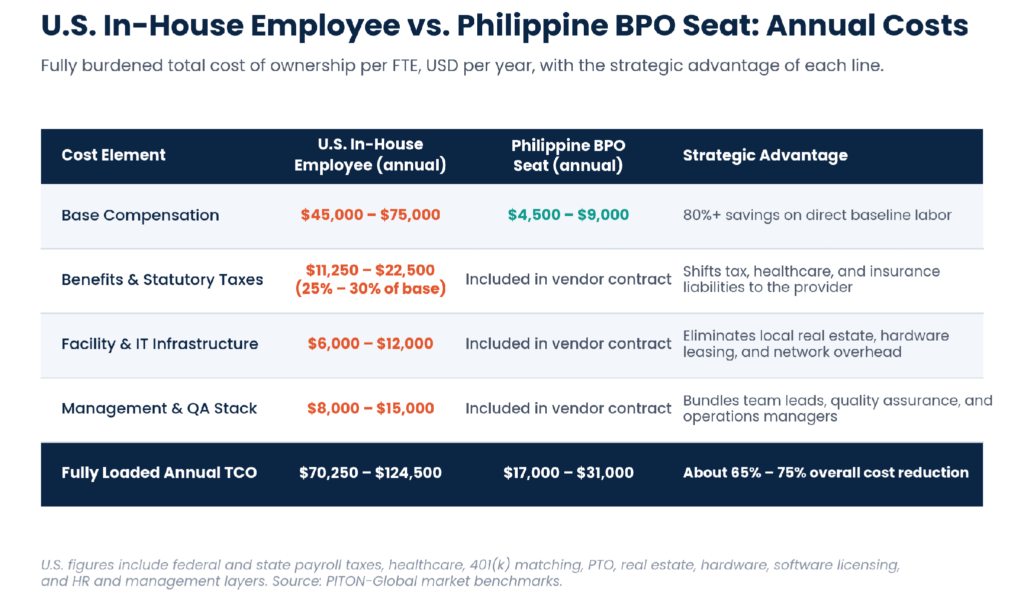
Figure 1. Annual cost elements of a U.S. in-house employee versus a Philippine BPO seat, with the strategic advantage of each line.
The gap holds at every level of seniority. Because the Philippine rate bundles benefits, infrastructure, and management, the U.S. burden grows in absolute terms as base salary rises while the offshore seat scales more gently, which is why senior-tier roles retain roughly the same percentage saving as entry-level ones.
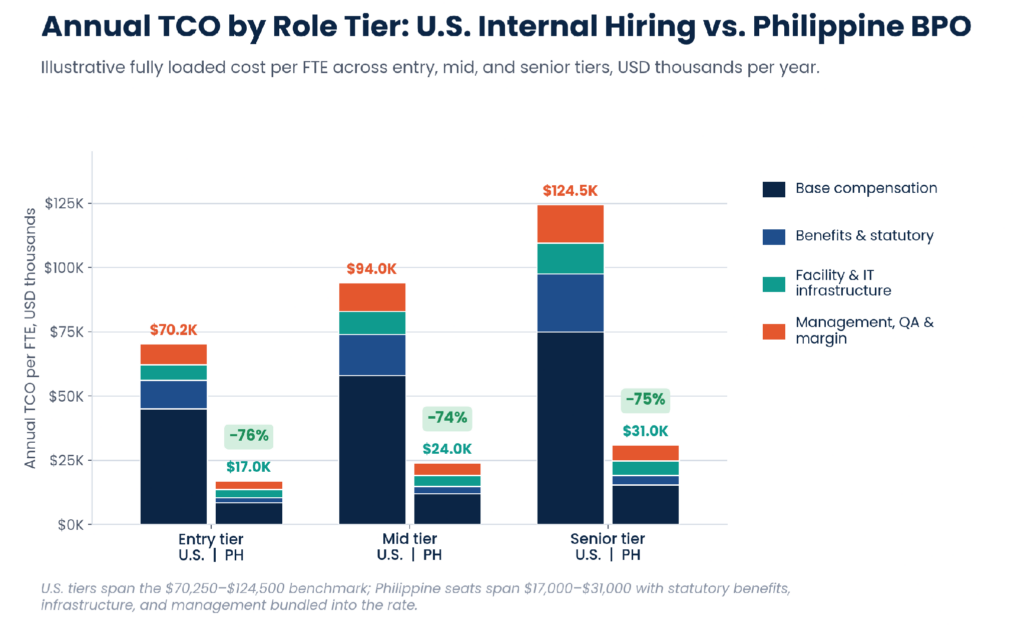
Figure 2. Side-by-side annual TCO breakdown, U.S. internal hiring versus Philippine BPO fully loaded rates, across entry, mid, and senior role tiers (illustrative).
How Do Costs Vary Across Specific Functional Roles and Skill Sets?
Cost structures vary with technical complexity, domain expertise, and shift requirements. Omnichannel customer support runs $8–$14 per hour in the Philippines versus $28–$40 in the U.S.; financial and accounting operations $12–$18 versus $40–$65; software engineering and IT helpdesk $15–$25 versus $55–$110; and digital marketing and content operations $10–$16 versus $35–$60.
While basic customer care and back-office administration yield the maximum baseline savings in percentage terms, specialized technical roles offer the largest absolute margin expansion because the U.S. rate they replace is so much higher. The four role families most often compared are:
- Omnichannel customer support: $8–$14 per hour in the Philippines versus $28–$40 in the U.S.
- Financial and accounting operations: $12–$18 per hour versus $40–$65.
- Software engineering and IT helpdesk: $15–$25 per hour versus $55–$110.
- Digital marketing and content operations: $10–$16 per hour versus $35–$60.
The matrix below plots Philippine bill rates against the experience and skill each role requires, and shows where Metro Manila and Cebu delivery centers fit.
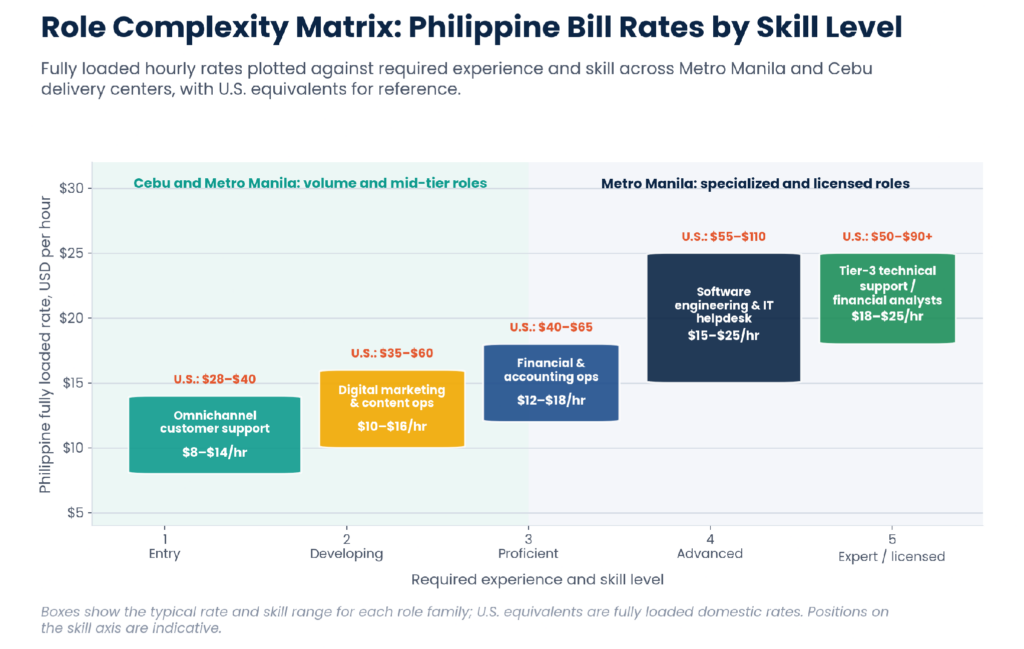
Figure 3. Role complexity matrix: Philippine hourly bill rates plotted against required experience and skill level, with U.S. equivalents for reference.
The practical implication for a staffing decision is that the offshore case is strongest at both ends of the skill spectrum: high-volume support roles for the percentage saving, and specialized finance, engineering, and Tier-3 technical roles for the dollar saving. Roles in between still save 60% or more, but the vendor’s domain expertise becomes the deciding factor rather than the rate.
What Hidden Costs and Operational Risks Should Enterprise Buyers Factor In?
Three indirect costs can erode the headline saving: attrition and retraining when a low-tier vendor operating on razor-thin margins pushes agent churn above 40%; infrastructure and redundancy gaps when a low-cost operator lacks the fiber, power, and PCI DSS, ISO 27001, or HIPAA safeguards Tier-1 providers maintain; and governance, which requires dedicated internal vendor management resources.
While the direct financial advantages are clear, evaluating an offshore model requires analyzing potential indirect costs. None of the three below changes the conclusion of the comparison, but each changes which provider wins it.
Attrition and Retraining Costs
Choosing a low-tier BPO vendor operating at razor-thin margins can result in agent churn rates exceeding 40%. Retraining new agents dilutes institutional knowledge and increases operational friction, and the cost lands on the buyer in the form of lower quality and slower resolution during every ramp.
Infrastructure and Redundancy
Tier-1 BPO operators invest heavily in enterprise-grade fiber redundancy, generator backups, and strict security compliance frameworks such as PCI DSS, ISO 27001, and HIPAA. Low-cost operators may lack these safeguards, exposing buyers to compliance liabilities and downtime that can cost more than a year of the rate difference.
Governance and Oversight
Managing an offshore engagement requires clear internal governance. Organizations should budget for dedicated vendor management resources to align service delivery with strategic expectations—typically a small fraction of contract value, and the surest protection for the savings the comparison promises.
The biggest mistake executive teams make when evaluating Philippine outsourcing is treating cost as a singular metric rather than a function of value creation. Squeezing a provider down to an unsustainable hourly rate guarantees high attrition, poor customer sentiment, and zero operational innovation. True cost optimization happens when you pay fair market value for elite BPO infrastructure and talent, unlocking a 60% operational saving while simultaneously elevating service performance.
— John Maczynski, CEO, PITON-Global
What Does a Successful Transition from Domestic Staffing Look Like?
A successful transition pairs a compliant, mid-tier specialized provider with a phased ramp. A U.S. healthcare technology enterprise replaced $34-per-hour domestic seats with a phased 45-seat deployment in Metro Manila, cut annual operational cost by 63% ($1.85M in Year 1), lifted CSAT from 84% to 92% within four months, and reduced agent attrition from 35% to 8%.
Client Challenge
A growing U.S. healthcare technology enterprise faced rapidly expanding customer support costs, with domestic agent seats averaging $34 per hour fully loaded. Budget constraints prevented it from offering 24/7 coverage across channels, and domestic attrition of 35% kept the team in a permanent state of ramp.
Vendor Selection
Partnering with PITON-Global, the organization avoided a lengthy RFP process. PITON-Global evaluated 12 specialized BPO providers within its vetted network and identified three candidates with extensive HIPAA compliance expertise and proven talent retention records.
Solution Implemented
A phased 45-seat deployment in Metro Manila featured dedicated Tier-1 and Tier-2 technical support representatives, integrated QA managers, and local team leadership, moving from advisory matching to 24/7 multi-channel go-live over roughly 90 days, as the timeline below shows.
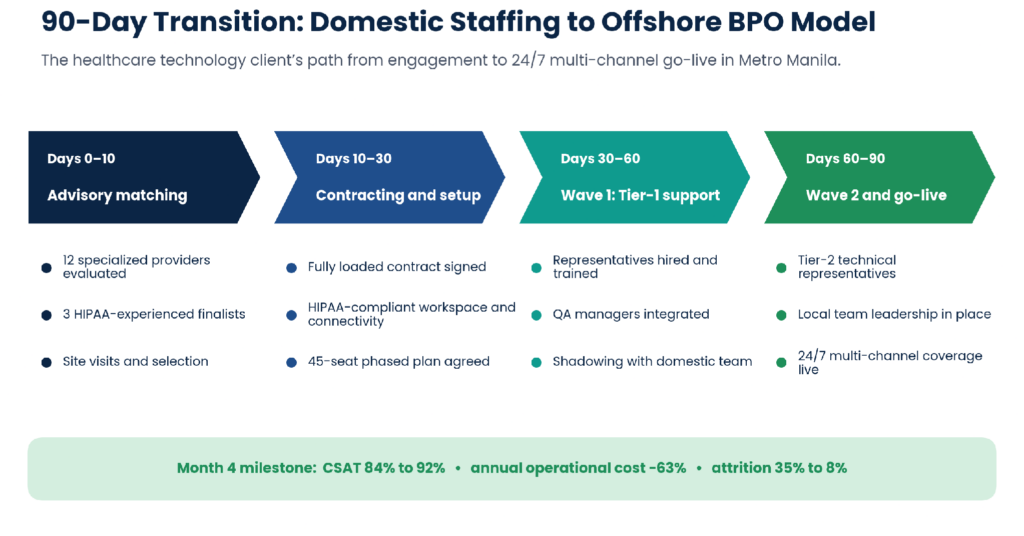
Figure 4. The client’s 90-day transition from domestic staffing to an advisory-matched offshore BPO model.
Outcomes and Lessons
Direct annual operational cost fell by 63%, saving $1.85M in Year 1. CSAT scores increased from 84% to 92% within four months thanks to expanded 24/7 availability, and agent attrition fell from a domestic baseline of 35% to 8% under the provider’s talent retention programs. The lesson: partnering with a fully compliant, mid-tier specialized provider yields far greater operational continuity and long-term savings than selecting the lowest-priced vendor.
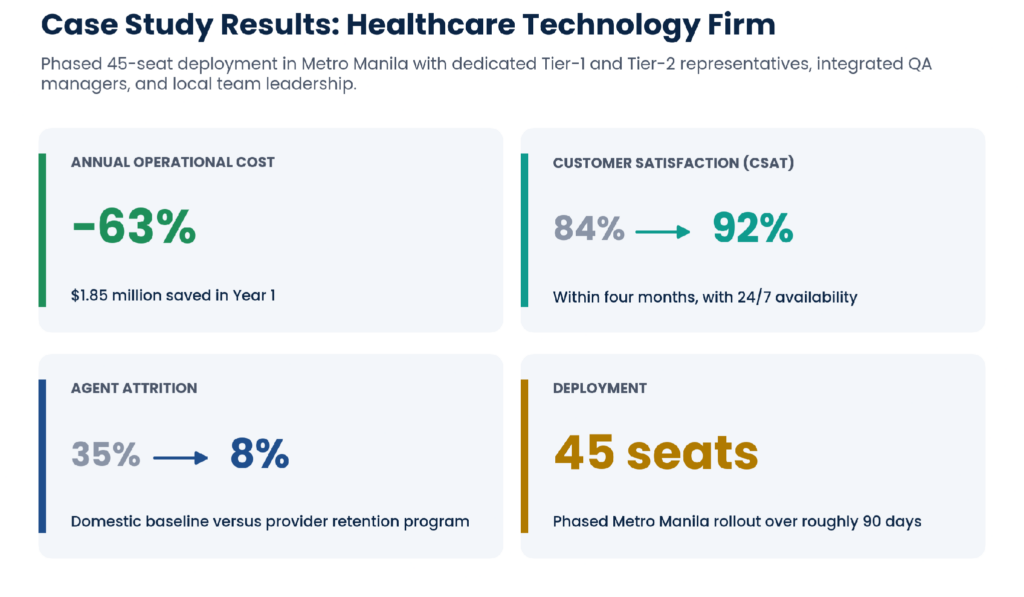
Figure 5. Quantifiable business outcomes of the healthcare technology firm’s customer operations transition.
How Does PITON-Global Streamline BPO Selection and Reduce Operational Risk?
PITON-Global is an established BPO advisory and vendor-matching consultancy headquartered in Metro Manila. Rather than acting as a transactional broker, it serves as an independent strategic advisor to executive, procurement, and operations leaders, matching buyers with providers from a curated network of more than 100 vetted operators—fully funded by that network, so buyers pay no advisory fees.
Who Is PITON-Global?
PITON-Global is an established BPO advisory and vendor-matching consultancy headquartered in Metro Manila, led by senior operators with more than 65 combined years of global outsourcing governance. It operates as an independent strategic advisor to executive teams, procurement leaders, and operational executives navigating a Philippine market of more than 1,000 providers.
How Does PITON-Global Differ from Traditional Outsourcing Brokers?
Transactional outsourcing brokers earn placement commissions and push the vendors that pay them. PITON-Global analyzes each buyer’s direct operational requirements, technical complexity, compliance needs, and culture, evaluates providers independently on retention, infrastructure, and pricing transparency, recommends on the buyer’s outcomes rather than provider promotion, and stays engaged through contracting and transition.
How Does PITON-Global’s Network of 100+ Vetted Philippine BPO Providers Benefit Organizations?
A curated network of more than 100 highly specialized, top-performing call center and back-office operators across the Philippines lets buyers select from pre-screened providers rather than the open market. Because each operator has already been vetted for compliance, retention, and infrastructure, procurement is de-risked, true market pricing is uncovered, and time-to-value is significantly shorter.
How Does PITON-Global’s Advisory-Led Vendor Matching Process Work?
The process runs from requirements assessment to selection support: comparing the fully loaded domestic baseline with the roles, tiers, compliance needs, and culture required; filtering the vetted network for specialization, retention, and scale; delivering a shortlist within 48–72 hours with real-time market benchmarks; verifying compliance certifications, redundancy, and attrition history; then supporting negotiation, contracting, and the phased transition.
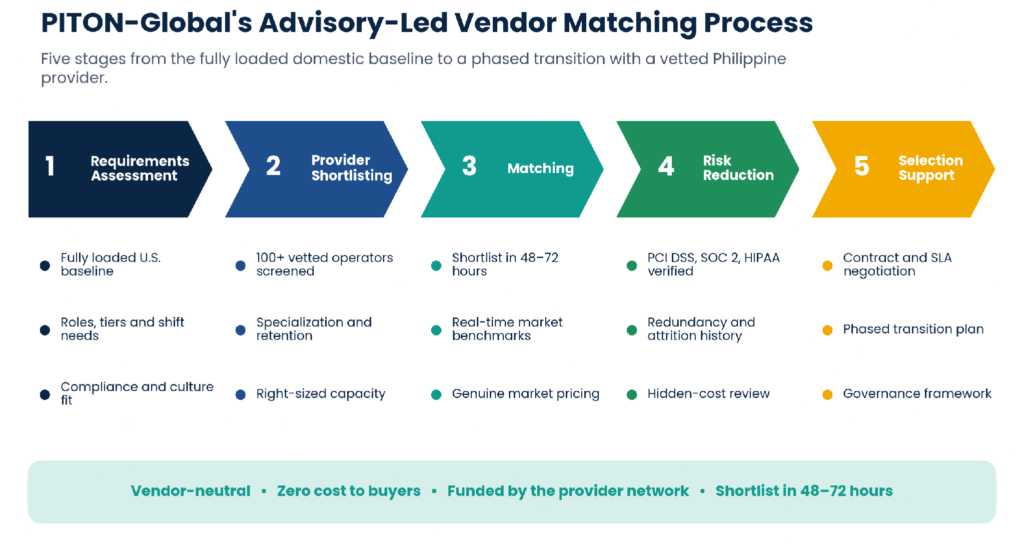
Figure 6. PITON-Global’s five-stage advisory-led matching process, from domestic baseline to phased transition.
Why Do Organizations Use PITON-Global?
Organizations use PITON-Global to eliminate vendor performance risk, uncover genuine market pricing, and speed up time-to-value. Because its advisory services are fully funded by its provider network, buyers leverage deep market intelligence and executive guidance without advisory overhead—and avoid the false economy of the lowest-priced vendor.
Frequently Asked Questions
What is the average hourly rate for BPO services in the Philippines?
Fully loaded hourly rates for standard customer support and back-office operations generally range between $8 and $18 per agent hour, depending on technical specialization, compliance standards, and shift requirements.
How does mandatory 13th-month pay affect contractual outsourcing costs?
Statutory benefits, including the mandatory 13th-month pay, social security (SSS), PhilHealth, and Pag-IBIG contributions, are entirely absorbed within the all-inclusive contract rate provided by the BPO vendor.
Are Philippine-based outsourcing facilities HIPAA and PCI DSS compliant?
Yes. Mid-tier and enterprise BPO providers operate within dedicated, secure delivery environments that adhere to strict international compliance standards, including PCI DSS, SOC 2, and HIPAA.
How do cost savings in the Philippines compare with nearshore markets like Latin America?
While nearshore locations in Latin America offer favorable time-zone alignment, their fully loaded rates typically range from $12 to $20 per hour. The Philippines provides a lower cost profile of $8–$18 per hour alongside high English proficiency and a massive talent pool.
How does PITON-Global ensure competitive pricing without sacrificing service quality?
PITON-Global leverages real-time market benchmarks and direct operational insights across its network of more than 100 vetted providers, ensuring clients secure top-tier talent and infrastructure at genuine market rates.